

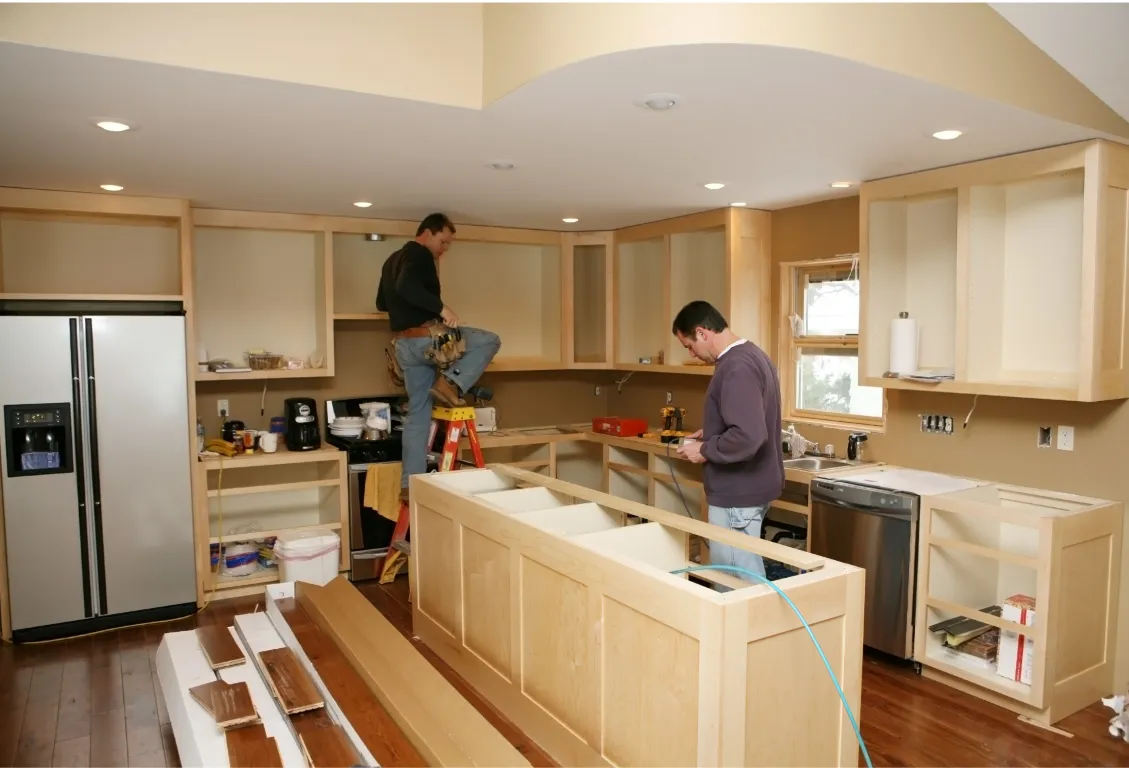
A homeowner with a $75,000 kitchen renovation budget doesn’t flip through the Yellow Pages anymore. They don’t look for a postcard in the mail. Their journey starts in the same place they look for recipes and watch videos: on their phone.
They will spend hours scrolling through Pinterest, searching Google for “kitchen remodel ideas,” and reading dozens of online reviews before they ever think about picking up the phone. If your business isn’t visible, credible, and compelling in those digital spaces, you don’t exist.
This is not another blog post with generic tips. This is a complete marketing blueprint for kitchen remodeling contractors who are serious about dominating their local market and building a predictable pipeline of high-value projects.
We’re breaking down the exact systems Aziel Digital uses to generate explosive growth for our clients, from building a website that sells for you to deploying paid ad campaigns that deliver leads on day one. By the end of this guide, you will have a clear, actionable plan to attract better clients, charge premium prices, and build a business that isn’t dependent on word-of-mouth alone.
Chapter 1: The Modern Kitchen Remodeling Marketplace
Before you can build a successful marketing plan, you must understand the field of play. The kitchen remodeling industry is not what it was ten, or even five, years ago. Homeowner expectations are higher, the digital landscape is more complex, and the economic factors driving decisions have shifted.
This chapter provides the essential market data and consumer psychology you need to grasp the sheer size of the opportunity and, more importantly, how modern homeowners actually decide who to hire. This is the bedrock upon which your entire strategy will be built.
Kitchen Remodeling Market Size, Growth, and Economic Impact
The kitchen and bath industry is an economic powerhouse. According to the National Kitchen & Bath Association (NKBA), it represents a market valued at over $199 billion in the United States alone. This is part of the broader U.S. home improvement market, a sector projected to be worth an enormous $485 billion. Within that massive industry, kitchen projects consistently rank as one of the top two most popular and highest-spend renovation categories.
The primary engine driving this growth is the age of the American housing stock. Research from the Joint Center for Housing Studies of Harvard University reveals a critical fact: over 80% of the nation’s 142 million homes are now at least 20 years old. A staggering 40% are at least 50 years old. This means millions of homes are hitting an age where kitchens are not just stylistically outdated, but functionally failing. This creates a continuous, built-in demand for remodeling services.
Several economic drivers are fueling this demand. High levels of homeowner equity give people the confidence and financial means to invest in their properties. Additionally, the recent “lock-in effect”, where homeowners with low mortgage rates choose to renovate rather than move and take on a new, higher-rate mortgage, has funneled significant spending into home improvement. This is coupled with a persistent demand for modern features, from open-concept layouts to smart kitchen technology.
However, the industry also faces economic headwinds. Fluctuations in interest rates can impact the availability of Home Equity Lines of Credit (HELOCs), a common funding source for large projects. Furthermore, persistent skilled labor shortages, as reported by the U.S. Bureau of Labor Statistics, continue to be a challenge for contractors aiming to scale their operations.
The Kitchen Remodeling Customer
To effectively market to homeowners, you must understand their motivations, what they expect to spend, and what they hope to gain. The numbers tell a clear story. According to Remodeling Magazine’s respected “Cost vs. Value Report,” a minor, midrange kitchen remodel averages around $28,000 to $32,000 and recoups a very healthy 70-80% of its cost at resale.
This makes it one of the highest-ROI projects a homeowner can undertake. In contrast, an upscale major kitchen remodel can easily exceed $150,000. Its ROI is significantly lower, typically between 40-50%, which tells us this is not a purely financial decision. It’s a lifestyle purchase, driven by desire rather than need.
The “Houzz & Home Study” provides deep insight into the primary triggers for a remodel. The top reasons homeowners finally decide to pull the trigger are:
1. “Finally have the time or finances” (35-40%)
2. “Can no longer stand the old kitchen” (30-35%)
3. “The old kitchen was deteriorating or breaking down” (30%)
This data shows that your marketing messages must speak to both practical needs (failing appliances, poor layout) and emotional wants (outdated style, desire for a beautiful space).
For many, the kitchen is the heart of the home, and the National Association of Realtors’ “Remodeling Impact Report” confirms this. It found that a new kitchen is the single project most likely to make homeowners want to spend more time at home, highlighting the deep emotional value attached to your work.
The Digital Path to Purchase – Mapping the Homeowner’s Hiring Journey
The path a homeowner takes from a vague idea to signing a contract with you is now almost entirely digital. BrightLocal research shows that 98% of consumers use the internet to find information about local businesses. This journey is predictable and can be mapped, allowing you to intercept potential clients at every stage.
It typically begins with broad, informational searches. Think “kitchen remodel ideas,” “best countertops for a busy family,” or “kitchen trends.” This is the Awareness or “Dreaming” phase. The homeowner is gathering inspiration, not yet ready to hire. Your marketing needs to meet them here with helpful, inspiring content.
As they get more serious, their searches narrow. They move into the Consideration or “Researching” phase. Searches become more specific: “how much does a kitchen remodel cost in Jacksonville FL,” “granite vs quartz countertops pros and cons.” They are now evaluating options and creating a budget. This is where detailed service pages and project galleries on your website become critical.
Finally, they enter the Decision or “Vetting” phase. Their searches become local and transactional: “kitchen remodelers near me,” “best kitchen contractors in Jacksonville,” or “[Your Competitor’s Name] reviews.” At this stage, they are actively looking to hire someone.
Your local SEO presence, Google Business Profile, and customer reviews are the most important factors. Over 50% of homeowners hire a professional for their renovations, and the number one hiring factor is “reviews and recommendations.” Your marketing funnel must be built to guide them seamlessly from inspiration to a phone call.
Understanding this marketplace, its size, the customer’s motivations, and their digital journey, is the first step. Now, you need to build the digital assets that will capture their attention and earn their trust. The next chapter will show you how to construct a digital foundation designed for one purpose: converting visitors into high-value leads.

Chapter 2: Building a High-Conversion Digital Foundation
Before you spend a single dollar on advertising, before you try to rank on Google, you must have a digital home base that can turn traffic into tangible business. Your website is that home base.
It’s your ultimate digital showroom, your 24/7 salesperson, and the engine of trust that makes all your other marketing efforts profitable. A weak website will leak leads and waste your marketing budget. This chapter provides the blueprint for creating a powerful digital foundation that builds undeniable credibility and systematically converts visitors into scheduled consultations.
Your Website – The Ultimate Digital Showroom and Trust Engine
In the remodeling world, perception is reality. A homeowner looking to invest $80,000 in a new kitchen will not trust a contractor with a cheap, outdated, or broken website. Groundbreaking research from Stanford’s Web Credibility department found that 75% of consumers admit to making judgments about a company’s credibility based purely on its website design. Your website is a direct reflection of the quality of your work. If it looks unprofessional, they will assume your work is unprofessional, too.
Your website must accomplish three primary goals. First, it must be professional and visually impressive. This means clean branding, high-quality photography, and an intuitive layout. Second, it must be technically sound. This includes being fully mobile-responsive (looking great on any device) and fast-loading. A slow website is a lead killer. Third, and most importantly, it must be a trust-building machine.
Key trust signals that every remodeler’s website must have include:
- Professional branding that looks established and reliable.
- High-resolution photos and videos of your best work.
- Authentic team bios and photos that humanize your company.
- Prominently displayed client testimonials and reviews.
- Logos of industry certifications (NKBA, NARI) and awards.
- Clear, easy-to-find contact information.
Remember, the core purpose of your website is not just to look pretty; it is to generate leads. Every single page, from the homepage to a project case study, should have a clear path that guides the visitor toward taking the next step, whether that’s filling out a form or calling your office.
The Non-Negotiable Website Elements Every Kitchen Remodeler Needs
A high-performing contractor website isn’t just a random collection of pages. It’s a strategic system where each element has a specific job to do. Here are the essential pages and components your website must have to convert visitors effectively.
- Home Page: This is your digital storefront. Within five seconds, a visitor must understand who you are, what you do, and why they should trust you. It needs a clear value proposition (e.g., “Award-Winning Kitchen Remodeling in Jacksonville”), a stunning “hero” image or video of a finished kitchen, social proof like client testimonials or award logos, and a clear, primary call-to-action (CTA) like “Get a Free Consultation.”
- About Us Page: This is where you tell your story and build a human connection. Don’t just list facts. Introduce the owner and key team members with professional headshots. Explain your unique process, giving it a name if you can (e.g., “The [Your Company Name] 5-Step Design-Build Process”). This differentiates you from competitors.
- Service Pages: Do not lump all your services onto one page. Create dedicated, detailed pages for each core service you offer, such as “Full Kitchen Remodels,” “Custom Cabinetry,” “Cabinet Refacing,” and “Countertop Installation.” These pages are absolutely critical for search engine optimization (SEO) and for educating clients about the specifics of what you do.
- Project Portfolio/Gallery: This is arguably the most important section of your site. It provides the visual proof that you can deliver on your promises. We will cover how to structure this for maximum impact in the next section.
- Testimonials/Reviews Page: While you should sprinkle testimonials throughout your site, having a dedicated page that aggregates your best reviews from Google, Houzz, and other platforms is powerful. A study by BrightLocal found that 87% of consumers read online reviews for local businesses, so make them easy to find.
- Contact Page: Make it incredibly easy for people to get in touch. Include a click-to-call phone number, a simple contact form (don’t ask for too much information), your physical address with an embedded Google Map, and your business hours.
- Calls-to-Action (CTAs): Your CTAs need to be more compelling than a simple “Submit” button. Use benefit-driven, low-friction language. For example, “Request Your Free Design Consultation” is much more enticing than “Contact Us.” “Schedule a Showroom Visit” feels more valuable than “Send Message.”
How to Create a Project Portfolio That Sells For You (The Case Study Method)
Your best marketing asset is your finished work. However, most contractors fail to present it effectively online. A simple gallery of photos is not enough. To truly build trust and command premium prices, you must move beyond a gallery and turn each of your best projects into a compelling case study. This method tells a story, showcases your problem-solving skills, and allows potential clients to see themselves in your work.
Here is the case study framework that turns a portfolio into a sales tool:
- Project Title: Create a descriptive, SEO-friendly title. Instead of “Kitchen Project 1,” use “Modern Farmhouse Kitchen Transformation in Jacksonville, FL.” This helps you rank for local searches.
- The Challenge: Start by describing the client’s problem in their own words. For example: “The original 1980s kitchen was dark, cramped, and completely cut off from the main living area. The homeowners lacked functional storage and had no space for entertaining.”
- The Solution: This is where you become the hero. Explain your process and the key decisions you made. “To solve this, our team first removed the non-load-bearing wall between the kitchen and the family room, creating a seamless open-concept space. We then designed and installed custom white shaker cabinets to maximize storage and brighten the room, centered around a large quartz-topped island with seating for four.”
- Key Features & Materials: List the specific, high-value materials and brands used. This is powerful for attracting clients who are already searching for specific finishes. Examples include “Cambria quartz countertops,” “Sub-Zero integrated refrigerator,” or “Custom-built vent hood.”
- The Result: Conclude the story with the outcome. This is the perfect place to include a powerful client testimonial that is specific to that project. For example: “‘They completely transformed our home! We can’t believe this is the same space. The design process was so collaborative, and the craftsmanship is second to none.'”
- The Visuals: This is the payoff. Showcase multiple, professional “before” and “after” photos from various angles. Grainy phone pictures will kill your credibility instantly. Investing in a professional photographer for your best projects is non-negotiable. A 60-second video walkthrough of the finished kitchen embedded in the case study is an incredibly powerful addition.
Finally, organize your portfolio so users can filter projects by style (e.g., Modern, Traditional, Transitional), scope (e.g., Full Remodel, Cabinetry Only), or even location/neighborhood. This makes it easy for potential clients to find projects that resonate with their specific tastes and needs.
Technical SEO Health – A Remodeler’s Checklist for a High-Performance Site
Behind every beautiful, high-converting website is a foundation of strong technical health. These elements are largely invisible to the user but are critical for how search engines like Google find, understand, and rank your site. Ignoring them is like building a stunning house on a crumbling foundation.
Here is a quick checklist of the technical SEO essentials:
- Site Speed: In an era of instant gratification, speed is everything. Your website should load in under 3 seconds. Any slower, and you’ll lose visitors and fall in Google’s rankings. You can use Google’s own PageSpeed Insights tool to test your site’s performance for free.
- Mobile-Friendliness: Google now operates on a “mobile-first indexing” model, which means it primarily uses the mobile version of your website for ranking and indexing. Your site must provide a flawless, easy-to-use experience on smartphones and tablets.
- SSL Certificate (HTTPS): The “S” in HTTPS stands for “secure.” This encrypts the data between your website and the user’s browser. It’s a non-negotiable trust signal for users and a confirmed ranking factor for Google. Your URL should start with `https://`, not `http://`.
- Clean URL Structure: Your website’s URLs should be simple, logical, and descriptive. For example, `yourdomain.com/services/kitchen-remodeling/` is far better for users and SEO than `yourdomain.com/page-id=123`.
- XML Sitemap: This is essentially a map of your website that you submit to Google. It helps search engines find and index all of your important pages efficiently.
- No Broken Links: Regularly check your site for broken links (links that lead to a “404 Not Found” error). These create a poor user experience and can negatively impact your SEO.
With a powerful, technically sound website in place, you are now ready to start driving targeted traffic to it. The next chapter focuses on the single most important channel for generating local leads: Google search and Google Maps.

Chapter 3: Dominating Local Search Results and Google Maps
For a kitchen remodeler, winning in marketing means winning locally. Your ideal clients are not searching for a generic contractor; they are searching for the best remodeler in their city, their town, or even their neighborhood. High-value homeowners don’t use the phone book anymore; they use Google. This chapter provides a step-by-step blueprint for dominating the local search results, including the coveted Google Maps “Local Pack,” where the most qualified, ready-to-buy leads are found.
Mastering Your Google Business Profile
Your Google Business Profile (GBP), the listing that appears in Google Maps and the Local Pack search results, is the single most powerful local marketing tool at your disposal. It is the number one ranking factor for appearing in the map results.
According to BrightLocal, 46% of all Google searches are for local information, and businesses with a complete, optimized GBP listing receive, on average, 7 times more clicks than those with an incomplete one. This isn’t just a directory listing; it’s a dynamic mini-website on Google itself.
Optimizing your GBP is not a one-time task. It requires ongoing attention to signal to Google that you are an active, relevant, and authoritative local business. Follow this optimization checklist step-by-step:
- Business Name: Use your exact, official business name as it appears on your legal documents. Do not stuff keywords into your name (e.g., “Jacksonville Premier Kitchen Remodeling”). This is against Google’s guidelines and can get your listing suspended.
- Categories: This is critical. Your primary category must be “Kitchen remodeler.” Then, add relevant secondary categories like “Cabinet maker,” “General contractor,” and “Bathroom remodeler” if you offer those services. Be as specific and comprehensive as possible.
- Service Areas: Clearly define the specific cities, towns, and zip codes you serve. This tells Google exactly where your potential customers are located.
- NAP Consistency: Ensure your business Name, Address, and Phone number (NAP) are 100% identical across your GBP, your website, and all other online directories. Even a small variation like “St.” vs. “Street” can confuse search engines.
- Services: Use the Services editor to list every single micro-service you provide. Don’t just list “Remodeling.” List “Quartz Countertop Installation,” “Custom Kitchen Islands,” “Backsplash Tiling,” and “Cabinet Refacing” with detailed descriptions for each. This helps you rank for very specific search queries.
- Photos & Videos: This is your chance to shine visually. Add new, high-quality, geo-tagged photos and videos every single week. Showcase finished projects, your team at work, and your showroom. BrightLocal data shows that businesses with over 100 photos get 520% more calls than the average business.
- Google Posts: Think of Posts as free mini-ads on your GBP listing. Use them weekly to share photos of recently completed projects, announce special offers, link to your latest blog post, or highlight a specific service. This activity signals to Google that your business is active and engaged.
- Q&A Section: Proactively populate the Questions & Answers section yourself. Ask common questions you receive from clients (e.g., “Do you offer financing?”, “How long does a typical kitchen remodel take?”) and then answer them thoroughly. This allows you to control the narrative and provide valuable information upfront.
On-Page SEO for Remodelers
While your GBP is critical for map rankings, your website’s pages are what rank in the traditional “blue link” organic results. On-page SEO is the practice of optimizing the content and structure of these pages to tell Google exactly what they are about and what locations they serve. The formula is simple but powerful: `[Service] + [Location]`.
Every core service needs its own dedicated page on your website, and these pages must be optimized for the locations you serve. Let’s look at the anatomy of a perfectly optimized service page for a kitchen remodeler in Jacksonville:
- Title Tag: This is the headline that appears in the Google search results and in the browser tab. It should be compelling and include your primary keyword. Format: `Primary Keyword | Brand Name`. Example: “Expert Kitchen Remodeling in Jacksonville, FL | Smith & Sons Remodeling.”
- Meta Description: This is the short, 160-character description below the title tag in search results. It’s your mini-ad. It should include your keyword, a key benefit, and a call-to-action. Example: “Transform your home with a beautiful, functional kitchen. Smith & Sons offers custom design-build remodeling in Jacksonville. Get your free consultation today!”
- H1 Heading: This is the main headline on the page itself. It should contain your primary keyword and clearly state the page’s topic. Example: “Custom Kitchen Remodeling Services in Jacksonville.”
- Page Content: The text on the page must be unique, detailed, and hyper-local. Don’t just describe kitchen remodeling in general terms. Talk about remodeling kitchens in Jacksonville specifically. Mention local neighborhoods or architectural styles (e.g., “remodeling historic kitchens in San Marco”). Showcase projects you’ve completed in the area. Include testimonials from local clients. Discuss local considerations like navigating the Jacksonville permitting process.
- Local Proof: Embed a Google Map of your primary service area on the page. This is a strong visual and technical signal to Google about your locality.
- Internal Linking: From your main kitchen remodeling service page, link out to more specific service pages (like custom cabinets) and to relevant project case studies from your portfolio. This helps users navigate your site and spreads ranking authority between your pages.
How to Build Local Authority with Citations and Backlinks
Google determines your local authority not just by what you say on your own website, but by what other reputable websites say about you. These mentions come in two primary forms: citations and backlinks.
Citations are online mentions of your business’s Name, Address, and Phone number (NAP). Consistency is the golden rule here. Every citation must match your GBP information perfectly. Think of each consistent citation as a vote of confidence in your business’s existence and location.
Your citation-building strategy should include:
- Core Citations: Build complete and accurate profiles on the most important top-tier directories. This includes Yelp, Houzz, Angi, the Better Business Bureau (BBB), and your local Chamber of Commerce.
- Industry-Specific Citations: Get listed in directories that are specific to the building and remodeling industry.
- Unstructured Citations: These are mentions of your business on websites that aren’t traditional directories, like a local news article about a project you completed or a blog post from a partner business.
Local link building involves getting other local websites to link directly to your website. These links are a powerful signal of authority to Google. Effective local link-building tactics include:
- Sponsoring a local youth sports team, a charity 5k, or a community event in exchange for a link on their website.
- Partnering with non-competing local businesses that serve the same clientele. For instance, build relationships with interior designers, real estate agents, architects, and high-end appliance stores. You can cross-promote each other’s services and link to each other’s websites as trusted partners.
- Joining and participating in local business associations like your Chamber of Commerce or a Business Network International (BNI) chapter, many of which have member directories that link to your site.
A Repeatable System for Generating Customer Reviews
After your GBP optimization, the quantity, quality, and frequency of your customer reviews are the next most important local ranking factor. More importantly, they are a massive conversion factor. According to BrightLocal’s survey, 87% of consumers read online reviews for local businesses. A steady stream of positive reviews builds immense social proof and convinces potential clients to choose you over a competitor.
You cannot afford to leave getting reviews to chance. You need a simple, repeatable system.
Here’s a 5-star review generation system that works:
- Timing is Everything: The best time to ask for a review is at the moment of peak client happiness. This is usually during the final project walkthrough when they see their stunning new kitchen for the first time.
- Make it Easy: Don’t just say, “Please leave us a review.” People are busy. Remove all friction from the process. Send them a direct link that takes them straight to the review submission box on your Google Business Profile. This can be sent via a follow-up email or text message.
- Automate the Request: Use a reputation management software tool to automate the process. These platforms can integrate with your project management system to automatically send a review request once a job is marked as complete.
- Respond to Every Review: This is non-negotiable. Respond to every single review within 24 – 48 hours. Thank positive reviewers personally. For negative reviews, respond professionally, calmly, and empathetically. A thoughtful response to a negative review can often win over more future customers than a dozen positive ones because it shows you care and are willing to address issues.
- Showcase Your Best Reviews: Leverage your hard-earned reviews as marketing assets. Use a website plugin to automatically stream your 5-star Google reviews directly onto your website’s homepage and testimonials page.
By mastering your GBP, optimizing your website for local search, building authority through citations and links, and implementing a system for generating reviews, you create a powerful local SEO engine.
This engine works 24/7 to put your business in front of the most qualified homeowners in your area. But capturing people who are already searching is only half the battle. The next chapter will explore how to create demand and inspire action through content and social media.

Chapter 4: Content and Social Media Marketing That Inspires Action
Effective local SEO and paid ads are brilliant at capturing clients who are actively searching for a remodeler. But what about the homeowners who are just starting to dream? The ones scrolling on their phones for inspiration, not yet ready to type “contractor near me” into Google?
Content and social media marketing allow you to connect with them early, build your brand, establish your expertise, and become the only company they think of when they are finally ready to start their project. This chapter covers how to use blogs, video, and visual social platforms to inspire homeowners and generate leads before your competitors even know they exist.
Content Marketing That Attracts High-Value Remodeling Leads
Content marketing for a remodeler isn’t about writing generic blog posts. It’s about strategically answering your ideal client’s most pressing questions at every single stage of their decision-making journey. By creating genuinely helpful content, you build topical authority with Google, earn valuable backlinks from other websites, and, most importantly, build trust with potential customers.
Your content should be organized around the marketing funnel:
Top of Funnel (Awareness/Inspiration):
At this stage, homeowners are looking for ideas and possibilities. Your content should be inspiring and educational. The goal is to get on their radar early.
Blog Post Ideas:
- “10 Kitchen Remodel Ideas for Historic Homes in Jacksonville”
- “How to Choose the Right Kitchen Countertop: Granite vs. Quartz vs. Marble”
- “The Ultimate Kitchen Remodel Planning Checklist for Homeowners”
- “[Current Year] Kitchen Design Trends We’re Seeing in North Florida”
Middle of Funnel (Consideration/Research):
Now, the homeowner is getting serious. They’re creating a budget and evaluating their options. Your content should demonstrate your expertise and help them make informed decisions.
Blog Post Ideas:
- “How Much Does a Kitchen Remodel *Really* Cost in the Jacksonville Area?” (Provide realistic price ranges for minor, major, and upscale projects and explain the factors that influence cost).
- “The [Your Company Name] Design-Build Process vs. Hiring a Separate Architect and Contractor”
- “Case Study: How We Transformed a Small Ponte Vedra Kitchen for Maximum Functionality”
- “5 Things to Ask a Remodeling Contractor Before Signing a Contract”
This type of content positions you as a trusted advisor, not just a salesperson. It attracts homeowners who are doing their homework, often the most qualified and highest-value clients.
How to Dominate Visually-Driven Platforms like Pinterest and Instagram
A kitchen remodel is a visual sale. The final product is what clients are buying. Platforms like Pinterest and Instagram are not optional for remodelers; they are essential channels for showcasing your work and inspiring future clients.
Pinterest:
Think of Pinterest not as a social network, but as a visual search engine for ideas. Homeowners create “dream boards” for their future kitchens months or even years before they are ready to hire. You need to be there.
- Strategy: Create different boards for various kitchen styles (“Modern Farmhouse Kitchens,” “Transitional Kitchen Design”), project types (“Small Kitchen Solutions,” “Luxury Kitchen Features”), and materials (“Quartz Countertop Ideas,” “Custom Cabinetry Examples”).
- Execution: Every image (a “pin”) you upload should be high-quality and vertically oriented. Crucially, every single pin must link back to a relevant page on your website, a specific project in your portfolio, a blog post about that style, or a service page. This drives valuable, targeted traffic back to your digital home base.
Instagram:
Instagram is your living, breathing portfolio. It’s where you humanize your brand and showcase your craftsmanship on a daily basis.
Post Types:
- Before & After Carousels: The swipable carousel format is perfect for dramatic before-and-after reveals.
- Instagram Reels: Create short, engaging video tours of finished projects set to trending music. Time-lapses of the construction process are also incredibly popular.
- “Meet the Team” Posts: Feature your project managers, designers, and lead carpenters. This builds trust and shows the people behind the work.
- Execution: Use high-quality photos and videos only. Write compelling captions that tell a small story about the project. Use a mix of broad hashtags (#kitchenremodel, #dreamkitchen) and local hashtags (#[city]remodeler, #[city]homes, #[neighborhood]design) to increase your visibility to a local audience.
Video Marketing for Remodelers: From Project Walkthroughs to Client Testimonials
If a picture is worth a thousand words, a video is worth a million. According to a study by Wyzowl, a remarkable 88% of people say they have been convinced to buy a product or service by watching a brand’s video. For a high-trust, high-ticket sale like a kitchen remodel, video is one of your most powerful sales tools.
There are four essential types of videos every remodeling company should be creating:
- Project Walkthroughs: This is your number one video asset. After a project is complete and professionally cleaned, film a 60-90 second tour. Use a smartphone with a gimbal for smooth shots. Walk through the space, highlighting key features like the custom island, the smart appliances, or the unique tile work. This video goes on your website case study page, on YouTube, and becomes an Instagram Reel.
- Client Testimonials: A written review is good. A happy homeowner on camera in their beautiful new kitchen talking about their amazing experience with your company is pure gold. It is the most authentic and powerful form of social proof you can create. Ask them simple questions like, “What was the biggest challenge with your old kitchen?” and “What is your favorite part of your new space?”
- About Us/Brand Story Video: Create a professional 2-3 minute video for your website’s About Us page. This video should explain your company’s mission, introduce your key team members, and articulate what makes your process different and better than the competition.
- Educational Videos: Film short, simple videos answering common customer questions. These can be 60-second shorts explaining concepts like, “What is a design-build firm?” or “3 things to consider when choosing kitchen cabinets.” This positions you as an expert and provides valuable content for your social media channels.
Host all your videos on a platform like YouTube, which is the world’s second-largest search engine. This gives you added SEO benefits. Then, embed those videos strategically on your website pages to increase engagement and conversion rates.
Content, social media, and video marketing are powerful long-term strategies for brand building and lead generation. They fill the top of your funnel and create an audience that trusts you. But what if you need leads right now? The next chapter dives into the world of paid advertising, the fastest way to get your phone to ring with qualified prospects.

Chapter 5: Paid Advertising for Immediate and Predictable Lead Flow
While SEO and content marketing are essential for building a long-term, sustainable asset, they take time to deliver results. When you need to fill your project pipeline now, paid advertising is the answer. It allows you to place your business directly in front of homeowners who are actively searching for your services, turning on the lead faucet almost immediately.
This chapter breaks down the most effective paid advertising channels for kitchen remodelers, showing you how to generate high-quality, high-intent leads on demand and achieve a positive return on your ad spend.
Google Ads vs. Local Services Ads (LSAs)
When homeowners need a remodeler, they turn to Google. Google offers two primary advertising platforms for local service businesses: traditional Google Ads (also known as pay-per-click or PPC) and the newer Local Services Ads (LSAs). Understanding the difference is critical to investing your budget wisely.
Local Services Ads (LSAs):
These ads appear at the very top of the search results page, even above the traditional PPC ads and the map pack. They feature your headshot, star rating, and, most importantly, the “Google Guaranteed” badge.
- The Google Guarantee: To earn this badge, you must pass a background check and provide proof of license and insurance to Google. This acts as a massive, built-in trust signal for consumers. Google even backs your work with a satisfaction guarantee up to $2,000.
- Payment Model: This is the key difference. With LSAs, you do not pay when someone clicks your ad. You pay per valid lead, a phone call or message from a potential customer in your service area looking for a service you offer.
- Control: You have less control over ad copy and keywords compared to traditional ads, but LSAs are designed to capture the highest-intent, bottom-of-the-funnel leads who are ready to call a contractor.
Traditional Google Ads (PPC):
These are the familiar text ads that appear below the LSAs. They operate on a pay-per-click (PPC) model, meaning you pay every time someone clicks on your ad, whether they become a lead or not.
- Control: This is the main advantage of traditional search ads. You have full control over the exact keywords you want to target (e.g., “luxury kitchen remodel jacksonville”), the ad copy you write, the landing page you send traffic to, and the specific audiences you want to reach.
- Cost: Costs-per-click (CPCs) for valuable remodeling keywords can be high, often ranging from $25 to over $100 in competitive markets.
- Flexibility: PPC is ideal for targeting specific, high-margin services, running remarketing campaigns to re-engage website visitors, and targeting competitor brand names.
The Ideal Strategy:
For most kitchen remodelers, the most effective strategy is not to choose one over the other, but to run both simultaneously. Use Local Services Ads to capture the highest-intent phone call leads with the powerful “Google Guaranteed” badge.
Use traditional Google Ads to drive targeted traffic to your high-converting landing pages, target niche services, and maintain visibility for a broader range of keywords. This two-pronged approach is a core component of the comprehensive Growth Bundles we implement at Aziel Digital.
How to Structure Google Ads Search Campaigns for Maximum ROI
Running a profitable Google Ads campaign requires a disciplined, strategic structure. Simply throwing a bunch of keywords into one campaign and pointing them at your homepage is a recipe for wasting money. A granular structure gives you greater control, better data, and a higher return on investment.
Here’s how to structure your campaigns for success:
- Campaign Structure: Create a separate campaign for each of your core services. For example, you should have a “Full Kitchen Remodels” campaign, a “Cabinet Refacing” campaign, and a “Countertop Installation” campaign. This allows you to set different budgets for each service based on its profitability.
- Ad Groups: Within each campaign, create tightly-themed ad groups. For instance, inside your “Full Kitchen Remodels” campaign, you might have ad groups for “Luxury Kitchen Remodels,” “Small Kitchen Remodels,” and “Modern Kitchen Remodels.” This ensures your ad copy is highly relevant to the search query.
- Keyword Match Types: Use a strategic mix of keyword match types. “Exact match” keywords give you the most control over who sees your ad, while “phrase match” allows you to appear for a slightly broader range of relevant searches. Most importantly, use negative keywords aggressively. A negative keyword list tells Google which searches you *don’t* want to show up for. This is crucial for filtering out irrelevant clicks from people searching for “jobs,” “school,” “DIY,” “cheap,” or “how to.”
- Compelling Ad Copy: Your ad is a tiny billboard competing for attention. It needs to speak directly to the searcher’s needs and your solution. Include powerful trust signals like “5-Star Rated,” “Licensed & Insured,” or “Award-Winning Designs.” Always end with a clear call-to-action like “Get a Free Estimate” or “Schedule Your Consultation.”
- Conversion Tracking: This is the most important part of any paid ad campaign, and it is absolutely non-negotiable. You must set up conversion tracking to measure the actions that matter: phone calls from your ads, contact form submissions on your website, and web chat inquiries. Without conversion tracking, you are flying blind and have no way to know if your ad spend is actually generating a positive ROI.
Creating High-Converting Landing Pages for Your PPC Ads
One of the biggest mistakes contractors make with Google Ads is sending their expensive ad traffic to their website’s homepage. Your homepage is designed for general browsing and has too many distractions. For paid traffic, you need dedicated landing pages. A landing page has one single goal: to get the visitor to convert into a lead.
The essential elements of a high-converting landing page for a remodeler include:
- Message Match: The headline on the landing page must directly match the message in the ad the user just clicked. If the ad promised a “Free Consultation for Custom Cabinets,” the landing page headline should say the exact same thing.
- Stunning Hero Image: The first thing a visitor sees should be a high-resolution, professional photo of a finished kitchen that is relevant to the service advertised.
- Benefit-Oriented Bullet Points: Quickly list the key benefits of working with you. Focus on outcomes, not just features. Instead of “We use quality materials,” say “Durable, beautiful materials built to last a lifetime.”
- Strong Social Proof: Include your best client testimonials, your star rating from Google, and logos of any awards or certifications you have. This immediately builds credibility.
- Simple Lead Capture Form: Place a simple, easy-to-fill-out contact form “above the fold” (visible without scrolling). Only ask for the essential information: Name, Phone, Email, and a brief message.
- Prominent Phone Number: Make your phone number a large, clickable button that is easy to see on both desktop and mobile.
- No Distractions: A true landing page should have no main navigation menu. The goal is to keep the user focused on the single action of contacting you, not to let them click away to your About Us page.
Using Social Media Ads to Fill Your Funnel
While Google Search ads are perfect for capturing high-intent leads, social media ads on platforms like Facebook and Instagram play a different role. They are less about direct, immediate lead generation and more about building an audience and generating demand.
- Targeting Capabilities: The power of social media ads lies in their sophisticated targeting. You can target users based on detailed demographics (age, income level, homeowner status), interests (people who follow home improvement magazines or watch HGTV), and behaviors (people who have recently moved or are “likely to move”).
- Ad Creative: On social media, your creative is everything. You are interrupting a user’s feed, so your ad must be visually arresting. Use your absolute best project photos and, even more effectively, short video walkthroughs of your finished kitchens. The goal is to stop the scroll.
- Strategy: A highly effective strategy is to run ads that promote a valuable piece of content, like a downloadable “Kitchen Remodeling Planning Guide.” You offer this guide for free in exchange for the user’s name and email address. This doesn’t generate an immediate job lead, but it builds your email list with qualified, interested homeowners whom you can then nurture over time.
- Retargeting: This is a must-have campaign. Retargeting allows you to show specific ads to users who have already visited your website but did not contact you. This is a powerful way to stay top-of-mind and bring them back to your site when they are finally ready to take the next step.
Paid advertising provides the speed and predictability that every growing business needs. When managed correctly, it’s not an expense; it’s a direct investment in profitable growth. Once you have these lead generation channels firing on all cylinders, the next challenge is to scale your business efficiently. The final chapter will explore advanced systems for growth, from leveraging AI to building powerful referral engines.

Chapter 6: Scaling Your Business with Advanced Growth Systems
You’ve built a powerful digital foundation. You’re dominating local search and generating a steady flow of leads from paid advertising. The foundational pieces are in place. Now, it’s time to focus on building systems that allow you to scale your business efficiently and profitably.
This chapter moves beyond basic lead generation and explores advanced strategies that the most successful remodeling companies use to build a dominant, future-proof business. We’ll cover leveraging artificial intelligence, building strategic referral partnerships, and implementing sophisticated lead nurturing to maximize the value of every opportunity.
Leveraging AI in Your Kitchen Remodeling Marketing Operations
Artificial intelligence is no longer a futuristic concept; it is a practical tool that can give you a significant competitive advantage. For a busy contractor, AI can automate repetitive tasks, provide valuable insights, and free up your time to focus on what you do best: designing and building beautiful kitchens.
Here are three practical ways to leverage AI in your marketing today:
- AI for Content Creation: Tools like ChatGPT can be a powerful assistant for your content marketing efforts. Use them to brainstorm blog post ideas, create detailed outlines for project case studies, or draft initial versions of social media posts. The key is to use AI as a first-draft generator. It provides the structure and initial content, which you or your team then must edit and refine to ensure it matches your brand voice, contains your unique expertise, and is factually accurate.
- AI for Lead Qualification: Implement an AI-powered chatbot on your website. A modern chatbot can do much more than just answer simple questions. It can engage visitors 24/7, ask critical qualifying questions (e.g., “What is your approximate budget for this project?”, “What is your ideal timeline to get started?”), and even integrate with your calendar to schedule consultations directly with qualified leads. This filters out tire-kickers and ensures that the leads that reach you are serious prospects, saving you hours of administrative time.
- AI in Advertising: Google’s advertising platform is heavily powered by AI. Campaigns like Performance Max use machine learning to automate bidding, targeting, and ad creation across all of Google’s networks (Search, Display, YouTube, Gmail). It analyzes thousands of signals in real-time to find users who are most likely to convert into a lead for your business. Effectively managing these AI-driven campaigns is a core competency we offer through Aziel Digital’s AI Contractor Marketing services, helping you get the most out of your ad spend.
Building a Referral Engine Through Strategic Partnerships
Your most profitable leads will often come from referrals. While referrals from past clients are fantastic, you can create a much more scalable system by building a network of strategic partners, other local businesses that serve the same high-value homeowner but do not compete with you.
Identify your key partnership targets:
- Interior Designers: They design beautiful spaces and need reliable, high-quality contractors to execute their vision. A great relationship here can lead to a steady stream of ideal projects.
- Real Estate Agents: Top agents are a goldmine of referrals. They work with clients who are buying fixer-uppers and need renovations, as well as clients who are selling and need to update a kitchen to maximize their home’s value.
- Custom Home Builders: Often, high-end builders will subcontract their custom kitchen and cabinetry work to a specialist. Becoming their go-to kitchen expert can be incredibly lucrative.
- Related Trades and Suppliers: Build strong relationships with architects, high-end appliance showrooms, cabinet suppliers, and countertop fabricators. They are often the first point of contact for a homeowner starting a project.
Building these relationships requires a proactive approach. Don’t just wait for them to find you. Reach out, take them to lunch, and explain your process and the quality of your work. Offer a formal referral fee for every job they send your way that you close.
Provide them with co-branded marketing materials. Most importantly, when they do send you a referral, deliver an absolutely exceptional experience for that client. This makes your partner look good for recommending you and ensures they will continue to send more business your way.
How to Nurture Leads and Maximize Client Value with Email Marketing
The reality of the remodeling business is that not every lead is ready to sign a contract today. They might be in the early planning stages, getting other bids, or waiting for financing. If you don’t have a system to stay in touch, you will lose these valuable long-term opportunities. Email marketing is the perfect tool for lead nurturing.
When a potential client downloads a resource from your website, like your “Kitchen Remodeling Planning Guide,” they should be entered into an automated email nurture sequence. This is a pre-written series of emails sent out over a period of weeks.
- Email 1 (Immediate): Welcome email that delivers the guide they requested.
- Email 2 (3 days later): Showcase a relevant case study from your portfolio, telling the story of a project similar to what they might be considering.
- Email 3 (1 week later): An educational email that answers a common question, such as “How long does a typical kitchen remodel take from start to finish?”
- Email 4 (2 weeks later): A “soft” call-to-action that invites them to schedule a no-obligation design consultation to discuss their project in more detail.
Beyond lead nurturing, you should also send a monthly email newsletter to your entire list, including past clients. This newsletter can feature your most recently completed projects, introduce a new team member, or offer seasonal home maintenance tips. This keeps your brand top-of-mind with past clients, dramatically increasing the chances they will refer you to their friends, family, and neighbors.
How to Set Your Marketing Budget and Track True ROI
Marketing should never be treated as an expense. It is an investment in the growth of your company. To make smart investments, you need a clear budget and a system for tracking your true return on investment (ROI).
As a general rule of thumb, most established service businesses should plan to invest between 5% and 10% of their gross annual revenue back into marketing. A newer business trying to gain market share may need to invest a higher percentage initially.
But a budget is useless if you don’t track your results. You need a marketing scorecard with a few key metrics:
- Cost Per Lead (CPL): Total Marketing Spend / Total Number of Leads. This tells you how much it costs to make your phone ring.
- Closing Rate: Number of Signed Jobs / Total Number of Leads. This measures the effectiveness of your sales process.
- Cost Per Acquisition (CPA): Total Marketing Spend / Number of Signed Jobs. This is the true cost of acquiring a new customer through your marketing efforts.
- Average Job Value: Total Revenue / Number of Signed Jobs.
- Return on Investment (ROI): The ultimate metric. The formula is: `(Total Revenue from Marketing – Total Marketing Spend) / Total Marketing Spend`. An ROI of 5x means that for every $1 you invested in marketing, you generated $5 in revenue.
To track these metrics accurately, you need a Customer Relationship Management (CRM) tool. A CRM allows you to track every lead from its original source (e.g., Google Ads, Organic Search, Referral) all the way through to a signed contract and final payment. This data is what allows you to make intelligent decisions about where to double down on your marketing investments and where to cut back.
By implementing these advanced growth systems, you move from simply generating leads to building a sophisticated, scalable marketing and sales machine. You create a business that is not only profitable today but is built on a foundation that can sustain growth for years to come.
Your Path to Market Leadership
You now have the complete blueprint. You understand the modern marketplace, you know how to build a digital foundation that converts, and you have the strategies to dominate local search, create inspiring content, generate immediate leads with paid ads, and scale your operations with advanced systems. The gap between knowing this information and achieving market leadership comes down to one thing: execution. The path is clear, but it requires consistent, expert implementation.
Many business owners find that while they are experts at remodeling kitchens, they don’t have the time or specialized knowledge to become expert marketers as well. That’s where a dedicated partner can make all the difference. If you’re ready to implement these strategies and build a predictable engine for growth, the team at Aziel Digital is here to help. We specialize in helping contractors like you dominate their local markets.
Take the next step. Schedule a Free Growth Call with our team today. We’ll analyze your current marketing, identify your biggest opportunities, and lay out a clear, actionable plan to help you reach your business goals. Visit us at https://azieldigital.com/free-consultation/ to book your call now.
Frequently Asked Questions
How Much Should A Kitchen Remodeler Spend On Marketing?
Most established kitchen remodelers should invest between 5% and 10% of their gross annual revenue into a comprehensive marketing strategy. For example, a company doing $1 million in revenue should budget $50,000 to $100,000 annually for marketing.
The U.S. Small Business Administration suggests that businesses with revenues less than $5 million should allocate 7-8 percent of their revenues to marketing. Newer businesses or those in highly competitive markets may need to invest a higher percentage initially to gain traction and build brand recognition.
What Is The Best Way To Get High-Quality Kitchen Remodeling Leads?
The highest-quality leads typically come from “inbound” sources where the client finds you. A multi-channel approach is best.
– First, optimizing your Google Business Profile for local map rankings generates high-intent phone calls.
– Second, running Google Local Services Ads with the “Google Guaranteed” badge builds immediate trust.
– Third, creating helpful website content that answers specific questions (like cost guides and material comparisons) attracts well-researched, educated clients who are further along in the buying process.
Is SEO Or PPC Better For A Kitchen Remodeling Company?
They are not competitors; they are partners in a complete marketing strategy. SEO (Search Engine Optimization) is a long-term investment that builds a sustainable asset, generating “free” organic traffic and leads over time. PPC (Pay-Per-Click), like Google Ads, is a short-term tool that generates leads immediately.
A sound strategy, which we execute in our Growth Bundles, involves using PPC to generate leads now while simultaneously investing in SEO to build your organic presence and reduce your reliance on ad spend in the future.
How Can I Market My Remodeling Business With No Money?
Marketing with a zero-dollar budget requires investing your time instead of money. Start by completely optimizing your free Google Business Profile with services, photos, and weekly posts. Next, focus on getting customer reviews by personally asking every happy client.
You can also build strategic partnerships with real estate agents and interior designers, offering a referral fee from the job’s profit instead of an upfront cost. Finally, take high-quality before-and-after photos with your smartphone and post them consistently on a business Instagram and Facebook page.
What Should I Post On Social Media For My Remodeling Business?
Your social media content should be highly visual and focus on showcasing your work and expertise. The most effective posts are before-and-after carousels showing dramatic transformations. Short video walkthroughs (Reels) of completed kitchens are incredibly engaging.
You should also post content that humanizes your brand, such as “meet the team” features or behind-the-scenes looks at your design process. Finally, share helpful tips, like “how to choose the right cabinet hardware,” to establish your authority.
Is Houzz Pro Worth The Cost For A Kitchen Remodeler?
Houzz Pro can be a valuable lead source, but its effectiveness depends heavily on your local market and how actively you manage your profile. The platform’s primary value is connecting you with homeowners who are in the early, inspirational phase of their project.
For many remodelers, it’s best used as a supplemental lead source rather than their primary marketing channel. It’s crucial to track the ROI from Houzz leads separately, as the cost can be significant. Compare your Cost Per Acquisition from Houzz to other channels like Google Ads to make an informed decision.
How Do I Compete With Larger Remodeling Companies In My City?
You can compete effectively by focusing on a specific niche and providing a superior customer experience. Instead of trying to be everything to everyone, become the known expert in something specific, like “historic kitchen renovations” or “ultra-modern kitchen design.”
Lean into your identity as a smaller, more personal company by highlighting the owner’s direct involvement in every project. Finally, dominate hyper-local SEO by creating content and getting reviews focused on specific neighborhoods or suburbs that larger companies might overlook.
What Are The Most Important Marketing Metrics For A Remodeler To Track?
The most critical metrics go beyond simple website traffic. You must track Cost Per Lead (CPL) to know what you’re paying for each inquiry. Next is your Closing Rate, which measures how many leads turn into jobs.
This leads to the most important metric: Cost Per Acquisition (CPA), the actual marketing cost for each signed contract. Finally, by tracking your Average Job Value, you can calculate your overall marketing Return on Investment (ROI) to ensure your efforts are profitable.
How Do I Create City-Specific Landing Pages That Actually Rank On Google?
To make city-specific pages (or “city pages”) rank, they must contain unique and genuinely valuable content, not just swapped-out city names. A successful city page for “Kitchen Remodeling in Ponte Vedra Beach” should feature a case study of a project you completed in that specific town. It should include a testimonial from a Ponte Vedra Beach client.
The text should discuss local nuances, such as specific architectural styles common in the area or considerations for coastal properties. Finally, embed a Google map showing your service area and include photos that are geo-tagged to that location.
How Long Does It Take For SEO To Start Working For A Contractor?
SEO is a marathon, not a sprint. While some initial improvements from on-page and technical fixes can be seen within 60 to 90 days, it typically takes 6 to 12 months of consistent effort to see significant, lead-generating results for competitive keywords like “kitchen remodeler in [Your City].” Factors influencing this timeline include the level of competition in your market, the current state of your website, and the consistency of your content creation and link-building efforts.
What’s The Best Way To Get Professional Photos Of My Completed Projects?
Investing in a professional photographer is one of the highest-ROI marketing decisions you can make. The best approach is to find a local photographer who specializes in real estate or architectural photography, as they understand lighting and composition for interiors.
You can often negotiate a package deal if you guarantee them a certain number of shoots per year. Before the shoot, ensure the kitchen is professionally cleaned and staged with minimal, tasteful props to make it look its best.
Should I Use A Chatbot On My Remodeling Website?
Yes, a modern AI-powered chatbot can be a powerful tool for a remodeler. It can work for you 24/7 to engage website visitors who may not be ready to pick up the phone. A chatbot can answer frequently asked questions (like “Do you offer financing?”), collect initial project details, and, most importantly, ask qualifying questions about budget and timeline. This filters leads for you, allowing you to focus your time on the most promising prospects.
How Do I Ask A Client For A Video Testimonial?
The best time to ask is at the final project walkthrough when their excitement is at its peak. Frame it as a small favor that would greatly help your business. Say something like, “We’re so thrilled you love your new kitchen! Would you be willing to share your experience on a quick video? It would just be a few questions and would mean the world to us.”
Make it easy by offering to film it right then and there with your smartphone. Come prepared with simple questions like, “What was your biggest frustration before the remodel?” and “What advice would you give to someone considering a remodel?”
What Is The Difference Between A Kitchen Designer And A Kitchen Remodeler In Marketing Terms?
In marketing, the key difference lies in the search intent and the services highlighted. “Kitchen designer” marketing should focus on the creative and planning aspects: 3D renderings, space planning, material selection, and creating a cohesive aesthetic.
Content would target keywords like “kitchen design ideas.” “Kitchen remodeler” marketing should focus on the execution and construction: project management, craftsmanship, timelines, and the complete transformation. Your marketing should clarify your business model, whether you are a design-build firm that does both, or a remodeler who executes pre-existing plans.
How Can I Use AI to Help With My Marketing Content?
AI tools like ChatGPT can be a fantastic creative partner and efficiency booster. Use AI to brainstorm a list of blog topics based on your ideal customer’s pain points. Ask it to generate an outline for a project case study using the “Challenge-Solution-Result” framework.
You can even have it write a first draft of a social media post celebrating a finished project. The critical step is to always have a human review, edit, and inject your company’s unique voice and expertise into the AI-generated draft before publishing.
What Kind Of Partnerships Should A Kitchen Remodeler Be Making?
A kitchen remodeler should build a network of strategic partners who serve the same high-end homeowner client but are not competitors. The most valuable partners are interior designers, real estate agents (especially those in the luxury market), architects, and custom home builders. Secondary partnerships with appliance showrooms, countertop fabricators, and high-end plumbing supply houses can also be a consistent source of qualified referrals.