

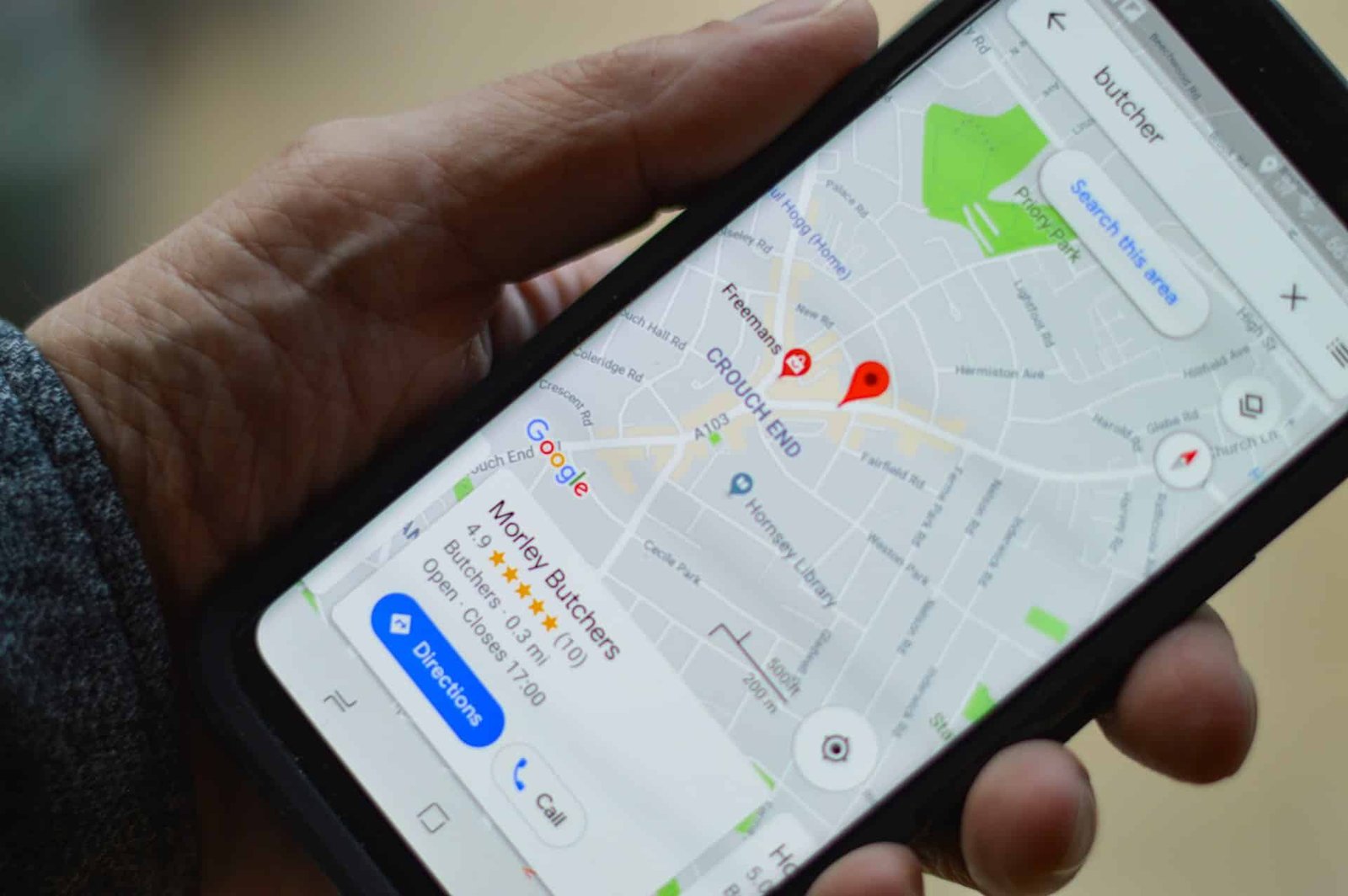
It’s a frustrating feeling, isn’t it? Your phone should be ringing off the hook with local jobs, but all you hear is silence. You pull up Google Maps, and there they are, your competitors, scooping up all the local jobs in the 3-pack. It leaves you wondering what secret they know that you don’t.
The truth is, they aren’t necessarily better at their trade than you are. They’ve just figured out how to show Google that they’re the top choice in your area. This guide is here to hand you that same playbook, breaking down the exact steps to get your service business noticed, chosen, and climbing the ranks on Google Maps.
Key Takeaways
- Think of your Google Business Profile as your digital storefront; filling out every last detail is one of the fastest ways to improve your online reputation.
- Choosing the right primary and secondary business categories helps you show up for the customers you actually want.
- Keep a steady flow of positive reviews coming in, and make a point to respond to every single one, good or bad.
- Your business Name, Address, and Phone number (NAP) need to be a perfect match everywhere your business is mentioned online.
- A mobile-friendly, locally-focused website is the foundation that supports your entire Google Maps ranking strategy.
- Use features like Google Posts and the Q&A section to keep your profile looking active, fresh, and engaging.
- While you build your organic rank for the long term, consider using Google Local Services Ads to get immediate, high-trust leads.
Master Your Google Business Profile
Let’s be clear, your Google Business Profile (GBP) is the engine driving your rank in the local map pack. Think of it as your digital storefront. If you leave the shelves half-empty, you’re telling Google, and your customers, that you might not be the real deal. You need to fill out every single field available.
Start with the essentials, your exact business name, address, phone number (NAP), and website. Then, get into the details by adding your hours of operation and writing a full, compelling business description.
Google’s algorithm rewards thoroughness, it’s not just about algorithms, a study even found that customers are 2.4 times more likely to see a complete profile as reputable. Choosing the right categories is just as important. Be sure to select the most specific primary category that describes your main service, like “Plumber” instead of a generic term like “Contractor.”
After that, add up to nine secondary categories to cover all the other services you offer, such as “Water Heater Installation Service” or “Drainage Service.” This is how Google connects you with people making very specific searches. If you’re a Service Area Business (SAB) that travels to your customers, don’t list your home address. Instead, you need to clearly define your service areas by listing the specific cities, counties, or zip codes you work in.
With roughly 80% of local searches happening on mobile phones, according to Statista, this ensures you pop up for customers in the right places. High-quality photos and videos are an absolute must-have. Upload clear, high-resolution photos of your team, your work trucks, your crew in action, and examples of your finished work.
Don’t forget to add a professional logo and a sharp cover photo. Businesses with photos get 42% more requests for driving directions and 35% more clicks through to their websites. Finally, make full use of the “Services” section to list and describe everything you do. You can even add prices if that makes sense for your business. All this information feeds directly into Google’s brain, making you visible for all those specific, long-tail keyword searches.

Build Trust and Authority Through Customer Feedback
Reviews are the lifeblood of your local reputation and a huge signal to Google that you’re a business people can trust. When it comes to your reviews, Google is looking at three things: how many you have (quantity), what people are saying (quality), and how new they are (recency).
This means you need a consistent stream of fresh, positive reviews to start climbing the ranks. In fact, reviews make up about 15% of the entire formula for local ranking, according to research by Moz. But you can’t just collect them and walk away, you have to engage with them. Make it your policy to respond to every single review, whether it’s glowing or critical.
Thank customers for their kind words and address any negative comments professionally by offering a way to make things right. This simple act shows potential customers that you stand behind your work and genuinely care. Think about it from a customer’s perspective.
It’s no surprise that, according to ReviewTrackers, businesses that take the time to reply are seen as 1.7 times more trustworthy than those that don’t. Getting reviews shouldn’t be a passive hope. You need a system. Make it a habit to ask your happy customers for a review right after you’ve finished a job.
You can do this with a simple text message, a follow-up email, or even a business card with a QR code that links directly to your review page. With 98% of people now reading online reviews for local businesses, as reported by BrightLocal, you simply can’t afford to leave this to chance. To make this process even easier, you can use specialized software.
Here are some of the top platforms that help you manage your reputation:
- Podium
- Birdeye
- Reputation.com
- ReviewTrackers
- GatherUp
Activate Your Profile with Posts and Q&As
Your Google Business Profile isn’t a “set it and forget it” tool. To show Google that you’re an active, thriving business, you need to keep it updated. The two best ways to do this are by regularly using Google Posts and the Questions & Answers feature. Think of Google Posts as free mini-billboards that show up right on your profile.
You can use them to announce a special offer, show off a recently completed project, share important business updates, or shine a spotlight on a specific service. It’s a direct line of communication to your customers, right there in the search results. On average, businesses that use Posts see a 15-20% jump in views and actions on their profile.
The Q&A section is another powerful tool that most businesses ignore. Potential customers can ask questions here, and if you don’t answer them, anyone on the internet can. This is your chance to get ahead of the conversation. Brainstorm the most common questions you get from customers and post both the questions and the answers yourself.
This handles common objections before they even come up and provides tons of value. About 30% of consumers check the Q&A section before making a decision, so keeping it filled with accurate, helpful information gives you a massive advantage.
Build A Solid Digital Footprint
What’s being said about your business across the web is just as important as what’s on your Google profile. Google is a bit like a detective, it scours the web to cross-reference your business information to make sure you are a legitimate, established company.
The single most critical piece of this puzzle is NAP consistency. Your business Name, Address, and Phone number must be exactly the same everywhere it’s listed online, from your website and social media profiles to local directories. It might seem small, but even a tiny difference like using “St.” on one site and “Street” on another can confuse the search engines and lead to a 5-10% drop in your local search visibility.
The next step is to build local citations. Citations are simply mentions of your business on other websites, usually in online directories. Each consistent citation you get is like a vote of confidence, telling Google that your business is real and a known part of the local community.
These signals contribute about 10-12% to your overall local ranking. Your focus should be on getting listed in well-known, high-authority directories like Yelp, Yellow Pages, and Foursquare, as well as sites specific to your industry, like Angi, Houzz, or Nextdoor. And don’t forget to get listed on your local Chamber of Commerce website, a link from there is a powerful local signal.
Turn Your Website into a Local Authority Hub
Your website is the home base for your entire digital presence, and it needs to be fine-tuned to support your goals on Google Maps. These days, thinking “mobile-first” isn’t just a suggestion, it’s the rule. Google now uses mobile-first indexing, which means it judges and ranks your site based on how it looks and works on a phone, not a desktop.
With over 60% of Google searches now happening on mobile devices, a clunky, slow-loading mobile site will absolutely tank your rankings. Your site has to be responsive, easy to navigate on a small screen, and lightning-fast.
On the content front, you need to naturally weave local keywords into your website’s pages, titles, and descriptions. Put yourself in your customers’ shoes and use phrases they would search for, like “emergency plumber in [city name]” or “roof repair [your town].”
You should also have LocalBusiness schema markup installed. This is a bit of code added to your site that clearly labels all your business information for search engines, so there’s no confusion.
Performance is a direct ranking factor. According to data from Think with Google, websites that take just 1-3 seconds to load see a 32% higher bounce rate than those that load in under a second. To further prove your local relevance, create separate landing pages for each of your main service areas. These pages should feature content written specifically for that neighborhood or city.
Finally, embed a Google Map directly on your contact page to physically tie your business to your service area in Google’s eyes.
Local Link Building Strategies
Backlinks are links from other websites pointing to your site, and they’re one of the most powerful ways to build authority in the eyes of Google.
For a local business, links from other relevant local websites are worth their weight in gold. When a respected local news site, a community organization’s blog, or even one of your material suppliers links to your website, it sends a powerful message to Google that you are a trusted and important part of the local community.
Earning these kinds of links takes a bit of proactive outreach and community involvement. You could sponsor a local youth sports team or a community event in exchange for a link back to your site from their website. You could also offer your expertise for a quote in a story being written by a local journalist or blogger.
Another great strategy is to partner with other non-competing local businesses on a joint promotion and have them link to your site as part of it. Creating genuinely helpful, location-specific content, like a guide to “winterizing your pipes in [your city],” can also naturally attract links from other local sites.
Analyze and Outmaneuver Your Local Competition
You don’t have to guess what it takes to rank at the top. Your top competitors are already giving you a roadmap. Think of it as friendly recon, regularly analyze the businesses that are always showing up in the local 3-pack for your most important keywords.
Look at everything they’re doing, the primary and secondary categories they’ve chosen, the number of reviews they have and how recently they got them, how often they’re publishing Google Posts, and what their website’s local optimization looks like.
This analysis will shine a light on gaps in your own strategy and reveal opportunities to outperform them. You can’t do this effectively just by poking around manually. It’s best to use professional tools to track where you rank for keywords, check your citations for consistency, and dig into your competitors’ strategies.
Software like BrightLocal, Semrush, and Moz Local will give you the hard data you need to make smart decisions. On top of that, Google Search Console and Google Analytics are free tools directly from Google that offer priceless insights into how customers are finding you and how your website is performing.

When to Use Google Local Services Ads
Let’s be realistic, building organic rankings on Google Maps takes time and consistent work. But what if you need the phone to start ringing *right now*? That’s where Google Local Services Ads (LSAs) come in.
These are the ads you see at the very top of the search results, sitting even above the map pack. They feature a special “Google Guaranteed” badge, which works as a powerful seal of approval for potential customers. To get this badge, Google actually vets your business, checking for things like proper licenses and insurance, which gives homeowners immense confidence.
LSAs operate on a pay-per-lead model, not pay-per-click. This is a game-changer because it means you only pay when a qualified customer actually calls or messages you directly through the ad. The average cost per lead for LSAs can be anywhere from $20-$60, according to Wordstream, which is often an incredible return on investment for high-value service jobs.
They are one of the most effective ways to generate immediate calls and bookings from serious customers while your long-term organic SEO strategy is taking root.
Getting your service business to the top of Google Maps isn’t about finding one magic trick. It’s about systematically and consistently executing a proven strategy that spans your Google profile, your website, and your online reputation.
It demands ongoing attention to detail, from making sure your business name is identical everywhere online to remembering to ask every happy customer for a review. We know this process can feel overwhelming when you’re also busy running your business and serving your customers.
That’s where Aziel Digital comes in. We live and breathe local SEO for blue-collar service businesses just like yours. We can handle every aspect of your digital presence for you, from completely optimizing your Google Business Profile and managing your online reviews to building a high-performance website and running targeted Google Ads campaigns.
We take all that complex digital work off your plate so you can focus on what you do best. Stop letting your competitors take jobs that should have been yours. Contact Aziel Digital today, and let’s get your business on the map.
Frequently Asked Questions
Why is my service business not showing up on Google Maps?
It’s a common frustration, and it usually boils down to a few key things.
First, your Google Business Profile might be incomplete or have some incorrect information, which makes it hard for Google to trust and show your listing.
Second, you could have issues with NAP (Name, Address, Phone) consistency, where different online directories have conflicting information about your business, which confuses the search algorithm.
Finally, you might not have enough strong local signals, like a good number of positive reviews or a website that's properly optimized for your service area, which can keep you from ranking for competitive local searches.
How long does it take to rank on Google Maps?
That's the million-dollar question! The honest answer is, it depends. The timeline for ranking on Google Maps can range from just a few weeks to several months.
A brand-new business in an area with little competition might see some real movement within a month just by optimizing its GBP and getting a few reviews. On the other hand, if you're in a highly competitive market like plumbing or roofing in a major city, it could take six months or more of dedicated, consistent effort, including review generation, local link building, and website SEO.
Research from Moz on local ranking factors shows that building authority in key areas like reviews and website optimization simply takes time. Your specific timeline will depend on your industry, your location, and how aggressively you pursue your optimization efforts.
How do I get my business in the Google Maps 3-pack?
Getting a spot in that coveted 3-pack means you have to master Google's three main local ranking criteria: relevance, distance, and prominence. You achieve relevance by completely filling out your GBP, using the most accurate business categories, and creating locally-focused content on your website.
Distance is all about the searcher's physical location in relation to your business, which you can influence by clearly defining your service areas in your profile. Prominence is like your online reputation, you build it through a strong, steady stream of high-quality reviews, earning backlinks from other local websites, and making sure your business is listed correctly in all the major online directories.
Data from Local SEO Guide on ranking factors confirms that you need to excel in all three of these areas to break into those top results.
What are the most important ranking factors for Google Maps?
The most critical factors for ranking on Google Maps start with your Google Business Profile itself, especially the primary business category you select and any keywords in your business title.
After that, online reviews have immense power, specifically, the number of reviews you have, how frequently you're getting new ones, and the diversity of the sites they're on.
Finally, the on-page SEO signals from your linked website (like having your name, address, and phone number clearly listed, along with local keywords) and the authority you gain from local backlinks play a huge role. Year after year, research from Moz shows that these elements make up the core of Google's local search algorithm.
How many reviews do I need to rank higher on Google Maps?
There isn't a magic number of reviews that will automatically get you a top ranking. A better way to think about it is to aim to have more high-quality, recent reviews than your direct competitors who are already in the 3-pack. Consistency is actually more important than sheer volume.
A steady flow of 5-10 new reviews every month is far more powerful than getting 50 reviews in one week and then nothing for the rest of the year. According to BrightLocal's Local Consumer Review Survey, businesses start to see a significant improvement in trust and visibility once they have around 40 total reviews.
The real goal is to build a consistent process for generating fresh feedback from your customers.
Is it better to have a physical address or be a service area business on GBP?
This choice depends entirely on how your business operates. If you have a physical storefront or a shop where customers can actually come and visit you, then you must display your physical address.
However, if you are a Service Area Business (SAB) that travels to your customers' locations (like a plumber, electrician, or mobile mechanic) and you don't have a location they can visit, you should hide your address and define your service areas by listing the zip codes or cities you serve.
Showing an address that isn't actually staffed during business hours can get your profile suspended. Google's own guidelines for representing your business are very clear that SABs should not show an address unless it's a place customers can come to during stated hours.
What is NAP consistency and why is it important for local SEO?
NAP consistency means making sure that your business's Name, Address, and Phone number are listed exactly the same across every online platform, from your website and social media profiles to all your online directory listings.
It's incredibly important because Google uses this information as a major trust signal. When its web crawlers find the exact same information everywhere, it confirms that your business is legitimate and is located where you say it is.
Inconsistencies, even tiny ones like using "St." on one site and "Street" on another, create confusion for the algorithm and can directly hurt your local search rankings.
Do Google Posts help with ranking?
While Google Posts might not be a direct, heavy-hitting ranking factor in the same way reviews or backlinks are, they do have a significant indirect impact on your visibility. Creating posts on a regular basis signals to Google that your business is active and engaged, which is always a positive quality signal.
Even more importantly, well-written posts that feature compelling offers or interesting updates can dramatically increase user engagement with your profile, leading to more clicks, calls, and requests for directions. This increased user activity is a strong signal to Google that your business is relevant and helpful to searchers, which can absolutely lead to improved rankings over time.
How often should I update my Google Business Profile?
A good rule of thumb is to engage with your Google Business Profile on a weekly basis. This should include publishing at least one new Google Post per week to showcase recent work, special offers, or company news. It's also a great idea to upload new photos at least once a month to keep your profile looking fresh and visually interesting.
Most importantly, you need to be monitoring and responding to all new reviews and Q&A submissions as soon as they come in, ideally within 24 hours. This constant activity shows both Google and your potential customers that you are an active and attentive business owner.
Can I rank in a city I am not physically located in?
Ranking in a city where you don't have a physical address is very challenging, but it's not impossible, especially for service area businesses. Your best strategy is to create a high-quality, dedicated landing page on your website specifically for that city.
This page needs to be filled with rich content that is relevant to that location, including testimonials from customers you've served there and details about jobs you've completed in that area. However, according to research from Local SEO Guide, the proximity of a business's address to the person searching is one of the top ranking factors.
So, while a dedicated webpage can help you compete, it will always be an uphill battle against competitors who are physically located in that city.
What is the difference between Google Maps and Google Local Services Ads?
Google Maps results are organic, which means they are ranked based on Google's complex algorithm of relevance, distance, and prominence. It doesn't cost anything to appear in the organic map pack, but it requires consistent, long-term SEO work to earn one of those top spots.
Google Local Services Ads (LSAs), on the other hand, are paid advertisements that appear at the very top of the search results, even above the map pack.
Businesses that appear in this section have passed a background check to become "Google Guaranteed," and you pay on a per-lead basis, not per click. In short, LSAs offer immediate visibility for a price, while Maps rankings are earned over time.
How do I handle negative reviews on my Google Business Profile?
It's critical that you respond to every negative review promptly and professionally.
First, always acknowledge the customer's frustration and apologize for their bad experience, even if you feel their complaint is unwarranted.
Second, try to take the conversation offline by providing a direct phone number or email address for them to contact you so you can resolve the issue privately. Whatever you do, do not get into a public argument or make excuses.
A study by Trustpilot found that a thoughtful, professional response to a negative review can often turn a dissatisfied customer into a loyal one. Plus, your public reply shows other potential customers that you take accountability and are committed to making things right.
Does my website's speed affect my Google Maps ranking?
Yes, absolutely. Your website's speed can affect your Google Maps ranking, though it's an indirect connection. Google uses mobile-first indexing, and page speed is a confirmed ranking factor for all mobile searches.
A slow-loading website creates a poor user experience, which leads to people leaving your site quickly (a high bounce rate). This sends a negative signal to Google that your site isn't very helpful. Since your website is directly linked to your Google Business Profile, these negative user experience signals can pull down the overall authority of your entire online presence, making it that much harder to rank in the competitive map pack.
A report from Think with Google confirmed that even a one-second delay in load time can dramatically increase bounce rates, which is bad news for your SEO.