
A check engine light is no longer the only diagnostic tool that matters. Today, the most successful auto repair shops are running diagnostics on their marketing, using data to pinpoint exactly what’s working, what’s broken, and where the next opportunity is.
The tool they’re using isn’t a scanner you plug into an OBD-II port, it’s Artificial Intelligence. It’s the engine that powers everything from attracting new customers on Google to bringing existing ones back for service before they even know they need it.
This is the definitive guide to AI marketing for auto repair shops. It’s not about futuristic robots fixing cars. It’s a practical, no-nonsense roadmap for using real, accessible AI tools to solve the biggest challenges you face every day, filling your bays, reducing no-shows, increasing your average repair order, and building a business that runs more efficiently, with or without you in the shop.
We will break down exactly what AI marketing is, how it works in a repair shop context, and provide a step-by-step plan to implement it, measure its success, and gain a permanent competitive advantage in your local market.
Chapter 1: Why AI Marketing Is The New Essential Tool In Your Auto Repair Shop’s Garage
The auto repair industry is in the middle of a massive shift. While the core job of fixing cars remains hands-on, the way customers find, choose, and interact with shops is now almost entirely digital. The old marketing playbook, a Yellow Pages ad, a spot in the local paper, and word-of-mouth, is no longer enough to compete, let alone grow.
Today’s market demands a smarter, more efficient, and data-driven approach. This is where Artificial Intelligence stops being a buzzword and becomes the most powerful tool in your garage for building a more profitable and resilient business. It’s not about replacing good mechanics. It’s about giving them more cars to fix.
The New Digital Battlefield For Local Auto Shops
The U.S. Auto Mechanic industry is a massive $84.1 billion market, according to IBISWorld. That size means it’s also incredibly fragmented, with independent shops, dealership service centers, and national chains all fighting for the same customers in every single town.
In this environment, the difference between a shop that’s just getting by and one that’s thriving isn’t just the quality of the repairs, it’s the quality and efficiency of its marketing. The battlefield has moved online, and the customer journey has changed completely.
Your potential customers are not flipping through a phone book. They are pulling out their smartphones. A study by BrightLocal found that 97% of consumers now use online media to shop for local services. When a check engine light comes on, or they hear a strange noise, their first move is a Google search for “mechanic near me” or “brake repair in [Your City].”
What they find in those first few seconds determines who gets their business. For auto repair specifically, the stakes are even higher. The same BrightLocal survey revealed that 89% of consumers read online reviews before choosing a local business, making your digital reputation paramount.
If your shop doesn’t appear at the top of local search results with a high star rating and a history of positive customer feedback, you are effectively invisible to the vast majority of your market. This new reality requires a new set of tools designed for a digital-first world.
How AI Solves the Biggest Marketing Headaches for Shop Owners
Shop owners are spread thin. Between managing technicians, ordering parts, talking to customers, and handling payroll, there’s little time left for complex marketing tasks. AI marketing directly addresses the three biggest marketing headaches that keep owners stuck working in the business instead of on it.
First is the data overload problem. Your Shop Management System (SMS), CRM, and accounting software all contain valuable customer data, but it’s often siloed and disconnected. You know who your customers are, but you don’t have an easy way to see patterns or act on them.
AI serves as the bridge, unifying this data to identify your most profitable services, find customers who are due for maintenance, and pinpoint your most valuable repeat clients.
Second is the time sink problem. How many hours do your service advisors or office staff spend on repetitive tasks? Answering the same questions over and over, calling customers to remind them of appointments, and manually texting a link to leave a review, it all adds up. AI automates these workflows.
An AI-powered chatbot can answer questions about hours and services 24/7, an automated system can handle reminders without human intervention, and review requests can be sent automatically after every completed job. This frees up your team to focus on high-value, revenue-generating work, like providing excellent in-person service and selling needed repairs.
Finally, there’s the rising cost problem. Traditional advertising channels are expensive, and their returns are diminishing. According to WordStream, the average Cost Per Click (CPC) for automotive repair keywords on Google Ads can range from $2.50 to over $5.00.
Without a sophisticated strategy, it’s easy to waste thousands of dollars on clicks that don’t turn into customers. AI-driven PPC campaigns can reduce this wasted ad spend by 15-30% by using data to target users who show a higher intent to actually book a service, not just browse.
Moving from Guesswork to Guaranteed ROI
The most significant change AI brings to marketing is the shift from guesswork to data-driven precision. Instead of a “spray and pray” approach where you send out a generic mailer to an entire zip code and hope for the best, AI allows for hyper-personalization at scale.
A report from McKinsey found that this level of personalization can lift revenues by 5-15% and increase the efficiency of marketing spend by 10-30%.
Consider the difference. A traditional marketing approach might be a postcard that says “10% Off Any Service.” An AI-powered approach is a personalized, automated text message that reads: “Hi Jane, our records show your 2019 Honda CR-V is due for its 60,000-mile service. This is an important one for preventing future transmission issues.
Click here to book your appointment this week, and we’ll take 10% off.” Which message do you think is more likely to get a response? The second one is relevant, timely, and demonstrates that you know your customer and their vehicle. It’s a level of service that was once impossible to provide at scale, but it’s exactly what AI marketing systems are designed to do.
This isn’t about technology for technology’s sake. It’s about using intelligent automation to run a more profitable and predictable business, allowing you to focus on what you and your team do best: providing expert service and fixing cars right the first time.
Now that we’ve established why AI is no longer optional for competitive shops, the next step is to pull back the curtain and understand what these tools actually are and how they work in plain English.
The following table breaks down the key differences:
| Feature | Traditional Marketing | AI-Powered Marketing |
| Targeting | Broad (e.g., direct mail to a zip code) | Hyper-Personalized (e.g., email to owners of 5-year-old Toyotas due for a timing belt |
| Timing | Scheduled (e.g., monthly newsletter) | Real-time & Predictive (e.g., text sent 3 days before a forecasted heatwave about A/C service) |
| Optimization | Manual (A/B testing takes weeks) | Automated (AI tests hundreds of ad variations simultaneously) |
| Customer Service | Limited to business hours | 24/7 (AI chatbot handles common queries instantly) |
| ROI Measurement | Often estimated or difficult to track | Precise & data-driven (tracks user from ad click to final invoice) |
As you can see, the shift is from broad, manual, and hard-to-measure activities to precise, automated, and fully accountable strategies.
With this foundational understanding of what AI marketing is and how its core engines work, we can now move into the most important part, how to use these tools specifically to fill every bay in your shop and attract a steady stream of new customers.
Chapter 2: How To Use AI To Dominate Local Search And Attract New Customers
Every shop owner wants the same thing, more good customers. The challenge is reaching them effectively in a crowded local market. This is where AI marketing transitions from a concept into a powerful, revenue-generating machine.
By leveraging AI, you can make your shop more visible to people actively searching for your services, create content that turns searchers into customers, protect and build your online reputation, and run paid ad campaigns that produce a clear, positive return on investment. This chapter provides the practical, actionable strategies to make it happen.
Winning the “Near Me” Search with AI-Powered Local SEO
The phrase “near me” has completely changed local marketing. According to Google data, searches containing “near me” have grown over 900% in recent years, and a separate HubSpot report shows that 46% of all Google searches are for local information.
When a potential customer searches for “auto repair near me,” their decision will almost certainly be made from the top three results shown in the Google “Map Pack.” Getting your shop into one of those coveted spots is non-negotiable for growth, and AI can give you a significant edge.
AI-driven keyword research tools can go beyond obvious terms like “oil change” and uncover long-tail keywords that signal high purchase intent. These are longer, more specific phrases like “honda civic brake repair near downtown jacksonville” or question-based queries like “how much does it cost to replace alternator on a ford f-150.” Creating content on your website that directly answers these questions can help you rank for these valuable searches.
Furthermore, AI can streamline the optimization of your Google Business Profile (GBP), which is the single most important factor for Map Pack ranking. You can use AI tools to generate ideas for compelling weekly GBP posts that showcase your services, highlight special offers, or share helpful tips.
It can also help you quickly draft answers to questions submitted on your profile, ensuring your potential customers see you as responsive and helpful. Consistency and activity are key signals to Google, and AI makes it easier to maintain that presence.
AI Content That Captures Customers
Your website is your digital storefront, and its content determines whether a visitor clicks the “book now” button or hits the back button. Generative AI tools like ChatGPT-4 or Jasper can be invaluable for creating the first drafts of the content you need to rank and convert.
You can use them to build out detailed, location-specific service pages e.g., “Transmission Repair in Jacksonville, FL’ or to create helpful blog posts that answer the common questions your customers ask every day.
However, there is a critical pro tip here: AI-generated content must always be reviewed, edited, and fact-checked by a human expert, in this case, you or your lead technician. Google’s ranking systems are designed to reward content that demonstrates high levels of Experience, Expertise, Authoritativeness, and Trustworthiness (E-E-A-T). AI can structure the content, but your human expertise is what makes it trustworthy and valuable.
Think of AI as your writing assistant, not your replacement.
To take this a step further, AI-powered SEO tools like SurferSEO can analyze the top-ranking pages for a keyword you want to target. The tool then provides a data-driven blueprint for your own content, recommending which related terms to include, how long the article should be, and what questions to answer to have the best possible chance of outranking your competition. This replaces SEO guesswork with a clear, analytical process.
Building a 5-Star Reputation on Autopilot with AI Review Management
Your online reviews are your most powerful marketing asset. In a high-trust industry like auto repair, a steady stream of recent, positive reviews is social proof that you do great work. But manually asking every customer for a review and responding to each one is time-consuming.
Research has shown that businesses that consistently respond to their reviews can earn up to 49% more revenue than those that don’t. AI makes this critical task manageable.
AI-powered reputation management platforms can automatically send a text or email to a customer shortly after their service is complete, asking them to leave a review on Google, Yelp, or another platform of your choice. This simple automation dramatically increases the volume of reviews you receive.
More advanced AI tools can analyze the sentiment of your reviews at scale. The system can instantly flag a negative review and notify you so you can craft a personal response immediately to resolve the issue.
At the same time, it can identify common positive themes mentioned in your 5-star reviews, such as “fast service,” “fair prices,” or “friendly staff.” You can then leverage this exact language in your website copy and advertisements, because you know it’s what your happiest customers value most.
Slashing Wasted Ad Spend with AI-Optimized Google and Facebook Ads
Paid advertising can be a fast way to get new customers, but it can also be a fast way to burn through cash if not managed properly. AI has transformed paid advertising by introducing a level of targeting and optimization that was previously impossible.
One of the most powerful features is predictive audience targeting. You can upload a list of your best existing customers from your Shop Management System to platforms like Google and Facebook. The platform’s AI will then analyze the thousands of data points associated with those people to build a “lookalike audience”, a new group of users in your local area who share similar characteristics and behaviors.
This means your ads are being shown to people who are statistically much more likely to become high-value customers.
Within the ad platforms themselves, AI drives automated bid management. Google’s Performance Max and Smart Bidding campaigns use machine learning to analyze dozens of signals in real-time like the user’s device, location, time of day, and search history to automatically adjust your ad bids to maximize conversions like phone calls and appointment form fills.
Google reports that advertisers using Smart Bidding see an average conversion value increase of 30% for the same return on ad spend.
Finally, AI tools like AdCreative.ai can automatically generate hundreds of variations of your ad by mixing and matching different headlines, descriptions, and images. The system then tests these combinations and quickly learns which ones perform the best, eliminating the need for slow, manual A/B testing and ensuring your budget is always allocated to the highest-performing ad creative.
This is how Aziel Digital helped Ultimate Reflections Towing increase their call volume by over 97.78%, by focusing ad spend only on what was proven to work.
Getting new customers through the door is the first major hurdle. But efficiently handling their inquiries and getting them booked for service is just as important. The next chapter will explore how AI can revolutionize your customer communication and scheduling processes.

Chapter 3: Using AI To Revolutionize Customer Communication And Scheduling
Once your marketing brings a potential customer to your website or social media page, the clock starts ticking. You need to answer their questions, provide a great experience, and make it easy for them to book an appointment. If you don’t, they’ll simply move on to the next shop in their Google search results.
This is a huge challenge for shops that are only open from 8 AM to 5 PM. AI tools like chatbots and smart schedulers act as your digital service advisor, ensuring you never miss a lead and that the booking process is seamless, saving your staff time and reducing costly no-shows.
How AI Chatbots Work for Your Shop After Hours
In today’s on-demand world, customers expect instant answers. A report from Salesforce, “State of the Connected Customer,” highlights that a majority of consumers expect real-time communication.
For a local business, a Drift survey found that 51% of consumers believe a business should be available 24/7. This is an impossible standard for a human team, but a perfect job for an AI chatbot on your website.
A well-implemented chatbot can instantly answer over 80% of the repetitive questions your front desk staff fields every day. These include:
- “What are your hours?”
- “Are you open on Saturdays?”
- “Do you service diesel trucks?”
- “How much do you charge for a synthetic oil change?”
By handling these FAQs, the chatbot frees up your human service advisors to focus on more complex, in-person customer issues and detailed repair explanations. This improves efficiency during business hours and, crucially, captures leads when your shop is closed.
Beyond answering basic questions, a chatbot can act as a lead qualification and triage tool. It can be programmed to ask initial diagnostic questions like, “What is the year, make, and model of your vehicle?” or “Is the check engine light on, and is it steady or flashing?”
It collects this vital information along with the customer’s name and phone number. When your service advisor arrives in the morning, they don’t just have a missed call. They have a detailed lead with full context, allowing them to follow up far more efficiently and knowledgeably.
Eliminating No-Shows with AI-Powered Appointment Scheduling and Reminders
An empty bay due to a no-show is pure lost revenue. AI-powered systems are incredibly effective at combating this problem. Studies have shown that simple automated appointment confirmation and reminder texts or emails can reduce no-shows by over 25%. These systems ensure that no appointment is forgotten and give customers an easy way to confirm or reschedule if needed.
The real power of AI, however, comes from smart scheduling. An advanced scheduling tool can integrate directly with your Shop Management System, whether it’s Tekmetric, Shop-Ware, or another platform. When a customer wants to book an appointment online, the AI doesn’t just show a blank calendar.
It analyzes the estimated time for the requested job, checks your technicians’ availability, and looks at current bay usage to offer only the appointment slots that are actually available and efficient for your shop’s workflow. This prevents the chaos of double-booking and helps you optimize your shop’s daily throughput.
The communication doesn’t stop once the service is booked. After the repair is complete, the AI system can automatically trigger a sequence of follow-up communications. This can include an immediate thank-you message with a direct link to leave a review on Google, followed by a scheduled future reminder based on the vehicle’s specific needs, like, “Hi Bill, just a reminder that your F-150 is due for a tire rotation in 6 months or 5,000 miles.
Let us know when you’d like to schedule that.” This automates a key part of the customer retention process.
Creating a Seamless AI-Enhanced Customer Experience
While chatbots and schedulers are the most common applications, AI can enhance many other communication touchpoints to create a better overall customer experience. For instance, modern AI-powered phone systems can transcribe voicemails into text and send them to you via email or text, so you can quickly read messages instead of listening to them.
Some can even analyze the tone of a caller’s voice to gauge sentiment, helping you prioritize callbacks from potentially upset customers.
The key is integration. When your website chatbot, your scheduling system, and your shop’s CRM are all connected, customer information is saved and accessible at every step. A customer who provides their vehicle information to the chatbot shouldn’t have to repeat it when they call the shop.
This seamless flow of information shows the customer you are organized and value their time, building trust from the very first interaction. There are many tools available to accomplish this, from user-friendly chatbot platforms like Tidio to dedicated appointment reminder services like GoReminders, as well as the increasingly powerful AI features being built directly into leading SMS platforms.
You’ve now used AI to attract new customers and provide them with a world-class booking experience. The next, and arguably most profitable, step is to use AI to keep those customers coming back for years to come.

Chapter 4: How AI Maximizes Customer Lifetime Value And Repeat Business
Attracting a new customer is expensive. Keeping an existing one is pure profit. The most successful auto repair shops understand that their greatest financial asset isn’t their diagnostic equipment or their tool collection, it’s their existing customer list.
This chapter shifts the focus from customer acquisition to customer retention. We’ll explore how AI can analyze the data you already have sitting in your Shop Management System to predict customer needs, automate personalized marketing, and turn one-time visitors into loyal, high-value customers for life. This is where AI marketing delivers its highest return on investment.
Why Keeping Customers is More Profitable Than Finding New Ones
The business case for focusing on retention is overwhelming. Depending on the industry, acquiring a new customer can cost anywhere from five to 25 times more than retaining an existing one.
Furthermore, research from Frederick Reichheld of Bain & Company, published in the Harvard Business Review, found that increasing customer retention rates by just 5% can increase profits by a staggering 25% to 95%. For an auto repair shop, this is the difference between struggling month-to-month and having a predictable, growing revenue stream.
Every time you service a car, you collect valuable data: customer contact information, vehicle make and model, mileage, and service history. For most shops, this data sits dormant in the SMS. AI is the tool that activates this data and turns it into a powerful marketing engine. It automates and personalizes your retention efforts at a scale that would be impossible to manage manually.
By focusing on increasing the lifetime value of each customer, you build a more stable, profitable, and valuable business. AI is the key to unlocking the hidden profit that already exists within your customer database.
Using AI for Predictive Maintenance Marketing
This is the most advanced and powerful application of AI for an auto repair shop. Predictive maintenance marketing is the process of using data to anticipate when a specific customer’s vehicle will likely need a specific service, and then reaching out to them with a relevant offer just before that need arises. It’s proactive, not reactive, and it positions you as a trusted advisor rather than just a repair shop.
Here’s how it works in the real world. Your AI marketing platform is connected to your Shop Management System. It constantly analyzes your data for key triggers.
- Trigger: The system flags a customer, John Smith, who owns a 2020 Ford Explorer that is now four years old and has 55,000 miles on the odometer.
- Analysis: The AI has been trained on both general automotive data and your shop’s specific history. It knows that this particular model often requires a transmission fluid change around the 60,000-mile mark to prevent future problems and maintain the warranty.
- Action: The system automatically triggers a personalized, multi-step marketing campaign. First, it sends an email to John: “Hi John, our records show your 2020 Ford Explorer is approaching 60,000 miles. To keep it running smoothly for years to come and protect your powertrain warranty, we highly recommend a transmission service. Here’s a 10% coupon if you book this month.” If John doesn’t respond, the system might send a follow-up text message a week later.
This is a world away from a generic “10% off” postcard. It’s highly relevant, genuinely helpful, and demonstrates a level of personalized care that builds immense customer loyalty. It also generates high-margin service jobs for your shop in a completely automated way.
Sending the Perfect Offer to the Right Customer, Every Time
Predictive marketing is one form of personalization, but AI can also segment your entire customer base into dynamic groups based on their behavior, allowing you to send the perfect offer to the right person.
A recent McKinsey study found that 71% of consumers now expect companies to deliver personalized interactions. AI moves you beyond a single, generic email list and allows you to create these targeted “micro-segments.”
Here are a few examples of smart segments AI can create and manage for you:
- High-Value VIPs: These are customers who have a high lifetime value, spend the most per visit, and come in regularly. Instead of a generic discount, they might get exclusive offers, early access to seasonal specials, or a “thank you” gift card.
- At-Risk of Churn: The system can identify customers who used to be regulars but haven’t visited in over 12 or 18 months. This triggers a special “we miss you” campaign with an aggressive offer designed specifically to win them back before they are lost for good to a competitor.
- Single Service Customers: These are customers who have only ever come in for a basic oil change. The system can send them targeted educational content and promotions for higher-margin maintenance services they are likely overlooking, such as brake inspections, alignments, or tire rotations, helping to increase their average repair order over time.
By tailoring your message to the specific context of each customer relationship, you make your marketing far more effective and strengthen the bond they have with your shop.
Understanding these powerful strategies is one thing, but putting them into practice is another. The next chapter provides a clear, step-by-step roadmap to help you integrate these AI tools into your shop in a manageable and cost-effective way.
Chapter 4: Integrating AI Into Your Auto Repair Shop
The idea of implementing a full AI marketing system can feel overwhelming. The good news is you don’t have to do everything at once. The most successful approach is a phased implementation that starts with foundational fixes and easy wins, then gradually builds towards a fully integrated system.
This roadmap breaks the process down into three manageable phases, complete with key actions and typical budget considerations, allowing any shop owner to start leveraging AI for growth regardless of their current technical expertise or marketing budget.
Phase 1 (Months 0-3): The Foundational Fixes and Easy Wins
The goal of this initial phase is to clean up your data and automate the most time-consuming basic communications. These actions provide a high return for a relatively low investment of time and money, building a solid foundation for future growth.
- Action 1: Master Your Data. Your entire AI strategy will be built on the data in your Shop Management System. The first, most critical step is to perform a data audit. Go through your customer list and ensure you have accurate names, email addresses, and mobile phone numbers for as many customers as possible. Standardize your vehicle information and ensure service history is being recorded correctly. This clean data is the fuel for your AI engine.
- Action 2: Deploy a Website Chatbot. Install a simple, user-friendly AI chatbot on your website. Platforms like Tidio offer affordable plans and are easy to set up. Program it to answer your top 5-10 frequently asked questions, including hours, location, services, and to capture lead information, name, phone, vehicle, issue, after hours. This is an immediate win that prevents lost leads.
- Action 3: Automate Reviews & Reminders. Sign up for a reputation management or appointment reminder service. Connect it to your SMS so it can automatically send a text or email asking for a review after a job is completed and send reminders a day or two before a scheduled appointment. This will immediately begin boosting your online reputation and reducing no-shows.
This phase is highly affordable. Expect to spend between $50 and $250 per month for the software subscriptions for a good chatbot and reminder/review system.
Phase 2 (Months 3-9): Accelerating Growth with AI-Powered Acquisition
With a solid foundation in place, this phase focuses on using AI to actively and efficiently attract new customers to your shop. This involves investing in content creation and paid advertising, guided by AI-driven insights.
- Action 1: AI-Powered Local SEO: Start creating content that answers your customers’ questions. Use an AI content assistant like Jasper to help you draft service pages and blog posts. Then, use a tool like SurferSEO to optimize that content with data-driven recommendations to help it rank higher in local search results. Alternatively, this is a great time to partner with a specialized agency that can manage this for you.
- Action 2: Launch Smart PPC Campaigns: If you’re running Google Ads, switch from manual bidding to an AI-powered strategy like Performance Max or Smart Bidding. Feed the system your conversion goals, phone calls, appointment bookings, and let Google’s machine learning find the most cost-effective way to get you new customers. This step alone can dramatically improve your ad spend efficiency.
- Action 3: AI-Generated Social Content: Use a generative AI tool to help you create a consistent stream of helpful and engaging social media posts for platforms like Facebook. Ask it for “5 tips for improving gas mileage” or “a post explaining why a timing belt is important,” then add your own photos or videos from the shop. Consistency is key, and AI makes it easier to achieve.
This phase involves more investment, primarily in ad spend. A reasonable budget could range from $500 to $2,500+ per month, which includes tool subscriptions and your actual advertising budget.
Phase 3 (Months 9+): Achieving Full Integration and Market Domination
This is the advanced stage where you connect all the pieces into a seamless system for maximizing customer lifetime value. The goal is to move from simply acquiring customers to building a predictable, automated engine for repeat business.
- Action 1: Implement an AI Marketing Platform: Graduate to a more advanced CRM or marketing automation platform that integrates deeply with your Shop Management System. This platform will serve as the central brain for your entire marketing strategy, allowing you to execute the predictive marketing campaigns discussed in the previous chapter.
- Action 2: Launch Predictive Offers: With your integrated system in place, begin building and launching automated marketing campaigns based on customer data. Create segments for at-risk customers, VIPs, and single-service customers. Build the predictive maintenance campaigns that trigger based on vehicle age and mileage.
- Action 3: Analyze and Refine: Use the AI-powered dashboards and reporting features of your platform to get a clear view of what’s working. Analyze which campaigns are driving the most repeat business and which offers are generating the highest average repair orders. Continuously use these insights to refine your strategy for even better results.
This data-driven approach is what separates market leaders from the competition. We’ve used this exact process to help clients like Paving Contractors Dublin achieve over 300% growth in organic traffic.
This phase represents a significant investment in powerful software and often, agency expertise. Budgets can range from $1,000 to $5,000+ per month, covering advanced software licenses and/or management fees.
This roadmap provides a clear path forward. But as you invest more into these systems, one question becomes critical: “How do I know if it’s actually working?” The next chapter will show you exactly how to measure what matters and prove the ROI of your AI marketing investment.
Chapter 5: Tracking The ROI Of Your AI Marketing Investment
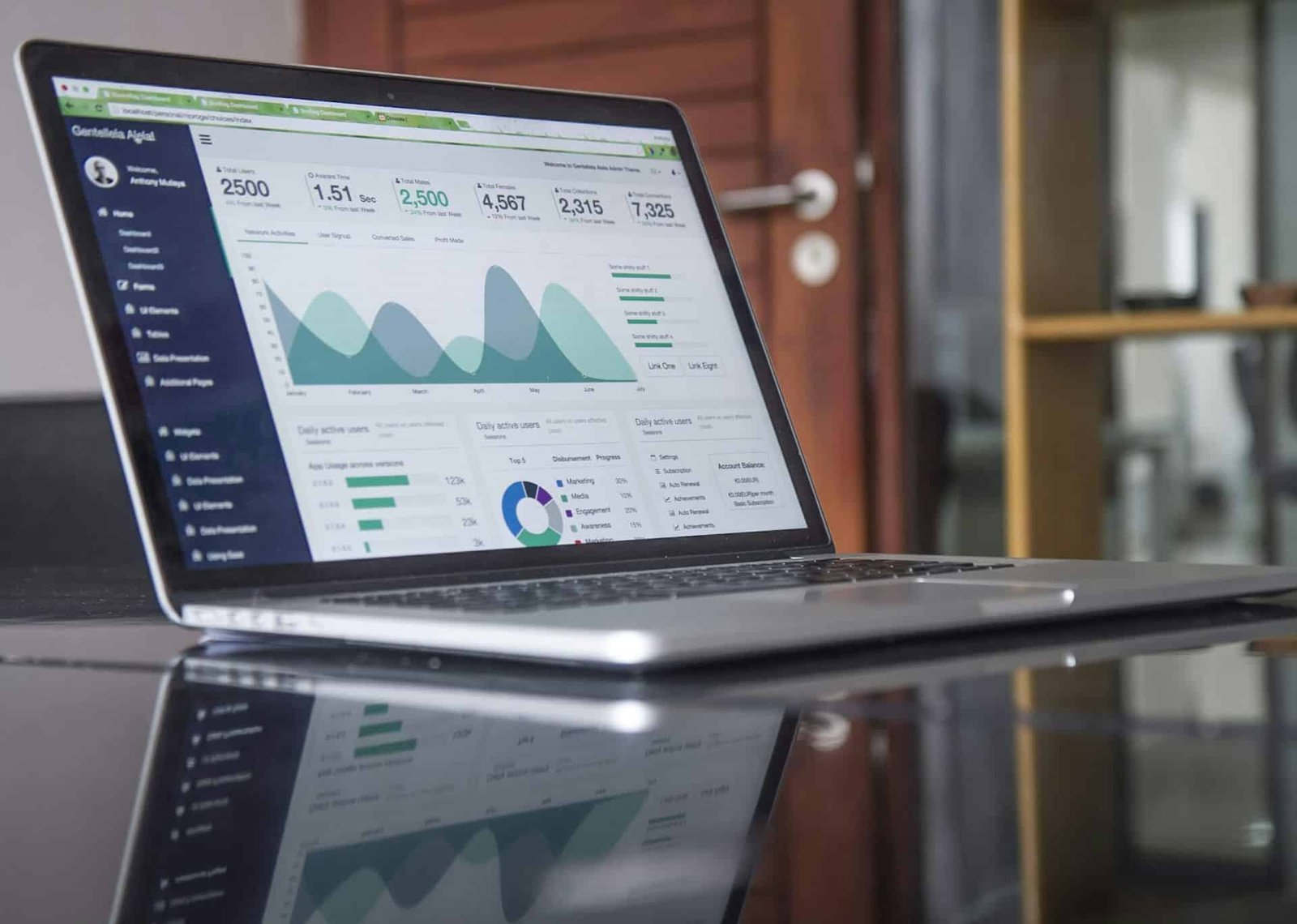
Investing in new tools and strategies is meaningless if you can’t prove they are making your business more money. One of the greatest advantages of AI marketing over traditional methods is its trackability. You can draw a straight line from a specific marketing dollar spent to a specific dollar of revenue earned.
This chapter will cut through the noise of vanity metrics and focus on the key performance indicators (KPIs) that truly measure the health and growth of your auto repair shop. We’ll explain how to build a dashboard to monitor these metrics and how to calculate the true return on investment (ROI) of your AI systems.
The Key Performance Indicators (KPIs) Every Shop Owner Must Track
It’s easy to get distracted by metrics like website visits, Facebook likes, or email open rates. While these can be interesting, they don’t pay the bills. A successful shop owner focuses on the business-critical KPIs that directly impact the bottom line. Your AI marketing efforts should be judged solely on their ability to move these numbers in the right direction.
Here are the essential KPIs you must track:
- Car Count: This is the most fundamental metric, the total number of vehicles you service in a given period (week, month, quarter). Your marketing should steadily increase this number.
- Average Repair Order (ARO): This is the average amount a customer spends per visit. A good AI strategy will not only bring in more cars but also help increase ARO through targeted promotions for needed services.
- Customer Acquisition Cost (CAC): This is the total amount you spend on sales and marketing to acquire one new customer. (Total Marketing Spend / Number of New Customers = CAC). AI aims to lower your CAC by making your marketing more efficient.
- Customer Lifetime Value (CLV): This is the total net profit a customer is projected to generate over their entire relationship with your shop. AI-driven retention strategies are designed specifically to maximize this crucial number.
- Marketing ROI: This is the ultimate measure of success. It calculates the total revenue generated from your marketing efforts divided by the total cost of those efforts.
Focusing on these core metrics will give you a clear and accurate picture of your business’s performance and the effectiveness of your marketing investment.
Building Your AI Marketing Dashboard
The magic of modern AI marketing platforms is their ability to connect all the dots in the customer journey. This is often called “closed-loop reporting,” and it’s something that’s nearly impossible with traditional marketing like print ads or radio spots.
Here’s how it works: An integrated AI system can track a single customer from their very first interaction all the way to the final invoice. It can see that a customer first saw one of your Facebook ads, clicked on it, visited your website, interacted with your chatbot to ask a question, and then booked an appointment through your online scheduler.
When that customer comes in for their service and you create an invoice in your Shop Management System, the platform connects that final revenue amount back to the original Facebook ad that started the journey.
This gives you an incredibly clear view of what’s profitable and what’s not. You can see with certainty that your Google Ads campaign for “brake repair” generated $5,000 in revenue last month on a $1,000 ad spend, while your campaign for “A/C service” only brought in $800.
This allows you to make data-driven decisions, shifting your budget away from underperforming campaigns and doubling down on what works. Many CRMs and agency-provided reporting software, like what we use at Aziel Digital, offer these dashboards as a standard feature.
How to Calculate the True ROI of Your AI Systems
With closed-loop reporting in place, calculating your marketing ROI becomes a simple and powerful exercise. This calculation gives you a clear percentage return, making it easy to justify your marketing budget and compare the performance of different channels.
The formula is straightforward:
(Revenue from Marketing – Marketing Cost) / Marketing Cost ) 100 = ROI %
Let’s use a practical example for an auto repair shop:
- You spent $2,000 in a month on an AI-optimized Google Ads campaign. This is your Marketing Cost.
- Your tracking shows that this campaign directly generated 10 new customer jobs.
- Your shop’s Average Repair Order (ARO) is $500.
- Therefore, the total Revenue from Marketing is 10 jobs, $500/job = $5,000.
Now, you plug these numbers into the formula:
($5,000 – $2,000) / $2,000 ) 100
( $3,000 / $2,000 ) 100
1.5 100 = 150% ROI
This means for every $1 you invested in that campaign, you got $2.50 back in revenue. This is the kind of hard data that empowers you to invest confidently in your shop’s growth. It moves marketing from an expense line item to a profit center.
Having a clear plan and knowing how to measure success are essential. But the final piece of the puzzle is execution. The last chapter addresses the practical question of whether to build this system yourself or partner with an expert to get results faster.
Chapter 6: Why Partnering With An AI Marketing Agency Is Your Fastest Path To Growth
You now have a complete understanding of what AI marketing is, how it can transform your auto repair shop, a roadmap for implementation, and a system for measuring success. The final question is one of resources, should you attempt to build and manage this complex system yourself, or should you partner with a specialized agency?
While a do-it-yourself approach is possible for the most tech-savvy and time-rich shop owners, for the vast majority, partnering with an expert is the most efficient, effective, and ultimately, the most profitable path to growth.
The Hidden Costs and Complexities of a Do-It-Yourself AI Strategy
On the surface, a DIY approach can seem like a way to save money. However, there are significant hidden costs and complexities that can quickly turn it into a source of frustration and wasted investment.
First is the steep learning curve. To properly execute the strategy outlined in this guide, you would need to become proficient in multiple, complex software platforms. SEO tools like Ahrefs or Semrush, Google Ads and its AI bidding strategies, Facebook’s ad manager, a CRM and marketing automation platform, a chatbot builder, and a reputation management tool.
Mastering each of these takes hundreds of hours of learning and practice, time that you are not spending running your shop.
Second is the integration nightmare. The real power of AI marketing comes from making these different tools “talk” to each other and, most importantly, to your Shop Management System.
Getting a website chatbot to pass lead data to your CRM, which then needs to sync with your SMS, can be a significant technical challenge, sometimes requiring custom programming or specialized connectors like Zapier. Without seamless integration, you end up with disconnected data and a broken system.
Third are the direct costs of the tools themselves. Professional-grade software is not cheap. Subscriptions for a full suite of AI marketing tools can easily exceed $1,000 per month before you even spend your first dollar on advertising. Agencies often get access to these tools at enterprise rates, which is more cost-effective than an individual business subscription.
Finally, there’s the “garbage in, garbage out” problem. An AI system is only as good as the data it’s fed and the strategy that guides it. An incorrectly configured ad campaign, a poorly structured predictive marketing workflow, or a flawed data analysis can lead you to make the wrong decisions and waste thousands of dollars.
What to Look For in a Specialized Auto Repair Marketing Agency
If you decide that partnering with an agency is the right path, it’s crucial to choose the right partner. A generic marketing agency that works with dentists and restaurants will not understand the unique challenges and opportunities of the auto repair industry.
Here is a checklist of what to look for in a specialized agency:
- Industry Experience: They should speak your language. Do they understand the difference between ARO and CLV? Do they know what a Shop Management System is and have experience integrating with platforms like Tekmetric, Mitchell1, or ALLDATA? Aziel Digital was founded to serve blue-collar businesses precisely for this reason.
- Proven Case Studies: Ask for proof. They should be able to show you demonstrable results they have achieved for other auto repair shops or similar service businesses. Look for specific numbers, like the 879.6% increase in organic traffic we drove for Hospitals For Humanity or the 150%+ organic traffic growth for Ultimate Reflections Towing.
- Transparency in Reporting: They should provide clear, data-driven reports that focus on the KPIs. You should have a clear dashboard showing exactly what you’re getting for your investment, not a fluffy report full of vanity metrics.
- Full-Service Integration: The best results come from a cohesive strategy. Look for an agency that can handle everything from web design and SEO to PPC and AI marketing automation. This ensures all the pieces are working together seamlessly to achieve your business goals.
How Aziel Digital’s Growth Bundles Provide a “Done-for-You” AI Marketing Engine
This entire guide has been a roadmap for building a modern, data-driven marketing system for your auto repair shop. At Aziel Digital, we’ve designed our services to be the “done-for-you” implementation of that exact roadmap.
Our Growth Bundles are not a collection of separate services, they are a fully integrated, expertly managed AI marketing engine designed to deliver one thing, measurable growth for your business.
Our bundles are structured to align with the phased approach from Chapter 6. Whether you’re just starting and need the foundational fixes or you’re ready to dominate your market with predictive marketing, we have a solution that fits.
When you partner with Aziel Digital, you get access to our team of industry specialists, our entire suite of professional-grade AI software, and our proven strategies for growing auto repair shops. We handle the technology, the strategy, the execution, and the reporting so you can focus on what you do best: leading your team and ensuring your customers get the best service possible.
Stop guessing and start growing. If you’re ready to see how a fully managed AI marketing system can transform your auto repair shop, the next step is simple.
Schedule your free, no-obligation strategy session with our auto repair marketing experts today. We’ll analyze your current online presence, understand your growth goals, and show you a clear, data-backed plan to help you achieve them. Call us at (888) 708-9321 or book your consultation directly at https://azieldigital.com/free-consultation/.
Frequently Asked Questions
How Is The Auto Repair Industry Changing With Technology?
The auto repair industry is changing dramatically, primarily in two areas, in the bay and in the marketing office. In the bay, vehicles are becoming more complex with advanced driver-assistance systems (ADAS) and electric vehicle (EV) technology, requiring new diagnostic tools and technician training.
In marketing, the customer journey is now almost entirely digital, starting with a Google search. This requires shops to master online visibility, reputation management, and data-driven communication, where technologies like AI are becoming essential for competing effectively.
Why Is Marketing So Hard For Independent Auto Repair Shops?
Marketing is challenging for independent shops because owners are typically experts in auto repair, not digital marketing. They are also extremely busy with the day-to-day operations of the business, managing staff, ordering parts, and ensuring quality control.
This leaves very little time to learn and execute complex, ever-changing strategies in areas like SEO, Google Ads, and social media, which is why many shops struggle to achieve a consistent return on their marketing efforts.
Is AI Marketing Too Expensive For A Small Auto Shop?
AI marketing is scalable and does not have to be expensive. A small shop can start with foundational, low-cost tools as outlined in Phase 1 of our roadmap, such as a website chatbot and an automated review request system, for as little as $50-$250 per month.
These tools provide immediate value by capturing leads and improving reputation. As the shop grows, it can reinvest profits into more advanced AI-powered advertising and retention campaigns, ensuring the investment always aligns with the business’s budget and growth stage.
Do I Need To Be A Computer Expert To Use AI Marketing For My Shop?
No, you do not need to be a computer expert. Most modern AI marketing tools are designed with user-friendly interfaces, and many platforms are built specifically for non-technical business owners.
Furthermore, partnering with a specialized agency like Aziel Digital removes the technical burden entirely. The agency handles the setup, integration, and management, allowing you to benefit from the technology without needing to become an expert in it.
What’s The Difference Between AI And Machine Learning For A Mechanic?
Artificial Intelligence (AI) is the entire toolbox, representing the broad concept of making machines smart. Machine Learning (ML) is one of the most important tools in that box, specifically, the wrench you use to find patterns.
ML is the process where the computer learns from your shop’s data (like service history) to make predictions (like which customer is due for a brake job soon). So, ML is a specific technique that makes the broader goal of AI possible.
Will An AI Chatbot Sound Like A Robot And Annoy My Customers?
Modern AI chatbots, powered by Natural Language Processing (NLP), are designed to sound much more natural and conversational than older, robotic versions. They can be programmed with your shop’s specific tone and personality. The key is to set clear expectations.
A good chatbot introduces itself as a digital assistant and is designed to handle common, straightforward questions quickly. For complex issues, it should seamlessly hand off the conversation to a human, ensuring customers never feel trapped or frustrated.
What Is The Best AI Tool For Getting More 5-Star Reviews?
The best AI tool for getting reviews is an automated reputation management platform. Services like Birdeye, Podium, or similar systems integrate with your Shop Management System.
They automatically detect when a repair order is closed and then send a personalized text or email to the customer a short time later, asking for feedback and providing a direct link to your Google Business Profile. This “ask” at the peak of customer satisfaction dramatically increases the quantity and quality of reviews you receive.
Can AI Integrate With My Existing Shop Management Software Like Tekmetric Or Shop-Ware?
Yes, absolutely. This integration is one of the most critical parts of an effective AI marketing strategy. Many modern AI marketing platforms and CRMs are built with direct integrations for popular Shop Management Systems (SMS) like Tekmetric, Shop-Ware, Mitchell1, and ALLDATA.
For those that don’t have a direct connection, an integration tool like Zapier can often be used to connect the systems, ensuring that your customer and service data flows automatically to your marketing platform.
How Can I Use AI To Predict When A Customer’s Car Needs Service?
You can use AI for predictive maintenance marketing by connecting an AI-powered CRM to your Shop Management System. The AI analyzes each customer’s service history, vehicle make, model, age, and last recorded mileage. It compares this data against manufacturer-recommended service intervals and patterns it has learned from thousands of other vehicles.
When it identifies an upcoming service need, like a 60,000-mile transmission service, it can automatically trigger a personalized email or text campaign to that specific customer with a relevant offer.
What Is Customer Segmentation And Why Does It Matter For My Shop?
Customer segmentation is the process of dividing your customer list into smaller groups based on shared characteristics. AI makes this process dynamic and powerful. Instead of one generic email blast, you can send different messages to different segments, a “thank you” special to your high-spending VIPs, a “we miss you” offer to customers who haven’t visited in a year, and an educational email about alignments to customers who only ever get oil changes.
This matters because personalized, relevant marketing gets much higher response rates and builds stronger customer loyalty, as confirmed by numerous studies from firms like McKinsey.
How Much Should An Auto Repair Shop Budget For AI Marketing?
A common benchmark for a service business’s marketing budget is between 5% and 10% of total revenue, but this can vary. A shop in a heavy growth phase might invest more, while a well-established shop might invest less.
The phased roadmap in this guide provides a practical approach: start small in Phase 1 ($50-$250/mo) to build a foundation, then scale up your investment in Phase 2 ($500-$2,500+/mo) and Phase 3 ($1,000-$5,000+/mo) as you begin to see a clear return on investment from your initial efforts.
What Is A Better Use Of AI, Getting New Customers Or Keeping Existing Ones?
Both are essential, but many experts argue that keeping existing customers provides a higher ROI. Acquiring a new customer can cost five times more than retaining an existing one, according to data cited by the Harvard Business Review.
Therefore, the most profitable use of AI is often in retention-focused activities like predictive maintenance marketing and smart segmentation. However, a healthy business needs both, so a balanced strategy that uses AI for both efficient acquisition via smart ads and SEO, and automated retention is the ideal approach.
Can AI Help Me Write My Facebook Posts And Website Content?
Yes, generative AI tools like Jasper or ChatGPT are excellent for helping you create written content. They can overcome writer’s block by providing first drafts for Facebook posts, blog articles about common car problems, or service page descriptions for your website.
The key is to use AI as an assistant, not a replacement. You must always review, edit, and add your own human expertise to ensure the content is accurate, helpful, and reflects your shop’s unique voice, which is crucial for building trust with customers and ranking well on Google.
How Do I Measure The ROI Of AI Marketing To See If It’s Working?
You measure ROI by tracking the revenue generated by your marketing efforts and comparing it to the cost. The formula is ( (Revenue from Marketing – Marketing Cost) / Marketing Cost ) 100.
To do this accurately, you need a system that provides “closed-loop reporting,” connecting data from your ad platforms and website all the way to the final invoice in your Shop Management System. This allows you to say with certainty, “I spent $1,000 on Google Ads, and it produced $5,000 in repair jobs,” proving a positive return on your investment.
What’s The First Step I Should Take To Get Started With AI Marketing Today?
The best first step is to focus on your existing data and your online reputation. Begin by auditing and cleaning up the customer contact information (emails, phone numbers) in your Shop Management System, as this data is the fuel for everything else.
Simultaneously, implement an automated system to start requesting reviews from every customer after their service. These two foundational actions cost very little but have an immediate and significant positive impact on your business.
Will AI Marketing Replace My Service Advisor?
No, AI marketing will not replace your service advisor. Its purpose is to make your service advisor more effective and efficient. AI is designed to handle the repetitive, low-value tasks like answering basic questions after hours, sending appointment reminders, and transcribing voicemails.
This frees up your human service advisor to focus on high-value activities that require their expertise and personal touch, such as building relationships with customers, clearly explaining complex repairs, and selling needed services in person.