
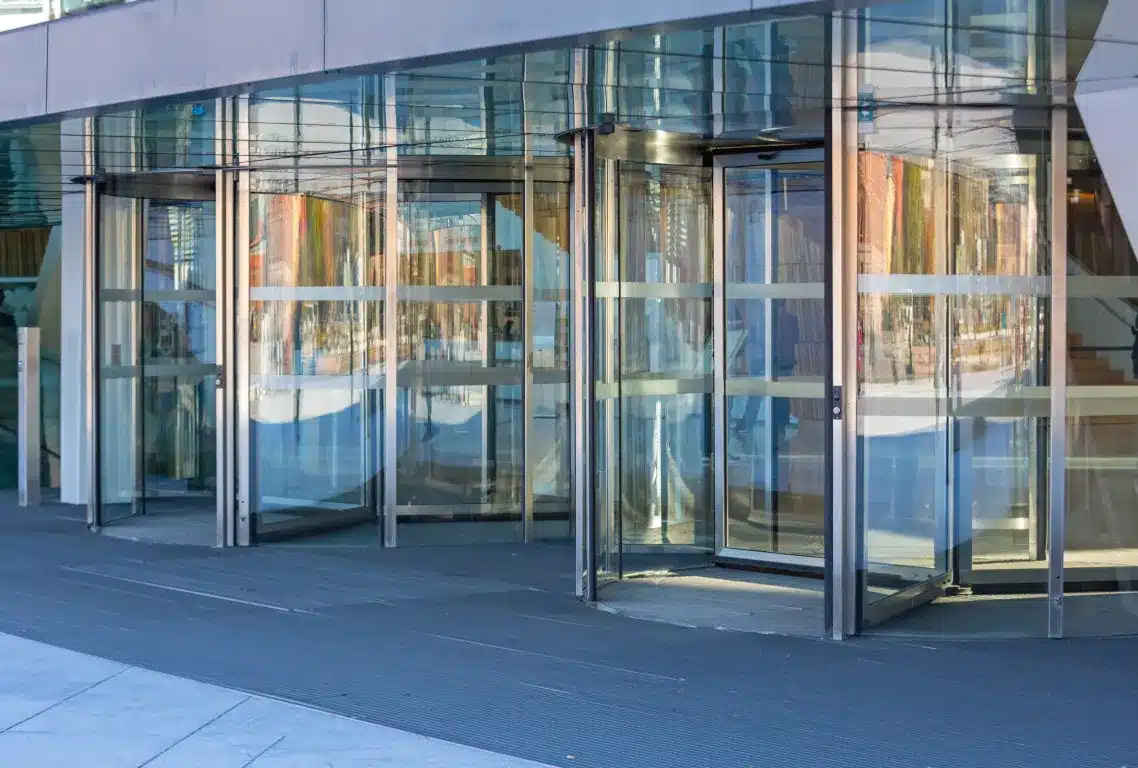
Automatic doors used to be symbols of sci-fi futures or the mark of a high-end luxury hotel. In today’s world, they represent something far more practical, basic hygiene and essential accessibility. The glass barriers at the entrance of a hospital or a shopping mall aren’t just entry points anymore, they act as the first line of defense for public health and energy conservation. Marketing these systems effectively means flipping the script from convenience to necessity. You need to speak directly to the urgent needs of facility managers staring down massive energy bills and business owners who stay up at night worrying about ADA lawsuits.
Key Notes
- The global appetite for automatic doors hit a massive $22.4 billion in 2021.
- Local SEO strategies are responsible for capturing 80% of high-intent emergency repair searches.
- If you get your product specified during the design phase, your chances of winning the bid jump by over 50%.
- Revolving doors exchange air 8 times less than sliding doors, saving facilities thousands of dollars annually.
- Holding an AAADM certification is a powerful trust signal for clients who are worried about liability.
- Video marketing can raise your qualified leads by 66% simply by visually demonstrating how the tech works.
- Retrofit kits provide a budget-friendly entry point for facility managers who need to modernize without breaking the bank.
Advanced Marketing Strategies for Automatic and Revolving Door Specialists
The way we view automatic doors has fundamentally changed, they are no longer just a ‘nice-to-have’ luxury but a critical piece of infrastructure. Procurement decisions are now driven just as much by hygiene concerns as they are by accessibility laws. Grand View Research valued the global automatic door market at roughly USD 22.4 billion in 2021, and this sector shows no signs of slowing down. Analysts project that the market will continue to expand at a compound annual growth rate (CAGR) of about 7.8% from 2022 to 2030.
While urbanization and rapid infrastructure development are fueling this expansion, it is consumer behavior that dictates which technologies win. Post-pandemic data shows that 60% of consumers explicitly prefer touchless technologies in public spaces. This preference creates an immediate, tangible demand for wave-to-open switches and hands-free sensors in places like hospitals, airports, and retail centers. Your marketing needs to highlight this shift. You aren’t just selling a door, you are selling the public confidence that a touchless environment provides. Investing in aggressive marketing now ensures you capture this demand before your competitors solidify their foothold.
Dominate Local Search to Capture High-Intent Emergency Repairs
When an automatic door fails, it is rarely just a minor inconvenience. It represents a security breach, a massive loss of heating or cooling, or a potential ADA violation. These failures trigger emergency situations where a facility manager needs a solution right now. While organic search traffic usually converts at around 2.4%, local search traffic for urgent services often sees conversion rates climb as high as 80%.
Optimizing Your Google Business Profile
Your Google Business Profile (GBP) is your primary asset for capturing this urgent traffic. Generic listings tend to get lost in the noise. You need to list specific services such as ‘AAADM Inspection,’ ‘Storefront Door Repair,’ and ‘Automatic Operator Troubleshooting.’ Considering that 46% of all Google searches are looking for local information, specificity is key. If your profile doesn’t explicitly state that you repair the specific brand or type of door the customer is struggling with, they will simply call the next shop on the list.
Creating specific landing pages for different geographic locations amplifies this effect. Having a single ‘Service Area’ page often isn’t enough. You should create individual pages for ‘Automatic Door Repair in Chicago’ and ‘Automatic Door Repair in Evanston.’ This targets long-tail keywords effectively. Statistics show that ‘Near me’ or ‘close by’ type searches have grown by more than 900% over two years. Furthermore, 88% of searches for local businesses on a mobile device result in a call or visit within 24 hours. You need to be visible the moment that search happens.
Winning Commercial Bids Through Pre-Construction Specifications
Trying to market to general contractors after the blueprints are already dry is essentially a fight for scraps. The most profitable strategy involves reaching architects and General Contractors (GCs) during the design phase. Getting your specific product specified in the Design Phase increases the likelihood of winning the bid by over 50% compared to trying to bid as an ‘or equal’ substitute later on.

Building Relationships with Architects
You can identify new projects early by using platforms like the Dodge Construction Network for leads or ConstructConnect for bidding opportunities. Once a lead, such as a new hospital wing, is identified, find the architect of record. Send them a ‘Lunch and Learn’ invitation focused on the latest safety features of revolving doors or ANSI standards. Use The Blue Book for directory listings to ensure you are found when they go looking for vendors.
Retention matters just as much as acquisition. Utilize CRM and Field Service Software like ServiceTitan or Jobber to automate annual AAADM inspection reminders. This keeps your company top-of-mind for the next project while securing recurring revenue from maintenance contracts.
Selling Sustainability and the ROI of Revolving Doors
Facility Managers and CFOs are focused on the bottom line. Marketing revolving doors requires a financial argument, not just an aesthetic one. Focus on the ‘Payback Period’ rather than just the initial installation cost. The ‘Always Open, Always Closed’ concept explains how revolving doors act as an airlock. They prevent conditioned air from escaping and raw outside air from entering.
The Data Behind Air Infiltration
Data visualization is your best ally here. Show charts that compare air exchange rates. Revolving doors exchange 8 times less air than swinging or sliding doors. An MIT study by Cullum and Lee found that if everyone used revolving doors, energy savings would comprise roughly 1.5% of total energy used for heating and cooling.
Translate this into hard currency. A single revolving door can save approximately $2,600 to $7,000 per year in energy costs compared to swing doors. This positioning moves sustainability away from vague greenwashing and turns it into a hard cost-saving mechanism for HVAC reduction.
Positioning Your Brand as a Compliance and Safety Consultant
Business owners often fear lawsuits more than they fear repair bills. Use this to your advantage. Position your company as a Compliance Consultant rather than just a team of mechanics. The American Association of Automatic Door Manufacturers (AAADM) certification is your critical trust badge. It signals that you understand the legal requirements that keep your clients out of court.
Leveraging AAADM Certification
Reference specific standards in your marketing materials. Cite ANSI/BHMA A156.10 for power-operated pedestrian doors and ANSI/BHMA A156.19 for low-energy operators. Remind potential clients that the Americans with Disabilities Act was passed in 1990, making accessibility a strict legal requirement, not merely a suggestion.
Create educational content to capture email leads. A blog post titled ‘Is Your Entryway ADA Compliant?’ or a downloadable ‘Daily Safety Checks’ checklist offers immense value. It establishes authority and naturally opens the door for a paid inspection conversation.
Visual Marketing with Video Content and Retrofit Demonstrations
Automatic doors are all about movement. Static images fail to convey smooth operation, silent motors, or the speed of a sensor. Video is the only medium that truly does the product justice. Video marketers get 66% more qualified leads per year according to Wyzowl. Viewers retain 95% of a message when they watch it in a video, compared to a meager 10% when reading text.
Different platforms require different approaches. Use LinkedIn to target Facility Managers and Architects with B2B content about specifications and energy savings. Use YouTube for ‘How-to’ repair videos and product demos to establish technical authority. Focus visual content on Retrofit Kits. Show a time-lapse of an old manual door being converted to an automatic operator without changing the frame. This demonstrates a cost-effective solution visually. Consider a content series like ‘Troubleshooting Tuesdays,’ where a technician explains error codes on common operators like Stanley or DormaKaba.
The automatic door industry is evolving rapidly, driven by urgent hygiene demands and rising energy costs. Success requires more than just technical skill, it demands a strategic marketing approach that addresses safety, compliance, and ROI. Aziel Digital specializes in translating these technical advantages into revenue. From high-converting local SEO to compelling video strategies, we build the digital infrastructure blue-collar businesses need to dominate their market.
Frequently Asked Questions
What is the current market size of the automatic door industry?
The automatic door market is a multi-billion dollar sector driven by safety needs and modernization.
Grand View Research valued the global automatic door market at approximately USD 22.4 billion in 2021. The market is projected to grow at a compound annual growth rate (CAGR) of 7.8% from 2022 to 2030. This growth indicates a massive opportunity for installers who position themselves correctly. The rising demand is fueled by urbanization and the post-pandemic need for touchless entry, making now the critical time to invest in acquiring market share.
How can I generate more commercial leads for automatic door installation?
Generating commercial leads requires intervening before the general bidding process even begins. Targeting architects and General Contractors during the design phase increases the likelihood of winning a bid by over 50%. Utilizing platforms like the Dodge Construction Network allows you to identify projects like hospital wings or office complexes early on. By offering ‘Lunch and Learn’ sessions or consulting on specifications, you move from being a commodity bidder to a trusted partner. This ensures your specific products are written into the blueprints, making it difficult for competitors to substitute cheaper alternatives later.
Why is local SEO important for door repair businesses?
Local SEO is the primary driver for high-intent, emergency service calls. Data indicates that 46% of all Google searches are seeking local information, and ‘near me’ searches grew by 900% over two years. Emergency repairs for security or HVAC issues are immediate needs, meaning customers rarely look past the top three results in the ‘Local Pack.’ Optimizing your Google Business Profile with specific services like ‘AAADM Inspection’ ensures you appear when facility managers are desperate. With 88% of local mobile searches resulting in a call within 24 hours, ignoring local SEO effectively surrenders your most profitable emergency revenue to competitors.
What are the benefits of revolving doors regarding energy efficiency?
Revolving doors act as an airlock, significantly reducing the HVAC load. Studies show that revolving doors exchange 8 times less air than sliding or swinging doors. An MIT study by Cullum and Lee highlighted that if revolving doors were universally adopted, energy savings would impact about 1.5% of total heating and cooling energy used. This translates to financial savings of $2,600 to $7,000 per year for a single building. Marketing this ROI allows you to sell revolving doors not just as an entry solution, but as a capital investment that pays for itself through reduced utility bills.
How does AAADM certification help in marketing door services?
AAADM certification acts as a primary trust signal and a tool for risk mitigation for clients. The American Association of Automatic Door Manufacturers (AAADM) certification proves a technician knows current safety standards. Promoting this certification distinguishes your brand from general handymen who lack the training to certify doors for public use. For facility managers, hiring an AAADM-certified technician is a liability shield against potential lawsuits. Marketing your compliance expertise attracts risk-averse commercial clients who prioritize safety over the lowest bid.
What is the difference between ANSI A156.10 and A156.19 standards?
These standards differentiate between full-power and low-energy door operators. ANSI/BHMA A156.10 covers full-power pedestrian doors, which require safety sensors and guide rails due to their speed and force. ANSI/BHMA A156.19 applies to low-energy operators, often used for ADA accessibility, which move slowly and stop upon obstruction without needing complex sensors. Understanding and marketing this distinction helps clients choose the right hardware for their traffic levels. It positions your company as a knowledgeable consultant capable of navigating complex code requirements for different building zones.
Which software is best for managing automatic door maintenance contracts?
Field service management software is essential for retention and efficiency. Platforms like ServiceTitan and Jobber are industry leaders for tracking customer assets and scheduling. They allow you to automate reminders for annual AAADM inspections, ensuring you never miss a recurring revenue opportunity. Using these tools improves the customer experience by providing digital estimates and service history. This level of organization builds trust with commercial facility managers who require detailed documentation for their own compliance records.
How do I target architects for door specifications?
Architects need education and solutions, not just sales pitches. The most effective method is providing ‘Lunch and Learn’ presentations that count toward their continuing education credits. Focus on topics like ‘Safety Standards in Automatics’ or ‘Energy Efficiency in Revolving Doors.’ By becoming a resource during the design phase, you ensure your products are specified in the initial plans. This relationship-based marketing secures long-term work that bypasses the low-bid environment of public tenders.
What is the ROI of installing a revolving door compared to a sliding door?
The ROI is found in energy conservation and maximizing usable floor space. While installation costs are higher, a revolving door saves thousands annually in HVAC costs by maintaining the building’s envelope. The ‘Always Open, Always Closed’ mechanism prevents drafts,keeping lobbies comfortable and reducing the load on heating systems. Additionally, revolving doors allow for the use of lobby space closer to the entrance, increasing the effective square footage of a commercial property. These long-term financial benefits often outweigh the initial price difference within a few years.
How can video marketing improve sales for door specialists?
Video conveys the motion and quality of automatic doors better than any static image ever could. According to Wyzowl, video marketers get 66% more qualified leads per year. Videos demonstrating smooth operation, silent motors, or retrofit installations provide proof of capability that text cannot match. Viewers retain 95% of a message when watching video. Using platforms like YouTube for troubleshooting guides builds authority, while LinkedIn videos targeting architects can showcase aesthetic integration and design possibilities.
What are the most effective keywords for automatic door repair?
Effective keywords combine urgency, location, and specific service types. High-intent keywords include ‘Automatic door repair near me,’ ‘Emergency storefront glass repair,’ and ‘Commercial door service [City Name].’ Long-tail keywords like ‘Stanley automatic door troubleshooting’ or ‘AAADM certified inspector’ target customers further down the sales funnel. Focusing on these specific terms attracts customers who are ready to buy, rather than those just browsing. It filters out residential garage door searches and zeros in on commercial facility managers with immediate needs.
How has the pandemic impacted the demand for touchless door technology?
The pandemic permanently shifted consumer expectations toward hygiene and touchless interaction. Data shows 60% of consumers now prefer touchless technologies in public spaces. This has driven a surge in demand for ‘wave-to-open’ switches and retrofit kits that convert manual doors to automatic ones without replacing the entire entrance. Marketing this as a hygiene necessity rather than a luxury allows door specialists to tap into budgets allocated for health and safety. It effectively expands the market to include small businesses and retail stores that previously did not consider automation.