
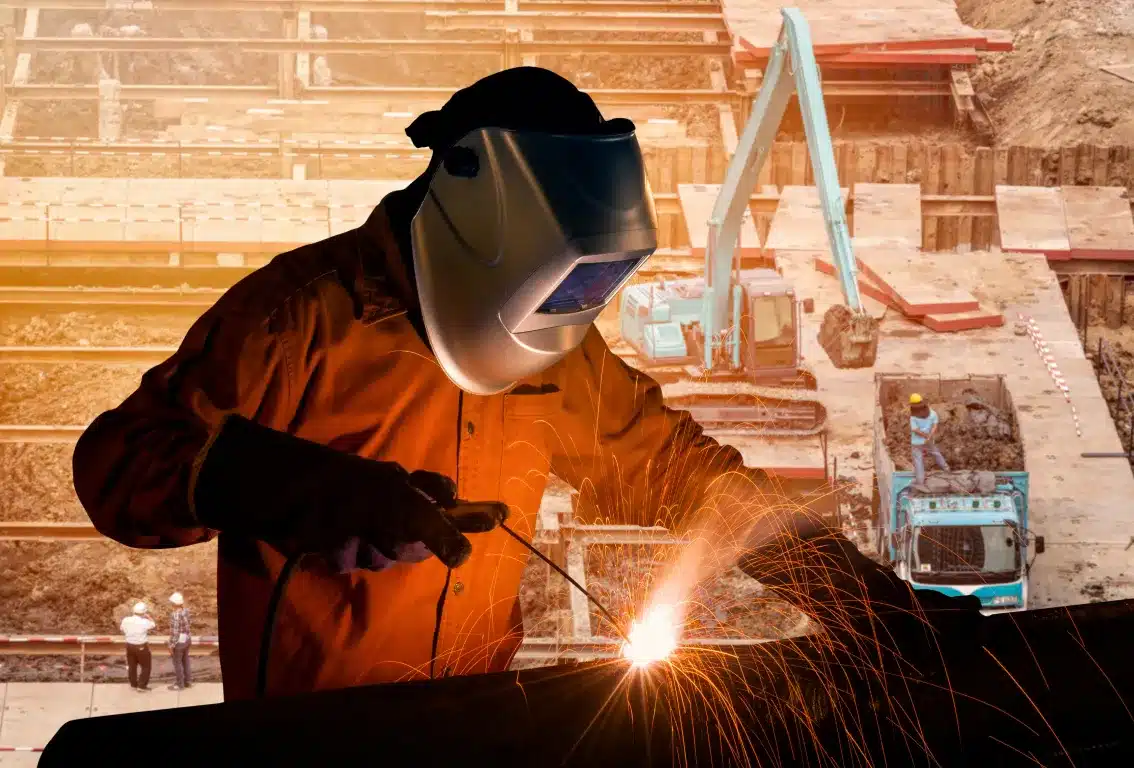
The days of winning six-figure contracts with just a firm handshake are pretty much over. These days, general contractors and project managers don’t dust off the phone book, they pull out their smartphones and search for certified, reliable fabricators they can count on. If your business has a weak or non-existent online presence, you’re basically invisible to the very people who sign the checks. You could be the best welder in the entire state, but you can still go broke if nobody knows you exist. It’s time to build a marketing plan that’s every bit as solid as your welds.
Key Notes
- Think of your website as your best salesperson, one who works 24/7. It needs to look great on a phone, be secure, and be designed specifically to win over project managers.
- Showing up at the top of local Google searches is non-negotiable for landing jobs in your area. This means mastering your Google Business Profile and making sure your info is correct everywhere online.
- Figure out what makes you different and shout it from the rooftops. Are you an expert in a specific process? Do you have top-tier certifications like AWS or AISC? Is your safety record spotless? That’s what sets you apart.
- Quit chasing every small job that comes your way. Instead, focus on the big fish,the high-value B2B clients in areas like commercial construction, industrial manufacturing, or major infrastructure work.
- Get on LinkedIn and start connecting directly with the people who make hiring decisions. Then, back up those online connections by shaking hands and building real relationships at industry events.
- Don’t just throw money at marketing and hope it works. Use tools like Google Analytics and a CRM to track your return on investment (ROI) and make sure every dollar you spend is bringing in profitable work.
- Stop thinking of marketing as just another expense. It’s an investment in creating a steady, predictable stream of the high-paying jobs you actually want.
Building a Website That Converts GCs and Project Managers
Let’s be clear, your website is the most powerful marketing tool you have. It’s out there 24/7, selling your services to general contractors, facility managers, and engineers while you’re on the job. This isn’t just an online brochure, it’s a machine for generating high-value leads. For it to actually work, it has to look professional, pop up instantly on a smartphone, and be totally secure. Google actually rewards sites using HTTPS security protocols with better search rankings, so this is one thing you can’t skip.
When you consider that Nectafy data shows 88% of people who look up a local business on their phone will call or visit within a day, your site has to deliver a perfect experience on any screen. You need to spell out exactly what you offer and why you’re the best choice, right on the homepage, answering a potential client’s biggest questions right away.
Essential Pages Every Welding Contractor Website Needs
A top-notch contractor website is clean, organized, and dead simple for a busy project manager to navigate. You really only need a few key pages to build that crucial credibility and guide them to pick up the phone or send an email. These pages all work together to tell your company’s story and prove you have what it takes.
Your website must include these key sections,
- Homepage- This is your digital handshake. It has to tell a visitor in a split second what you do and why you’re their best option. A clear, powerful headline like ‘AWS-Certified Structural Steel & Custom Fabrication for Commercial Projects’ immediately lets them know they’re in the right place.
- Services- Don’t just throw up a list of what you do,describe it. Create separate, dedicated sections for things like MIG welding, TIG welding, custom fabrication, structural steel erection, and your mobile repair services. Take the time to explain the applications and benefits of each one.
- Portfolio/Case Studies- This is where you prove you can walk the walk. Show off high-resolution photos and videos of your best work. For each project, include a short description of the job, any challenges you overcame, and some positive feedback from the client.
- About Us- People hire people they trust. This is your chance to build that connection. Introduce your key team members and talk about their experience. Make sure to prominently display your most important certifications, like AWS Certified Welder, WABO, and ASME, to show you meet the highest industry standards.
- Contact Us- Don’t make them hunt for your contact info. Make it laughably easy for a GC to get in touch. Your phone number should be big and bold, you should have an email address listed, and a simple contact form right there on the page.
Mastering Google and Online Business Directories
Picture this, a project manager is in a bind and needs a local fabricator for an urgent job. What’s the first thing they do? They pull out their phone and Google it. Your business absolutely has to show up at the top of those local results. To make that happen, you need a focused strategy that starts with your Google Business Profile and includes making sure your company’s information is perfectly consistent everywhere it shows up online. According to Statista, Google is king, handling over 92% of all global search traffic. Being visible there isn’t just a good idea, it’s the main way new clients who are actively looking for your skills will ever find you.

Optimizing Your Google Business Profile
Think of your Google Business Profile (GBP) as your new digital storefront. In a local search, it’s often the very first impression a potential client will have of your business. A complete, optimized profile builds trust right off the bat. You have to make absolutely certain your business name, address, and phone number (what we call ‘NAP’) are 100% accurate. Go through and fill out every single section, including your hours and a detailed list of all the services you offer. Upload high-quality photos of your team working, your shop, and your finished projects. Most importantly, actively ask your happy clients to leave you a review, and then make sure you respond to every single one,the good and the bad. It shows you’re engaged and that you genuinely care about your reputation.
Stand Out in a Crowded Market, Defining Your Unique Advantage
Let’s be honest, in the construction and fabrication industry, trying to be the cheapest guy is a losing game. It’s a race to the bottom. Instead, you need to compete on value. You have to pinpoint what makes your company the clear-cut, superior choice and then talk about it constantly. This is your unique selling proposition (USP). Maybe it’s your deep expertise in a complex welding process, your advanced certifications, your bulletproof quality control system, or your impeccable safety record. For the big-ticket B2B clients, differentiators like these are way more important than a small difference in price. When you consider that the cost of poor quality can be as high as 15% of a project’s total value, as noted by McKinsey, proving that you’re reliable is one of the most powerful sales tools you have.
Highlighting Your Certifications and Safety Record
In the world of big commercial and industrial contracts, trust is everything. And you build that trust by showing them you’ve got the qualifications to back up your claims. Promoting your team’s and your company’s credentials isn’t just smart marketing, it’s often a requirement just to get your foot in the door to bid on certain jobs. You should feature these qualifications prominently on your website and in all your marketing materials.
Make a point to showcase your qualifications, including,
- Individual Certifications- Show off the skills of your crew. List credentials like AWS Certified Welder (CWI, SENSE) and any specific process certifications your team holds, such as for AWS D1.1 (Steel), D1.2 (Aluminum), or D1.6 (Stainless Steel).
- Company Certifications- Does your whole shop hold certifications like ISO 9001 for quality management or is it an AISC certified fabricator? That’s a huge deal and a major selling point that signals a serious commitment to excellence.
- Safety Training- Safety is a massive selling point. Highlight that your team holds OSHA 10 or OSHA 30-hour cards. If you work in specific industries, mention credentials like MSHA for mining. Then, back it up with hard numbers, like ‘Zero lost-time incidents in over 50,000 man-hours.’
Pinpointing and Winning Your Ideal B2B Fabrication Clients
It’s time to stop wasting your energy and marketing dollars on dead-end leads. The real key to profitable growth is to zero in on the specific industries and decision-makers who have an ongoing need for your specialized skills. You have to get inside their heads and understand their biggest worries,hitting deadlines, keeping everyone safe, controlling costs, and meeting all the regulations,and then craft your marketing message to show how you solve those specific problems. With the U.S. construction industry projected to grow by 5.4% in 2024 according to the Dodge Construction Outlook, and manufacturing being a huge part of the national GDP as reported by the BEA, there is more than enough high-value work out there for contractors who market themselves the right way.
Segmenting the Market for High-Potential Niches
You can’t be everything to everyone, so don’t even try. Instead, aim your marketing firepower where you know you have an edge and can charge what you’re really worth. Take a look at the market and break it down into different segments, then decide which ones are the best fit for your skills, your equipment, and your goals. Some high-potential niches could be commercial construction for structural steel, public infrastructure projects like bridges and transit hubs, industrial manufacturing plants that need process piping and equipment repair, marine fabrication and ship repair, or even high-end architectural metalwork for luxury homes and buildings. Choose your battleground, and then dominate it.
Building a Powerful Network on LinkedIn and in the Real World
Your skills on the torch are what get the job done, but it’s your network that gets you the job in the first place. That’s why you need a one-two punch for networking. Use B2B-focused platforms like LinkedIn to show off your expertise and connect directly with the key players you might not meet otherwise. Then, seal the deal by reinforcing those digital connections with actual face-to-face interactions at industry events.
This powerful combination builds the kind of high-trust relationships that lead to long-term partnerships and a steady flow of profitable contracts. According to LinkedIn’s own data, a staggering 80% of B2B leads come from their platform. On top of that, Salesforce research shows that companies with strong referral programs have conversion rates that are 70% higher, proving just how valuable a great network really is.
A B2B Strategy for LinkedIn
Don’t make the mistake of thinking LinkedIn is just for people looking for a desk job. It’s an incredibly powerful tool for contractors. Start by making sure your personal and company profiles are complete and look professional. Your profile should be like a highlight reel, showing off your certifications, specializations, and project history. The key is not just to collect connections, but to actually engage with people. Share high-quality photos and videos of your projects,before-and-after shots are always a big hit.
Post short articles explaining a complex welding process or highlighting a new safety procedure you’ve put in place. Most importantly, interact with the content that general contractors, architects, engineers, and project managers in your target market are posting. Leave thoughtful comments on their posts. This is how you slowly but surely build a reputation as a credible expert they can trust.
Tracking Your Marketing ROI
You wouldn’t start a project without a blueprint, so don’t run your marketing without looking at the data. Just guessing if your marketing is working is the fastest way to burn through your cash. You have to track key performance indicators (KPIs) so you can make smart, data-driven decisions. By keeping an eye on things like your website traffic, where your leads are coming from, how many of your proposals turn into jobs, and what it costs you to land a new client, you can put your money where it’s actually making you money. Research from CoSchedule shows that business owners who actively track their return on investment are far more likely to hit their goals.
Using Google Analytics to Understand Your Website Traffic
Google Analytics is a free tool, and frankly, it’s a goldmine of information about how your website is performing. You can install it on your site and immediately see how many people are visiting, where they’re coming from (like a Google search, social media, or a link from another site), and which of your pages they’re spending the most time on. This data tells you exactly what’s resonating with potential clients. If your ‘Mobile Welding Services’ page is getting a ton of traffic from search, you know people are actively looking for that service, and you can double down on it. You can also set up conversion goals to track how many visitors fill out your contact form or click to call your business, which literally draws a straight line from someone visiting your website to a new lead for your business.
You’ve worked hard to build a reputation based on precision, quality, and reliability. Your marketing deserves to be held to that same high standard. By putting a strategic plan in place,one that combines a high-performance website, smart local SEO, and active B2B networking,you can finally stop the feast-or-famine cycle and create a predictable pipeline of the high-margin jobs you want. You’re a master of your trade, but that doesn’t mean you have to be a digital marketing guru too.
That’s where we can help. Here at Aziel Digital, we specialize in helping blue-collar businesses just like yours become the dominant players in their local markets. We build websites that actually convert project managers, run SEO campaigns that get you to the top of Google, and develop marketing strategies that deliver a real, measurable return on your investment. Stop losing good bids to competitors who just happen to have better marketing. Let’s build a plan to secure your company’s future. Contact us today to get started.
Frequently Asked Questions
How do I get clients for my welding business?
The best way to keep a steady flow of work coming in for your welding business is to mix a strong online presence with smart, targeted networking. First, your online foundation has to be rock-solid. That means having a professional website that looks and works great on a phone and is set up to rank high in local search results. Think about it, a huge number of people use their phones for local searches, and Nectafy reports that 88% of them will call or visit a business within 24 hours.
Second, you need to be where your B2B clients are. With 80% of B2B leads coming from LinkedIn, according to their own marketing guide, it’s a crucial place to connect with general contractors and project managers. The main takeaway is to stop waiting for the phone to ring and start building a system that actively brings your ideal customers to you, both online and off.
What is the best way to advertise a welding company?
The smartest way to advertise is to put your budget where potential clients are already looking for your services. This means putting your money into search engine marketing and B2B social media instead of broad, old-school methods like radio or print ads. Google is the undisputed champion, handling over 92% of all search traffic according to Statista. Running focused Google Ads for search terms like ‘commercial steel fabricator in [your city]’ puts you right in front of a GC at the exact moment they need your help.
When it comes to reaching specific decision-makers, LinkedIn advertising is incredibly efficient because it lets you target people by their job title, company, and industry, making sure your portfolio lands in front of the right eyes. This targeted digital strategy gets the most out of every advertising dollar by cutting out the waste and focusing only on high-potential leads.
How do I market myself as a mobile welder?
When you’re marketing a mobile welding business, you need to hammer home three things, speed, reliability, and local visibility. Your biggest selling point is that you go to the job site, so your marketing has to scream convenience. Your number one priority should be local SEO. That means optimizing your Google Business Profile with ‘mobile welding’ as a main service and clearly defining your service area. When a piece of heavy equipment breaks down, the operator is going to search ’emergency welding repair near me’ on their phone. You have to be the first name they see. Your website and ads should be full of pictures of your service rig and should emphasize how quickly you can respond to emergency repairs. It’s also a great idea to build direct relationships with businesses that often need on-site work, like construction companies, farm managers, and trucking companies.
How do you write a business plan for a welding and fabrication company?
A strong business plan for a welding and fabrication company needs to cover several key areas, an executive summary (a quick overview), a company description, a market analysis, your organization and management team, a detailed breakdown of your services, a complete marketing and sales strategy, and realistic financial projections. In your market analysis, you need to clearly identify your target customers (like commercial contractors or industrial plants) and take a hard look at your direct competitors.
In the marketing plan, you’ll detail exactly how you’re going to reach these customers, referencing your plans for a professional website, local SEO, and B2B networking. For the financial part, you need to make honest estimates of your startup costs, your ongoing operating costs, and your revenue forecasts based on your pricing and how many jobs you expect to land. A well-thought-out plan shows that you don’t just understand your trade, you understand the business of running a successful company.
What social media platform is best for welders and fabricators?
For welders and fabricators who are targeting B2B clients, LinkedIn is, without a doubt, the best social media platform. While platforms like Instagram can be good for showing off cool visual work, LinkedIn is where the actual business deals happen. It lets you connect directly with project managers, engineers, architects, and the people in charge of procurement.
You can use it as a digital portfolio, a place to highlight your company’s certifications, and a way to share case studies of complex projects you’ve successfully completed. LinkedIn’s own data shows it’s the source for a whopping 80% of all B2B leads from social media, making it an essential tool for building your credibility and generating those high-value commercial and industrial jobs.
How do I get commercial welding contracts?
Landing commercial welding contracts is all about proving your capability, reliability, and professionalism. First things first, you have to have the right certifications, like AWS D1.1, and carry the right amount of insurance,these are deal-breakers for most general contractors. Second, you need a professional website with an impressive portfolio that showcases your experience on projects of a similar size and scope.
Third, you have to get out there and actively network to build relationships with general contractors and construction project managers. Joining industry groups like the Associated General Contractors of America (AGC) can be a fantastic way to meet the right people. Finally, getting your business listed in contractor directories and on bidding platforms can open the door to projects you might never have heard of otherwise.
Is owning a welding business profitable?
Yes, owning a welding business can be extremely profitable, but that profitability really hinges on specialization, smart business management, and effective marketing. If you’re just doing general welding and small repairs, you’ll find it’s a crowded market that often turns into a race to the lowest price. The real money is in specialized niches that require a higher skill level, like sanitary welding for the food and beverage industry, high-pressure pipe welding for the energy sector, or custom architectural fabrication.
Profitability is also directly tied to how efficiently you run your business, good project management, minimizing wasted materials, and bidding jobs accurately are all crucial. As Salesforce research shows, companies that use a CRM system to manage their leads and sales pipeline see an average sales increase of 29%, which proves that having strong business systems is directly linked to making more money.
What are the most profitable welding jobs?
As a rule, the most profitable welding jobs are the ones that demand a high level of skill, specialized equipment, or specific certifications that create a high barrier to entry. These are often jobs that involve expensive materials or high-stakes situations where a weld failure would be catastrophic. Some examples include aerospace welding (TIG on materials like titanium and aluminum alloys), underwater hyperbaric welding for marine projects, sanitary stainless steel welding for pharmaceutical or food processing plants, and high-pressure pipe welding for power plants and refineries. These specialized fields command top dollar because there are simply fewer welders who are qualified to do the work to the exacting standards required.
How can I improve my welding company’s website?
To make your welding company’s website better, you should focus on three main things, building trust, improving the user experience, and generating leads. First, build trust by making your certifications (AWS, AISC) front and center, showcasing high-quality photos of your best work, and including testimonials from happy clients. Second, make the site a breeze to use, especially on a phone,Nectafy data shows that’s where a huge number of local searches happen. Your contact information should be incredibly easy to find on every single page.
Third, set it up to generate leads by having a clear call to action, like ‘Request a Bid,’ and a simple contact form. Finally, make sure all the technical stuff is right, like having HTTPS security, which Google has stated is a factor in how they rank websites.
What certifications do I need to win bigger welding jobs?
If you want to win bigger commercial and industrial welding jobs, you need the certifications that prove you can meet strict industry standards. For your individual welders, an AWS Certified Welder credential is the baseline. Specific code certifications like AWS D1.1 (Structural Steel) are almost always required for that type of work. For your company as a whole, an AISC (American Institute of Steel Construction) certification is the gold standard for structural steel fabricators and erectors, as it proves you have a comprehensive quality management system in place.
On top of that, certifications like ISO 9001 show a deep commitment to quality processes. A spotless safety record, proven by having team members with OSHA 10 or 30 cards, is another critical qualification that prime contractors are always looking for.
How much should a welding contractor spend on marketing?
A good rule of thumb for an established business is to set aside 5-10% of your annual revenue for marketing. If you’re a new business or you’re trying to grow aggressively, that number might be closer to 12-15%. But honestly, the exact dollar amount isn’t as important as the return you get on that investment. You should focus on strategies you can actually measure. For instance, if you spend $1,000 a month on local SEO and Google Ads and that brings in $10,000 worth of profitable work, that’s a fantastic investment.
It’s vital to track how much it costs you to acquire a new customer (CAC) and compare that to what that customer is worth over time. According to CoSchedule, businesses that track their ROI are 1.6 times more likely to hit their goals, so your budget should always be tied to real performance data.
How do I find general contractors to work with?
Finding and building solid relationships with general contractors (GCs) requires you to attack it from multiple angles. Start online by using LinkedIn to find project managers and estimators at construction firms in your region. Don’t just send a blind request, engage with their posts and send a personalized connection message. In the real world, join local chapters of industry groups like the Associated General Contractors (AGC) or the American Subcontractors Association (ASA) to network with people face-to-face.
You can also do some research on recent building permits filed in your area to see which GCs are the busiest, and then reach out to them directly with a professional introduction that includes a link to your online portfolio.
What is local SEO and why does it matter for my fabrication shop?
Local SEO (Search Engine Optimization) is all about fine-tuning your online presence so you attract more business from people searching for your services nearby. For a fabrication shop, this is absolutely critical because your clients,whether they’re general contractors, facility managers, or farmers,are almost always located right in your service area. When they need a welder, they’re searching for things like ‘steel fabricator near me’ or ‘mobile welding in [Your City].’
Local SEO is what makes sure your business shows up at the top of those search results, especially in the Google Map Pack. Since most local searches happen on phones and lead to a call or visit very quickly, as confirmed by Nectafy, being invisible in local search is basically the same as being invisible to your most valuable potential customers