
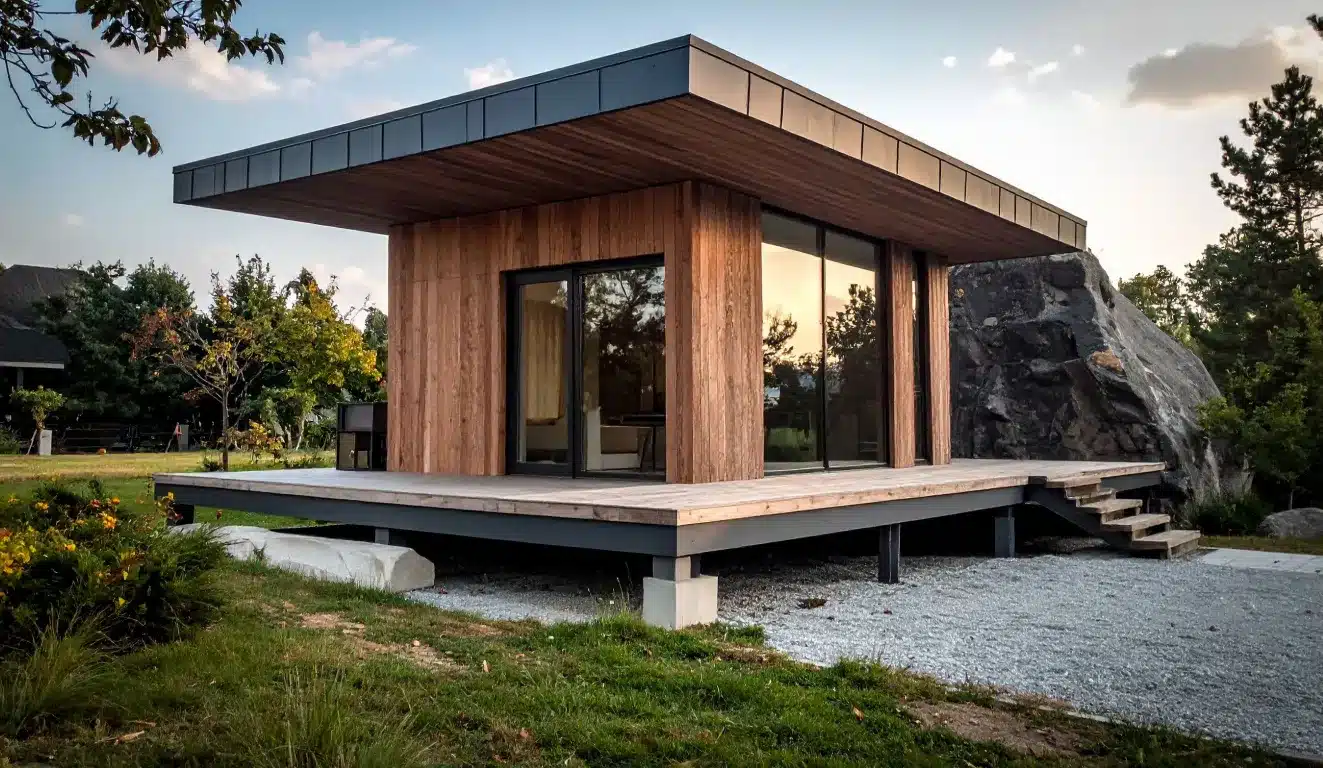
Builders are leaving serious money on the table by treating tiny homes just like standard real estate. The buyer searching for a 300-square-foot ADU isn’t really shopping for square footage, they are buying an escape hatch from the crushing weight of a thirty-year mortgage. You aren’t just selling walls and a roof. You are selling the ability to quit a job they hate or the freedom to finally travel. Knowing this psychological difference is the only way to turn a casual browser into a signed contract.
Key Notes
- The global tiny homes market is set to expand by an impressive USD 3.57 billion by 2026.
- 68% of tiny home owners live mortgage-free, which serves as a powerful hook for marketing copy.
- Marketing must target two distinct groups, Millennials seeking freedom and Boomers wanting simplicity.
- Websites featuring video content are 53 times more likely to land on Google’s first page.
- Niche directories like Tiny House Listings often provide a significantly lower cost-per-lead than general platforms.
- Visual content gets shared 40 times more often than text-based updates.
- Email marketing continues to yield an average return of $36 for every $1 spent.
Leveraging Tiny Home Market Trends and Demographics
Right now, the demand for alternative housing is accelerating faster than most construction companies can actually scale. The global tiny homes market is projected to grow by USD 3.57 billion between 2021 and 2026, moving at a CAGR of 4.45%. This surge isn’t accidental. It is driven by a massive disparity in housing affordability. The average cost of a tiny home sits between $30,000 and $60,000. Compare that to the median U.S. home price, which is hovering around $400,000. Your marketing needs to hammer this point home. You are essentially offering home ownership for the price of a luxury car.
Capitalizing on Market Growth and Financial Shifts
Financial freedom is the strongest lever you have. Statistics show that 68% of tiny home owners have no mortgage, compared to only 29.3% of all U.S. homeowners. This mortgage-free reality should be the headline of your landing pages. When a potential client realizes they could own their home outright in three years instead of thirty, the sales conversation shifts from ‘can I afford this?’ to ‘when can we start?’.
Consider the interest payments alone on a standard home. A standard mortgage interest payment over 30 years often equals the total purchase price of two or three custom tiny homes. Presenting this math clearly allows the customer to see the tiny home not as a compromise on space, but as a massive gain in disposable income.
Targeting the Split Demographic
Your audience is not a monolith. Data indicates a clean split in interest, 63% of millennials would consider purchasing a tiny home, yet 40% of current owners are over age 50. A single message will not work for both. Millennials are often chasing the ‘Mortgage-Free in 5 Years’ dream. They want mobility and adventure. Boomers are different. They want to downsize, simplify, and age in place without the heavy burden of maintaining a four-bedroom house.
Marketing Segmentation Strategy,
- Millennials- Focus on adventure, eco-footprints, and saving money. Use hooks like ‘How to Live Mortgage Free.’
- Boomers- Focus on quality materials, single-floor living, and proximity to family (ADUs).
- The Common Thread- Financial stability. 55% of tiny house owners have more savings than the average American. Use this to prove that going tiny is a smart financial play, not just a trendy one.
High-Converting Website Design and Mobile-First SEO Strategy
Too often, a builder’s website acts as a digital brochure that nobody actually reads. To sell tiny homes, your site must be a visual experience. Buyers are purchasing a lifestyle. If they cannot visualize themselves cooking in that galley kitchen or sleeping in that loft, they will not call you. Prioritize high-resolution galleries and 3D walkthroughs. Text blocks should be minimal.
Prioritizing Visual Hierarchy and User Experience
Speed is critical. Over 58% of global web traffic originates from mobile devices. If your site takes more than three seconds to load, you lose the customer. High-quality images must be compressed so they don’t bog down the load time. Pricing transparency is another major hurdle. The number one cause of high bounce rates in construction is a lack of pricing. You don’t need to give a final quote, but starting prices are essential to keep the user engaged.
Interactive elements keep people on your site longer, which signals to Google that your page is valuable. Embed interactive floor plans that let users toggle between options, like swapping a loft for a ground-floor bedroom. This increases ‘Time on Page,’ a metric that directly improves your search rankings.
SEO Implementation for Builders
While local SEO is standard, tiny home builders often ship nationally. You need to rank for ‘Tiny homes for sale [State]’ for every state you service, not just where your workshop is located. Create specific landing pages for each state to capture this traffic.
Video is your best SEO tool. Websites with video content are 53 times more likely to rank on the first page of Google. Replace your generic ‘Contact Us’ form with a ‘Get a Quote’ calculator. This provides immediate value to the user and captures better lead data for you.
Website Builder Recommendations,
- Squarespace- Excellent for drag-and-drop visual portfolios.
- WordPress- The superior choice for advanced SEO control.
- Showit- Offers high design freedom for creative layouts.

Dominate Visual Social Platforms, Instagram, Pinterest, and TikTok
Social media is exactly where the tiny house movement lives. It is visual, aspirational, and highly shareable. If you aren’t active here, you are virtually invisible to a massive segment of your market.
Executing a 3-Tier Content Strategy
Pinterest is often overlooked, but it is a powerhouse for intent. 47% of users utilize the platform to plan life events. Tiny homes are a massive category within Home Decor. Unlike an Instagram post that fades in 24 hours, a Pin can drive traffic to your site for months or even years. Treat it like a visual search engine.
Short-form video is currently the king of organic reach. A simple walkthrough Reel on Instagram or TikTok can generate 10 times the reach of a static photo. Use TikTok for behind-the-scenes content,show the framing, the insulation, the delivery. It proves you are a legitimate builder, not a scammer. Instagram should be your polished portfolio. Focus on aesthetics here and use Direct Messages to nurture leads.
Building Trust and Protecting Assets
Polished studio photos look nice, but User-Generated Content (UGC) sells homes. Sharing a photo of a past client actually living in their unit builds immense trust. It proves the home is livable. Visual content is 40 times more likely to get shared on social media than other types.
Protection Tip, Watermark every single image and video. Aggregator accounts constantly scrape content. If your video goes viral on someone else’s page, you want your logo and website clearly visible so the traffic finds its way back to you.
Build Trust Through YouTube Marketing and Influencer Collaborations
YouTube is the second largest search engine in the world. For tiny homes, it is the primary research tool. Buyers watch hours of tours before they ever contact a builder.
Harnessing the Tour Phenomenon
Channels like ‘Living Big in a Tiny House’ command millions of subscribers. Getting a single feature on a channel of that size can crash your website with traffic. It validates your product instantly. Reach out to influencers like Tiny House Giant Journey or Tiny House Expedition. Pitch them on your most unique, feature-rich model. These videos answer the physical questions photos can’t, like ‘how much headroom is really in that loft?’
Internal Video Production and Optimization
Don’t wait for an influencer. Start filming your own units. Optimize your videos with tags like ‘Tiny House Tour’ and ‘Container Home.’ You need three types of videos in your arsenal,
- The Finished Model Walkthrough- Pure sales focus. Show the features and finishes.
- The Construction Time-Lapse- Demonstrates build quality and process.
- Client Testimonials- Social proof that you deliver on time and on budget.
Statistics reinforce this effort, 73% of homeowners say they are more likely to list with an agent who uses video. The same logic applies to builders. Show the product dynamically, and you build the confidence required for a high-ticket purchase.
Capitalize on Niche Traffic via Tiny Home Marketplaces
Stop relying solely on Zillow or Craigslist. Those platforms are full of tire kickers. Niche directories are where the serious buyers hang out.
Leveraging Directories for High-Quality Leads
The intent of traffic on niche sites is specifically aligned with tiny living. Leads from these directories often have a lower Cost Per Lead (CPL) than Google Ads because the audience is already pre-qualified. Furthermore, listing on reputable industry directories provides high-authority backlinks. This boosts your own website’s domain authority, helping you rank higher in organic search results.
Optimization for Marketplace Listings
You need to be present on the top directories, Tiny House Listings, Tiny House Marketplace, Tiny House Talk, and Tiny House Swoon. Do not just throw up a phone number and a price. Treat these listings like landing pages. Include at least 10 photos, a link to a video tour, and a clear Call to Action (CTA). Tell them exactly what to do next, whether it is ‘Download our Floor Plan’ or ‘Schedule a Call.’
Mastering the Long Sales Cycle with Email Automation and CRM
Buying a tiny home is a major life decision. The sales cycle averages 6 to 12 months. If you ignore a lead after the first contact because they aren’t ready to buy today, you are losing sales.
Implementing Effective Lead Nurturing
You must segment your leads. Tag them based on readiness. ‘Dreamers’ should go into a newsletter sequence that offers inspiration and tips. ‘Ready to Build’ leads need personal follow-up. To get them into your system, trade value for their email address. Offer a PDF floor plan, a zoning guide, or a financing checklist.
Email is powerful. For every $1 spent on email marketing, the average ROI is $36. It is the most cost-effective way to stay top-of-mind during a long decision process.
CRM Tools and Drip Campaigns
Get a CRM that handles construction workflows. HubSpot is great for automation. Buildertrend is ideal for combining project management with lead tracking. Zoho CRM offers a solid budget-friendly alternative.
5-Email Welcome Series Structure,
- Delivery- Send the lead magnet immediately.
- Intro- Who you are and your building philosophy.
- Proof- A case study of a happy client.
- Education- FAQ on financing and zoning.
- The Ask- Invitation for a consultation call.
Aziel Digital understands the grit required to build a business with your hands. We specialize in digital strategies for the trades. If you are ready to stop chasing leads and start building a pipeline that works as hard as you do, we are the partner you need.
Frequently Asked Questions
What is the average cost per lead for tiny home builders?
The cost per lead (CPL) varies wildly by channel, but construction leads typically range between $30 and $80 on general platforms. Niche tiny home directories often produce leads at the lower end of this spectrum, around $25-$45, due to higher intent. General platforms like Google Ads can be expensive because you are competing with every other builder.
Niche marketplaces concentrate the audience, meaning your ad spend targets only people already interested in tiny living. WordStream data suggests construction industry CPL averages around $44 on search, but highly targeted campaigns can reduce this. Focus budget on high-intent keywords and niche directories first. Track CPL weekly. If a channel exceeds $100 per lead without high conversion, cut it.
Which website builder is best for tiny home construction companies, WordPress or Squarespace?
WordPress is the superior choice for long-term growth and SEO, while Squarespace is better for builders who need a beautiful site up quickly with zero technical skills. WordPress powers over 40% of the web and offers plugins like Yoast SEO that are critical for ranking nationally. Squarespace is a ‘walled garden’,great design is easy, but you have less control over the technical backend that drives search rankings. If you plan to ship nationally and want to dominate search results, invest in a custom WordPress site. If you are a local builder just starting out, Squarespace will suffice for a portfolio.
How do I get my tiny homes featured on channels like ‘Living Big in a Tiny House’?
You must pitch a unique, story-driven angle. These channels do not want a sales pitch, they want a narrative about the design ingenuity or the homeowner’s lifestyle change. Channels like Living Big in a Tiny House have millions of viewers. They look for innovative space-saving solutions or unusual materials.
A standard shiplap tiny home is unlikely to get picked up unless the owner has a compelling personal story.
Submit high-quality photos and a short video walkthrough to the channel’s submission page. Highlight the ‘weird’ or ‘clever’ features of your build, not the price.
Is it better to list tiny homes on Zillow or niche marketplaces like Tiny House Listings?
Niche marketplaces are far more effective. Zillow is designed for traditional mortgages and fixed foundations, which confuses the search algorithm for tiny homes on wheels. Users on Tiny House Listings are specifically looking for movable structures and understand the financing limitations.
Zillow users often stumble upon tiny homes and bounce when they realize they can’t get a standard 30-year FHA loan. Maintain a presence on Zillow for brand awareness if you have the budget, but prioritize paid listings on Tiny House Listings and Tiny House Marketplace for actual conversion.
How does the sales cycle for tiny homes differ from traditional real estate?
The sales cycle is often longer and more consultative, averaging 6 to 12 months, because buyers face unique hurdles like zoning and financing that traditional homebuyers do not. A traditional buyer gets a pre-approval letter and finds a house. A tiny home buyer has to find a builder, secure a parking spot (zoning), and find personal property loans or RV loans.
This requires the builder to act as a consultant. Build a robust email nurture sequence that educates the buyer on zoning and loans over several months so they remain engaged until they solve their logistical problems.
What are the most effective lead magnets for capturing tiny home buyer emails?
Practical, high-value assets work best. ‘Zoning Guides,’ ‘Floor Plan PDFs,’ and ‘Cost Calculators’ convert significantly better than generic newsletters. Tiny home buyers are overwhelmed by logistics. A guide that solves a specific pain point (e.g., ‘Where can I park my tiny home?’) offers immediate relief and establishes your authority. Create a ‘Tiny House Budget Worksheet’ or a ‘State-by-State Zoning Cheat Sheet’ and gate it behind an email sign-up form on your homepage.
How can I optimize my builder website for national searches if I am based locally?
You must create location-specific landing pages for the states you are willing to ship to. Google ranks local businesses based on proximity. To rank in Texas when you are in Oregon, you need a page titled ‘Tiny Homes for Sale in Texas’ that discusses delivery fees to Texas, local Texas zoning, and relevant climate features (e.g., insulation for heat). Build out a ‘Service Areas’ section in your footer linking to 5-10 individual state pages, each with unique content relevant to that region.
What specific keywords should I target to reach millennials vs. retirees?
For Millennials, target ‘off-grid,’ ‘sustainable,’ ‘DIY,’ and ‘financial freedom.’ For retirees, target ‘ADU,’ ‘granny pod,’ ‘main floor bedroom,’ and ‘downsizing.’ Keyword research tools show that younger demographics search for lifestyle benefits (freedom, travel), while older demographics search for functional benefits (accessibility, proximity to family).
Run two separate Google Ad groups. Group A (Millennials) targets terms like ‘modern tiny house on wheels.’ Group B (Retirees) targets ‘backyard cottage for aging parents.’
Why is pricing transparency critical for reducing bounce rates on builder websites?
Tiny home buyers are often budget-constrained. If they cannot find a price range, they assume they cannot afford it and leave immediately.
Construction websites often hide prices to ‘encourage a call.’ In the digital age, this frustrates users. Data shows that pages with pricing information have lower bounce rates and higher time-on-page. You don’t need a fixed price. Display ‘Starting at $XX,XXX’ clearly on your model pages to qualify leads instantly and keep them browsing.
How can I use Pinterest to drive organic traffic to my tiny home portfolio?
Post high-quality vertical images of your interiors linked directly to your model pages. Use keywords in the pin description, not just hashtags. Pinterest is a search engine. Users search for ‘small kitchen ideas’ or ‘loft bedroom storage.’ If your image pops up, they click through to your site to see the whole build. Create boards for specific rooms (e.g., ‘Tiny House Kitchens,’ ‘Smart Storage’). Pin your own project photos to these boards daily.
What CRM software integrates best with construction project management tools?
Buildertrend and CoConstruct are the industry standards that combine CRM (sales) with Project Management (execution). General CRMs like Salesforce are often too complex and lack construction-specific features like change orders or daily logs. Buildertrend allows you to track a lead from the first call all the way through to the final punch list in one system. If you are a small builder, start with HubSpot (free tier) for sales and migrate to Buildertrend once you are managing 3+ builds simultaneously.
How do interactive floor plans improve SEO for builder websites?
They increase ‘dwell time,’ which is a user engagement signal Google uses to rank pages. Static images are viewed quickly. An interactive plan where a user clicks to add furniture or move walls keeps them on the page for minutes rather than seconds. Google interprets this long visit as a sign that your content is high quality.
Use a tool like ‘RoomSketcher’ or ‘Cedreo’ to create embeddable plans. Place them on your most popular model pages to increase engagement metrics.