

An empty truck is just burning cash every hour it sits idly in your driveway. Between fuel, insurance costs, and labor wages, the bills don’t hit the pause button just because your phone has stopped ringing. To cover your overhead and start building actual, take-home profit, you need a steady, reliable stream of incoming jobs. This plan breaks down the specific, actionable steps you need to take to fill your schedule with high-value cleanouts and profitable hauling gigs.
Salient Points
- Prioritize Google Local Services Ads (LSA) so you are paying strictly for valid leads rather than just clicks.
- Optimize your Google Business Profile by using geotagged photos to truly dominate the local map pack.
- Build specific landing pages for each city you serve to capture search traffic for niche terms like ‘hot tub removal.’
- Secure steady, recurring revenue by establishing strong referral networks with local realtors and property managers.
- Target homeowners on Facebook precisely when they are going through life events, such as moving or renovating.
- Deploy bandit signs and door hangers to capture local foot and vehicle traffic near busy home improvement stores.
- Use booking software to automate your follow-ups and recover leads that would otherwise slip through the cracks.
Dominate Search with Google Local Services Ads and PPC
You simply cannot afford to be invisible on Google when someone has a pile of trash they need gone immediately. When that happens, people pull out their phones, search for a hauler, and usually call the very first credible number they see. Google Local Services Ads (LSA) are the listings that sit at the absolute top of those results. Unlike standard Pay Per Click (PPC) campaigns,where you pay every single time a user clicks a link regardless of the outcome,LSA is designed to charge you only for tangible leads. You pay only when a customer actually calls and speaks to you for a set duration or sends a direct message.
Your budget allocation should primarily focus on maxing out your LSA spend before you put a single dime into traditional PPC. The return on investment for LSA is far superior for service trades because the customer intent is incredibly high and the friction is low. Data from BrightLocal indicates that Google Local Services Ads account for 13.8% of local SERP clicks. Because these leads are coming from people who are ready to book right now, they are often 50% cheaper to acquire than traditional PPC leads.
That said, traditional PPC still has its place, but it requires strict, careful management. The average Cost Per Click (CPC) for junk removal on Google Ads generally ranges from $15 to $35. Without proper safeguards, you will burn through cash on useless searches. You have to use negative keywords to filter out users who are searching for things like ‘free junk removal,’ ‘municipal waste services,’ or ‘garbage truck routes.’ These are searchers with zero intention of paying for a private hauler, and you don’t want to pay for their clicks.
Leveraging the Google Guarantee Badge
In the home service industry, trust is the only currency that matters. The Google Guarantee badge, which is available only through the LSA program, signals to homeowners that you have passed a background check and carry the proper insurance. This little green checkmark appears right above traditional ads and organic listings, instantly validating your business in the eyes of the consumer. It effectively transforms you from a stranger with a truck into a vetted, safe professional.
Ranking in the Local Map Pack via Google Business Profile
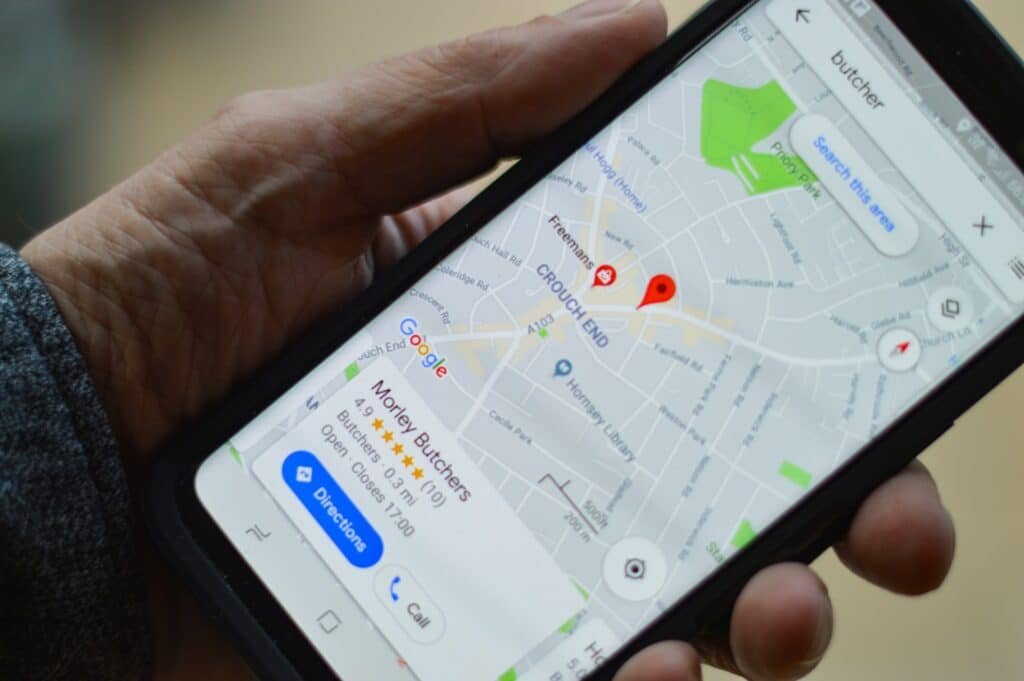
The Local Pack, often called the ‘Map Pack,’ is that block of three business listings that appears just below the ads. Google states that the Local 3-Pack appears in the top spot in 93% of searches that have local intent. Getting your business into one of these three coveted spots drives the vast majority of organic calls. The best part is that you do not need to pay for this placement, but you do have to earn it through consistent activity and precision.
Geotagging is a powerful signal that is often completely overlooked by competitors. When you snap a photo of a completed job, the image file can store GPS coordinates. Uploading these geotagged before-and-after photos to your profile proves to Google exactly where you are operating. It validates your service area much more effectively than simply listing city names in your description. BrightLocal found that businesses with more than 100 images on their profile get 520% more calls than those with fewer images.
Consistency in your Name, Address, and Phone number (N.A.P.) across the web is absolutely non-negotiable. If your Facebook page lists ‘Bob’s Hauling’ but your Google profile says ‘Bob’s Junk Removal LLC,’ you are going to confuse the search algorithm. You need to ensure that every listing on Yelp, Bing, and various industry directories matches your Google profile character for character.
Optimization of the Q&A Section
Voice search is relying more heavily on direct answers these days. You should take the initiative to pre-populate the Q&A section of your Google Business Profile. Go ahead and ask and answer common questions yourself, such as ‘Do you take paint?’ or ‘Do you offer same-day service?’ This helps Google serve your profile to users who are asking these specific questions via Siri or Google Assistant. And remember, never leave your profile unclaimed. An unclaimed profile is vulnerable to user edits, including malicious markers that could label your business as ‘permanently closed.’
Designing High-Converting Mobile-First Websites
Your website really has one job, to get the visitor to call you. It does not need to be a digital art gallery. It simply needs to pass the 5-second test. A user must know who you are, what you haul, and exactly how to contact you within five seconds of the page loading. If they have to hunt around for a phone number, they will leave.
Mobile performance will dictate your ranking. The reality is that most emergency hauling searches happen on a smartphone. Google Data shows that 53% of mobile site visits are abandoned if pages take longer than 3 seconds to load. You must prioritize speed over heavy, flashy graphics. Use tools like Google PageSpeed Insights to check your performance. A fast, ugly site will outperform a slow, beautiful one every single time.
Structure your site to capture specific search traffic. A single ‘We Haul Junk’ homepage competes with every other hauler in the state. Instead, build specific location pages for every town and county you serve. Create service-specific sub-pages for niche jobs like ‘Hot Tub Removal,’ ‘Hoarder Cleanouts,’ and ‘Construction Debris.’ HubSpot data reveals that websites with 40+ landing pages generate 12x more leads than those with fewer pages. These specific pages rank easier because the competition for ‘Hot Tub Removal in [City]’ is much lower than for generic ‘Junk Removal.’
Click-to-Call Functionality
Friction kills conversion rates. Your mobile site must feature a sticky header with a ‘Click-to-Call’ button that stays visible as the user scrolls down the page. The average conversion rate for service websites usually hovers between 2.5% and 5%. With a fast loading speed, clear specific service pages, and an omnipresent phone number, you should aim for conversion rates above 10%. Also, avoid stock photos of smiling models in clean overalls. Show your real trucks and your real team in uniform. Real photos build the trust necessary to invite a stranger into a home.
Building Trust with Reviews and Realtor Partnerships
Speed wins contracts. The time it takes you to respond to a lead is the single biggest predictor of success. Velocify data shows that responding to a lead within one minute increases conversion by 391%. If you wait an hour, that customer has likely already booked with a competitor who picked up the phone.
Realtors are a goldmine for junk removal businesses. They generally do not care about the lowest price, they care about closing the deal on time. A garage full of trash can delay a closing, potentially costing them thousands in commission. You are the solution to that problem. Visit local real estate offices with a simple pitch. Bring coffee and a dedicated price sheet for their clients. Tell them, ‘I am the guy who makes sure your closing isn’t delayed by junk.’
Automating Review Requests
Reviews drive decisions. BrightLocal studies show that 88% of consumers trust user reviews as much as personal recommendations. Do not leave review collection to chance. You need to automate the process. As soon as payment is processed, your system should send an SMS requesting a review. Do not ‘gate’ reviews by asking if they were happy first. This practice is frowned upon by Google. Send the link directly. A tiny increase in your star rating has massive leverage, Uberall found that a 0.1-star increase can raise conversion rates by 25%.
Hyper-Local Targeting with Nextdoor and Facebook Ads
Junk removal is strangely visually satisfying. People love seeing chaos turned into order. This makes the industry perfect for social media advertising. Videos of a cluttered room being cleared out stop the scroll. You don’t need high production value, a simple time-lapse on your phone works wonders. G2 Crowd reports that video content generates 1200% more shares than text and image content combined.
Nextdoor is perhaps the most undervalued platform for home services. It is used by 1 in 3 US households, according to Nextdoor internal data. The trust level is high because recommendations come from verified neighbors. You are not just a business ad, you are a neighbor offering a service.
Targeting Life Events on Social Media
People generate junk during big life changes. Facebook allows you to target users based on these specific events. Run ads specifically for people who have ‘Recently Moved,’ are ‘Selling a House,’ or are interested in ‘Home Improvement.’ Use ‘Before and After’ sliders in your ads. These images do more than show your work, they reduce anxiety. A customer looking at a hoard is often embarrassed.
Seeing that you have handled worse messes makes them feel safe calling you. Monitor local Buy/Sell groups. When someone posts a large item with the caption ‘Must be gone by Friday,’ wait. If it doesn’t sell, comment offering a removal quote. You aren’t spamming, you are solving a time-sensitive problem.
High-ROI Offline Marketing with Signs and Flyers
Digital marketing is crowded. Offline marketing offers a way to stand out physically in the real world. Bandit signs, the small yard signs you see at intersections, capture high-intent traffic. Place them near the exits of Home Depot or Lowe’s. DIYers often realize they are in over their head after a trip to the hardware store. Seeing your sign at that exact moment of frustration is perfect timing.
Check your local municipal codes before placing signs on public property to avoid fines. Design your signs for readability at 40 mph. Use high-contrast colors like yellow on black or red on white. Keep it simple, ‘WE HAUL JUNK’ and a massive phone number. No website, no logo, no bullet points.
The Five-Around Door Hanger Method
Maximize every trip to the dump. When you finish a job, spend ten minutes hanging flyers on the neighbors’ doors. Use the ‘Five-Around’ method, the five houses to the left, five to the right, and five across the street. Neighborhoods usually share similar demographics and home ages. If one house is clearing out clutter, the neighbors likely need to do the same.
For broader reach, Every Door Direct Mail (EDDM) allows you to target specific postal routes. Choose routes with high homeownership rates and income levels that support luxury services. Direct mail response rates can reach up to 9%, far outperforming email’s 1%, according to the ANA/DMA Response Rate Report.
Streamlining Operations with CRM and Booking Software
Growth requires systems. You cannot scale if you are managing your schedule on a whiteboard. Modern customers expect the ability to book a service without speaking to a human. GetApp data indicates that 70% of customers prefer to book services online. Your website must have a widget that allows them to pick a time and receive a confirmation instantly.
Your software needs to handle dispatching, invoicing, and follow-up. Tools like Workiz, Jobber, or Housecall Pro track your trucks and your profit margins. They ensure you know exactly how much space is left in a truck before committing to the next stop.
Recovering Revenue with Automation
Leads fall through the cracks when follow-up is manual. A robust CRM automates this. If a customer gets a quote but doesn’t book, the system sends a text message 24 hours later. Automated follow-up texts can recover up to 20% of dead leads. Integration with mobile card readers and text-to-pay options also speeds up cash flow. Collecting payment should take seconds at the job site. This level of professionalism separates a serious business from a guy with a pickup truck.
Aziel Digital specializes in helping tradesmen and service businesses dominate their local markets. If you want to stop guessing and start filling your schedule, our team handles everything from SEO and high-converting web design to Google Ads management. We build the systems so you can focus on the work.
Frequently Asked Questions
What is the best way to get junk removal leads quickly?
The fastest way to generate leads is through Google Local Services Ads (LSA). LSAs appear at the absolute top of search results, above traditional ads and the map pack, connecting you instantly with users actively searching for removal services. Unlike standard PPC where you pay for clicks, LSA charges you only for valid calls or messages, as noted in comparisons of search advertising models. The Google Guarantee badge associated with LSA significantly boosts consumer confidence, leading to higher conversion rates compared to unverified listings.
How much does a junk removal lead cost on Google Ads?
Costs vary by location, but the average Cost Per Click (CPC) for junk removal ranges from $15 to $35.Competitive metro areas will see higher CPCs than rural regions due to saturation. Using negative keywords prevents wasted spend on searches for ‘free pickup’ or municipal services. Leads from Local Services Ads are often 50% cheaper than traditional PPC leads because they are pre-qualified and lower funnel.
Is Google Local Services Ads better than PPC for junk hauling?
Yes, LSA generally offers a better ROI for junk removal businesses than standard PPC. LSA leads are often 50% cheaper than traditional PPC leads due to higher intent and lower friction. BrightLocal data suggests LSAs capture over 13% of local SERP clicks, targeting users with immediate needs rather than those just browsing. Standard PPC requires complex management of negative keywords to avoid paying for ‘free pickup’ searches, whereas LSA filters these naturally by charging only for valid service inquiries.
How do I get commercial junk removal contracts?
Securing commercial contracts requires building offline relationships with gatekeepers. Focus on realtors and property managers who need reliable, quick turnarounds to close sales or rent units. Approach these partners not with the lowest price, but with a guarantee of reliability and speed, solving their pain point of delayed closings. Establish a B2B referral network where you become the go-to vendor, ensuring recurring revenue that persists regardless of seasonal fluctuations in residential work.
What is the best CRM software for junk removal businesses?
The best CRM depends on your specific needs, but industry favorites include Workiz, Jobber, and Housecall Pro.Software like Jobber allows for route optimization and job tracking, ensuring you know where your trucks are and their capacity.
Workiz is popular for its online booking widgets, catering to the 70% of customers who prefer booking online (GetApp). These platforms offer automated follow-up texts which can recover up to 20% of dead leads, directly impacting your bottom line.
How do I optimize my Google Business Profile for junk removal?
Optimization involves validating your location and activity to signal relevance to Google’s algorithm. Uploading photos with embedded GPS coordinates reinforces your service area validity to Google. Regularly adding photos is crucial, businesses with over 100 images see 520% more calls (BrightLocal). Pre-populating your Q&A section with voice-search-friendly questions and answers helps capture traffic from voice assistants like Siri and Alexa.
Do yard signs still work for junk removal marketing?
Yes, bandit signs are highly effective for capturing local, high-intent traffic. Placing signs near home improvement store exits targets DIYers who have realized their project is too big for their own vehicle. A customer often needs to see a brand multiple times (Rule of 7) before acting, signs contribute to this frequency. Compared to digital ads, signs offer a low-cost method to dominate a specific neighborhood, provided they adhere to local municipal codes.
How many landing pages should my junk removal website have?
You should aim for a dedicated landing page for every major city and specific service you offer.HubSpot data indicates that sites with 40+ landing pages generate 12x more leads than smaller sites.
Specific pages for ‘Hot Tub Removal’ or ‘Hoarder Cleanouts’ rank higher for those long-tail keywords than a generic homepage. City-specific pages allow you to rank organically in neighboring towns where you don’t have a physical address but still provide service.
What are the most profitable junk removal keywords?
The most profitable keywords are specific, long-tail terms with high purchase intent. Terms like ‘hot tub removal,’ ‘estate cleanout,’ and ‘construction debris removal’ often have less competition and higher margins than generic ‘junk removal.
‘Keywords including ‘[City Name] junk hauling’ attract users looking for local providers. Avoiding terms like ‘free,’ ‘municipal,’ and ‘trash pickup’ is essential to protect your budget from low-value search traffic.
How can I market my junk removal business for free?
Free marketing relies on sweat equity and leveraging community trust. Joining local Buy/Sell groups on Facebook to offer removal services for unsold items costs nothing but time. Claiming and optimizing your Google Business Profile is free and puts you in the Local Map Pack.
Nextdoor allows you to build a reputation as a trusted neighbor, which is powerful given that 1 in 3 US households use the platform.
What is the average conversion rate for a junk removal website?
While the industry average for service websites is 2.5% to 5%, an optimized junk removal site should aim higher. With fast load times and clear calls to action, you should target a conversion rate above 10%. Since 53% of mobile users abandon slow sites, speed optimization via tools like Google PageSpeed Insights is critical for conversion. Displaying real team photos and verified reviews can significantly lift these rates by reducing customer anxiety.
How do I target realtors for cleanout referrals?
Targeting realtors involves positioning yourself as a solution to their logistical headaches. Visiting offices with value (coffee, donuts) and a concise pitch script helps break the ice. Emphasize that your service ensures closings happen on schedule, addressing their primary fear of delay. Offering a specific ‘Realtor Discount’ sheet gives them a concrete reason to recommend you over a competitor.