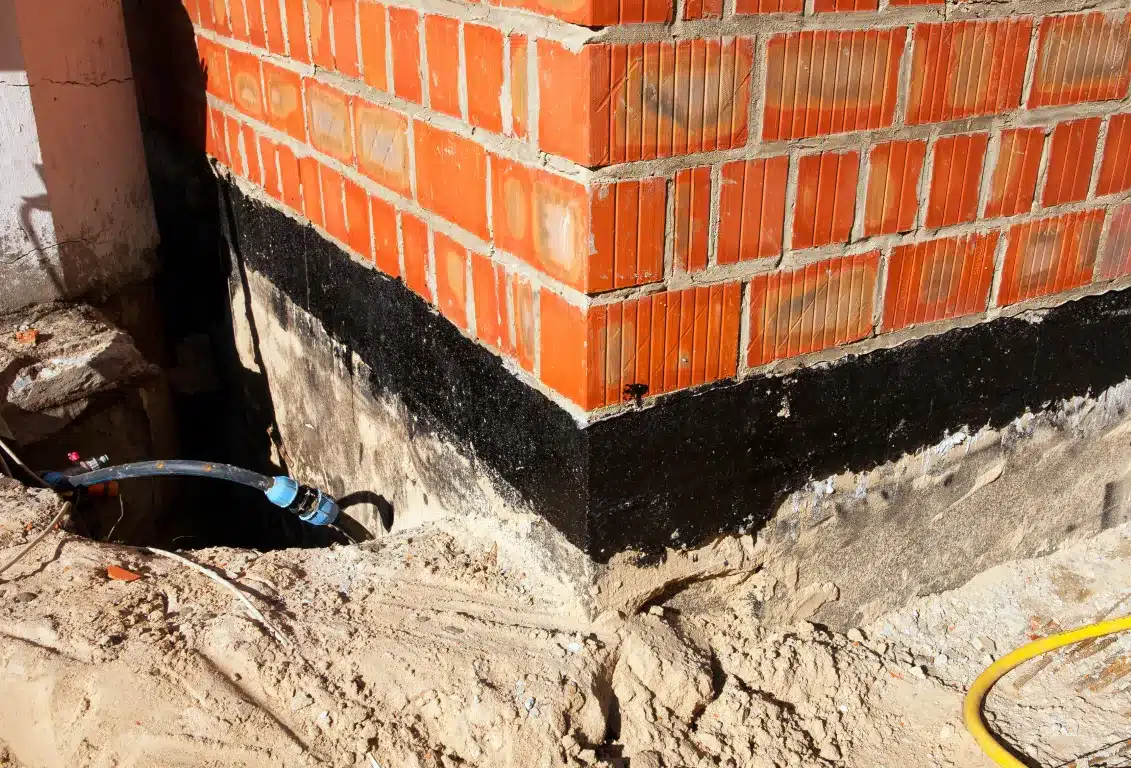
A foundation repair job isn’t a small purchase; it’s a four, five, or even six-figure decision that holds a family’s largest asset together. The industry that supports this critical need is valued at a staggering $84.5 billion in the United States alone. For the contractor on the ground, however, that massive number means nothing without a predictable way to connect with the homeowners who need your expertise.
The old methods of referrals and local ads are no longer enough. The battle for the best jobs is now won or lost on the first page of Google. This guide provides the complete blueprint to win that battle. It’s not about marketing theories or technical jargon. It is a step-by-step operational manual for turning your company’s website into its most powerful lead generation asset.
By the time you finish, you will know exactly how to find the keywords your customers are using, dominate the Google Maps results in your service area, build a website that Google trusts, and measure the return on your investment down to the dollar. This is how you stop competing on price and start winning on expertise.
Chapter 1: Why SEO is Non-Negotiable for Foundation Repair Companies
Before diving into the “how,” you must understand the “why.” The opportunity in the foundation repair market is immense, but the way customers find and choose a contractor has fundamentally changed.
This chapter establishes the hard numbers behind the industry’s digital shift and proves why a strategic investment in search engine optimization (SEO) is the single most effective way to build a sustainable, long-term pipeline of qualified leads. It’s not just another marketing channel; it’s the new foundation of your business development.
The State of the Foundation Repair Industry & The Digital Shift
The Foundation, Structure, and Building Exterior Contractors industry is a cornerstone of the American economy, valued at an enormous $84.5 billion in 2024, according to industry analysis by IBISWorld. This market is projected to grow by another 2.1% this year, a clear indicator of consistent, healthy demand for your services.
This demand is not fleeting; it is driven by immutable geological and environmental factors. Expansive clay soils in Texas and the Southeast, seismic activity on the West Coast, and relentless freeze-thaw cycles in the Northeast and Midwest mean that homes will always need structural support.
This constant need creates a fertile ground for business, but it also cultivates fierce competition. In this environment, your reputation for quality work is no longer enough to guarantee a full schedule. Visibility is the new currency.
Your potential customers are not flipping through the Yellow Pages; they are on their phones, searching for solutions to a problem that terrifies them. Standing out requires being seen precisely where they are looking. This is where the digital shift becomes non-negotiable.
The Modern Homeowner’s Search Journey for a Contractor
The path a homeowner takes from noticing a stair-step crack in their brick to calling your office has been completely rerouted. It now begins, almost without exception, with a search engine. According to recent consumer surveys, an overwhelming 97% of people learn more about a local company online than anywhere else. For a high-stakes, high-cost service like foundation repair, this online research phase is even more intense and critical.
Homeowners are not just looking for a phone number. They are vetting your trustworthiness, confirming your expertise, and scrutinizing your reputation before they even consider reaching out. They are looking for proof that you are the right choice to handle a project that impacts the safety and value of their home. This journey is predictable, and it happens online. Nearly 46% of all searches on Google are for local information.
When a homeowner types “foundation repair near me” or “best basement waterproofing companies in Jacksonville,” they are not casually browsing. They are a highly qualified, bottom-of-the-funnel lead with a serious problem, and they are ready to hire. Being visible at that exact moment is the difference between winning the job and never knowing it existed.
Organic SEO vs. Paid Ads: Building a Long-Term Lead Generation Asset
Many contractors turn to paid ads, like Google Ads (PPC), for quick leads. While PPC has its place for immediate results, it’s a fundamentally different strategy than organic SEO. Paid ads are like renting an audience; the moment you stop paying, the leads disappear. SEO is like buying the land and building a lead-generating property on it. It is an investment in a compounding asset that pays dividends for years.
The data overwhelmingly supports this. Organic search is the most dominant channel for website traffic, driving an average of 53.3% of all visitors, according to a Search Engine Journal analysis. This is more than all other channels combined. Furthermore, users inherently trust organic results more than advertisements, which often leads to higher quality leads and better conversion rates.
The cost difference is also stark. The average Cost Per Click (CPC) for competitive terms like “foundation repair” can easily range from $25 to over $100. A single click from a curious, unqualified searcher can cost you more than a nice dinner. Organic clicks, generated by your rankings, are free.
Over time, the return on investment from SEO dwarfs that of PPC. A top-ranking service page or blog post can continue to generate qualified leads for years after the initial work is completed. A BrightLocal study on Google Business Profiles found that the average business receives 1,260 profile views per month, with 59 of those resulting in a direct action like a website click or a phone call. This is the power of free, organic visibility at work. While paid ads offer speed, SEO offers sustainable, profitable growth.
Now that the critical importance of SEO is clear, the next step is to build the blueprint. This starts with understanding the exact language your customers use when they search for your services. Chapter 2 provides a step-by-step process for mastering keyword research to attract the right kind of leads.
Chapter 2: Mastering Keyword Research for Foundation Repair Leads
Effective SEO begins with a solid blueprint. In the digital world, that blueprint is keyword research. It’s the process of uncovering the exact words and phrases your potential customers are typing into Google when they need your help.
This chapter moves beyond generic terms like “foundation repair” and provides a step-by-step method for finding the high-intent, problem-aware keywords that drive qualified, ready-to-buy leads directly to your phone and inbox. Get this right, and every other part of your SEO strategy becomes more effective.
Decoding Search Intent: The 3 Types of Keywords You Must Target
Not all keywords hold the same value. A person searching “what is a helical pier” is in a very different stage of their journey than someone searching “helical pier installers in Dallas.” Understanding the user’s intent behind the search is the key to creating content that meets their needs and drives them toward a sale.
Here are the three primary types of search intent you must target.
- Informational Intent: These users are at the top of the funnel. They have a problem but are looking for answers, not necessarily a contractor just yet. Examples include “what causes foundation cracks,” “signs of foundation settlement,” or “polyurethane foam vs mudjacking.” Targeting these with helpful blog content establishes you as the expert and builds trust early in their journey.
- Commercial/Transactional Intent: These users are at the bottom of the funnel. They understand their problem and are actively looking to hire a professional. Examples include “foundation repair cost,” “best foundation repair companies near me,” or “basement waterproofing Cleveland.” These high-value keywords are the primary targets for your service pages. Explosive growth in this area is highlighted by data showing that searches including “near me” have grown by over 500% in recent years.
- Navigational Intent: These users are already looking for your specific company. They might be searching for “ABC Foundation Pros reviews” or “ABC Foundation phone number.” While important, these are people who already know you exist. Your main growth opportunity lies in capturing the informational and commercial searchers.
Finding Your “Money” Keywords: Core Services & Local Modifiers
Your “money” keywords are the most direct, high-value terms that form the core of your entire SEO strategy. These are the phrases that signal a user is ready to make a call. The process for finding them is straightforward but requires thoroughness.
First, create a comprehensive list of every distinct service you offer. Think beyond the main category of “Foundation Repair.”
Here’s a starting list of core service keywords:
- Concrete Leveling
- Basement Waterproofing
- Crawl Space Encapsulation
- Crawl Space Repair
- Helical Piers
- Push Piers / Steel Piers
- Drilled Piers
- Mudjacking / Slabjacking
- Polyurethane Foam Injection / PolyLevel
- Carbon Fiber Straps
- House Leveling / Jacking
- Wall Anchors / Tiebacks
- Sump Pump Installation
The magic happens when you apply a simple formula: [Core Service Keyword] + [Geographic Modifier]. Geographic modifiers include your city, state, county, metro area, and even specific neighborhoods.
Examples of high-value “money” keywords include:
- “basement waterproofing Cleveland”
- “crawl space encapsulation Atlanta”
- “helical pier installation Dallas TX”
- “polyurethane foam injection Jacksonville FL”
These keywords should be the primary focus for your main service pages.
The Untapped Goldmine: How to Find Problem-Based Keywords
Here is a professional tip that most of your competitors miss: homeowners almost always search for the *symptom* before they search for the *solution*. They don’t know they need “helical piers”; they just know they have “cracks in drywall near door frames.” By targeting these problem-based keywords, you capture potential customers much earlier in their journey, build immense trust by diagnosing their issue, and become their obvious choice when it’s time to hire.
This is a massive opportunity to outmaneuver competitors who only focus on service-based keywords. Brainstorm all the warning signs and issues that lead a homeowner to call you.
Examples of powerful problem-based keywords include:
- “sticking doors and windows”
- “sloping floors in old house”
- “water in basement after heavy rain”
- “musty smell in crawl space”
- “gap between foundation and wall”
- “stairstep cracks in brick wall”
- “chimney pulling away from house”
Creating blog posts and FAQ pages that directly answer questions related to these problems will attract a huge audience of concerned homeowners who are on the verge of seeking professional help.
A Step-by-Step Keyword Discovery Process for Contractors
Here is a clear, actionable process you can follow to build your master keyword list.
- Brainstorm Seed Keywords: Start by writing down every service you offer and every problem you solve, just as we did above. This is your “seed list.”
- Use Keyword Research Tools: Plug your seed list into professional SEO tools like Ahrefs, Semrush, or even the free Google Keyword Planner. These tools will provide a wealth of related ideas and, crucially, three key metrics: search volume (how many people search for it per month), keyword difficulty (how hard it is to rank for), and Cost-Per-Click (CPC). A high CPC, often $50 or more for foundation repair terms, is a clear signal of strong commercial intent.
- Analyze Your Competitors: The easiest way to find keywords that work is to see what’s already working for the competition. Use SEO tools to analyze the websites of the top-ranking foundation repair companies in your area. You can see the exact keywords they rank for, which pages are bringing them the most traffic, and where their marketing focus lies. This is a proven goldmine of ideas.
- Mine Google’s Suggestions: Google itself gives you free insights into what users are looking for. When you type a search, pay attention to the “People Also Ask” box and the “Related Searches” at the bottom of the page. For a search like “foundation repair cost,” Google might suggest related queries like “how much do helical piers cost” or “is foundation repair covered by insurance.” These are perfect topics for your website’s content.
- Listen to Your Customers: The most valuable and often overlooked source of keyword research is your own customers. Pay close attention to the exact language they use when they call you or send an email. How do they describe their problems? What questions do they ask? These real-world phrases are often valuable long-tail keywords that SEO tools will miss.
With a master list of carefully researched keywords in hand, you’re ready to start optimizing your website. The next chapter details the exact on-page SEO techniques required to make your website a magnet for both search engines and potential customers.
Chapter 3: On-Page SEO for Foundation Repair Websites
Your website is your 24/7 digital sales representative. It must be persuasive, trustworthy, and easy for both users and search engines to understand. On-page SEO is the art and science of optimizing every element on your pages, from the headlines customers see to the behind-the-scenes code Google reads, to convert your hard-earned traffic into qualified leads.
This chapter breaks down the anatomy of a perfect service page, the power of local landing pages, and how to signal your expertise to win high-stakes customers.
Anatomy of a High-Converting Foundation Repair Service Page
Your service pages are where the money is made. A visitor landing on your “Basement Waterproofing” page is a highly qualified prospect. Your goal is to give them every piece of information they need to feel confident in choosing you. Each service page must be a comprehensive resource.
Here is the essential anatomy of a service page that converts:
- Title Tag: This is the single most important on-page SEO element. It’s the blue link that appears in Google search results. Follow this formula: `[Primary Service] in [City], [State] | [Your Brand Name]`. For example: `Expert Basement Waterproofing in Cleveland, OH | ABC Foundation Pros`.
- Meta Description: This is your 155-character advertisement in the search results. It doesn’t directly impact rankings, but it heavily influences clicks. It must include your primary keyword, a compelling benefit, and a clear call-to-action (e.g., “Get a Free, No-Obligation Estimate Today”).
- H1 Tag: This is the main headline on the page itself. It should be clear, concise, and contain your primary keyword. For example: `Professional Foundation Piering Services in Houston, TX`.
- Comprehensive Content (1,000+ words): Your content must be detailed and user-focused.
- Start with the problem: Immediately address the visitor’s pain points. Use subheadings like “Common Signs You Need Basement Waterproofing.”
- Explain your solution: Detail your step-by-step process. Use photos, diagrams, or short videos to demystify the work. This builds trust and shows you’re an expert.
- Detail the materials and products: Explain the technology you use, like galvanized steel piers or high-strength carbon fiber straps. This showcases your quality.
- Showcase your Unique Selling Proposition (USP): Why should they choose you? Highlight your warranties, years of experience, financing options, or proprietary methods.
- Include service-specific FAQs: Answer the top 3-5 questions customers ask about *that specific service*.
- Add strong Calls-to-Action (CTAs): Don’t just have one CTA at the bottom. Place buttons and forms throughout the page with clear text like “Schedule Your Free Inspection” or “Call Now for a Free Estimate.”
The Power of Hyper-Local City Pages for Service Area Domination
If you serve multiple cities or a large metropolitan area, creating dedicated landing pages for each key location is one of the most powerful local SEO strategies available.
A study by BrightLocal found that 49% of businesses using location pages report them as their single most effective SEO tactic. These pages allow you to rank for geo-specific searches like “foundation repair in Sugar Land” even if your physical office is in Houston.
There is one golden rule for city pages: Each page must have unique content. Simply copying a template and changing the city name is considered duplicate content by Google and can seriously harm your rankings.
Here’s how to create valuable, unique content for each city page:
- Mention local landmarks or neighborhoods: Show that you know the area. For example, “We’re proud to serve homeowners from The Woodlands all the way down to Pearland.”
- Reference local geology or common issues: Demonstrate your local expertise. “Our teams specialize in repairing foundations affected by Houston’s notoriously expansive gumbo clay soil.”
- Embed a Google Map: Include a map showing the specific service area for that page.
- Feature testimonials from that city: Use reviews from customers in that exact location to build local social proof.
- Include photos from jobs in that city: Display before-and-after pictures of work you’ve completed in that specific community.
How to Demonstrate E-E-A-T and Win High-Stakes Customers
E-E-A-T (Experience, Expertise, Authoritativeness, and Trustworthiness) is a set of criteria from Google’s quality guidelines used to evaluate the credibility of a website. For high-stakes “Your Money or Your Life” (YMYL) topics like foundation repair, where a poor choice can have significant financial and safety consequences, demonstrating strong E-E-A-T is critical for ranking well.
- Experience: Go beyond a simple photo gallery. Create detailed project case studies. For each one, describe the customer’s challenge, explain the solution you engineered, and show the final result with high-quality before-and-after photos and video. This provides tangible proof of your experience.
- Expertise: Author in-depth blog posts that explain complex topics in simple terms, such as “The Geotechnical Science Behind Helical Pier Installation.” Create a dedicated “About Us” or “Our Team” page with detailed biographies for your owner and key personnel, listing their certifications, training, and years in the industry.
- Authoritativeness: Display the logos of industry associations you are a member of, such as the Foundation Repair Association (FRA), the National Association of Waterproofing and Structural Repair Contractors (NAWSRC), or your local Home Builders Association.
- Trustworthiness: Make your full company Name, Address, and Phone number (NAP) prominent and consistent on every page, ideally in the footer. Showcase real customer testimonials with photos. Clearly link to your warranty information, insurance details, and privacy policy.
Optimizing Images and Video to Engage Users and Boost SEO Rankings
Visuals are essential for explaining complex repair processes and showing the quality of your work. Optimizing them correctly can engage users and provide an SEO boost.
- Image SEO: Search engines cannot “see” images, so you need to tell them what the image is about using descriptive alt text. Instead of an unhelpful filename like `alt=”photo123.jpg”`, use descriptive, keyword-rich alt text like `alt=”steel push pier installation to stabilize a sinking foundation in Jacksonville FL”`. This helps your images appear in Google Image Search.
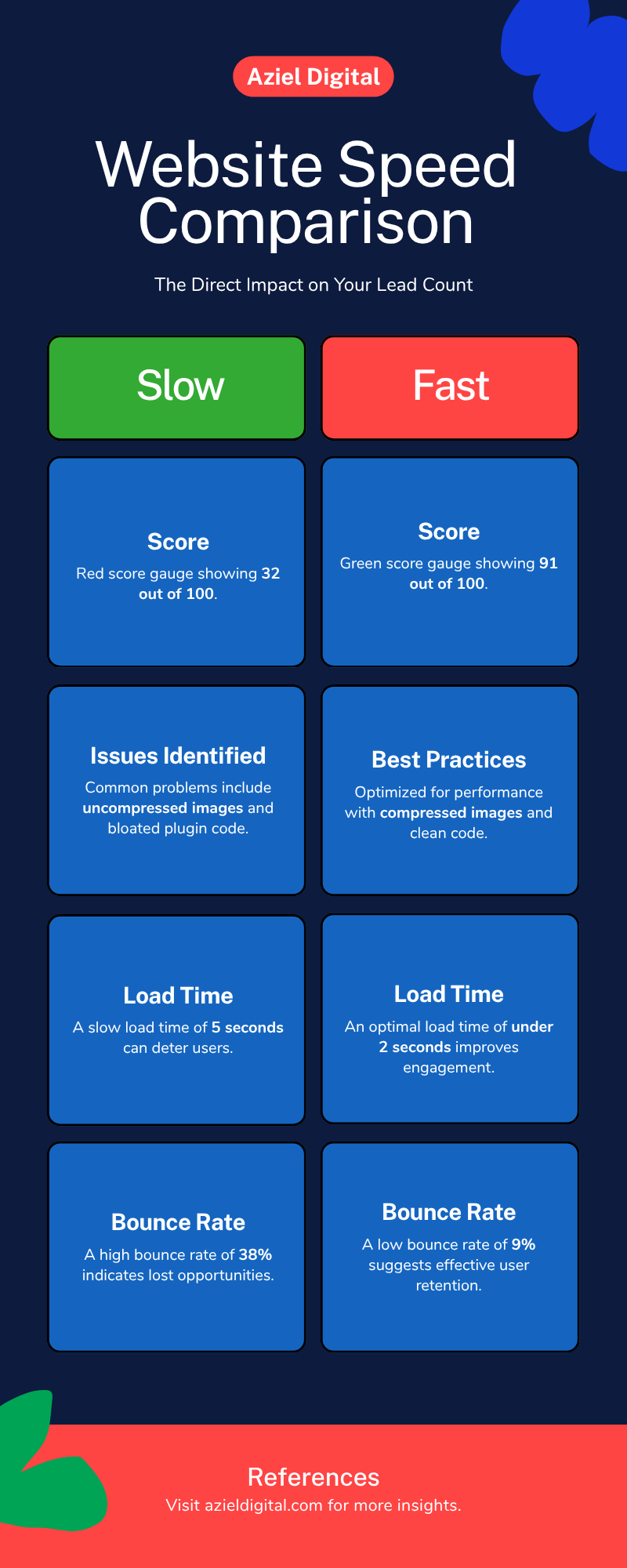
- Image Compression: High-resolution photos from job sites can be very large files, which dramatically slow down your website. According to WebsiteBuilderExpert, pages that load in 2 seconds have an average bounce rate of just 9%, but that jumps to 38% for pages that take 5 seconds. Use a free tool like TinyPNG to compress your images before uploading them to your site.
- Video Engagement: Embedding relevant videos on your service pages, such as case studies, process explainers, or customer testimonials, is one of the best ways to increase the amount of time users spend on your page. This “dwell time” is a powerful positive engagement signal to Google, indicating that your page is a valuable resource.
With your website’s pages now optimized for both users and search engines, the next crucial step is to conquer the most valuable real estate in local search: the Google Maps 3-pack. Chapter 4 is your complete guide to local SEO and Google Business Profile domination.
Chapter 4: A Complete Guide to Local SEO for Foundation Repair
For a foundation repair contractor, winning the local battle isn’t just part of the game, it is the game. The vast majority of your customers will come from your immediate service area.
This chapter is your comprehensive guide to getting your business featured prominently in the Google Maps “3-Pack,” the list of the top three local businesses that appears for searches like “foundation contractor near me.” This is the single most valuable piece of real estate in all of local search, and owning a spot in it will make your phone ring.
Why Your Google Business Profile is Your Most Important Marketing Asset
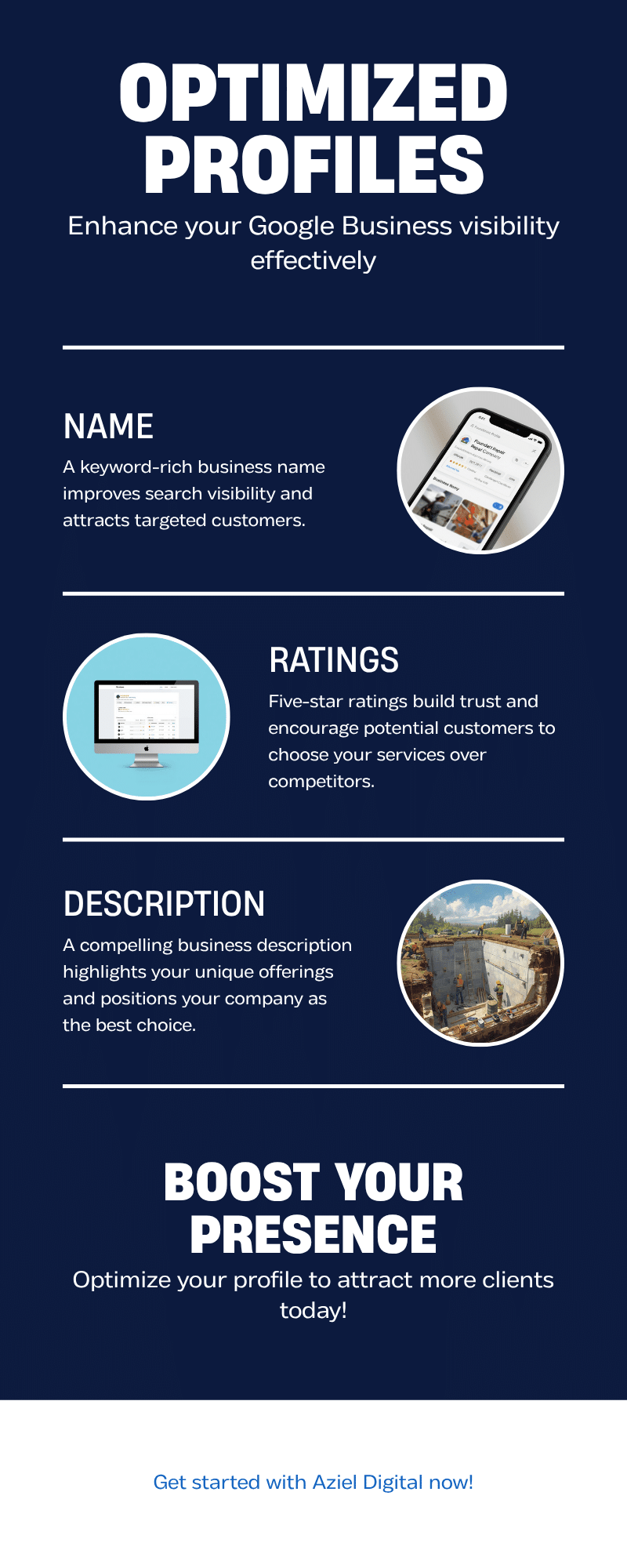
Think of your Google Business Profile (GBP) as your new digital storefront. For local searches, it’s often the very first, and sometimes the only, interaction a potential customer will have with your business before deciding whether to call you or your competitor. It displays your company name, reviews, phone number, hours, and photos, all before a user even needs to click on your website.
The data on its importance is undeniable. A comprehensive analysis found that 56% of actions on GBP listings are website visits. More importantly for contractors, a crucial 24% are phone calls made directly from the listing itself, and 20% are requests for driving directions.
These are high-intent actions from people ready to engage your services. Visuals play a massive role as well. Google reports that businesses with photos on their GBP listings receive 42% more requests for driving directions and 35% more clicks through to their websites. A well-optimized GBP is not just a listing; it’s a powerful lead generation tool.
The Ultimate GBP Optimization Checklist for Foundation Contractors
Optimizing your Google Business Profile is a continuous process, not a one-time task. Follow this detailed checklist to ensure your profile is working as hard as possible to attract customers.
Here is your step-by-step optimization plan.
- Claim and Verify: The first step is to claim and verify your listing. This proves to Google that you are the legitimate owner of the business.
- NAP Consistency: Your Name, Address, and Phone number (NAP) must be 100% identical across your GBP, your website’s footer, and all other online directories. Any inconsistency can confuse Google and hurt your rankings.
- Categories: This is critical for relevance. Your primary category must be “Foundation Contractor.” Then, add as many relevant secondary categories as apply, such as “Basement Waterproofing Service,” “Concrete Contractor,” and “Crawl Space Service.”
- Services: Use the “Services” feature to its full potential. Do not just list “foundation repair.” Create a separate entry for every single service you offer, Helical Piers, Mudjacking, Carbon Fiber Straps, etc., and write a detailed description for each one. This helps you show up for highly specific searches.
- Photos and Videos: Your GBP is a visual platform. Constantly upload new, high-quality photos of your team in uniform, your branded trucks, your equipment in action on a job site, and completed projects (before and after shots are incredibly powerful). Aim to add a new photo at least once a week.
- Google Posts: This feature is like a mini-blog directly on your GBP listing. Use it at least weekly to share company news, highlight a recent 5-star review, promote a new blog post from your website, or announce a limited-time offer.
- Q&A Section: Don’t wait for customers to ask questions. Be proactive. Use the “Ask a question” feature to post common questions yourself and then answer them immediately. This allows you to control the narrative and address key customer concerns upfront, such as “Do you offer a lifetime warranty?” or “Is your company fully licensed and insured?”
Generating and Managing 5-Star Reviews to Build Trust and Drive Calls
In a high-trust industry like foundation repair, social proof is paramount. Your online reviews are one of the most powerful factors in a homeowner’s decision-making process. The numbers from BrightLocal’s Local Consumer Review Survey are clear: 98% of consumers read online reviews for local businesses.
Volume and quality both matter. Research suggests that having at least 50 reviews can lead to a 4.6% increase in conversion rates. The sweet spot for star rating is not necessarily a perfect 5.0. Businesses with an average rating between 4.0 and 4.5 stars often earn the most revenue, as it appears more authentic to potential customers. The most important part of review management is engagement.
Another BrightLocal study found that 57% of consumers are unlikely to use a business that doesn’t respond to reviews. You must respond to every single review. Thank positive reviewers for their business and address negative reviews professionally, expressing regret that their experience wasn’t perfect and offering to take the conversation offline to resolve the issue.
Local Citation Building: Ensuring NAP Consistency Across the Web
A “citation” is any online mention of your business’s Name, Address, and Phone number (NAP) together. These mentions on other websites and directories act as votes of confidence that verify your business’s location and legitimacy to Google. They are a foundational local ranking factor.
As mentioned earlier, consistency is king. Any variation, using “St.” instead of “Street” or a different phone number, can create confusion and dilute the power of your citations. Your goal is to ensure your NAP is identical everywhere it appears.
Here are some of the most important citation sources for foundation repair contractors:
- Industry-specific directories: Yelp, Angi, HomeAdvisor, Thumbtack, Houzz, Porch
- General business directories: Better Business Bureau (BBB), Yellow Pages
- Local directories: Your local Chamber of Commerce, local Home Builders Association
Manually building and cleaning up citations can be a tedious process. It is often wise to use a service like BrightLocal or Semrush’s Listing Management tool to automatically distribute and correct your business information across dozens of important directories, which saves immense time and ensures perfect accuracy.
Now that your local signals are dialed in, it’s time to focus on the content that will establish you as the ultimate authority in your market. The next chapter explores how to create content that builds trust, generates leads, and attracts powerful backlinks.
Chapter 5: Content That Builds Trust, Generates Leads, and Attracts Links
Effective SEO today is about more than just technical precision; it’s about becoming the most trusted and authoritative resource in your service area. Homeowners with foundation problems are stressed and looking for an expert they can rely on.
A strategic content marketing program allows you to be that expert. This chapter provides a framework for creating high-value content that attracts customers at every stage of their journey, from their initial worry about a crack in the wall to their final decision to hire your company.
The Pillar and Cluster Model: Establishing Topical Authority in Foundation Repair
Stop thinking about writing random, one-off blog posts. The most effective strategy for demonstrating deep expertise to Google is the “pillar and cluster” model. This approach organizes your content architecture to signal comprehensive knowledge on a given topic.
Here’s how it works:
The Pillar Page: You create a single, massive, in-depth page on a broad core topic. This page acts as the central hub. A perfect example for a foundation contractor would be a 5,000-word “Ultimate Guide to Foundation Problems in North Florida.” This page would touch on all related subtopics, such as causes, signs, repair methods, and costs.
The Cluster Content: You then create numerous shorter, more specific articles that cover one subtopic in great detail. These are your “cluster” pages. Each of these articles links back to your main pillar page.
Examples of cluster content that would support the “Foundation Problems” pillar page include:
- “Identifying Horizontal vs. Vertical Foundation Cracks: What They Mean”
- “The True Cost of Helical Pier Installation in Jacksonville”
- “DIY vs. Professional Basement Waterproofing: A Cost-Benefit Analysis”
- “How Expansive Clay Soil Affects Your Home’s Foundation”
This interconnected structure does two powerful things. It provides a seamless user experience, allowing visitors to dive deeper into specific topics. More importantly, it signals deep topical authority to Google, helping your entire website rank for a wide range of related keywords.
High-Value Content Formulas That Attract Your Ideal Customers
To consistently attract the right audience, you need to create content that directly addresses their questions and concerns. Here are several proven content formulas that work exceptionally well for foundation repair contractors.
- Ultimate Regional Guides: Create a definitive resource for your specific area, such as “The Homeowner’s Guide to Central Texas Soil and Foundation Issues.” This positions you as the undisputed local expert.
- Problem/Symptom Posts: Target the problem-based keywords discovered in Chapter 2. A post titled “Why Are My Doors Sticking? 5 Potential Causes (and When to Worry)” will attract homeowners who don’t yet know they have a foundation problem, capturing them early in their journey.
- Solution Comparison Posts: Customers are often trying to understand their options. Create content that helps them, like “Mudjacking vs. PolyLeveling: Which Concrete Lifting Method is Right for Your Driveway?” This captures users who are actively comparing solutions and close to making a decision.
- Cost-Related Content: This is one of the most searched-for topics. Don’t be afraid to address it. A post titled “How Much Does Foundation Repair Cost in Jacksonville, FL?” can be one of your most valuable assets. Be transparent. You don’t need to give exact quotes, but you can provide realistic price ranges and detail the factors that influence the final cost (e.g., number of piers needed, site accessibility, severity of the issue, local permit fees). Data from the Content Marketing Institute shows that 70% of buyers making a large purchase research pricing online. Addressing cost builds immense trust.
- Project Spotlights/Case Studies: Transform your best jobs into detailed content pieces. Go beyond a simple photo gallery. Create a full blog post for a challenging project. Describe the homeowner’s initial problem, show photos of the damage, detail the specific solution you implemented (e.g., “we installed 14 helical piers to a depth of 25 feet”), and finish with a short video testimonial from the happy client.
Creating “Link Bait”: How to Build Links with Strategic Content
Backlinks, links from other websites to yours, are one of Google’s most powerful ranking factors. They act as third-party votes of confidence in your expertise. “Link bait” is a term for content that is so uniquely valuable, interesting, or useful that other websites and publications actively want to link to it.
Here are three strategic link bait ideas for a foundation repair company:
- Original Research/Data: Conduct a simple study and publish the findings. For example, survey 50 local real estate agents on how much an unrepaired foundation issue typically drops a home’s value in your market. Publish the results in a report titled “The Impact of Foundation Damage on [Your City]’s Real Estate Market.” Local news outlets, real estate bloggers, and home inspectors will find this original data highly citable and will link back to your report.
- Ultimate Infographics: People love to share visual data. Work with a designer to create a comprehensive infographic like “A Homeowner’s Visual Guide to Foundation Cracks,” which shows different types of cracks (vertical, horizontal, stair-step) and explains what each one might indicate. Data shows that high-quality infographics can generate up to 178% more links than a standard blog post.
- Local Resource Pages: Create a genuinely helpful page for people in your community, such as “Helpful Resources for New Homeowners in [Your City].” On this page, link out to non-competing local resources like the county property appraiser’s website, the main utility companies, the city permit office, and other useful sites. Local community blogs, real estate agents, and neighborhood associations may link to this page as a helpful guide for their own audiences.
With a powerful content strategy in place, you need to ensure the website housing it is technically sound. Just like a house, a website built on a shaky foundation will never perform well, no matter how good it looks. The next chapter provides a simple checklist for your site’s technical health.
Chapter 6: A Contractor’s Technical SEO Checklist for a High-Ranking Website
Just as a house needs a solid foundation to stand strong, your website needs a solid technical foundation to rank well in search results. Technical SEO can seem intimidating, but you don’t need to be a web developer to understand the basics that have a major impact on your business.
This chapter demystifies technical SEO, providing a straightforward checklist to ensure your site is fast, secure, mobile-friendly, and easily understood by search engines, all of which directly affect your ability to generate leads.
How Site Speed Directly Impacts Your Lead Count
Website speed is not just a minor technical detail; it is a critical conversion factor. In today’s fast-paced digital world, users have zero patience for slow-loading websites. The financial impact is real and measurable.
According to research, a mere 1-second delay in page load time can result in a 7% reduction in conversions. For a foundation repair contractor, that means fewer contact form submissions and fewer phone calls every single day.
Google is well aware of this user behavior and has made site speed, particularly through its Core Web Vitals metrics, a confirmed ranking signal. Google’s recommended standard is a mobile page load time of under 3 seconds. You can test your site’s speed for free using Google’s own PageSpeed Insights tool.
Common culprits that slow down contractor websites include:
- Large, uncompressed images: High-resolution photos from your job sites are valuable, but they must be compressed before being uploaded.
- Bloated code: Cheap WordPress themes or an excessive number of plugins can add unnecessary code that slows down your site.
- Slow web hosting: The cheapest shared hosting plans often can’t provide the speed necessary for a modern business website.
Mobile-First Indexing: Why Your Site Must Work Flawlessly on a Phone
The majority of your potential customers are finding you on their smartphones, often while standing in their basement or walking around their property looking at cracks. Data from Statista confirms that as of 2023, 63% of all online traffic in the United States comes from mobile devices.
Because of this reality, Google has adopted a policy of “mobile-first indexing.” This means Google predominantly uses the mobile version of your website for indexing and ranking. If your site is clunky, hard to read, or difficult to navigate on a phone, your rankings will suffer across all devices, period.
Put yourself in your customer’s shoes. A homeowner dealing with the stress of a potential foundation failure will not tolerate a website where they have to pinch and zoom to read text or struggle to click a tiny, un-clickable phone number. They will simply hit the back button and call your competitor whose website just works. Your website must be fully responsive, meaning it automatically adapts to any screen size for a seamless user experience.
Schema Markup: The Secret Language That Helps Google Understand Your Services
Schema markup is a type of standardized code that you add to your website’s HTML to help search engines understand the context of your content more deeply. Think of it as giving Google a labeled blueprint of your site’s information. While users don’t see this code, its effects can be dramatic.
The primary benefit of using schema markup is that it can enable “rich snippets” in the search results. These are enhanced listings that show extra information directly under your link, such as star ratings, pricing, and FAQ dropdowns. These eye-catching features can dramatically increase your click-through rate, driving more traffic to your site even if your ranking position doesn’t change.
Essential schema types for a foundation repair website include:
- `LocalBusiness`: Clearly tells Google your company name, address, phone number, hours, and service area.
- `Service`: Allows you to provide specific details for each of your services, like Helical Pier Installation or Basement Waterproofing.
- `Review` / `AggregateRating`: This is the schema that powers the gold star ratings that appear in search results, a massive trust signal.
- `FAQPage`: Using this schema on your FAQ pages can make your questions and answers appear as clickable dropdowns directly in the Google search results.
The Essential Technical SEO Checklist
Here is a simple checklist of technical items to review on your website.
- HTTPS Security: Your website’s URL should start with `https://`, not `http://`. An SSL certificate, which enables this, is a confirmed ranking signal and, more importantly, a critical trust signal for users. Modern browsers will flag non-HTTPS sites as “Not Secure.”
- XML Sitemap: This is a simple file that lists all of your website’s important pages. Ensure you have one and that it has been submitted to Google via the free Google Search Console tool.
- Robots.txt File: This file tells search engines which pages they can and cannot crawl. A simple misconfiguration here could accidentally block Google from seeing important parts of your site.
- No Broken Links: Broken links (links that lead to a “404 Not Found” error) create a poor user experience and can waste Google’s crawl budget. Use a tool like Ahrefs’ Site Audit or a free online checker to find and fix any broken internal or external links.
A technically sound website is the platform upon which all your other marketing efforts are built. But how do you know if those efforts are actually paying off? The next chapter shows you how to measure your SEO success and prove its return on investment.
Chapter 7: How to Measure SEO Success and Prove ROI
How do you know if all this work is actually making you money? Simply ranking for a keyword is not the goal; generating profitable leads is. This chapter cuts through the confusion of marketing metrics and shows you exactly which Key Performance Indicators (KPIs) to track. We will provide a clear framework to measure what truly matters: qualified leads, cost per lead, and the ultimate return on your SEO investment.
Ditching Vanity Metrics for KPIs That Actually Matter
Many business owners fall into the trap of focusing on “vanity metrics.” These are numbers that look impressive on the surface but don’t necessarily correlate with business growth. Examples include ranking #1 for a keyword that has zero commercial intent, or celebrating a spike in overall website traffic that came from an irrelevant source and didn’t generate a single lead.
The goal of your SEO program is not just to get more traffic; it’s to get more of the *right* traffic and convert it into profitable jobs. Therefore, your focus must be on metrics that directly connect to your bottom line. You must shift your mindset: SEO is not an operational expense like your electric bill. It is a capital investment in a lead generation asset. And just like any other investment, its performance must be measured in terms of return.
The 6 Essential SEO KPIs for Foundation Repair Companies
To get a true picture of your SEO performance, you need to track a handful of key metrics that tell the full story from visibility to revenue.
Here are the six most important KPIs for any foundation repair contractor.
- Organic Traffic: This is the total number of visits to your website that come from unpaid search engine results. Using a tool like Google Analytics 4 (GA4), you should track the month-over-month and year-over-year trends. A steady increase in organic traffic is a sign of a healthy SEO campaign.
- Keyword Rankings (for Commercial Terms): While you shouldn’t obsess over every keyword, it is crucial to monitor your ranking position in Google for your high-intent “money” keywords, such as “[service] in [city].” Improvement in these rankings directly correlates with increased visibility to ready-to-buy customers.
- Local Pack Rankings: For a local business, this is arguably more important than traditional organic rankings. You must track your visibility in the Google Maps 3-pack for your most valuable search terms. This is a primary driver of phone calls.
- Conversions (Leads): This is the ultimate metric. You must have a system in place to accurately track every lead generated by your SEO efforts. This includes both contact form submissions (“Get a Free Estimate”) and, most importantly, inbound phone calls.
- Conversion Rate: This is the percentage of your organic visitors who take a desired action (i.e., become a lead). It’s calculated by dividing the number of conversions by the total number of organic visitors. A healthy conversion rate for a home services website is typically in the 2-5% range. Improving your conversion rate is often the fastest way to get more leads from your existing traffic.
- Cost Per Lead (CPL): This is the most important business metric of all. Calculate your CPL by dividing your total monthly SEO investment by the number of qualified leads it generated. This powerful number allows you to directly compare the efficiency and ROI of SEO against other marketing channels like Google Ads or direct mail. Knowing your CPL gives you true clarity on your marketing performance.
Your Measurement Toolkit: Setting Up Analytics and Call Tracking
To effectively track these KPIs, you need the right tools in place. Fortunately, some of the most powerful tools are free.
- Google Analytics 4 (GA4): This is the free, essential platform for measuring website traffic, user behavior, and on-site conversions. You must configure “conversion events” within GA4 to properly track every time a user fills out your contact form.
- Google Search Console: Another free tool from Google, Search Console provides invaluable data directly from the source. It shows you which keywords are actually driving clicks to your site, your average ranking position, your click-through rates, and alerts you to any technical issues Google finds on your site.
- Call Tracking Software: This is absolutely non-negotiable for proving ROI. Services like CallRail or WhatConverts use a technology called dynamic number insertion. They place a unique phone number on your website that is only shown to visitors who arrive from organic search. When a customer calls that number, the software attributes the call directly back to your SEO efforts. Without call tracking, you are flying blind and have no way of knowing how many of your inbound calls are coming from your website.
- Rank Tracking Software: While you can check rankings manually, it’s inefficient and inaccurate due to personalization. Professional SEO software suites like Semrush or Ahrefs include rank tracking tools that automatically monitor your keyword rankings in specific geographic locations, providing you with accurate, unbiased trend data over time.
With a robust system for measurement in place, you can confidently invest in your SEO, knowing exactly what return it’s generating. But the world of search is always evolving. The final chapter looks at the next frontier and how to leverage emerging technologies to stay ahead of the competition.

Chapter 8: Leveraging AI, Voice, and Video SEO to Outpace Competitors
The fundamentals of good SEO, quality content, a solid technical foundation, and authoritative links, will always be important. However, the way people search for information is constantly changing. While your competitors are still focused on yesterday’s tactics, this chapter will show you how to prepare for the future. We’ll cover how to optimize your business for AI-driven search results, the rise of voice assistants, and the world’s second-largest and most visual search engine: YouTube.
How Google’s AI Overviews are Changing the Game
You have likely already seen them. Google is now integrating generative AI summaries, called AI Overviews, directly at the top of many search result pages. These overviews attempt to provide a direct, synthesized answer to a user’s query, pulling information from multiple websites.
What this means for your business is that the signals of E-E-A-T (Experience, Expertise, Authoritativeness, Trustworthiness) discussed throughout this guide are now more important than ever before. Google’s AI models are specifically designed to cite and synthesize information from sources it deems to be authoritative, factual, and trustworthy. A generic, thin, or unhelpful website has zero chance of being featured.
The path to optimizing for AI Overviews is to double down on the strategies laid out in this guide:
- Create deeply researched, well-structured, data-rich content that comprehensively answers customer questions.
- Build strong E-E-A-T signals through case studies, expert author bios, and industry credentials.
- Earn authoritative backlinks from reputable websites, as these act as strong third-party endorsements that AI models can recognize.
Being cited in an AI Overview positions your brand as a definitive source of information, which is a powerful competitive advantage.
Optimizing for Voice Search: “Hey Google, Find a Foundation Repair Contractor Near Me”
Voice search is no longer a futuristic novelty; it’s a part of daily life for millions. According to industry data, 27% of the global online population now uses voice search on their mobile devices. People are asking their phones and smart speakers questions directly.
Voice searches differ from typed searches in a key way: they are typically longer and phrased as natural language questions. A person might type “best foundation repair,” but they will ask, “Hey Google, who is the best-rated foundation repair company near me?” or “Siri, what are the signs of a bad foundation?”
To optimize for voice search, you need to think about providing fast, direct answers.
- Focus on conversational queries: Create content that directly answers these full-sentence questions. The FAQ sections on your service pages and dedicated FAQ pages are perfect for this.
- Use FAQPage schema: As discussed in Chapter 6, implementing FAQPage schema markup helps voice assistants like Google Assistant and Siri easily find, parse, and read your answers aloud as the definitive response to a user’s query.
YouTube SEO: Becoming the Go-To Visual Resource in Your Market
Many business owners forget that YouTube is not just a video-sharing site; it is the world’s second-largest search engine. For a trade as visual as foundation repair, it represents a massive, untapped opportunity. Many homeowners, especially those trying to understand a visual problem like a foundation crack or the process of pier installation, will go to YouTube before they go to Google.
Creating a YouTube presence establishes you as a visual expert and builds trust in a way that text cannot.
Here are some high-value video ideas for a foundation repair contractor:
- Educational Content: “A 2-Minute Explanation of Helical Piers vs. Push Piers.”
- Problem/Diagnosis Content: “How to Spot Foundation Problems During a Home Tour” (perfect for attracting home buyers and real estate agents).
- Trust-Building Content: “Meet Our Crew: Why Our 30+ Years of Combined Experience Matters.”
- Results-Oriented Content: Short, 60-second “before and after” videos of recent jobs, showing the problem and the stabilized result.
Just like with your website, optimization is key. Use your target keywords in the video’s title, its description, and its tags on the YouTube platform. It’s also important to say your keywords in the video itself, as YouTube can now transcribe and understand spoken words. Finally, embed these relevant videos on your website’s service pages and blog posts to increase user engagement and provide valuable content for your visitors.
By embracing these future-facing strategies alongside the foundational principles of SEO, you can build a marketing system that not only dominates today’s search results but is also prepared to outpace the competition for years to come.
Your Next Step to Predictable Growth
You now have the complete architectural plan for a dominant online presence. You understand why SEO is the most powerful asset for a foundation repair company, how to find the keywords that drive real business, and the exact steps to optimize your website and local listings.
You know how to create content that builds trust and how to measure your results to prove the return on your investment. The path from relying on inconsistent referrals to building a predictable, scalable lead generation machine is clear.
Knowledge is the blueprint, but execution is what builds the house. Applying these strategies consistently requires time, expertise, and focus that many business owners simply do not have while running the day-to-day operations of their company.
If you’re ready to implement this plan and turn your website into your most valuable employee, we can help. Aziel Digital specializes in executing these proven growth strategies for contractors, delivering results like a 300%+ increase in organic traffic for paving contractors and a 97.78% increase in call volume for towing companies.
Book a Free Growth Call with our team today. We’ll analyze your current online presence, identify your biggest opportunities, and lay out a clear, no-obligation plan to help you dominate your local market.
Schedule your free consultation at https://azieldigital.com/free-consultation/
Frequently Asked Questions About Foundation Repair SEO
How Long Does It Take For Foundation Repair SEO To Start Working?
It’s best to view SEO as a long-term investment. While some quick wins can be seen in the first 1 to 3 months, such as improvements from optimizing a Google Business Profile, it typically takes 6 to 12 months to see significant, authority-building results like first-page rankings for competitive commercial keywords.
Factors influencing this timeline include the level of competition in your city, the current state of your website, and the consistency of your SEO efforts. According to Search Engine Journal, the compounding nature of SEO means the most substantial ROI often materializes after the first year.
What Is More Important For A Foundation Contractor: SEO Or Google Ads?
The best strategy often involves both, but they serve different purposes. Google Ads (PPC) is excellent for generating leads immediately, making it ideal for new businesses or for filling gaps in your schedule quickly.
SEO is the superior long-term strategy for building a sustainable, cost-effective asset. An organic click from SEO is free, whereas a click from an ad can cost $50 – $100+ in this industry. Over time, a well-executed SEO campaign will produce a much lower Cost Per Lead (CPL) than a campaign relying solely on paid ads.
How Much Should A Foundation Repair Company Budget For SEO Per Month?
SEO budgets can vary widely based on your market’s competitiveness, your business goals, and the scope of services included. A comprehensive local SEO campaign for a foundation repair company in a mid-sized market can range from $1,500 to $5,000+ per month.
It’s crucial to see this not as a cost but as an investment. A successful campaign that generates even one or two high-ticket foundation repair jobs per month can deliver a significant positive return on that investment.
What Are The Most Important Keywords For A Foundation Repair Business?
The most important keywords fall into two categories. First are the high-intent “money keywords,” which combine your core services with your location (e.g., “helical pier installation Dallas” or “basement waterproofing Cleveland”).
The second category, often overlooked, is “problem-based keywords” that your customers search for before they know the solution (e.g., “stair step cracks in brick” or “sloping floors in house”). Targeting both types with service pages and blog content, respectively, creates a comprehensive strategy.
How Can I Get My Business To Show Up In The Google Maps 3-Pack?
Appearing in the Map Pack relies on three core local SEO factors: proximity, relevance, and prominence. Proximity is how close your business is to the searcher. Relevance is how well your business profile matches the search query, which is why having “Foundation Contractor” as your primary category and listing all your services is vital.
Prominence is how well-known your business is, which is influenced by the number and quality of your reviews, the consistency of your business information (citations) across the web, and the authority of your website. A fully optimized Google Business Profile is the most critical component, as confirmed by numerous BrightLocal studies.
Do I Need A Blog On My Foundation Repair Website?
Yes, absolutely. A blog is the single best tool for establishing your company’s E-E-A-T (Experience, Expertise, Authoritativeness, Trustworthiness). It allows you to target those valuable problem-based and informational keywords, answering your customers’ questions before they even contact you.
Writing detailed articles on topics like “The Impact of Expansive Clay Soil on Foundations” or “A Guide to Sump Pump Maintenance” builds immense trust and helps you rank for a much wider range of search terms.
How Do I Get More 5-Star Reviews From My Customers?
The easiest way is to implement a simple, consistent process. The best time to ask is right after the job is complete and the customer has expressed their satisfaction. You can do this in person, but it’s often more effective to follow up with a text message or email a day or two later.
This message should thank them for their business and provide a direct, easy-to-find link to your Google Business Profile review section. Tools are also available to automate this follow-up process.
Is Yelp Important For Foundation Repair Contractors?
While Google is the top priority, Yelp remains a significant platform for home services. It often ranks highly in Google search results for “[service] in [city]” keywords, and many homeowners use it as a trusted source for reviews.
It’s essential to have a fully claimed and optimized Yelp profile with up-to-date information, photos, and responses to all reviews. It’s a key citation source and a powerful trust signal.
How Does The Soil Type In My Area Affect My SEO Strategy?
Your local soil conditions are a powerful tool for creating hyper-local, expert content. If you operate in an area with expansive clay soil (like Texas) or sandy loam (like Florida), you should create specific pages or blog posts about it.
Content titled “How Expansive Clay Soil in Dallas Affects Your Home’s Foundation” demonstrates true local expertise that your competitors likely aren’t talking about. This signals immense authority to both Google and potential customers.
What Is E-E-A-T And Why Does It Matter For My Contractor Website?
E-E-A-T stands for Experience, Expertise, Authoritativeness, and Trustworthiness. It’s a framework from Google’s quality guidelines used to assess the credibility of a website. For a high-stakes service like foundation repair, it’s critical.
You demonstrate E-E-A-T by showcasing detailed case studies (Experience), writing in-depth technical blog posts (Expertise), displaying industry certifications (Authoritativeness), and having transparent contact information and positive reviews (Trustworthiness). A site with strong E-E-A-T is more likely to rank well and convert visitors into leads.
How Can I Track Phone Call Leads That Come From My Website?
The only reliable way to do this is with call tracking software (e.g., CallRail, WhatConverts). This technology places a special, trackable phone number on your website that forwards to your main business line.
It can dynamically change the number shown based on how the visitor arrived. This allows you to know with 100% certainty that a specific phone call originated from a user who found you through an organic Google search, proving the direct ROI of your SEO efforts.
Should I Create Separate Pages For Each City I Serve?
Yes, if you serve several distinct cities or suburbs, creating unique “city pages” is a highly effective local SEO strategy. The key is that each page must have unique content. Do not just copy and paste a template.
Mention local landmarks, discuss common foundation issues specific to that city’s housing stock or soil, and embed testimonials from customers in that specific area to make each page a valuable, unique resource.
How Will Google’s AI Overviews Affect My Business?
AI Overviews will place an even greater emphasis on having a high-quality, authoritative website. Google’s AI will synthesize answers from sources it trusts. The best way to be included or cited is to become that trustworthy source.
This means creating the most detailed, factual, and helpful content on foundation repair in your market, supported by strong E-E-A-T signals. Generic, thin content will be ignored.
What Kind Of Photos Should I Be Putting On My Google Business Profile?
You should have a wide variety of high-quality photos. This includes pictures of your branded trucks, your team in uniform (with their permission), your equipment on a job site, and before-and-after photos of your work.
Action shots are particularly effective. Also, include photos of the business owner and the inside of your office (if applicable) to humanize your brand. According to Google, businesses with photos receive significantly more engagement.
Is Video Marketing Necessary For A Foundation Repair Company?
While not strictly “necessary,” it is a massive competitive advantage. Video is incredibly effective for demonstrating processes that are hard to explain with text, such as how a helical pier is installed. Creating video case studies, company introductions, and educational shorts for YouTube and your website can dramatically increase user engagement and build trust faster than almost any other medium.
How Do I Find Out What My Competitors Are Doing For Their SEO?
Professional SEO tools like Semrush and Ahrefs are designed for competitive analysis. You can input a competitor’s website URL and see a wealth of information, including the keywords they rank for, which of their pages get the most traffic, and which websites are linking back to them. This provides a clear roadmap of what is already working in your market, allowing you to improve upon their strategy.
What Is The Single Most Important Factor For Local Seo Success?
If you had to choose just one, it would be your Google Business Profile (GBP). A fully optimized GBP, with the correct categories, a constant stream of new photos and reviews, weekly Google Posts, and a populated Q&A section, is the engine of local search visibility.
It directly impacts your ranking in the valuable Google Maps 3-pack, which is where the majority of ready-to-buy local customers will find you.