

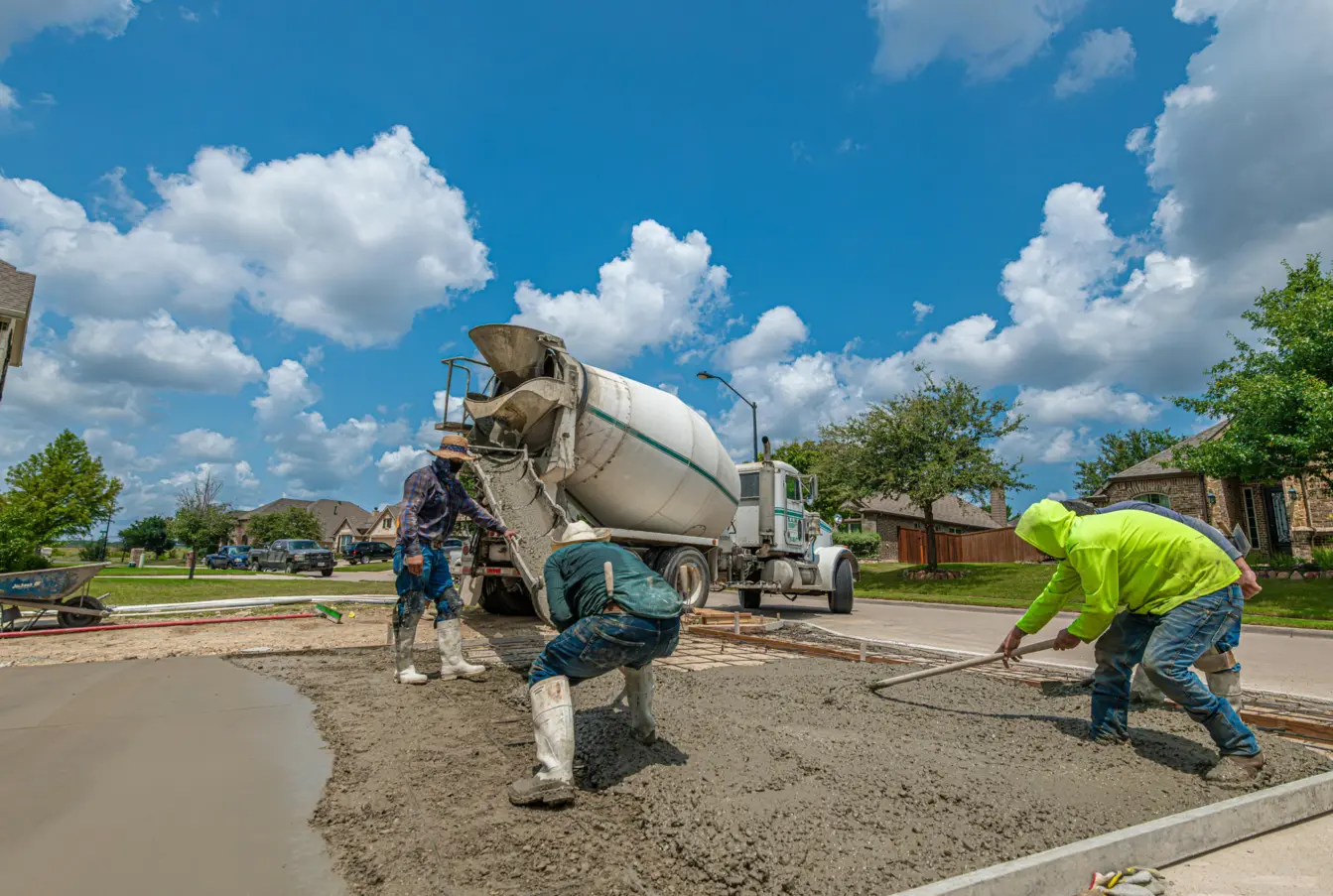
Pouring concrete is a business of precision. You know that the right mix, the proper reinforcement, and a flawless finish separate a job that lasts for decades from one that cracks under the first frost. The same precision is required to build a business that lasts.
The difference is that the foundation is no longer just rebar and gravel; it’s data, search terms, and your visibility on a customer’s phone screen. While the US concrete industry is an $85.7 billion giant, a surprising number of contractors are still operating as if their best marketing tool is a sign in a customer’s yard. That sign is no match for the 97% of consumers who now go online to find local services.
This is a definitive guide, a blueprint for turning your concrete company’s website and online presence into your most valuable, predictable lead-generation asset. We will cover the entire process, from understanding the keywords your customers are searching for right now to mastering Google Maps and measuring the exact return on your investment.

Chapter 1: Why SEO is Non-Negotiable for Concrete Contractors
Before pouring a single yard of concrete, you establish the groundwork. You survey the land, set the forms, and ensure the base is solid. In digital marketing, this initial phase is about understanding the landscape of your industry and your customer. SEO isn’t a modern luxury; it’s the essential foundation for growth.
The State of the Concrete Industry
The demand for your services is booming. The concrete contractors industry in the United States is a massive $85.7 billion market, according to industry analysis from IBISWorld. This market has seen steady growth, expanding by an average of 3.7% each year since 2019. As of this year, there are 162,246 concrete contractor businesses in the U.S., a number that grew by 2.1% from 2023 alone. The competition is fierce and getting more crowded every day.
Yet a significant portion of the construction industry is lagging far behind in digital adoption. A 2022 survey from the Construction Marketing Association revealed a critical gap: while 85% of construction firms have a website, fewer than 40% are actively investing in SEO.
For every ten competitors in your area, at least six are likely operating with a weak or non-existent digital presence. This means the contractors who commit to a robust, professional SEO strategy aren’t just competing, they are capitalizing on the inaction of others and building a powerful, defensible moat around their business.
How Homeowners and B2B Clients Find Concrete Services Today
The days of relying on the Yellow Pages and word-of-mouth alone are over. According to industry data, 97% of consumers now use the internet to learn more about a local company than any other source. Mobile searches including the phrase “near me” have exploded by over 200% in recent years, as reported by Nectafy.
Your potential customers are not typing “concrete companies” into Google; they are searching for “concrete driveway contractor near me,” “stamped concrete patio Jacksonville,” or “foundation repair specialists” on their phones, often while standing in their own backyard looking at the problem.
Data shows that 88% of consumers who perform a local search on their mobile device will call or visit the business within 24 hours. BrightLocal’s consumer survey found that 77% of people always or regularly read reviews when evaluating local businesses. A lack of recent, positive reviews is a major red flag that will send customers straight to your competitors.
The Real Cost of Ignoring SEO
Consider two hypothetical but realistic businesses. “Old School Concrete Co.” has been in business for 30 years, does great work, and has a solid reputation with past clients. Their marketing consists of an outdated website, an occasional ad in a local paper, and the hope that referrals will keep coming.
Their lead flow is a roller coaster; some months are great, but others are dangerously quiet. They are forced to take any job that comes along, even the low-margin ones, just to keep their crews busy.
“Modern Concrete Solutions” invested in a professional SEO strategy. Their website ranks on the first page of Google for profitable services like “decorative concrete patios” and “commercial foundation pouring.” Their GBP is packed with dozens of 5-star reviews and photos.
They get a steady, predictable stream of inbound phone calls and can choose the high-margin jobs they want, scheduling their work weeks in advance. SEO for them isn’t an expense; it’s an investment that builds a scalable, predictable lead generation asset.
At Aziel Digital, we build these types of predictable growth systems, as seen in our work increasing organic traffic by over 300% for Paving Contractors Dublin and boosting calls by over 100% per month for Hessco Innovations Towing.

Chapter 2: Keyword Research and Competitive Analysis for Concrete Leads
Having established the urgent need for a digital presence, we now move from the “why” to the “what.” This chapter provides the strategic blueprint for any successful SEO campaign, getting inside your customer’s head to understand the exact words and phrases they use when searching for your services, and legally spying on your local competitors to discover exactly what’s working in your market.
Finding Profitable Keywords: What Your Customers Are Actually Searching For
Keywords are the bridge between a customer’s problem and your solution. We can break search intent down into three main categories. Informational intent is when users are learning about a problem, they might search for “cost to pour a 20×20 concrete slab” or “how to fix a cracked driveway.”
Commercial investigation intent is when they are comparing options, using searches like “stamped concrete vs pavers cost” or “best concrete sealer for driveways.” Transactional intent, the most valuable, is when a customer is ready to hire, using phrases like “concrete patio installers near me” or “foundation repair company Houston.”
To organize your efforts, think about keywords in four categories:
- Service-Based Keywords that describe what you do (concrete driveway repair, stamped concrete patio, epoxy garage floor, concrete foundation pouring);
- Location-Based Keywords that signal a high desire to hire someone nearby (concrete contractor Jacksonville FL, driveway replacement Orange Park, commercial concrete services Duval County);
- Problem-Based Keywords that target customers at the very beginning of their journey (what causes concrete to crack, signs of foundation problems, how to level a garage floor); and
- Cost and Near Me Keywords that capture users close to making a decision (cost of a new concrete driveway, foundation repair companies near me).
Focus on long-tail keywords, longer, more specific phrases. A search for “concrete company” is broad, but “average cost for a stamped and colored concrete patio in Jacksonville” shows a customer who knows exactly what they want.
These long-tail keywords convert at a much higher rate. Tools like Google Keyword Planner, Ahrefs, and Semrush are invaluable for uncovering these terms.
| Keyword Type | Example Keyword | Customer’s Mindset | Where to Target |
|---|---|---|---|
| Service-Based (Transactional) | stamped concrete patio Jacksonville | Ready to hire, actively searching for a contractor | Service pages |
| Location-Based (Transactional) | concrete contractor Jacksonville FL | High intent to hire someone specifically in their area | Location pages and GBP |
| Problem-Based (Informational) | why is my driveway cracking | Diagnosing a problem, not yet ready to hire | Blog posts and FAQs |
| Cost/Near Me (Commercial) | cost of concrete driveway near me | Close to a decision, researching pricing | Service pages with pricing info |
How to Analyze and Outrank Other Local Concrete Companies
You don’t need to outrank every concrete company in the country, just the top 3 to 5 competitors in your specific service area. Here is the Aziel Digital Step-by-Step Competitor Analysis Framework:
- Identify your true competitors: Open an incognito browser and search for your top 5 most profitable service keywords, like “concrete driveway replacement [your city].” Make a list of the companies that consistently appear in the Google Maps Local Pack and the top organic search results.
- On-page website analysis: Visit each competitor’s website. Do they have separate, detailed pages for each service, or is everything lumped onto one page? Is their content thin and generic, or is it in-depth and helpful? Use Google’s PageSpeed Insights to check how fast their site loads.
- Google Business Profile audit: Look up your competitors on Google Maps. How many reviews do they have, and what is their average star rating? Are they actively using Google Posts? Have they completely filled out their services section with detailed descriptions?
- Off-page backlink analysis: Use Ahrefs’ Free Backlink Checker to see who is linking to your competitors. Are they getting links from the local Chamber of Commerce, home improvement blogs, or sponsorships of local events? This reveals their level of authority and shows you what types of links you need to build to surpass them.
Defining Your Service Area and Niche
Attempting to be everything to everyone everywhere is a guaranteed recipe for failure in SEO. You must choose your battlefield. Start by clearly defining your primary service area. This could be a 25-mile radius from your physical address or a specific list of cities, towns, and counties you are willing to travel to for jobs.
Beyond geography, consider the power of niching down. Instead of marketing yourself as a “general concrete contractor,” you could become the recognized local expert for a specific, high-margin service, the go-to company for “decorative stamped concrete,” or a specialist in “commercial foundation pouring for new builds.” Niching down allows you to use more targeted keywords, create highly relevant content that speaks directly to a specific customer’s needs, and build a powerful reputation.

Chapter 3: On-Page SEO For Concrete Contractors
A well-researched strategy is useless without a powerful tool to execute it, and that tool is your website. This chapter provides the blueprints for building a contractor website that doesn’t just look professional but actively works to attract, engage, and convert visitors into qualified, paying customers.
The Ultimate Concrete Contractor Website Structure
Structure is everything for both your users and for Google’s search crawlers. The most effective structure is a “silo” model, where your content is organized into clear, logical categories. Every concrete contractor website must have these essential pages:
- Homepage: Within five seconds, it must answer four questions: Who you are, what you do, where you do it, and why a customer should choose you. This “why” is communicated through trust signals like “Licensed and Insured,” “Free Estimates,” and “20+ Years of Experience.”
- About Us: This is where you build trust and showcase your E-E-A-T (Experience, Expertise, Authoritativeness, and Trustworthiness). Don’t use stock photos; show real pictures of your owner, your team, and your trucks. List your certifications, such as being an ACI Certified Flatwork Finisher.
- Core service pages: This is a non-negotiable rule; do not list all your services on a single page. You must create a separate, detailed page for each service you offer: /concrete-driveways/, /stamped-concrete-patios/, /foundation-repair/, /commercial-concrete/.
- Location pages: If you serve multiple towns or cities, creating dedicated location pages is crucial for ranking in those areas. Each page should be unique, discussing local projects or considerations, and titled accordingly: /concrete-contractors-plano-tx/.
- Project gallery and portfolio: For concrete work, visual proof is paramount. Categorize by service type (Driveways, Patios, Walkways) and allow customers to see the quality of your work.
- Blog: The engine that builds your topical authority, where you answer your customers’ questions and attract informational searches, positioning you as the local expert.
- Contact Us: Include your full NAP (Name, Address, Phone number), a simple contact form, and an embedded Google Map. Your NAP should be consistent in your website’s footer on every single page.
Optimizing Your Service Pages to Attract High-Intent Concrete Coatings Customers
Your service pages are your digital salespeople, persuasive, informative, and optimized to convert visitors who are ready to make a hiring decision. Each service page should be a comprehensive resource on that specific topic:
- H1 title: The main headline must be focused on the keyword and location, “Expert Stamped Concrete Patio Installation in Jacksonville, FL.”
- Introduction: Immediately address the visitor’s problem and position your service as the ideal solution.
- Detailed description: For a stamped concrete page, discuss patterns, colors, the sealing process, and benefits. Use related semantic keywords like decorative concrete, colored concrete, rebar reinforcement, and crack sealing.
- Benefits over features: Instead of saying “We pour 4000 PSI concrete,” write “You’ll get a crack-resistant driveway that withstands Florida’s heavy rains and boosts your home’s curb appeal for decades to come.”
- High-quality media: Embed several before-and-after photos and, if possible, a short video showcasing a completed project.
- Social proof: Include one or two powerful customer testimonials directly related to the service being described on that page.
- FAQs section: Answer 3 to 5 of the most common questions you get about that service. This is a prime opportunity to win a Google Featured Snippet.
- Strong call-to-action: End the page with a clear, compelling instruction: “Call [phone] for a Free, No-Obligation Estimate Today!”
Building Topical Authority In The Concrete Space
To be seen as a true expert by Google, you need to demonstrate your knowledge beyond just your service pages. A blog or learning center is a powerful tool. According to industry marketing data, businesses that actively blog receive 97% more links to their websites than those that don’t.
Lead-generating blog post ideas for a concrete contractor include: comparison posts like “Stamped Concrete vs. Pavers: A Cost and Durability Guide for Florida Homeowners”; cost guides like “How Much Does it Cost to Replace a Concrete Driveway in Jacksonville?”; maintenance guides like “The Ultimate Guide to Sealing and Maintaining Your Concrete Patio to Prevent Cracks”; local project spotlights like “Project Spotlight: A Modern Concrete Pool Deck in the San Marco Neighborhood” (which builds hyper-local relevance); and problem/solution posts like “3 Common Causes of Foundation Cracks in Florida Homes (And How to Fix Them).”
Technical SEO Checklist
- Mobile-first design: The vast majority of local searches happen on a smartphone. Your website must be responsive, looking and working perfectly on any screen size.
- Site speed: A slow-loading website is a lead killer. Web performance data shows that even a one-second delay in page load time can reduce conversions by 7%. Use Google’s PageSpeed Insights tool to test and identify issues like oversized images.
- SSL certificate (HTTPS): The padlock icon in the browser address bar is a basic security requirement, Google uses it as a minor ranking signal, and users distrust HTTP sites.
- Clean URL structure: Your page URLs should be short, easy to read, and include your target keyword: yourdomain.com/stamped-concrete-patios/ is much better than yourdomain.com/page-id=123.
- XML sitemap: A file that acts as a map for Google, helping its crawlers find and index all the important pages on your website.
Chapter 4: Dominating Google Maps and Building Unshakeable Trust
A powerful website is your digital headquarters, but the battle for local customers is often won or lost on Google Maps. This chapter focuses on off-page SEO, the critical factors that build your reputation, visibility, and authority across the entire digital landscape.
Mastering Google Business Profile
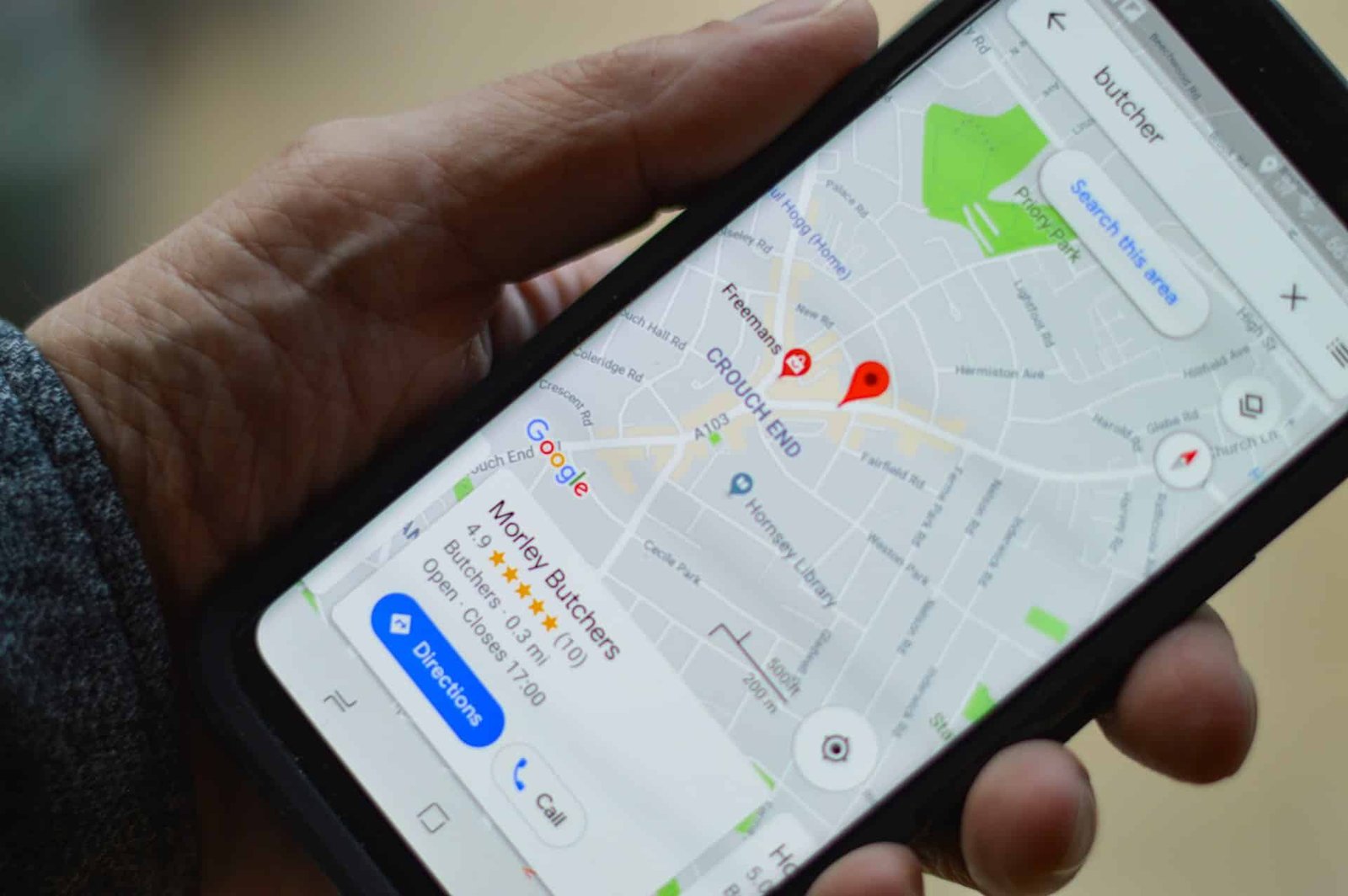
Research from GoGulf shows that 46% of all Google searches are for local information. For many potential customers, their entire interaction with your business will happen within the Google Maps Local Pack; they will see your reviews, look at your photos, and call you directly from your profile, often without ever clicking through to your website.
This is known as a “zero-click” conversion, and it’s why optimizing your GBP is arguably the single most impactful activity for local lead generation.
- Claim and verify your profile, ensure you have 100% ownership and control over your listing.
- Perfect NAP consistency, your business Name, Address, and Phone number must be absolutely identical on your GBP, your website, and everywhere else on the web.
- Choose the right categories; your primary category must be “Concrete Contractor.” Add as many relevant secondary categories as apply: Foundation Repair, Paving Contractor, Epoxy Flooring Service, Masonry Contractor.
- Define your service area precisely, list every city, zip code, and county you serve. If you operate from a home address and don’t serve customers there, set yourself up as a Service Area Business (SAB) and hide your physical address.
- Detail your services with keyword-rich descriptions, and mirror the detail on your website’s service pages. This helps you rank for more specific long-tail searches.
- Upload high-quality, geo-tagged photos and videos consistently, and your profile should be a visual portfolio with a continuous stream of new photos from completed jobs. Before-and-after photos are incredibly powerful.
- Use Google Posts weekly, every week, create a new post sharing a recently completed project, a special offer, or a link to a new blog post on your site.
- Seed your Q&A section, proactively ask and answer the most common questions you receive about your services, pricing, and process. This controls the narrative and provides helpful information upfront.
- Enable messaging, turn on the messaging feature to allow potential customers to text you directly from your profile. Responding quickly can be the difference between winning and losing a job.
Citations and Local Link Building
Google determines your local prominence by how often your business is mentioned across the web. A citation is any online mention of your Name, Address, and Phone number (NAP). According to local SEO research by Moz, the consistency of this NAP data is a critical local ranking factor.
You need to build a portfolio of accurate citations from a variety of sources: major data aggregators like Foursquare, Data Axle, and Neustar Localeze (which supply business data to hundreds of other online directories); industry-specific directories like HomeAdvisor, Angi, Houzz, Thumbtack, and BuildZoom; and local directories including your local Chamber of Commerce, city business listings, and local newspaper websites.
Beyond citations, you need to build actual local links. Actionable strategies include sponsoring a local youth sports team or community festival (often resulting in a link from their website), joining local business associations like the Associated General Contractors (AGC) of America, and forming strategic partnerships with complementary businesses, landscapers, roofers, and fence companies, and featuring each other on a “Trusted Partners” page on your respective websites.
Our full concrete contractor marketing guide covers even more strategies for building local authority.
Your Ultimate Conversion and Ranking Tool
Online reviews serve a dual purpose: they are a direct ranking factor for the Google Local Pack and arguably the most powerful conversion tool you have. ReviewTrackers found that 94% of consumers say a negative review has convinced them to avoid a business.
A Harvard Business School study discovered that a one-star increase in a business’s Yelp rating can lead to a 5 to 9% increase in revenue.
- Ask every happy customer personally: When a job is complete, and the customer is thrilled with the result, ask them if they would be willing to share their experience online.
- Make it easy with a direct link: As soon as the final payment is made, send them a text or email with a direct link to your Google review form. Don’t make customers hunt for your review page.
- Use review generation software: Tools like Podium or Birdeye can automate the review request process, sending follow-ups and making it simple for customers to leave feedback on multiple platforms.
- Create ‘Leave a Review’ cards: Design and print small cards with a QR code that links directly to your Google review page. Hand these out to customers upon job completion.
Respond to all reviews, both positive and negative. Thank customers for positive feedback. For negative reviews, respond professionally and publicly: acknowledge their concern, take the conversation offline to resolve the issue, and show potential customers that you stand behind your work and care about customer satisfaction.

Chapter 5: Advanced Tactics and Measuring ROI
You’ve laid the digital foundation, built the website structure, and established your presence across the local web. This final chapter introduces the advanced strategies that create true, lasting market leaders, how to build unbreakable trust with Google’s E-E-A-T framework, how to measure the actual dollar-for-dollar return on your SEO investment, and how to leverage AI and paid advertising to stay miles ahead of your competition.
Proving Your Experience, Expertise, Authoritativeness, and Trustworthiness
Google’s mission is to provide users with the most helpful and reliable results. To do this, its algorithms evaluate websites based on E-E-A-T. For a high-stakes trade like concrete work, where a bad job can lead to costly structural failure, demonstrating E-E-A-T is not just good for SEO; it’s essential for converting discerning customers.
- Experience: Prominently display your “Years in Business” on your homepage. Create detailed project case studies outlining the customer’s initial problem, your process, the materials used, and the final successful result with high-quality photos.
- Expertise: Write in-depth blog posts that answer complex questions. Create detailed biography pages for the owner and key team members, highlighting their years in the trade and listing any industry certifications, such as being an ACI Certified Flatwork Finisher or an NRMCA Certified Concrete Technologist.
- Authoritativeness: Display the logos of organizations you belong to, the Better Business Bureau (BBB), the Associated General Contractors (AGC), or local home builder associations. If you’ve won any local awards or been mentioned in local media, feature those prominently.
- Trustworthiness: Your contact information, including a physical address and phone number, must be easy to find. Showcase “Licensed and Insured” badges throughout your site. Have a clear, easy-to-understand privacy policy. Embed customer testimonials on relevant service pages.
SEO KPIs for Concrete Businesses
- Organic traffic: Using a tool like Google Analytics, track a steady upward trend in the number of visitors coming to your site from search engines.
- Keyword rankings: With a platform like Semrush or Ahrefs, track your website’s position in both the standard organic results and the Google Maps Local Pack for your most important service and location keywords.
- Google Business Profile insights: Your GBP provides a goldmine of data. The three most important metrics are Phone Calls, Website Clicks, and Driving Directions Requests. Month-over-month increases here are a clear sign of success.
- Conversions and call tracking: Track how many people fill out your contact form. More importantly, use call tracking software, which assigns a unique phone number to your website, allowing you to know with certainty which phone calls came directly from your SEO efforts.
- Lead-to-customer rate and ROI: Track how many of your SEO-generated leads turn into actual paying jobs. If you invest $2,000 in SEO and it generates five jobs worth $25,000 in revenue, you have a clear and powerful return on your investment.
Leveraging AI and Paid Ads to Amplify Your SEO For Concrete Coatings
SEO does not exist in a vacuum. The most dominant contractors create a marketing ecosystem where different channels work together. AI tools like ChatGPT can accelerate your content creation by brainstorming blog topics, creating detailed outlines, and even writing initial drafts; however, a human expert must always review, edit, and inject genuine insights to satisfy E-E-A-T requirements.
Think of SEO and Pay-Per-Click (PPC) advertising as a one-two punch for market domination. SEO is a long-term strategy that builds a valuable, lasting asset. PPC, including Google Ads and Google Local Services Ads (LSAs), provides instant visibility at the top of the page. The “Google Guaranteed” badge that comes with LSAs is a massive trust signal that can generate leads immediately.
You can use PPC campaigns to quickly test which keywords and ad copy convert into the most profitable jobs, then funnel that real-world data back into your SEO strategy to prioritize your efforts.
The ultimate goal is total SERP domination, appearing in the LSAs, the PPC ads, the Google Map Pack, and the top organic results for your main keywords. When a customer sees your company everywhere, you become the obvious and only choice.
Your Next Step to Predictable Growth
You now have the complete blueprint. You understand the digital landscape of the concrete industry, the strategic planning required to find your customers, the on-page tactics to turn your website into a lead machine, and the off-page strategies to build unshakeable local authority.
At Aziel Digital, we don’t just talk about SEO; we build predictable growth systems for contractors. Explore our complete suite of concrete contractor marketing services, including SEO for concrete contractors, Google Ads for concrete contractors, web design for concrete contractors, and our full Trades We Serve page to explore all the industries we serve.
Book a free, no-obligation growth strategy session with our team today. We’ll analyze your current online presence, assess your competition, and show you the precise, actionable steps you can take to achieve predictable growth.
Frequently Asked Questions About SEO for Concrete Contractors
How Long Does SEO Take to See Results for a Concrete Business?
You can typically expect to see initial positive movement in rankings and traffic within 3 to 6 months. Factors influencing this timeline include the level of competition in your specific city, the current state of your website, and the aggressiveness of the SEO campaign.
While some quick wins, like optimizing your Google Business Profile, can generate calls faster, sustainable first-page rankings for competitive terms require patience and consistent effort.
Is SEO Better Than Paying for Leads From HomeAdvisor or Angi?
SEO is fundamentally different and, in the long run, a more valuable asset. When you pay for leads from services like HomeAdvisor or Angi, you’re often competing with several other contractors for the same lead.
With SEO, you are building your own lead generation machine. The traffic and leads you generate are exclusive to you, and the cost per lead from SEO typically becomes far lower than paid lead services over time.
What Is the Difference Between Local SEO and Regular SEO?
Regular SEO focuses on ranking for keywords on a national or global scale. Local SEO, which is what matters for a concrete contractor, is about being visible to customers in a specific geographic area. It heavily emphasizes signals like your Google Business Profile, local citations (consistent NAP data), and online reviews from local customers.
The goal is not just to rank in the standard search results but to dominate the Google Maps Local Pack, which is where most high-intent local customers find service providers.
Can I Do SEO for My Concrete Company Myself?
It is possible to handle some basic SEO tasks yourself, such as claiming your Google Business Profile and ensuring your website has unique pages for each service.
However, effective SEO that outranks established competitors requires significant expertise, time, and specialized tools for keyword research, competitor analysis, link building, and technical audits.
For most busy contractors, partnering with a specialized agency provides a much higher and faster return on investment.
How Much Should a Concrete Contractor Invest in SEO Per Month?
The investment can vary widely based on your market’s competitiveness, your business goals, and the scope of services included. A basic local SEO campaign might start in the low thousands per month, while a more aggressive, comprehensive strategy for a competitive major metropolitan area could be significantly more.
The key is to view it not as a cost but as an investment; a proper SEO campaign should generate a clear positive ROI by bringing in high-margin jobs that far exceed the monthly investment.
What Are the Most Important Ranking Factors for Google Maps?
According to extensive industry studies from Moz, the top ranking factors for the Google Maps Local Pack are signals related to your Google Business Profile (proximity, categories, keywords), on-page signals from your website (NAP consistency, keywords in titles), link signals (backlink authority, anchor text), and review signals (review quantity, velocity, and diversity).
Google wants to see a well-optimized and active GBP, a strong website, and a great local reputation.
Why Is My Competitor Outranking Me Even Though I Have a Better Website?
A great-looking website is only one piece of the puzzle. Your competitor might be outranking you due to stronger off-page factors, a much more extensive and consistent citation profile, more high-quality local backlinks from authoritative sites, or a significantly better review portfolio (more reviews, higher rating, and more consistent review velocity).
SEO is a holistic discipline; success requires excellence both on your website and across the entire digital ecosystem.
Do I Need a Blog on My Concrete Contractor Website?
Yes, a blog is a critical tool for building topical authority and demonstrating your expertise to both Google and potential customers. Businesses that blog get 97% more links to their websites, a key ranking factor.
By creating helpful content that answers common customer questions, you attract users early in their buying journey and establish your company as the trusted local expert, making them more likely to call you when they are ready to hire.
How Do Online Reviews Affect My SEO Rankings?
Online reviews have a direct and significant impact on your local SEO rankings, especially within the Google Maps pack. Google’s algorithm considers review quantity, the frequency of new reviews (velocity), and the overall star rating as strong signals of a business’s real-world prominence and trustworthiness.
A steady stream of positive reviews tells Google that customers in your area trust and choose your business, which in turn makes Google more likely to recommend you to other searchers.
How Can I Track if My SEO Investment Is Actually Generating Phone Calls and Jobs?
You must use call tracking software. This technology replaces the phone number on your website with a unique, trackable number that forwards to your main business line.
This allows you to log every single call that originates from your website traffic and directly attribute paying jobs back to your SEO campaign. This transforms SEO from a marketing expense into a measurable investment with a clear ROI.