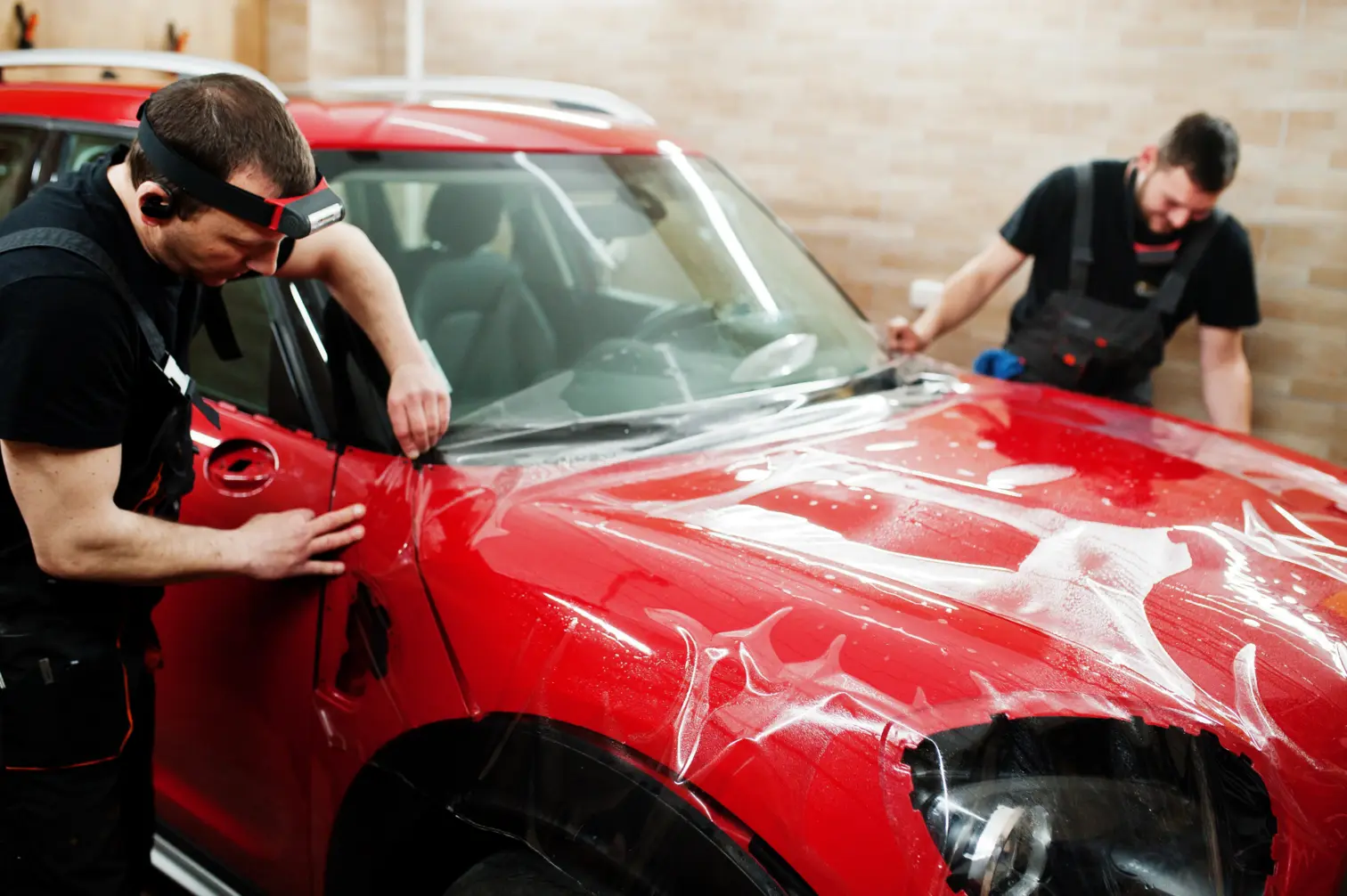
The average profit margin for a collision repair shop in the United States is between 3% and 6%. This isn’t a business of comfortable margins. It’s a constant fight against DRP pressures, a crippling technician shortage, and cars that get more complex and expensive to fix every single year.
While you’re focused on cycle time and paint quality, a new, unseen force is deciding which shops win the only jobs that truly matter, the high-margin, customer-pay work that DRPs don’t control. That force is Artificial Intelligence.
This is not a guide about futuristic robots fixing cars. This is a practical, step-by-step roadmap for auto body shop owners to use real, accessible AI tools to solve their biggest marketing problems today.
We’ll show you how to attract more profitable jobs, automate your customer service to earn more 5-star reviews, and measure the return on every dollar you invest. By the end, you will have a clear plan to turn AI from a buzzword into your most powerful engine for shop growth.
Chapter 1: Why AI Marketing Is A Game-Changer For Modern Collision Centers
Artificial intelligence is no longer a concept reserved for tech giants in Silicon Valley. It’s a fundamental business tool that is becoming essential for survival and growth in the hyper-competitive collision repair industry.
For shop owners facing daily economic and operational pressures, AI marketing is not another expense to add to the pile. It is the single most effective lever to combat those pressures, increase efficiency, and reclaim control over your shop’s profitability. Ignoring it is no longer an option.
Acknowledging the Headwinds Facing Today’s Shops
If you feel like it’s harder than ever to run a profitable shop, you’re right. The U.S. Collision Repair industry is a massive $51.5 billion market, but according to IBISWorld, it’s fragmented across more than 35,000 competing businesses.
This intense competition is happening against a backdrop of severe economic headwinds. The average profit margin sits in a razor-thin 3-6% range for many shops, as reported by FenderBender’s 2023 KPI Survey. Three key challenges are driving this squeeze:
- Direct Repair Program (DRP) Dominance: For many shops, DRPs with major insurers like State Farm, Geico, and Progressive account for 50-80% of total revenue. While this provides a steady flow of work, it comes at a cost. Insurers dictate labor rates, limit parts choices to aftermarket or used, and add administrative burdens, all of which compress your margins. The most critical marketing goal for any modern shop is to attract more profitable, non-DRP, customer-pay jobs to balance the scales.
- The Technician Shortage: The industry is facing a severe lack of skilled labor. A report from The TechForce Foundation projects a demand for over 100,000 new collision technicians by 2026. This shortage directly impacts your bottom line, leading to longer cycle times, reduced capacity, and the inability to take on more work even when it’s available.
- Increasing Vehicle Complexity: The days of simple bumper repairs are over. Modern vehicles equipped with Advanced Driver-Assistance Systems (ADAS), electric powertrains, and exotic materials require massive, ongoing investments in specialized equipment and I-CAR training. A minor fender-bender can now necessitate a complex sensor recalibration that costs hundreds of dollars, adding another layer of operational complexity and cost.
AI marketing directly addresses these challenges. It isn’t about replacing your technicians. It’s about making your business more efficient and targeted, so you can attract the high-margin jobs that pay for the training and equipment your top-tier technicians need.
Defining AI Marketing for Auto Body Shop Owners
Let’s clear up a common misconception. AI marketing is not about robots fixing cars or a sentient computer running your front office. It is simply the use of intelligent software and powerful algorithms to automate, optimize, and personalize how you find and keep your customers. The core concept is a shift from marketing based on guesswork to marketing based on data-driven decisions.
Think of it this way. In the past, you might have run a Google Ad by manually picking a few keywords like “auto body shop” and setting a budget, hoping for the best. That’s guesswork.
An AI-powered approach is fundamentally different. Instead of you guessing, an AI system analyzes thousands of signals in real-time for every single person searching. It looks at the time of day, the person’s device, their location, their past search history, and hundreds of other data points.
It can then predict which user is most likely to have been in a recent accident and needs immediate repair, not just someone casually researching costs. The AI automatically bids higher for that high-intent user and lower for the tire-kicker, maximizing your ad budget to attract real, profitable jobs. AI marketing takes the human intuition you use in your shop and applies it at a scale and speed that no human ever could.
The Core Benefits Of AI For Increasing Shop Profitability
When you move from guesswork to data-driven AI, the impact on your shop’s bottom line is direct and measurable. The benefits are not abstract. They translate into more revenue, better margins, and a more efficient operation.
Here are the primary ways AI boosts profitability for a collision center:
- Hyper-Personalization at Scale: AI allows you to talk to the right customer with the right message at the right time. Imagine a severe hailstorm hits a few specific neighborhoods in your city. With AI-powered advertising, you can instantly launch a campaign targeting homeowners in only those zip codes with ads for your paintless dent repair (PDR) services. This level of precision is impossible with traditional methods. A report by McKinsey found that businesses effectively using AI for personalization see revenue increases of 6-10%, which is two to three times faster than those who don’t.
- Dramatically Improved ROI on Ad Spend: AI eliminates wasted money on bad clicks. Google’s own data shows that AI-powered bidding strategies in Google Ads can improve conversion value by an average of 18% at a similar or even lower cost-per-action (CPA). For your shop, this means turning more of your advertising budget into actual, paying repair jobs instead of just website visits.
- 24/7 Customer Engagement & Lead Capture: Your front office closes at 5 or 6 PM, but potential customers are searching for help at all hours, especially right after an accident. According to data from Drift, over 35% of potential customers are browsing for services outside of typical business hours. An AI chatbot on your website can answer up to 80% of routine customer inquiries, “Do you work with Allstate?” or “Are you open on Saturdays?” and, most importantly, capture their contact information for your team to follow up with in the morning. You stop losing leads that happen after you’ve locked the doors.
- Data-Driven Decision Making: AI tools can analyze your marketing and sales data to uncover profitable trends that a human would likely miss. It can identify which zip codes generate the customers with the highest average repair orders (ARO), which specific vehicle models result in the most profitable repairs, or which marketing channel is bringing you the most non-DRP work. This allows you to double down on what works and cut what doesn’t, optimizing your entire marketing strategy for maximum profitability.
These benefits are not theoretical. They represent a fundamental shift in how collision centers can compete and grow. The next chapter will break down the specific technologies that make all of this possible, translating the “what” into the “how.”

Chapter 2: Machine Learning, NLP, And Generative AI For Your Body Shop
The term “AI” can feel like an intimidating black box. To make smart decisions for your shop, you don’t need to be a data scientist, but you do need to understand the basic tools in the toolkit. This chapter demystifies the three core technologies that power effective AI marketing: Machine Learning (ML), Natural Language Processing (NLP), and Generative AI.
We will skip the complex theory and focus on simple definitions and, more importantly, hyper-specific examples of how each one solves a real-world problem for a busy collision center.
Machine Learning (ML): The Predictive Powerhouse for Bids and Leads
In simple terms, Machine Learning is the science of teaching computers to learn from data to find patterns and predict future outcomes without being explicitly programmed for every scenario.
For your auto body shop, its greatest power is predicting which marketing efforts will lead to the most profitable repair jobs. It’s about turning your past performance data into a roadmap for future success.
Here are three practical applications of ML in a collision center’s marketing:
- Predictive Ad Bidding: This is the engine behind modern Google Ads. When you use an AI-driven strategy like “Smart Bidding,” Google’s ML algorithms analyze your historical conversion data, every person who called your shop or filled out an estimate form from an ad in the past. It learns the characteristics of a high-value lead and then analyzes hundreds of real-time signals of a new user to predict how likely they are to become a customer. If the system predicts a high likelihood, it automatically bids more to ensure your ad shows up. If the user is just browsing, it bids less or not at all. This maximizes your budget for clicks that matter.
- AI Lead Scoring: Not all leads are created equal. A lead for a “small scratch on a 15-year-old car” is far less valuable than a lead for a “multi-panel collision on a late-model Audi.” An ML-powered Customer Relationship Management (CRM) system can automatically analyze incoming leads from your website and assign a “hotness” score based on factors like the vehicle type, the described damage, and the customer’s location. This allows your service advisors to immediately prioritize follow-ups on the leads that are most likely to result in large, profitable repair orders.
- Customer Churn Prediction: ML can also help with customer retention. By analyzing your shop’s service history, an ML model can identify patterns that precede a customer leaving for a competitor. For example, it might learn that customers who haven’t been in for any service in over three years and live in an area with a new competing shop are at high risk of “churning.”
The system can then automatically flag these customers, allowing you to proactively reach out with a targeted email offering a discount on a detail service or a seasonal check-up, keeping your shop top-of-mind.
Understanding How Your Customers Talk And Think
Natural Language Processing is the branch of AI that gives computers the ability to understand, interpret, and respond to human language, both written and spoken. It’s the technology that bridges the gap between how your customers communicate and how your software operates.
For a service business like a body shop, where clear communication is everything, NLP is a powerful tool.
Consider these real-world applications:
Intelligent AI Chatbots: A basic chatbot can only respond to pre-programmed commands. An NLP-powered chatbot on your website can understand the intent behind a customer’s question. It recognizes that “how much to fix a dented fender on a 2022 Honda CRV?” is a request for an estimate. It can then ask follow-up questions, guide the user to submit photos of the damage, and capture all their contact information, 24/7, just like an experienced service advisor would.
Reputation Management at Scale: Manually reading every online review across Google, Yelp, and Facebook is time-consuming. NLP tools can automatically scan all of your reviews and perform “sentiment analysis,” categorizing them as positive, negative, or neutral. More importantly, it can identify recurring topics. For instance, the software could analyze your last 100 reviews and show you that “communication during repair” is the most frequently mentioned topic in your negative reviews, while “repair quality” is the most common theme in your positive ones. This provides immediately actionable feedback to improve your operations.
Voice Search Optimization: According to Google, over 27% of the global online population now uses voice search on their mobile devices. People don’t speak the same way they type. A person might type “auto body shop Jacksonville,” but they will say, “Hey Google, find a body shop near me that does aluminum repair and works with USAA.” NLP helps you optimize your website’s content to directly answer these longer, more conversational spoken questions, ensuring your shop appears in these valuable voice search results.
Generative AI: Your In-House Content and Ad Creation Engine
Generative AI is the technology that has captured the most headlines recently, with tools like ChatGPT, Jasper, and Google’s Gemini. In its simplest form, Generative AI creates new, original content, including text, images, and video based on the prompts and instructions you provide. For a busy shop owner who doesn’t have time to be a full-time marketer, it’s a massive force multiplier and time-saver.
Here’s how a body shop can use Generative AI today:
- Fuel Your SEO Content Strategy: To rank well on Google, your website needs helpful, authoritative content. You can use a tool like ChatGPT to generate a comprehensive draft for a blog post on a topic like “5 Signs of Hidden Frame Damage After an Accident” or a detailed FAQ page answering common questions about the insurance claim process. This provides a strong foundation that you or your marketing team can then refine and publish, building your site’s authority and attracting organic traffic.
- Create Endless Ad Copy Variations: Writing compelling ads is difficult. With Generative AI, you can input a few key details about a promotion, for example, a special on paintless dent repair, and ask it to create 10 different headlines and descriptions for a Google Ad campaign. It can generate variations that focus on speed, quality, cost-savings, or your certifications. You can then use AI-powered features within Google Ads to automatically test which combinations get the most clicks and calls, constantly optimizing your campaigns.
- Simplify Social Media Management: Coming up with fresh ideas for social media can be a drain. You can ask a Generative AI tool to create a week’s worth of social media post ideas for your shop. This could include writing engaging captions for your “before and after” repair photos, drafting quick tips for post-repair car care, or creating a post that spotlights one of your I-CAR certified technicians to build trust and highlight your team’s expertise.
Understanding these three pillars, Machine Learning, NLP, and Generative AI is the key to unlocking the full potential of AI marketing. They are not separate, competing technologies. They work together to create a smarter, more efficient marketing system.
Now that you understand the tools, the next chapter will show you how to apply them to your most important objective, acquiring more high-margin customers.

Chapter 3: AI Strategies To Attract More High-Margin, Non-DRP Collision Repair Jobs
Theory is useful, but results are what matter. This chapter moves from explaining AI concepts to applying them to the number one goal for most collision center owners, getting more profitable, non-DRP jobs in the door. The battle for these customers is won or lost online, primarily on Google.
Here, we will detail exactly how AI revolutionizes the two most critical digital marketing channels for any local service business, Local Search Engine Optimization (SEO) and Pay-Per-Click (PPC) advertising.
AI-Enhanced Local SEO: How to Be the First Shop Customers Find on Google
The stakes of local search are incredibly high. Data from GoGulf shows that 46% of all searches on Google are for local information. Furthermore, research from Chatmeter reveals that searches containing “near me” have grown by over 900% in recent years.
When someone’s car is damaged, their first action is to pull out their phone and search for “collision repair near me.” If your shop doesn’t appear prominently in the Google Local Pack that map box at the top of the results you are invisible to your most valuable potential customers.
AI is transforming how shops can dominate these local search results. It’s no longer just about stuffing keywords onto a page. It’s about demonstrating true local authority and expertise, and AI provides the tools to do it at scale.
Here’s how AI is revolutionizing local SEO for body shops:
- AI-Driven Keyword & Topic Research: In the past, SEO focused on ranking for a single keyword like “auto body shop.” Modern AI-powered SEO tools like Semrush allow you to identify entire topic clusters that you need to cover to be seen as an authority. AI will not only identify the main keyword but also hundreds of related questions and topics your customers are searching for, such as “how does the insurance claim process work,” “understanding diminished value claims,” or “OEM vs. aftermarket parts explained.” By creating content that covers these topics, you signal to Google that you are a comprehensive resource, not just another repair shop.
- AI-Powered Content Optimization: Once you know which topics to cover, Generative AI can help you create the content. You can use a tool like ChatGPT to draft a hyper-local service page for “Tesla-Certified Collision Repair in Jacksonville, FL,” complete with details about specific models and repair procedures. Then, AI writing assistants like SurferSEO can analyze the top-ranking competitor pages for that search term and provide a data-driven checklist of related terms and entities you need to include in your content to outrank them.
- Automated Review Analysis (NLP): As we discussed, Natural Language Processing (NLP) can scan all your Google reviews (and your competitors’). It can identify the specific words and phrases customers use when they are happy. If your 5-star reviews frequently mention “fast and clear communication” or “kept me updated throughout the process,” AI helps you recognize this as a key selling point. You can then strategically weave that exact language into your website copy, meta descriptions, and Google Business Profile description, aligning your marketing message with what real customers actually value.
- Automated Schema Markup Generation: Schema markup is a type of code you add to your website to help search engines understand your content more deeply. AI tools can now scan your site and automatically generate the correct `LocalBusiness` and `AutoRepair` schema. This code explicitly tells Google your hours of operation, the types of cars you service, the insurances you accept, and your exact location. This can lead to “rich snippets” in search results, making your listing stand out and giving you an edge over competitors.
Hyper-Targeted PPC Campaigns With AI
Pay-Per-Click advertising on platforms like Google Ads is the fastest way to get to the top of the search results. However, it can also be the fastest way to waste money if not managed correctly. The old-school approach of manual bidding is fundamentally inefficient.
It forces you to pay the same amount for a click from a teenager just price-shopping a small scratch as you do for a click from someone who was just in a serious accident, has an insurance check in hand, and needs a high-value, multi-panel repair immediately.
AI solves this problem with intelligent, automated bidding and audience targeting.
- Google’s Smart Bidding: This is not a single feature but a suite of Machine Learning-driven bidding strategies within Google Ads. Strategies like Target CPA (Cost-Per-Action), Target ROAS (Return On Ad Spend), and Maximize Conversions analyze hundreds of real-time signals for every single user to determine the perfect bid for that specific auction. It learns from your past results and gets smarter over time, automatically prioritizing your budget towards the searchers who are most likely to become profitable customers.
- Performance Max (PMax): This is Google’s most AI-heavy campaign type. Instead of you micromanaging keywords and ad placements, you provide Google with your business goals and a collection of assets, headlines, descriptions, images, and videos. Google’s AI then takes these assets and automatically finds customers for your shop and across all of its channels, including Search, YouTube, Display, Maps, and Gmail. It is the perfect tool for maximizing your reach within your defined service area and letting the AI find pockets of customers you would have never discovered on your own.
- AI-Powered Ad Copy Testing: Google’s Responsive Search Ads feature is a prime example of AI in action. You provide up to 15 headlines and 4 descriptions. The AI then mixes and matches these components to create hundreds of different ad variations.
It learns in real-time which combinations resonate most with users and automatically starts showing the highest-performing versions more often. According to Google, this can increase click-through rates (CTR) by up to 15%, giving you more traffic for the same budget.
A Step-by-Step Guide to Launching an AI-Powered PPC Campaign:
- Define a Clear Conversion: A conversion is the valuable action you want a user to take. For a body shop, this is typically a phone call from an ad or a submitted online estimate form.
- Ensure Your Conversion Tracking is Perfect: The AI needs clean, accurate data to learn. If your tracking is broken, you are feeding the machine bad information, and it will make bad decisions.
- Choose the Right Smart Bidding Strategy: If you’re starting out, a strategy like “Maximize Conversions” is a great way to let the AI learn what a good lead looks like for your business.
- Load Up Responsive Search Ads: Provide at least 10-12 distinct headlines that feature trust signals “I-CAR Gold Class,” “Lifetime Warranty,” “OEM Certified”, and strong calls-to-action “Get a Free Online Estimate Now,” “Call for a Tow”.
- Provide Audience Signals: For Performance Max campaigns, give the AI a head start. You can provide signals like a list of your past customers, and Google’s AI will find new people online who share similar characteristics and behaviors.
By combining an AI-enhanced SEO foundation with hyper-targeted, AI-driven PPC campaigns, you create a powerful customer acquisition machine. This system works tirelessly to ensure that when a potential high-margin customer in your area needs collision repair, your shop is the first and best option they see.
But getting the lead is only the first step. Next, we’ll explore how AI helps you convert that lead and create a loyal customer for life.

Chapter 5: How AI Can Automate Communication And Boost Customer Loyalty For Your Shop
Acquiring a new customer is expensive. Keeping one is profitable. In the collision repair business, where trust and communication are paramount, the customer experience you provide is your most powerful marketing tool.
This chapter focuses on how AI can automate and dramatically enhance that experience, from the moment a potential customer lands on your website to long after their repaired vehicle has left your lot. This isn’t just about efficiency. It’s about building a system that boosts your online reputation and drives lucrative repeat and referral business on autopilot.
AI Chatbots: Your 24/7 Digital Service Advisor and Lead Capture Machine
Modern customers expect immediate answers. A report from HubSpot reveals that 82% of consumers rate an “immediate response” as important or very important when they have a question. In the stressful aftermath of a car accident, this expectation is even higher.
Fast, clear, and empathetic communication is often the number one factor that determines whether a customer leaves a 5-star or a 1-star review. An AI chatbot is your frontline tool for delivering that immediate response, 24/7.
Key functions a chatbot can perform for your auto body shop include:
- 24/7 Lead Capture: A potential customer crashes their car at 9 PM on a Friday. They start searching for shops immediately. Your office is closed, but your AI chatbot is working. It can engage the visitor, ask key qualifying questions (“What is the year, make, and model of your vehicle?”), and securely capture their name, phone number, and email address for your team to contact first thing Monday morning. You instantly stop losing valuable after-hours leads to competitors.
- Automated Appointment Scheduling: By integrating with your shop’s calendar or scheduling software, a chatbot can allow customers to book their own estimate appointments directly on your website. This reduces friction and eliminates the phone tag that often frustrates potential customers.
- Instant FAQ Answers: Your service advisors likely spend a significant portion of their day answering the same questions over and over: “Do you work with Geico?”, “Do you offer a lifetime warranty?”, “Are you I-CAR certified?”. An AI chatbot can be trained on this information to provide instant, accurate answers, freeing up your human staff to focus on more complex tasks like writing detailed estimates and communicating with customers whose vehicles are in for repair.
- Initial Damage Triage: A more advanced chatbot can guide a user through the process of uploading photos of their vehicle’s damage. This information, along with the vehicle details, can be automatically routed to a human estimator’s inbox, giving them a head start on preparing a preliminary online estimate.
Popular and effective chatbot software for local service businesses includes Tidio, which is great for getting started, and Podium, which is widely used in the trades and integrates reputation management and payment features.
AI for Reputation Management: Turning Customer Feedback into a Marketing Asset
The influence of online reviews is absolute. Research by Qualtrics shows that 93% of consumers say online reviews impact their purchasing decisions. For a local business, your Google rating is your digital storefront sign.
Even a half-star improvement can lead to a dramatic increase in inbound phone calls and estimate requests. AI provides a systematic way to manage and improve this critical marketing asset.
Here’s how AI automates and optimizes your reputation strategy:
- Automated Review Requests: The best time to ask for a review is immediately after the service is complete, when the customer is happiest with their shiny, repaired car. AI tools can integrate with your shop management system, like CCC ONE or Mitchell. The system can be set up to automatically send a text message to the customer with a direct link to your Google review page a day or two after they pick up their vehicle. This simple automation can dramatically increase the volume of positive reviews you receive.
- AI-Powered Sentiment Analysis: As new reviews come in, NLP-powered tools can instantly scan them and flag any negative or neutral reviews for a manager’s immediate attention. This allows for rapid response and service recovery. Turning a 1-star experience into a positive outcome by quickly addressing the customer’s concerns can be more powerful than a dozen 5-star reviews.
- AI-Generated Response Drafts: Responding to every review is crucial, but it’s time-consuming. Generative AI can create personalized draft responses for your approval. For a 5-star review that mentions a specific employee, the AI can draft a response that thanks the customer by name and acknowledges that team member’s great work.
For a negative review, it can draft an empathetic response that validates the customer’s frustration and provides a clear next step to resolve the issue offline. This saves hours of management time and ensures a consistent, professional brand voice.
AI-Powered CRM and Email Marketing: Driving Repeat Business on Autopilot
The repair is finished, and the customer has paid their bill, but the relationship shouldn’t end there. A customer who has already trusted you with a major repair is your most likely source of future business, whether it’s for another collision, a minor door ding, or referring a friend. An AI-powered Customer Relationship Management (CRM) system can automate your retention marketing.
- Automated Customer Segmentation: AI can automatically categorize your customers into different groups based on data you already have. It can segment them by the value of their past repairs, their insurance provider, the age of their vehicle, or the specific services they’ve had performed, e.g., creating a segment of all past paintless dent repair customers.
- Personalized, Automated Follow-Ups: Once you have these segments, you can create automated email and text message campaigns that are highly relevant and personalized.
- 6-Month Check-in: An automated email can be sent six months after a major repair. “Hi [Customer Name], it’s been about six months since we repaired your [Vehicle Make/Model]. We hope you’re still loving the results! As a thank you for your business, here’s a 10% off voucher for any future detail or touch-up work.
- Hail Season Alert: When hail is in the local forecast, you can send a targeted email to your segment of past customers in the affected zip codes, reminding them that you are their go-to expert for paintless dent repair (PDR).
- Lease-End Reminder: For customers you know have leased vehicles, you can set up an automated reminder to be sent three months before their lease is up, offering a pre-inspection service to fix any dings or scratches to help them avoid costly dealer penalties.
By weaving AI into your customer experience, you build a powerful, automated system for communication and retention. This not only makes your shop run more efficiently but also creates a loyal customer base that becomes a compounding marketing asset. The next chapter will provide a clear, step-by-step roadmap for putting all these pieces together.
Chapter 6: A Practical 5-Step Plan For Integrating AI Into Your Body Shop’s Marketing
Understanding the potential of AI is one thing, successfully implementing it in a busy auto body shop is another. This chapter provides a clear, actionable, five-step framework that any shop owner can follow.
The goal is to get started with AI marketing without feeling overwhelmed, focusing on solving your biggest problems first, proving the return on investment, and then scaling your efforts intelligently. This is your practical roadmap from concept to results.
Audit Your Current Marketing And Identify Your Biggest Bottleneck
Before you invest a single dollar in new software, you must accurately diagnose your biggest problem. Buying an AI tool without a clear goal is like buying an expensive frame machine you don’t need. Take a hard look at your current marketing and sales process to identify your primary bottleneck. Where is the most significant friction or leakage occurring?
- Is it a Lead Generation Problem : Are your phones not ringing enough? Are you getting very few online estimate requests? If you simply don’t have enough at-bats, your initial focus should be on top-of-funnel AI tools for SEO and PPC.
- Is it a Lead Conversion Problem : Are you getting a decent amount of traffic to your website, but very few of those visitors turn into actual leads? This points to a problem on your website itself, and an AI Chatbot could be the perfect solution to engage visitors and capture their information.
- Is it a Customer Service or Reputation Problem : Is your front office staff constantly overwhelmed with repetitive phone calls? Are you struggling with negative online reviews that mention poor communication? Your focus should be on AI-powered Chatbots and Reputation Management software.
- Is it a Customer Retention Problem : Do you have a lot of one-and-done customers who never return for future work or refer others? This indicates a need for an AI-powered CRM and automated follow-up marketing system.
To make this tangible, create a simple “Pain Point Audit.” Make a chart with three columns. Task e.g., Answering basic phone questions, Following up on web leads, Asking for reviews, Hours Spent Per Week, and Potential for AI Automation (High, Medium, or Low). The task with the highest hours and highest automation potential is your ideal starting point.
Define Clear, Measurable Goals and Key Performance Indicators (KPIs)
Once you’ve identified your bottleneck, you need to define what success looks like. “Using AI” is not a goal. Using AI to achieve a specific, measurable business outcome is. Vague goals lead to wasted money and frustration. Be specific.
- Bad Goal: We want to do better marketing with AI.
- Good Goal: We will use an AI chatbot to increase our website’s lead conversion rate from 2% to 4% within the next quarter.
- Good Goal: We will use AI-powered reputation management to increase our Google rating from 4.2 to 4.6 stars within nine months.
- Good Goal: We will use AI-powered PPC bidding to decrease our cost per qualified estimate request by 15% over the next six months.
These goals are specific, measurable, achievable, relevant, and time-bound (SMART). They give you a clear benchmark against which you can judge the success of your AI investment. These will become the Key Performance Indicators (KPIs) you track.
Choose Your First AI Tools: The Collision Center “Starter Stack”
Do not try to implement everything at once. Start with one or two tools that directly address the bottleneck you identified in Step 1. This “crawl, walk, run” approach allows you to master a tool, prove its value, and get your team comfortable before adding more complexity.
Here is a simple, prescriptive “Starter Stack” based on your primary bottleneck:
- If Your Bottleneck is LEAD CAPTURE: Your first investment should be an AI Chatbot.
- Recommended Tools: Tidio or Podium.
- Why: This is a relatively low-cost, high-impact tool that can immediately increase the number of leads you get from the website traffic you already have. It’s the fastest way to see a tangible return.
- If Your Bottleneck is REPUTATION/REVIEWS: Your first investment should be a Reputation Management Platform.
- Recommended Tools: Birdeye or ReviewTrackers.
- Why: Your online reputation is your single most powerful marketing asset. Improving it has a positive ripple effect on every other marketing channel, from SEO to PPC to word-of-mouth referrals.
- If Your Bottleneck is CONTENT/SEO: Your first investment should be a Generative AI Writing Suite.
- Recommended Tools: A ChatGPT Plus subscription combined with a content optimization tool like SurferSEO.
- Why: If your shop has poor online visibility, creating helpful, search-optimized content is the essential foundation for long-term, sustainable growth. This combination allows you to create that content efficiently.
Integrate AI with Your Team And Existing Shop Management Systems
A new tool is useless if your team doesn’t use it or if it doesn’t fit into your existing workflow. Integration is both a technical and a human process.
- Technical Integration: The good news is that most modern AI marketing tools are Software-as-a-Service (SaaS) and are designed to be user-friendly. Adding a chatbot to your website is often as simple as having your web developer add a small snippet of code. Many reputation management and CRM tools also offer integrations with popular platforms your shop may already use.
- Process Integration (The Crucial Part): This is where most implementations fail. You must clearly define the new workflow. For a chatbot, who on your team is responsible for monitoring and responding to the leads it captures? For AI-drafted review responses, who gives the final approval before they are posted? Document the new process and make it part of your team’s daily routine.
- Team Training & Buy-in: It’s critical to frame these AI tools as assistants that make your team’s jobs easier, not as replacements. Position the chatbot as a tool that handles the repetitive, basic questions so you can focus on writing complex estimates and providing great service to the customers who are in the shop.
When your team sees AI as a way to reduce their frustration and help them succeed, they will embrace it.
Measure, Analyze, And Iterate For Continuous Improvement
The final step is to close the loop by measuring your performance against the goals you set in Step 2. Your AI tools will provide you with a dashboard of data, so your job is to turn that data into insight.
- For your Chatbot: Track the number of “conversations started,” “leads captured,” and “appointments booked.” Most importantly, look at your website’s overall conversion rate. Did it increase after implementing the chatbot?
- For your Reputation Tool: Track your “average star rating over time,” the “number of new reviews generated per month,” and the sentiment analysis trends.
- For your AI-powered PPC: Track your “Cost Per Lead” (CPL) and your “Return on Ad Spend” (ROAS). Is the AI successfully lowering your CPL over time?
Use this data to build the business case for expanding your use of AI. If you can show that a $300/month chatbot increased your website leads by 20%, you now have a powerful argument to invest in an AI-powered PPC campaign to drive even more traffic to your now high-converting website. This creates a virtuous cycle of measurement, improvement, and intelligent growth.
Following this five-step roadmap provides a structured, low-risk way to begin leveraging AI. For shop owners who prefer a “done-for-you” approach, partnering with an agency like Aziel Digital can provide a comprehensive Growth Bundle that includes a full AI marketing stack and the expert team to manage it.
Now that you have a plan, the final chapter will show you exactly how to calculate the financial return on these efforts.

Chapter 7: How To Prove The Value Of AI And Make Smart Investment Decisions
For any practical auto body shop owner, the most important question is always: “What’s the bottom line?” Marketing can feel like a cost center, but when implemented correctly, it’s an investment that should generate a clear and positive return.
This final chapter provides a simple, no-nonsense framework for measuring the return on investment (ROI) from your AI marketing tools. This will help you justify the expense, understand the real financial impact on your business, and make intelligent, data-backed decisions about where to invest next.
Tracking the Right Metrics
To prove the value of AI, you must stop tracking “vanity metrics” and focus on the numbers that directly impact your revenue and profitability. Clicks, impressions, and website visitors are interesting, but they don’t pay your technicians’ salaries.
Here are the essential AI marketing KPIs every body shop owner should be tracking:
- Cost Per Lead (CPL): This is your total marketing spend for a specific channel (e.g., Google Ads) divided by the total number of qualified leads (defined as phone calls or submitted estimate forms) it generated. The primary goal of AI in advertising is to lower your CPL over time by being more efficient.
- Lead-to-Estimate Ratio: Of all the leads you generate, what percentage actually turn into written estimates? This metric helps you gauge the quality of the leads your marketing is producing.
- Estimate-to-Job Ratio (Closing Rate): Of all the estimates you write, what percentage do you win and turn into paying jobs? This is a key indicator of your sales process effectiveness.
- Average Repair Order (ARO): This is the average revenue you generate per completed job. It’s crucial to segment your ARO by the original marketing source. You will likely find that the ARO from your AI-powered Google Ads targeting non-DRP work is significantly higher than the ARO from your DRP jobs. This proves the value of targeted marketing.
- Customer Lifetime Value (CLV): This is an estimate of the total profit a single customer will bring to your shop over their entire relationship with you, including potential repeat business and referrals. AI-powered retention tools like automated email follow-ups are designed specifically to increase your CLV.
Forecasting AI’s Impact on Revenue and Margins
The easiest way to understand the potential ROI of an AI tool is to run a simple before-and-after calculation. This makes the value proposition tangible and helps you decide if an investment is worthwhile. Let’s use the example of adding an AI chatbot to your website.
Example Scenario: The ROI of an AI Chatbot
1. Establish Your Baseline (Current State):
- Monthly Website Visitors: 1,000
- Current Website Conversion Rate (form fills): 2%
- Total Monthly Leads: 1,000 visitors x 2% = 20 leads
- Your Closing Rate (jobs won from leads): 50%
- Total New Jobs per Month: 20 leads x 50% = 10 jobs
- Your Average Repair Order (ARO): $3,000
- Total Monthly Revenue from Website: 10 jobs x $3,000 = $30,000
2. Forecast the Impact of the AI Tool (After AI Chatbot):
- Let’s assume the chatbot is effective and increases your conversion rate by just one percentage point by capturing after-hours leads and engaging more visitors.
- Monthly Website Visitors: 1,000
- New Website Conversion Rate: 3%
- Total Monthly Leads: 1,000 visitors x 3% = 30 leads
- Your Closing Rate: 50% (remains the same)
- Total New Jobs per Month: 30 leads x 50% = 15 jobs
- Your Average Repair Order (ARO): $3,000
- New Monthly Revenue from Website: 15 jobs x $3,000 = $45,000
In this conservative scenario, a chatbot that costs perhaps $300 per month has generated an additional $15,000 in monthly revenue. That is an ROI that any shop owner can get behind. You can use this same simple formula to forecast the impact of AI-powered PPC, reputation management, or any other marketing initiative.
Comparing AI Investment vs. Traditional Marketing Costs
It’s also helpful to frame the cost of AI tools not as a new expense, but as a more efficient replacement for existing costs or a solution to otherwise unsolvable problems.
- AI Chatbot vs. The Alternative: An AI chatbot might cost $100 – $400 per month. What is the cost of having a human answer the phone 24/7? It’s impossible. What is the cost of a single lost lead from a customer who visited your site at 10 PM and went to a competitor because you were closed? With an ARO of $3,000, the chatbot pays for itself for nearly a year by saving just one of those leads.
- AI Reputation Management vs. The Alternative: An AI reputation tool might cost $200 – $500 per month. What is the cost in lost business from a single unjustified 1-star review that you failed to respond to quickly? What is the cost of your service manager spending 5-10 hours a month manually texting customers and begging for reviews? The AI tool is almost always the more cost-effective and efficient solution.
For many shop owners, the most efficient investment of all is a consolidated one. At Aziel Digital, our Growth Bundles are designed to provide a complete AI marketing stack, including the software and the expert team to manage it, for a predictable monthly investment. This allows you to get the full benefit of a sophisticated, AI-driven marketing system that delivers a measurable ROI, without you or your team needing to become technology experts.
You now have a complete understanding of what AI marketing is, how the core technologies work, and how to apply them to acquire and retain more profitable customers. You have a step-by-step roadmap for implementation and a clear framework for proving the financial value of your efforts.
The age of marketing by guesswork is over. The tools are here to make data-driven decisions that directly grow your shop’s revenue and profitability. The only remaining question is when you will start.
To get a custom AI marketing plan and a detailed ROI forecast specifically for your collision center, we invite you to schedule a Free Consultation with our team. Let us show you what’s possible. You can book your free, no-obligation strategy session at https://azieldigital.com/free-consultation/.
Frequently Asked Questions About AI Marketing For Collision Centers
What Is AI marketing For An Auto Body shop?
AI marketing for an auto body shop is the use of intelligent software to automate, optimize, and personalize how you attract and retain customers. It’s not about robots repairing cars. It’s about using data to make smarter decisions.
For example, instead of manually guessing which Google Ads clicks are valuable, an AI system analyzes thousands of real-time signals to predict which searcher is most likely to need an immediate, high-value repair and bids accordingly.
The core goal is to shift from expensive guesswork to a data-driven system that increases the number of profitable, non-DRP jobs.
How Can AI help My Collision Center Get More Non-DRP jobs?
AI is uniquely suited to attract non-DRP (Direct Repair Program) jobs by enabling hyper-targeted marketing. AI-powered advertising platforms like Google’s Performance Max can analyze geographic, demographic, and behavioral data to show your ads specifically to vehicle owners in affluent zip codes or to people who have recently searched for information related to a car accident.
Furthermore, AI-driven SEO helps you create website content that answers the specific questions these customers have about OEM parts and the insurance claim process, establishing your shop as a trusted expert who advocates for the vehicle owner, not just the insurer.
Is AI Marketing Expensive For A Small Auto Body Shop?
AI marketing is scalable and can be very cost-effective, often proving more affordable than traditional methods when you calculate the return on investment. A starter tool like an AI chatbot can cost as little as $100 per month, and by capturing just one extra job it would have otherwise missed, it can pay for itself for several years.
The key is to start small with a tool that solves your biggest bottleneck, prove its ROI, and then reinvest the profits into expanding your AI stack. It’s less about a large upfront cost and more about a smart, incremental investment in efficiency.
What Are The Best First AI Tools To Use For My Repair Shop?
The best first tool depends entirely on your shop’s biggest bottleneck. If you get website traffic but few leads, start with an AI Chatbot like Tidio or Podium to improve your conversion rate. If your biggest issue is a poor online reputation or a lack of reviews, start with a reputation management platform, like Birdeye, to automate review generation.
If you are simply invisible online and need more traffic, start with a Generative AI writing tool like ChatGPT Plus to begin creating the foundational SEO content your website needs to rank on Google.
Will An AI Chatbot Replace My Service Advisors?
No, an AI chatbot will not replace your service advisors. It will make them better at their jobs. A chatbot acts as a digital assistant, handling the repetitive, low-value tasks that consume a service advisor’s time. It can answer common questions 24/7, schedule appointments, and collect initial customer information.
This frees up your human advisors to focus on high-value activities like writing complex estimates, communicating detailed repair plans to customers, and providing the empathetic, expert service that builds trust and wins jobs.
How Does AI Help With Getting More 5-Star Reviews On Google?
AI helps generate more 5-star reviews through smart automation and timing. An AI-powered reputation management tool can integrate with your shop management system and automatically send a review request via text message to a customer a day or two after they pick up their fully repaired vehicle.
This timing is critical, as it contacts them at the moment of maximum satisfaction. This automated consistency dramatically increases the volume of reviews you receive, which, for a well-run shop, will be overwhelmingly positive.
Can I Use Chatgpt To Write My Website And Blog Posts?
Yes, you can and should use Generative AI tools like ChatGPT as a powerful writing assistant to create content for your website and blog. It can generate first drafts, create outlines, and brainstorm topic ideas in seconds, saving you hours of time.
However, it’s crucial that a human expert, you or your marketing team reviews, edits, and adds your shop’s unique expertise and local flavor to the content. AI provides the foundation, but human oversight ensures the final product is accurate, authentic, and truly helpful to your potential customers.
What’s The Difference Between AI And Machine Learning For Marketing?
Artificial Intelligence (AI) is the broad science of making machines that can simulate human intelligence. Machine Learning (ML) is a specific and very important subset of AI. ML is the process of “training” a computer by feeding it large amounts of data, from which it learns to identify patterns and make predictions.
In marketing, a Google Ads “Smart Bidding” strategy is a perfect example. It’s a Machine Learning model that has been trained on billions of data points to predict which user is most likely to convert into a lead for your shop.
How Does AI Help My Google Ads For Collision Repair Perform Better?
AI makes your Google Ads perform better by replacing manual guesswork with data-driven predictions. Google’s AI-powered bidding systems analyze hundreds of signals for every user in real-time, their location, device, time of day, search history, and more to predict their intent.
It then automatically adjusts your bid up or down for that specific auction to maximize your chances of capturing a high-value lead while not overpaying for a low-value click. This leads to a lower Cost Per Lead (CPL) and a higher Return on Ad Spend (ROAS), stretching your marketing budget further.
How Do I Measure The ROI Of My AI Marketing Efforts?
You measure the ROI of AI marketing by tracking metrics that directly connect to revenue, not vanity metrics like clicks. The key formula is (Revenue Gained from AI – Cost of AI) / Cost of AI. To do this, you need to track your Cost Per Lead (CPL), closing rate on those leads, and Average Repair Order (ARO) for jobs generated by your AI-driven channels.
By calculating the total revenue generated and comparing it to the cost of the AI software or service, you can determine a clear, tangible ROI.
Can AI Help Me Rank Higher In The Google Maps Local Pack?
Yes, AI indirectly and directly helps you rank higher in the Google Maps local pack. Directly, AI tools can help you optimize your Google Business Profile by suggesting categories, analyzing competitor Q&As, and drafting posts. Indirectly, and more powerfully, AI helps with the key ranking factors.
AI-powered reputation management helps you generate a steady stream of positive reviews. AI-driven SEO helps you build a website with strong topical authority on collision repair in your city. These signals of relevance and prominence are what Google’s algorithm looks for when deciding who to show in the top three map results.
What Is Sentiment Analysis, And How Does It Help My Shop’s Reputation?
Sentiment analysis is a function of Natural Language Processing (NLP) that automatically reads text, like an online review, and determines the emotional tone behind it, positive, negative, or neutral. For your shop, this is incredibly powerful. A sentiment analysis tool can scan all your new reviews and instantly alert a manager to any negative comments.
This allows for rapid service recovery. It can also identify trends over time, showing you that, for example, mentions of “customer service” are consistently positive while mentions of “repair time” are trending negative, giving you actionable data to improve your operations.
How Can AI Automate My Customer Follow-Up Process?
AI can automate your customer follow-up process through an AI-powered CRM or email marketing system. The system can automatically segment your past customers based on their service history. Then, it can trigger personalized, pre-written emails or text messages at specific intervals.
Examples include sending a “6-month check-in” email after a repair, a “hail alert” message with a PDR offer to customers in a specific area, or a reminder about pre-lease-return inspections, all without any manual effort from your team.
Does My Collision Center Need A CRM To Use AI Marketing?
While you can use standalone AI tools without a formal Customer Relationship Management (CRM) system, a CRM acts as the central hub that makes your AI marketing much more powerful. A CRM stores all your customer data in one place.
When you connect AI tools to it, you can do advanced things like AI Lead Scoring, customer churn prediction, and the highly personalized, automated email follow-ups mentioned above. For a shop serious about growth, a CRM is a foundational piece of the AI marketing puzzle.
What Are The Biggest Mistakes Shops Make When Starting With AI Marketing?
The biggest mistake is buying a tool without a clear goal. Shop owners often hear the buzz about AI and purchase software without first identifying the specific business problem they are trying to solve.
This leads to confusion, poor implementation, and the incorrect conclusion that “AI doesn’t work.” The second biggest mistake is a “set it and forget it” mentality. AI tools learn and improve over time, but they still require human oversight, strategy, and analysis to deliver the best results.
How Does AI Marketing Help With The Technician Shortage?
AI marketing helps combat the effects of the technician shortage by improving business efficiency and profitability. By using AI to attract more high-margin, non-DRP jobs, you increase the overall profitability of the shop. This additional margin can then be reinvested into offering higher, more competitive wages and better benefits to attract and retain top-tier technicians.
Furthermore, by automating front-office tasks with chatbots and other tools, AI frees up your existing staff to provide better support to the technicians you do have, improving morale and reducing burnout.
Can AI Create Social Media Content For My Auto Body Shop?
Absolutely. Generative AI tools like ChatGPT are excellent for brainstorming and creating social media content. You can ask it to generate a month’s worth of post ideas, write engaging captions for your before-and-after photos, create scripts for short video tips, or draft a post highlighting your shop’s latest OEM certification.
It’s a massive time-saver that ensures you can maintain a consistent, professional presence on platforms like Facebook and Instagram without having to spend hours each week creating content from scratch.