
There is a tangible cost to silence. It’s frustrating to see your phone sitting quiet while competitors who might not even match your skill level secure the contracts you deserve simply because they show up in the local pack. You offer superior service, yet other businesses dominate the top three spots on Google Maps because they have a better handle on the algorithm. Today, visibility isn’t just a bonus; it determines survival for trade and service businesses. Relying solely on word-of-mouth creates a dangerous gap when customers are searching for immediate solutions on their phones. We can close that gap and get you seen right now.
Salient Points
- Your Google Business Profile is the most powerful engine for driving local pack rankings.
- Adding visual content to your profile dramatically raises engagement and gets more people clicking through.
- How often you get reviews and how quickly you respond matters just as much as your actual star rating.
- Voice search is changing the game, requiring a conversational approach to local keywords.
- If your mobile site is slow or lacks click-to-call buttons, you are likely losing leads instantly.
- Schema markup acts as a translator, helping search engines read and display your business data correctly.
- Keeping your name, address, and phone number (NAP) consistent everywhere creates the trust needed for high visibility.
Master Google Business Profile Optimization for the Local Pack
A profile that is claimed but left empty relies entirely on how close you are physically to the person searching. However, a fully optimized profile uses relevance and prominence to help you rank across a much wider service area. Signals from your Google Business Profile actually account for about 25.12% of local pack ranking factors. You need to treat this profile like a micro-website. It’s vital to fill out every single available field. Attributes like ‘women-led’ or ‘wheelchair accessible’ aren’t just details; they function as secondary keywords that connect you with specific user needs.
Visual proof is what separates active, trustworthy businesses from stagnant ones. Profiles that feature photos receive 42% more requests for driving directions on Google Maps and 35% more clicks through to their websites compared to those without images. Make it a habit to upload photos of your team, your completed projects, and your equipment. Utilizing Google Posts on a weekly basis to share offers or project updates signals to the algorithm that you are open for business. According to research from Ipsos, an up-to-date business profile makes a company 2.7 times more likely to be viewed as reputable. Tools like BrightLocal, Whitespark, or Moz Local are excellent for helping you manage and track these elements efficiently.
Leverage Review Management to Boost Authority and Trust
Star ratings only tell part of the story. Google looks closely at review velocity, essentially how frequently new feedback comes in and the age of your latest review. A pristine five-star rating from two years ago carries far less weight than a four-star rating received last week. In fact, review signals make up approximately 15.44% of Local Pack ranking factors.
It is essential that you respond to every piece of feedback you receive. While only about 25% of businesses reply to reviews, those that do generate significantly higher revenue and stronger trust signals. Your strategy for responding should address both the praise and the criticism equally. When you reply, try to include specific service-based keywords naturally. If a customer mentions ‘best pizza in Chicago’ or ‘fast plumbing repair,’ acknowledging those terms reinforces your relevance for future searches.
You should establish a process to request reviews immediately after a job is done. Using SMS or email templates can greatly reduce friction for the customer, making it easier for them to leave feedback. Since 98% of consumers read online reviews for local businesses, you need a steady stream of feedback rather than a sudden, unnatural influx, which can trigger spam filters. Platforms like Podium, Birdeye, GatherUp, and Trustpilot can help streamline this collection process for you.
Target Near Me and Geo-Specific Keywords
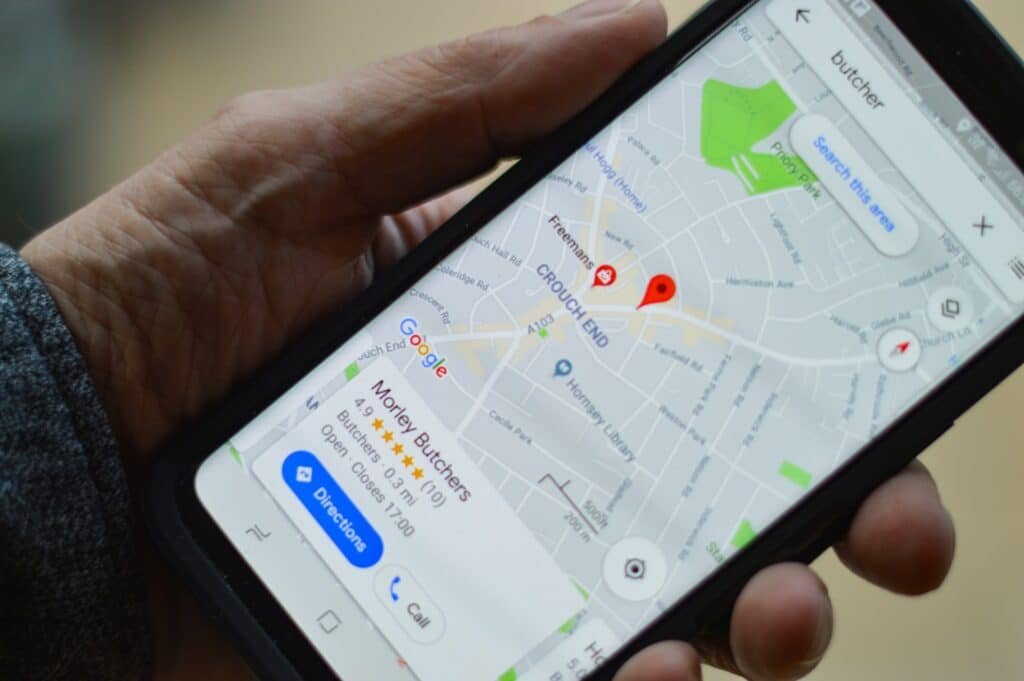
Generic home pages rarely rank well for specific local queries. To succeed, you need location-specific landing pages for each area you serve, such as ‘Plumber in [City Name].’ While national SEO chases high search volume, Local SEO chases intent. You want the user who is searching for ‘Organic fair-trade coffee shop in downtown Seattle,’ rather than someone just typing in ‘coffee.’
Voice search is fundamentally changing how people find you. Queries spoken to Siri, Alexa, or Google Assistant tend to be more conversational and longer than typed searches. Your content needs to align with these natural speech patterns to capture this traffic. Users performing these searches usually have high commercial intent. Searches for ‘Near me’ or ‘buy now’ have grown by over 500% in recent years, showing just how ready these users are to purchase.
The data confirms the urgency behind these searches. A staggering 76% of people who search on their smartphones for something nearby visit a business within a day. Furthermore, 28% of those searches result in an actual purchase. Tools like SEMrush, Ahrefs, Ubersuggest, and AnswerThePublic are fantastic for identifying the long-tail keywords your competitors might be missing.
Optimize for Mobile Experience and Core Web Vitals
Google judges the quality of your website primarily based on its mobile version. Since mobile devices account for 58.67% of global website traffic, this distinction is critical. If your mobile site loads slowly, your rankings will drop everywhere, desktop included. A non-responsive site forces users to pinch and zoom to read text, which usually leads to them leaving immediately.
Speed has the power to create or destroy leads. 53% of visits are abandoned completely if a mobile site takes longer than 3 seconds to load. You must prioritize optimizing Core Web Vitals, Largest Contentful Paint (LCP), First Input Delay (FID), and Cumulative Layout Shift (CLS). These are simply metrics that measure loading performance, interactivity, and visual stability.
Functionality matters just as much as speed. Ensure that your phone numbers are clickable links. A user in an emergency isn’t going to copy and paste a number; they will call the competitor who offers a one-tap connection. 61% of mobile searchers are more likely to contact a local business if they have a mobile-friendly site. Ensure your Name, Address, and Phone number (NAP) remain consistent across the footer and contact page. You can analyze your performance easily with Google PageSpeed Insights, GTmetrix, and Google Search Console.
Implement Schema Markup for Rich Snippets
Search engines have to guess what your content means unless you speak their language. Schema markup is that language. It translates your hours, address, price range, and service area into code that bots can understand natively. This helps establish your business as a distinct, verified entity in the Knowledge Graph.
Structured data is what powers those eye-catching rich results. Review Snippets allow your star ratings to appear directly in search results, which drastically increases your Click-Through Rate (CTR). Rich results can capture up to 58% of clicks for a given query, giving you a massive advantage.
Implementation requires some technical precision. You need to add JSON-LD code to your website header. It is risky to rely on plugin defaults without verification, as they often generate incomplete data. Websites with schema markup rank an average of 4 positions higher in search results than those without. Use the Merkle Schema Markup Generator to build your code and validate it with Google’s Rich Results Test or Schema.org.
To truly dominate the local pack, you need a partner who understands the sweat and effort behind the service you provide. At Aziel Digital, we specialize in building the digital infrastructure that blue-collar businesses rely on. We handle the SEO, branding, and web design so you can focus entirely on the job site. Contact us today to secure your place at the top of the search results.
Frequently Asked Questions
What is the most important ranking factor for local SEO?
Your Google Business Profile (GBP) optimization stands as the single most critical factor. Think of it as a signal of relevance and legitimacy sent directly to Google’s local algorithm. Google assigns substantial weight to GBP signals, accounting for over 25% of the local pack ranking criteria.
This includes things like your primary business category, keywords in the business title, and how close you are to the searcher. Focusing solely on your website while neglecting your GBP creates a massive gap in your strategy. You must claim, verify, and exhaustively complete your profile to compete in the ‘Local Pack’ (that map listing you see at the top of results).
How often should I post updates on my Google Business Profile?
You should aim to post updates weekly to maintain an active signal. Regular activity shows Google that the business is operational, alive, and engaged with customers. Posts on GBP expire or get buried quickly, usually disappearing from default views after 7 days. Consistent posting ensures your audience sees your current offers, events, or recent project photos.
Treat GBP posts like a micro-blog. Share completed jobs, seasonal discounts, or team updates. This not only engages potential leads but also provides fresh content for Google to index associated with your location
Why are my Google reviews not showing up immediately?
Google applies strict filtering to prevent spam and fake engagement. A delay usually just means the review is undergoing a moderation process. The algorithm scans for suspicious patterns, such as multiple reviews coming from the same IP address or reviews containing prohibited content.
While most legitimate reviews appear within hours, some can take several days. Do not panic or ask the customer to repost immediately. Patience is required here. If a legitimate review never appears, it likely triggered a filter, but attempting to force it through usually makes the issue worse.
What is the difference between organic SEO and local SEO?
Local SEO targets a specific geographical area, while organic SEO targets broad, location-neutral search terms. Local SEO focuses on ranking in the Map Pack and local finder using geographical modifiers (e.g., ‘plumber in Dallas’). Organic SEO focuses on ranking traditional website links for informational or national queries (e.g., ‘how to fix a leak’).
For a service business, Local SEO provides a higher return on investment because it captures high-intent users who are ready to hire someone nearby, rather than users just looking for general information.
How do I add Local Business schema to my website?
You generate JSON-LD code containing your specific business details and inject it into the HTML header of your site. Schema markup acts as a translator, explicitly telling search engines your address, hours, and service type in a format they can digest instantly. Tools like Merkle’s Schema Markup Generator can create this code for you.
Simply pasting the code isn’t enough; you must validate it using Google’s Rich Results Test. Incorrect schema can lead to penalties or a failure to display those valuable rich snippets.
Does responding to negative reviews actually help my ranking?
Yes, responding helps rankings and significantly builds trust. It signals to Google and your customers that you actively manage your reputation. Engagement is a ranking signal. Furthermore, prospective customers read negative reviews to see how a business handles conflict. A professional response can neutralize the damage of a bad rating.
Never get defensive. Acknowledge the issue, offer to take the conversation offline, and show future customers that you care about service quality. This turns a negative signal into a neutral or even positive trust indicator.
What are ‘near me’ searches and how do I rank for them?
‘Near me’ searches are queries where users look for immediate solutions in their immediate vicinity. Ranking for these requires strong proximity signals and mobile optimization. These searches have exploded in volume and carry massive intent to purchase. Google prioritizes the user’s physical location and how complete the business profiles are within that radius.
You cannot optimize for the phrase ‘near me’ simply by stuffing it into your content. Instead, optimize for your city, neighborhood, and service keywords, and ensure your Google Business Profile address is 100% accurate.
How does mobile page speed impact my local search visibility?
Mobile speed is a direct ranking factor because Google uses mobile-first indexing. If your site loads slowly on a phone, Google demotes it in search results, assuming it provides a poor user experience. Remember, 53% of users abandon a site that takes over 3 seconds to load.
You must compress images, leverage browser caching, and minimize code. A fast mobile site retains the user long enough for them to click your ‘call now’ button.
Can I delete a negative review from my Google Business Profile?
No, business owners cannot delete reviews directly. This rule preserves the integrity and honesty of the review system. You can only request removal if the review violates Google’s specific content policies (e.g., hate speech, conflict of interest, or spam). You must flag the review through your dashboard to start this process.
If the review is genuine but negative, your only option is to respond professionally and bury it with a steady influx of positive reviews from happy customers.
What tools are best for managing local citations and listings?
BrightLocal, Whitespark, and Moz Local are the industry standards for managing directory listings effectively. These tools audit your presence across the web, identifying inconsistent Name, Address, and Phone (NAP) data that hurts your rankings. They also help automate the distribution of correct data to aggregators.
Using these tools saves dozens of hours of manual entry and ensures your business data remains consistent across platforms like Yelp, Bing, and YellowPages.
How do photos on my profile affect customer engagement?
Photos drastically increase interaction rates. Profiles with images see significantly higher click-throughs to websites and more direction requests. Humans are visual decision-makers. A profile with high-quality images of your work, team, and premises builds immediate subconscious trust.
Upload new photos regularly. A business with photos from three years ago looks dormant compared to a competitor who uploaded a project photo yesterday.
What is the Local Pack or 3-Pack?
The Local Pack is that block of three business listings with a map that appears at the very top of Google search results for local queries. It is the most valuable real estate in local SEO. These three spots capture the vast majority of clicks for service-based searches. Ranking here requires a different strategy than standard organic results, focusing heavily on Google Business Profile optimization, reviews, and citations rather than just website content.