


The US electrical services market is a $294.6 billion industry, yet most of that money flows to the handful of businesses that appear on the first page of Google. The old way of getting jobs, a Yellow Pages ad and a good reputation, is gone.
Today, your job site is digital. When a circuit breaker trips in the middle of the night or a homeowner finally decides to install that EV charger, they don’t look for a phone book.
They pull out their phone, type “electrician near me,” and call one of the first three names they see. This isn’t a trend, it’s a permanent shift in how customers find and hire electricians.
This guide is the blueprint for wiring your electrical business to thrive in this new reality. It’s not a list of marketing tips, it’s a comprehensive, step-by-step system for dominating your local search results and creating a predictable flow of exclusive, high-quality leads.
We will cover the exact strategies Aziel Digital uses to generate results like a 97.78% increase in call volume for our clients.
By the end of this guide, you will have a complete understanding of how to turn your online presence into your most valuable business asset.
Chapter 1: Why SEO Is Non-Negotiable For Modern Electricians
The game has fundamentally changed. Your skills as a master electrician are essential for doing the job, but they don’t get the phone to ring. The simple truth is that visibility is now as important as ability. Search Engine Optimization (SEO) is the framework that provides that visibility.
It’s not about tricking Google, it’s about systematically proving to search engines that you are the best, most relevant, and most trustworthy answer to a potential customer’s problem in your specific service area.
This chapter lays out the hard data behind this shift, creating the urgent case for why SEO is the primary engine for growth for any electrical contractor today.
How Customers Find Electricians Today
The customer journey no longer starts with a recommendation from a neighbor, though that still helps. It starts with a problem and a search engine. A study from BrightLocal found that 97% of consumers now use the internet to find and research local businesses.
For an urgent need like a power outage or a sparking outlet, this behavior is even more pronounced. The search is immediate, and the decision is made in minutes.
The phrase “electrician near me” is the modern emergency signal. It represents a customer with a high-intent problem who needs a solution right now.
According to Google, 76% of people who perform a local search on their smartphone visit a related business within 24 hours. This mobile-first reality is where the battle for customers is won or lost.
If your business isn’t visible in those critical mobile search results, you are effectively invisible to the vast majority of your potential market.
Your website must be mobile-friendly, and your phone number must be prominent and clickable, ready to capture that desperate, high-value call.
Market Growth and Fierce Competition
The opportunity in the electrical services industry is immense. IBIS World research confirms the market size in the United States is a staggering $347.5 billion in 2026. This market is not shrinking, it’s expanding.
This growth is driven by several powerful trends: new construction projects, the urgent need to upgrade America’s aging electrical infrastructure, and the massive consumer shift towards green energy solutions like EV chargers, solar panel installations, and home battery storage systems.
However, this growth also attracts intense competition. The U.S. Bureau of Labor Statistics projects that the employment of electricians will grow by 6 percent between 2022 and 2032.
This translates to more electrical contractors, more vans on the road, and more businesses competing for the same limited space on the first page of Google. In this crowded market, SEO becomes the great equalizer.
A smaller, highly-focused electrical company with a smart SEO strategy can systematically outrank larger, more established competitors by dominating the search results for specific, profitable services and locations.
You don’t need the biggest fleet, you need the best digital strategy.
Quantifying the ROI of SEO
It’s easy to dismiss SEO as a marketing expense. This is a critical mistake. SEO is an investment in a lead-generating asset that you own and control.
Unlike paid advertising, where the leads stop the moment you stop paying, the value of SEO compounds over time. The authority you build, the content you create, and the rankings you earn continue to generate leads for months and years, often at a decreasing cost per lead.
This is the power of inbound marketing. Instead of you chasing customers with ads and mailers, customers with an immediate need find you. These inbound leads are fundamentally higher quality.
The person calling you has already identified their problem, searched for a solution, reviewed your company online, and decided you are a potential fit. The sales process is shorter, and the close rates are higher.
The core goal of a well-executed SEO strategy is simple: to systematically reduce your customer acquisition cost while simultaneously increasing the volume and quality of inbound leads.
Every action taken, from optimizing a title tag to writing a blog post, is directly tied to the ultimate goal of making your phone ring with a profitable job on the other end.
With this foundation in place, the next step is to build your most powerful tool for capturing local search demand. We will now move from the “why” to the “how,” starting with your digital work truck: your Google Business Profile.
Chapter 2: Mastering Google Business Profile & Local SEO For Electricians
Think of your Google Business Profile (GBP) as your most important work truck. It’s the first thing potential customers see when they need help, it carries all your essential tools (services, photos, reviews), and its performance directly determines how many jobs you get.
It’s the single most powerful free marketing tool available to an electrician, and optimizing it is not optional. This is your digital storefront in the Google Map Pack, where the majority of high-intent local customers make their decision.
A poorly optimized profile is like showing up to a job site with a rusty, unmarked van, it inspires zero confidence. A perfectly optimized profile, however, positions you as the premier, trustworthy expert before the customer even clicks on your website.
A Complete GBP Optimization Checklist for Electricians
Your GBP is often the first and only impression a customer will have of your business. Google states that businesses with complete and accurate profiles are 2.7 times more likely to be considered reputable by consumers. That trust is the first step toward a phone call.
Furthermore, a BrightLocal study revealed that the average local business appears in over 1,000 searches per month, with a massive 84% of those being “discovery” searches, e.g., “EV charger installer jacksonville fl”, rather than someone searching for your company by name. This is your primary source of new customers.
Follow this checklist to ensure your profile is set up for maximum visibility and impact.
- Claim and Verify Your Profile: Go to google.com/business and search for your business name and address. If a profile exists, claim it. If not, create one. You will need to verify ownership, usually via a postcard mailed to your physical address, but sometimes with phone or video verification options. Do this immediately.
- Achieve 100% Profile Completeness: Google provides a checklist or a percentage bar indicating your profile’s completeness. Do not stop until it hits 100%. This means filling out every single relevant section, which we will detail below. An incomplete profile signals to Google that you are less serious or legitimate than a competitor who has filled everything out.
- Ensure NAPU Consistency: Your Name, Address, Phone Number, and URL (NAPU) must be absolutely identical across your GBP, your website, and all other online directories. A simple variation like “St.” instead of “Street” can confuse Google and hurt your local rankings.
- Set Your Service Area: As an electrician, you are a service-area business (SAB). You can hide your physical address if it’s a home address and instead define the specific cities, zip codes, or counties you serve. Be realistic and accurate with this area.
- Upload High-Quality Media Regularly: Add new photos and videos every month. This shows Google your business is active.
- Enable Messaging: Turn on the GBP messaging feature and install the app on your phone. Responding quickly to messages is a positive signal and a great way to capture leads.
- Populate the Q&A Section: Proactively ask and answer the most common questions customers have.
The Anatomy of a Perfect Electrician GBP Listing
Getting the basics right isn’t enough. Dominating the Map Pack requires optimizing every single component of your profile with electrician-specific details.
- Business Name: Use your real business name. Do not stuff keywords like “Jacksonville Electrician” into it unless it’s your actual legal name. This is against Google’s guidelines and can get your profile suspended.
- Primary Category: This must be set to “Electrician.” There is no room for debate here, it is the single most important ranking factor for your profile.
- Secondary Categories: This is where you can gain a significant competitive advantage. Most electricians stop at the primary category. You should add every other relevant category. This tells Google the full scope of your expertise. Here are some of the most important ones to add:
- Electrical installation service
- EV charging station contractor
- Generator installation service
- Home automation company
- Lighting contractor
- Commercial electrician
- Solar energy contractor
- Business Description: You have 750 characters to tell customers who you are and why they should choose you. Write for humans, but weave in your main keywords and trust signals. For example: “Aziel Electric is Jacksonville’s trusted team of licensed and insured master electricians. We specialize in residential and commercial services, including panel upgrades, EV charger installations, and 24/7 emergency electrical repairs. Call us for a free, no-obligation estimate.”
- Services/Products: This section is incredibly powerful. Do not just list “Panel Upgrades.” Create a detailed service item for every single thing you do. For each service, add a full description and a price or price range if possible. Example: Service: Circuit Breaker Panel Upgrade. Description: “We replace outdated, unsafe fuse boxes and builder-grade breaker panels with modern, high-capacity panels from top brands like Siemens and Square D. A panel upgrade ensures your home can safely handle today’s electrical demands, from new appliances to EV chargers. All work meets or exceeds NEC code. Call for a custom quote.”
- Photos & Videos: Visuals build trust and increase engagement. Google’s data shows that businesses with photos on their GBP receive 42% more requests for driving directions. Name your image files with keywords before uploading, e.g., `siemens-200-amp-panel-upgrade-jacksonville-fl.jpg`. Most importantly, make sure location services are enabled on your phone when taking pictures at a job site, this embeds geographic coordinates (geotags) into the photo’s data, which is a powerful local signal to Google. Showcase your team, your branded trucks, before-and-after photos of your work, and short videos of you explaining a common issue.
Advanced GBP Features to Win More Jobs
Many contractors set up their profile and then forget it. Consistent activity is a major ranking signal. Use these advanced features to stay ahead of the competition.
- Google Posts: Think of these as mini-ads or social media updates directly on your GBP profile. Use them at least once a week to share a special offer (“10% off generator installs this month!”), highlight a recent 5-star review, share a helpful safety tip (“How to test your GFCI outlets”), or showcase a recently completed project with photos. Posts expire after seven days, so consistency is key to showing Google that your business is active and engaged.
- Q&A Section: Most business owners wait for customers to ask questions. You should be proactive. Think of every question you get on the phone and add it to your Q&A section, then provide a thorough, expert answer. This preemptively handles customer objections and allows you to control the narrative. Examples:
- Q: “Are your electricians licensed and insured in Florida?”
- A: “Absolutely. [Business Name] is a fully licensed and insured electrical contractor in the state of Florida. Our license number is [EC12345]. All of our technicians are covered by our comprehensive liability insurance for your peace of mind.”
- Q: “Do you offer financing for large jobs like a rewire or panel upgrade?”
- A: “Yes, we do. We partner with [Financing Company] to offer flexible payment plans to fit your budget. You can learn more and even pre-qualify on our website. [Link to financing page].”
- Booking Link: If you use scheduling software like Housecall Pro or Jobber, integrate it with your GBP. This adds a “Book Online” button directly to your profile, removing friction for customers and allowing you to capture leads 24/7.
- Attributes: Scroll through the list of attributes and select all that apply. These help you stand out in specific searches. Examples include “Veteran-led,” “Woman-owned,” “Black-owned,” or specific service offerings like “Online estimates.”
The Power of Online Reviews
Reviews are arguably the most critical conversion factor on your GBP and a top-three local ranking factor.
A BrightLocal survey confirmed that 94% of consumers say positive reviews make them more likely to use a business. A steady stream of new, positive reviews is non-negotiable.
You need a systematic process for generating them. Don’t just hope customers leave a review. Implement a system, either manually or through software, to send a follow-up text or email after every completed job.
The message should be simple: “Hi [Customer Name], thank you for choosing us. We’d be grateful if you could take 30 seconds to share your experience on Google. [Direct Link to GBP Review Box].”
Responding to reviews is just as important as getting them. You must respond to every single review positive or negative within 24 hours.
- For positive reviews: Thank the customer by name and mention the specific job or technician. This shows you’re paying attention and reinforces the positive experience for future readers.
- For negative reviews: Respond professionally and empathetically. Acknowledge their issue, take the conversation offline (“Please call our office at [Phone Number] so we can make this right.”), and never get into a public argument. How you handle criticism shows more about your business than a dozen 5-star reviews.
Your Google Business Profile is a dynamic, lead-generating machine, not a static listing. By mastering every element detailed here, you build a powerful digital presence that attracts customers and builds trust.
Now that your “work truck” is tuned up and ready to go, it’s time to build your “digital headquarters”, a website structured to convert that traffic into paying jobs.
Chapter 3: Electician On-Page SEO & Website Structure
If your Google Business Profile is your work truck that meets customers on the digital job site, your website is your company headquarters.
It’s the central hub where you showcase your expertise, prove your trustworthiness, and officially turn an interested visitor into a paying customer.
A cheap, poorly designed website is like having a head office in a run-down building, it signals a lack of professionalism and drives potential customers away.
A well-structured, technically sound, and conversion-focused website, on the other hand, is an asset that works 24/7 to build your brand and generate leads. This chapter provides the architectural blueprint for that digital headquarters.
The Ideal Electrician Site Structure
The way your website is organized, or its “architecture,” directly impacts both user experience and your ability to rank on Google. The most effective model for a service-based business like an electrician is the “Hub-and-Spoke” structure.
This creates clear pathways for users and helps Google understand which pages are the most important.
- The Hub: Your Homepage: This is the front door to your headquarters. Within five seconds, it must clearly answer four questions: Who are you? What do you do? Where do you serve? And why should I trust you? This is where you display your most powerful trust signals prominently: your phone number, “Licensed & Insured,” “24/7 Emergency Service,” “Master Electrician,” and any warranties or guarantees you offer.
- The Core Spokes: Your Service Pages: This is a non-negotiable rule of electrician SEO, you must have one unique, detailed page for each major service you offer. A single page titled “Our Services” is not enough to rank for high-value terms. If you want to show up when someone searches “EV charger installation,” you need a dedicated page just about that. Each page should be a deep dive into the service, covering the benefits, your process, common questions (FAQs), and photos of your work.
- Examples of essential service pages include: EV Charger Installation, Electrical Panel Upgrades, Commercial Electrical Services, Generator Installation, Smart Home Wiring, Emergency Electrical Repairs, Lighting Installation, and Code Compliance & Inspections.
- The Hyper-Local Spokes: Your Location Pages: If you serve multiple distinct cities, towns, or even large neighborhoods, you need to create a unique page for each one. This is critical for ranking in the local results for those specific areas. Important: These pages cannot be simple copies with the city name swapped out. To be effective, each page must contain unique content. Mention local landmarks, common electrical issues in that area’s housing stock (e.g., “upgrading knob and tube wiring in historic Riverside homes”), and feature testimonials from customers in that specific town.
- Supporting Pages: These pages build trust and answer administrative questions. They include a comprehensive About Us page (showcase your team, tell your story, list your license and insurance details), a Blog/Resource Center (which we’ll cover in the next chapter), and a Contact page with a map, contact form, and your phone number clearly displayed.
On-Page SEO for Electricians
On-page SEO refers to the specific elements you optimize on each individual page of your website. Think of it as labeling each room in your headquarters so Google’s crawlers know exactly what it’s for.
- Title Tags: This is the blue link that appears in Google search results. It’s a powerful ranking signal. Follow this formula: `Primary Service in [City, ST] | [Brand Name]`. For example: `EV Charger Installation in Jacksonville, FL | Aziel Electric`.
- Meta Descriptions: This is the 160-character snippet of text below the title tag. It doesn’t directly impact rankings, but it heavily influences whether someone clicks on your result. It’s your mini-ad. Include a benefit and a strong call-to-action. Example: “Expert Level 2 EV charger installation for all electric vehicle models. We handle permitting and panel upgrades. Call Aziel Electric for a free quote today!”
- Header Tags (H1, H2, H3): These organize your content for both readers and search engines. Your page title should be your one and only H1 tag, and it must include your primary keyword. Use H2s for major subtopics and H3s for finer points within those subtopics.
- URL Structure: Keep your URLs clean, simple, and descriptive. For example: `yourdomain.com/services/generator-installation`. Avoid long, messy URLs with numbers and special characters.
- Image SEO: Google can’t “see” images, so you need to tell it what they are. Before uploading, name the file with a descriptive keyword (e.g., `commercial-led-lighting-retrofit-jacksonville.jpg`). Then, use descriptive “alt text” in the website’s backend. `alt=”Aziel Electric master electrician installing a Generac whole-home generator for a customer in Jacksonville, Florida”`. This helps with image search rankings and accessibility.
- Internal Linking: Create a web of links between your pages to spread authority. On your EV charger page, mention that some installations require a panel upgrade and link to your panel upgrade page. On blog posts, always link back to the relevant primary service page. This guides users and search engines through your site, showing them what’s most important.
Technical SEO
Technical SEO is the “code compliance” for your website. These are the behind-the-scenes factors that determine if your site is secure, fast, and easy for Google to crawl and index. If the foundation is cracked, everything you build on top of it is at risk.
- Mobile-Friendliness: This is non-negotiable. The majority of local searches happen on a phone. Your website must provide a seamless experience on a small screen. You can check your site using Google’s free Mobile-Friendly Test tool.
- Page Speed: How fast your pages load is a critical ranking factor and an even more critical user experience factor. Google has found that as page load time goes from one to three seconds, the probability of a user leaving (bouncing) increases by 32%. Your customers are impatient, especially in an emergency. Get a fast, reliable web host, compress your image files, and use caching technology to speed things up.
- SSL Certificate (HTTPS): This encrypts the data between your website and the user’s browser, displaying a little padlock icon in the address bar. It’s a mandatory security measure and a clear trust signal for both users and Google. A site without HTTPS will be flagged as “Not Secure” by Chrome.
- XML Sitemap: This is a simple file that acts as a roadmap of your website. You create it and submit it to Google Search Console to ensure Google can find and index all of your important pages.
How to Build Unshakeable Trust with Google and Customers
Google’s quality guidelines revolve around a concept called E-E-A-T: Experience, Expertise, Authoritativeness, and Trustworthiness. For an electrician, this is your secret weapon.
Google wants to rank businesses that are real, credible experts, especially in a field that affects people’s safety and homes. You must prove your E-E-A-T on your website.
- Experience: Showcase your real-world experience. Use photos and videos of your actual team performing work on job sites. Stock photos scream inexperience. On your About page, detail the years your business has been serving the community and the combined experience of your master electricians.
- Expertise: Display your credentials prominently. Your Florida state license number should be in the footer of every page. Create a dedicated section or use badges on your homepage to show certifications like “Certified Generac Installer” or “Lutron Pro.”
- Authoritativeness: This is about being recognized as a leader. Feature testimonials from happy customers. If you’ve been featured in a local news story or trade publication, link to it.
- Trustworthiness: Make it easy for customers to trust you. Have a clear privacy policy. List your physical address and phone number. Show proof of insurance. An even more powerful tool is Schema Markup. This is a type of code you add to your website that explicitly tells Google details about your business. By implementing `LocalBusiness` and `Electrician` schema, you can spoon-feed Google your address, phone number, service area, and even your aggregate review rating, making you a more trusted entity in its eyes.
A well-built website is the engine that drives conversions. With a solid structure and technically sound foundation, you are now ready to fuel that engine with high-performance content that attracts customers and establishes your authority.

Chapter 4: The Electrical Content That Powers Your Rankings
Your service pages are designed to capture customers who are ready to buy now. But what about the 95% of potential customers who are still in the research phase? They have questions.
“Why are my lights flickering?” “How much does it cost to install an EV charger?” “Is my old breaker panel a fire hazard?” The electrician who answers these questions builds trust and becomes the default choice when it’s time to make a call.
This chapter details the content strategy that moves you from being just another contractor to being the recognized electrical authority in your service area. This is how you generate leads for years, not just for today.
A Content Strategy to Become the Local Electrical Authority
Google’s goal is to provide its users with the most expert and comprehensive answers to their questions. To achieve top rankings, you must demonstrate “topical authority.” This means you can’t just have a single page about a service, you need to create a cluster of content that covers that topic from every possible angle.
Imagine you want to rank for “electrical panel upgrades.” Your main service page is the hub.
To build topical authority around it, you need to create supporting blog content, the spokes, that answer every related question a homeowner might have. This could include articles on:
- “5 Signs Your Home Needs a Panel Upgrade”
- “What’s the Difference Between a 100 Amp and 200 Amp Service?”
- “Average Cost of an Electrical Panel Upgrade in Jacksonville, FL”
- “Is My Federal Pacific Panel a Fire Risk?”
Each of these articles answers a specific question, builds trust with the reader, and contains an internal link back to your main “Electrical Panel Upgrade” service page.
This strategy signals to Google that you are not just a service provider, you are a comprehensive expert on this topic, making your main service page more likely to rank for the high-value commercial term.
Keyword Research That Sparks Leads
Effective content starts with understanding the exact words and phrases your customers are typing into Google. This is keyword research. These keywords can be broken down by the user’s intent.
- Transactional Keywords (High Intent): These are used by people ready to hire someone. They are the primary targets for your service and location pages. They often include words like “electrician,” “contractor,” “service,” “repair,” “installation,” “cost,” “near me,” or your city name.
- Examples: `emergency electrician jacksonville`, `cost to install generac generator`, `commercial lighting contractor near me`.
- Informational Keywords (Research Phase): These are used by people looking for answers, not necessarily an electrician… yet. These are the perfect targets for your blog content. They are often phrased as questions. You can find them by looking at the “People Also Ask” section on Google search results pages or by using free tools like AnswerThePublic.
- Problem/Symptom-based: `why are my lights flickering when the ac turns on`, `what to do when a circuit breaker keeps tripping`, `burning plastic smell from outlet`.
- Cost-based: `how much to rewire a 1500 sq ft house florida`, `electrical inspection cost for home purchase`.
- DIY vs. Pro: `how to replace a light switch`, `is it safe to install my own ceiling fan`.
- Educational: `what is a GFCI outlet`, `types of landscape lighting for pools`.
By creating content that targets both transactional and informational keywords, you capture customers at every stage of their journey, from initial problem awareness to the final hiring decision.
The Three Tiers of Content Every Electrician Needs
Your content plan should be organized into three distinct tiers, each serving a specific purpose.
- Tier 1: Service Pages (“Money Pages”): As we covered in the last chapter, these are the core of your website. They are deep-dive resources on each service you offer, optimized for transactional keywords. They must be persuasive, build trust, and have strong calls-to-action (“Call Now for a Free Estimate”).
- Tier 2: Location Pages (“Local Dominance Pages”): These pages are critical for signaling your geographic relevance to Google. They target keywords like `electrician in St. Augustine` or `Ponte Vedra Beach electrical repairs`. Each page must prove you are a local expert in that specific community.
- Tier 3: Blog Content (“Authority Building Pages”): This is where you answer your customers’ informational questions. This content builds trust, attracts organic traffic from a wide range of searches, and earns valuable backlinks from other websites. Below are two examples of what a high-value blog post outline looks like.
Blog Post Example 1
- Title: The Florida Homeowner’s Complete Guide to Electrical Panel Upgrades
- Sections: Introduction (addressing the safety and capacity needs of modern homes), 7 Telltale Signs You Need an Upgrade (mentioning issues common in older Florida homes), The Benefits of a Modern Panel (insurance discounts, home value, safety), Understanding Florida Building Code Requirements for Panel Replacements, Our Step-by-Step Panel Upgrade Process (from permitting to final inspection), Average Costs in the Jacksonville & North Florida Area, Frequently Asked Questions about Panel Upgrades.
Blog Post Example 2
- Title: Is Your Home Ready for an Electric Vehicle? Your Guide to EV Charger Installation
- Sections: Understanding Level 1, Level 2, and DC Fast Charging, How to Assess Your Home’s Current Electrical Capacity, The J1772 vs. NACS (Tesla) Connector Explained, The Permitting Process in Duval and St. Johns County, How to Choose the Right Charger for Your Car and Budget, What to Expect on Installation Day.
Executing Your Content Plan
Creating content isn’t just about writing, it’s about showcasing your genuine expertise (E-E-A-T) in every piece.
- Use Author Bios: Every blog post should be “authored” by a real person at your company. Include a small bio box at the end of the article with their photo, title (e.g., Master Electrician), years of experience, and license number. This tells Google the content was written by a qualified expert.
- Cite Your Sources: When discussing safety or code, reference the National Electrical Code (NEC). This demonstrates a level of expertise that generic content mills cannot replicate.
- Use Original Media: Ditch the generic stock photos of smiling actors in hard hats. Go to your job sites and take real photos and videos of your team performing the work you’re writing about. If you’re writing about a panel upgrade, include a photo of your technician working on a panel.
- Be Consistent: Create a simple content calendar. Plan to publish at least one new blog post per month and one new Google Post per week. Consistency is more important than volume.
High-quality content is the fuel for your SEO engine. It builds trust, attracts qualified traffic, and establishes your authority. But even the best content needs a signal boost.
The next chapter will explore how to get that boost by earning “votes of confidence” from other websites across the internet.
Chapter 5: Electrician Link Building & Off-Page SEO
Imagine your website is a new business in town. Great content and a well-structured site are like having a pristine storefront and knowledgeable staff.
But for people to truly trust you, they need to hear about you from others. In the world of SEO, these recommendations are called “backlinks.”
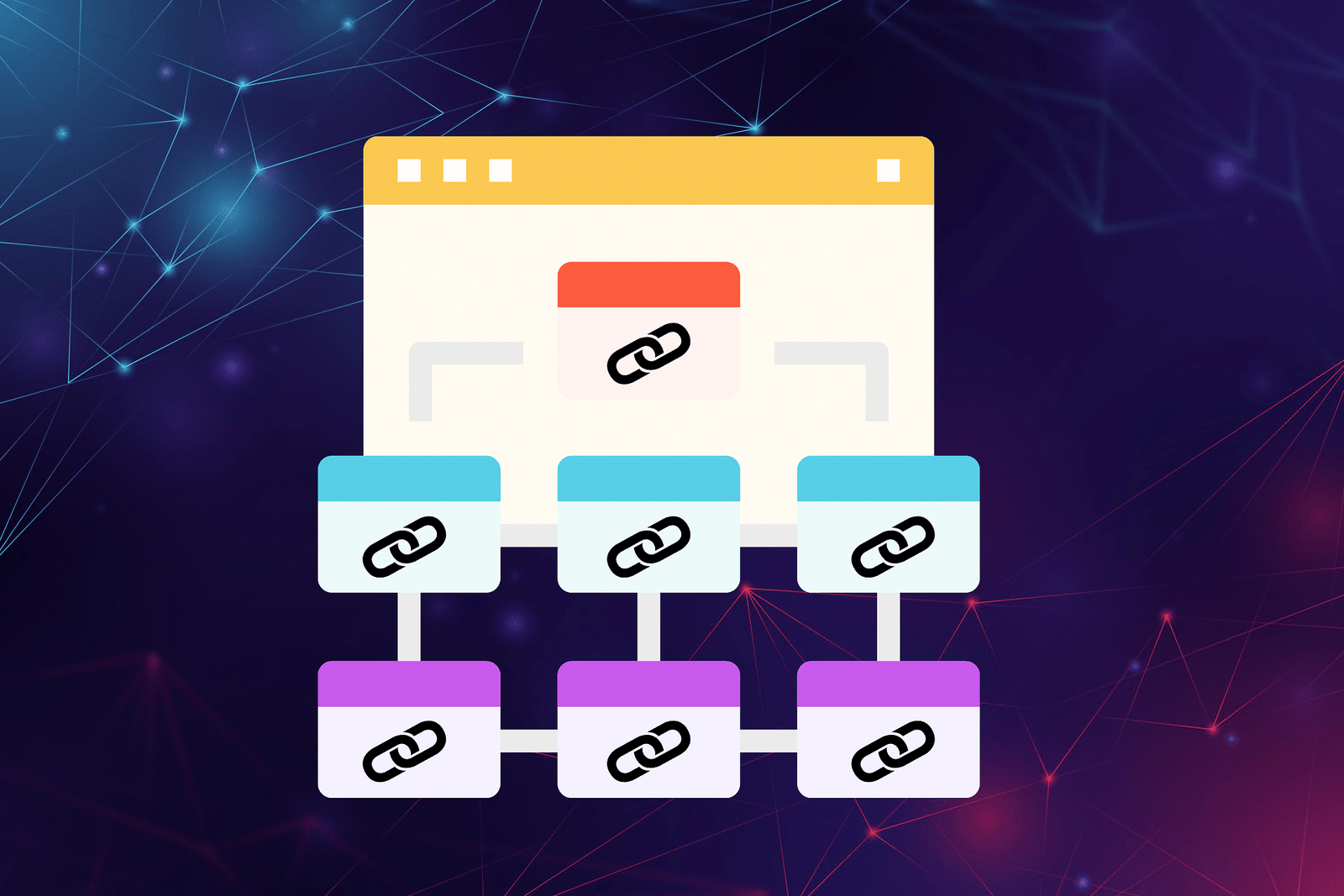
A backlink is simply a link from another website to yours. Google views these links as votes of confidence. The more high-quality, relevant websites that “vote” for you, the more authoritative your website becomes in Google’s eyes, and the higher you will rank.
This chapter demystifies the process of earning these votes through a practical, tiered approach to link building.
A Practical Link Building Guide for Electricians
Not all links are created equal. A link from a local Chamber of Commerce website is far more valuable than a link from a random, unrelated blog.
The goal is not to get the most links, but to acquire the most relevant and authoritative links to build a natural, diverse profile.
An influential study from the SEO tool Ahrefs found a direct and clear positive correlation between the number of backlinks a page has from unique websites and the amount of organic traffic it receives.
Think of your link building strategy as a pyramid. You need a wide, stable base of foundational links, a strong middle tier of local authority links, and a sharp peak of industry-specific links to reach the top.
Tier 1: Foundational Links (Citations and Directories)
These are the absolute table stakes of local SEO. A “citation” is any online mention of your business’s Name, Address, and Phone number (NAP).
Ensuring your NAP is 100% consistent across all these directories is critical for reinforcing your location and business identity for Google. Inconsistencies can create confusion and harm your local rankings.
Start with these essential directories:
- General Directories: Yelp, Apple Maps, Bing Places, Facebook, Nextdoor, and the Better Business Bureau (BBB).
- Industry-Specific Directories: Angi, HomeAdvisor, Thumbtack, Houzz, and Porch. While you don’t necessarily need to pay for their lead services, having a free, fully filled-out profile is important for visibility and a relevant backlink.
Managing dozens of these listings manually can be tedious. Using a service like BrightLocal or Yext can help you manage and clean up your citations efficiently, ensuring consistency across the web.
This tier forms the solid foundation upon which all other authority is built.
Tier 2: Local Authority Links (Community and Partnerships)
This is where you prove to Google that you are a real, legitimate, and active member of your local community. These links are often more powerful than directory links because they come from trusted local institutions.
- Sponsorships: This is one of the easiest ways to get high-quality local links. Sponsor a local little league team, a high school sports team (football, band, etc.), a 5k charity run, or a local festival. In almost every case, you will get a link back to your website from their “Our Sponsors” page.
- Chamber of Commerce: Join your local Chamber of Commerce (e.g., JAX Chamber). You’ll typically get a listing in their high-authority member directory, which is a powerful local signal.
- Local Media & Blogs: Be proactive. Reach out to local news outlets or popular Jacksonville-area bloggers. Do you have a unique perspective on hurricane-proofing a home’s electrical system? Offer to provide a quote for a seasonal story. Did you just complete a major commercial lighting retrofit for a well-known local business? Let them know.
- Strategic Partnerships: This is a vastly underutilized strategy. Build real-world relationships with other reputable, non-competing home service businesses. These include general contractors, roofers (especially those doing solar), HVAC companies, plumbers, home inspectors, and real estate agents. Offer to provide value to their audience. For example, write a guest post for a prominent realtor’s blog titled “Top 5 Electrical Red Flags to Spot During a Home Inspection.” They get free, valuable content for their clients, and you get a highly relevant backlink and a potential source of referrals.
Tier 3: Industry Authority Links (Niche and Digital PR)
These are the most powerful links. They establish you not just as a local player, but as a recognized expert in the electrical trade itself. These links are harder to get, but a single one can be more impactful than dozens of directory listings.
- Supplier/Manufacturer Links: This is a gold mine. If you are a certified installer for a major brand, you absolutely must be listed on their official website. Brands like Generac, Siemens, Lutron, ChargePoint, and Tesla all have “Find an Installer” or “Find a Contractor” locators on their sites. A link from one of these high-authority domains is an incredibly strong signal of your expertise and legitimacy.
- Trade School Scholarships: This is a powerful and community-focused strategy. Create a small annual scholarship ($500-$1,000) for a student enrolled in the electrician program at a local trade school or community college (like Florida State College at Jacksonville). Create a page on your website with the scholarship details and application form. Then, reach out to the school’s financial aid office. They will almost always link to your scholarship page from their website. A link from an `.edu` domain is considered one of the most authoritative links you can get.
- Guest Posting on Industry Blogs: Write an article for a national home improvement blog or an online electrical trade publication. Share your expertise on a complex topic like “Sizing a Whole-Home Generator for Hurricane Season” or “The Future of Smart Home Wiring.”
- Digital PR (Create a “Linkable Asset”): This is an advanced strategy, but it can pay huge dividends. A linkable asset is a piece of content on your website that is so unique, useful, or interesting that other people link to it naturally. For example, you could research and publish a “Florida EV Readiness Report” that includes an interactive map showing the average cost to install a Level 2 charger in every major city, alongside data on public charging infrastructure. You would then promote this report to local journalists, EV enthusiast blogs, and real estate publications, who are likely to cite and link to your original research.
Building a strong backlink profile is a long-term project, but it is one of the most durable competitive advantages you can create.
With your digital headquarters built and a network of authoritative recommendations pointing to it, the final step is to amplify your efforts and ensure every part of your marketing is working in concert.

Chapter 6: Electrical Company Growth With Paid Ads, Social Media, And AI
A powerful SEO strategy is the engine of your long-term growth, but it shouldn’t operate in isolation. To achieve maximum velocity, you need to integrate it with other marketing channels.
Think of it like a high-performance electrical system, SEO is the main service line providing consistent, reliable power, while paid ads act as a dedicated circuit for immediate needs, and social media is the wiring that connects you with the community.
This chapter shows you how to combine these elements, along with the power of Artificial Intelligence, to create a fully integrated system that dominates your market.
How SEO, PPC, and Social Media Work Together
Many contractors view these channels as separate choices: “Should I do SEO or Google Ads?” The correct approach is to see how they work together to create a result greater than the sum of their parts.
- PPC Informs SEO: Pay-Per-Click (PPC) advertising, like Google Ads, provides immediate data. You can quickly learn which keywords convert into actual phone calls and which ad copy gets the most clicks. This valuable intelligence can then be used to prioritize your long-term SEO efforts. If you discover that ads for “commercial led lighting retrofit” have a very high conversion rate, it’s a strong signal to build out a detailed service page and blog content around that topic.
- SEO Reduces PPC Costs: As your organic rankings improve through SEO, your “Quality Score” in Google Ads often increases. Google rewards websites that provide a good user experience and relevant content. A higher Quality Score can lead to lower costs per click, meaning your ad budget goes further.
- Dominating Search Real Estate: When you have the top organic ranking for a term and you are running a paid ad on the same page, you push competitors further down and significantly increase your total share of clicks. This level of visibility builds immense brand credibility.
- Social Media Builds Trust: While not a direct ranking factor, a professional presence on platforms like Facebook builds social proof. You can share before-and-after photos of jobs, post video testimonials from happy clients, and run targeted ads to local homeowners. When a potential customer finds you on Google and then sees your active, professional Facebook page with dozens of positive reviews, it solidifies their decision to call you.
Google Local Services Ads (LSAs)
For electricians and other home service businesses, Google Local Services Ads are a game-changer. These are the listings that appear at the very top of the search results, even above traditional paid ads, featuring a green “Google Guaranteed” badge.
LSAs operate on a pay-per-lead model, not pay-per-click. This means you only pay when a customer initiates a valid phone call directly from the ad.
The “Google Guaranteed” badge is a powerful trust signal, as it means Google has vetted your business and confirmed you are licensed and insured. In fact, Google backs your work with a satisfaction guarantee of up to $2,000 for jobs booked through LSAs.
To qualify, you must go through a verification process that includes a background check on the business owner and employees.
Here’s the critical connection to SEO, your performance in LSAs is directly influenced by the quantity and quality of your reviews on your regular Google Business Profile.
A strong review generation strategy, which is a cornerstone of good local SEO, will help you get more leads and a better return from your LSA investment.
Leveraging AI to Supercharge Your Electrician SEO
Artificial Intelligence is not going to replace a skilled electrician or a savvy marketing strategist. However, it is an incredibly powerful tool that can make your entire marketing operation more efficient and effective.
- Content Ideation and Drafting: Use AI tools like ChatGPT to accelerate your content creation. You can provide it with a keyword like “whole home surge protection” and ask it to generate a list of blog post titles, a detailed article outline, or even a first draft. The key is that this draft must be reviewed, edited, and infused with your company’s unique experience and expertise (E-E-A-T) by a human expert. AI provides the starting block, your expertise wins the race.
- Technical SEO Analysis: Many leading SEO platforms, like Semrush, are now integrating AI to perform faster and more insightful website audits. These tools can quickly identify technical issues, analyze competitor strategies, and uncover new keyword opportunities, allowing you to make smarter decisions more quickly.
- Customer Service and Lead Qualification: AI-powered chatbots can be installed on your website to provide 24/7 customer service. They can answer common questions (“Do you offer free estimates?”), collect customer information, and even schedule appointments, ensuring you never miss a lead, even after hours.
Choosing the Right Partner for Integrated Growth
Attempting to manage SEO, PPC, social media, and LSA campaigns with different vendors or agencies often leads to wasted money and missed opportunities.
A siloed approach is inefficient because no one is looking at the big picture. One hand doesn’t know what the other is doing.
A true growth partner understands how all these channels feed into each other to achieve the only goal that matters, generating more profitable work for your business. This is the core philosophy behind Aziel Digital‘s approach.
Our Growth Bundles are designed to integrate the most effective digital marketing channels into a single, cohesive strategy.
This ensures your SEO efforts are supported by paid advertising insights, your social media builds the trust needed to convert search traffic, and every decision is based on a unified view of your business goals.
An integrated strategy is the most efficient and effective path to sustainable growth. But how do you know if it’s all working? The final chapter will focus on how to read the meter and measure the real-world results of your investment.

Chapter 7: Measuring SEO Success & KPIs For Electricians
In the electrical trade, you work with precise measurements. You use a multimeter to check voltage and a torque wrench to tighten connections to spec. Your marketing should be no different.
You can’t afford to “feel” like it’s working, you need to see the data that proves it. This final chapter cuts through the confusing jargon and vanity metrics to focus on the handful of Key Performance Indicators (KPIs) that truly matter.
We’ll show you how to connect your SEO efforts directly to what you care about most: more calls, more booked jobs, and a measurable return on your investment.
How to Track the Real ROI of Your SEO
Ranking #1 on Google for a keyword is a great milestone, but it is not the goal. The goal is to get your phone to ring with profitable jobs. To measure this, you need a few essential, non-negotiable tracking tools set up from day one.
- Google Analytics 4 (GA4): This free tool from Google is installed on your website and tells you everything about your website traffic, how many people are visiting, where they are coming from (e.g., Google organic search, Google Maps, Facebook), which pages they look at, and how long they stay.
- Google Search Console (GSC): This is another free tool that shows you how Google sees your website. It reveals which specific search queries you are ranking for, your average position, and how many people are clicking on your site from the search results. It’s also where Google will alert you to any technical problems with your site.
- GBP Insights: Within your Google Business Profile dashboard, you can see how many people found you on Google Maps, how many requested driving directions, how many clicked through to your website, and most importantly, how many called you directly from your profile.
- Call Tracking Software: This is the single most important tool for measuring the true ROI of your marketing. Services like CallRail assign unique, trackable phone numbers to each of your marketing channels. The number displayed on your website for organic visitors will be different from the one on your GBP profile, which will be different from the one in your Google Ads. When a customer calls one of these numbers, it forwards directly to your main business line, but the software records which channel the lead came from. Without this, you are just guessing where your most valuable calls are originating.
Your Electrician SEO Dashboard
Don’t get bogged down in dozens of metrics. Focus on the data points that directly reflect business growth. This is the dashboard you or your marketing partner should be reviewing every single month.
- Organic Traffic: The total number of visitors arriving at your website from non-paid search results. This is your primary measure of overall visibility and should show a steady upward trend over time.
- Keyword Rankings: You don’t need to track hundreds of keywords. Focus on a core group of 10-20 high-intent, “money” keywords that are most likely to lead to jobs (e.g., `emergency electrician [your city]`, `panel upgrade [your city]`, `ev charger installer near me`).
- GBP Performance: The three key metrics here are Phone Calls, Website Clicks, and Direction Requests directly from your Google Business Profile. The number of calls is often the most valuable leading indicator of new business.
- Conversions (Leads): This is the most critical KPI. A conversion is a specific, valuable action a user takes. For an electrician, this should be defined as a Phone Call (tracked by your call tracking software) or a Submitted Contact Form.
- Cost Per Lead (CPL): A simple but powerful calculation: `Total Monthly SEO Spend / Total Number of Leads (Calls + Forms)`. This tells you exactly how much it costs you to generate one new opportunity.
- Return on Investment (ROI): This is the ultimate metric that tells you if your SEO is profitable. To calculate it accurately, you need two numbers from your business, your average job value and your lead-to-close rate (what percentage of leads turn into paying customers).
- The Formula: `((Value of New Business from SEO – SEO Cost) / SEO Cost) 100`
- Example Calculation:
- Your SEO cost is $3,000/month.
- You generated 30 leads (25 calls, 5 forms).
- Your close rate is 25% (1 in 4 leads becomes a customer). So, 30 leads x 25% = 7.5 booked jobs.
- Your average job value is $1,500. So, 7.5 jobs x $1,500 = $11,250 in new revenue.
- ROI = (($11,250 – $3,000) / $3,000) 100 = 275%
- For every $1 you invested in SEO, you got $2.75 back in profit.
Turning Insights into Action and Booked Jobs
Data is only useful if it leads to action. A good marketing partner doesn’t just send you a report, they interpret it and tell you what happens next. SEO is a continuous process of analysis, adjustment, and improvement.
Here are a few scenarios of how to turn insights into action:
- The Insight: “Our organic traffic for the ‘EV Charger Installation’ page has increased by 50%, but we’ve only received two calls about it.”
- The Action: “This means the SEO is working to attract visitors, but the page itself isn’t converting. We need to optimize the page by adding more trust signals like customer testimonials, a video of an installation, and a clearer, more prominent call-to-action.”
- The Insight: “Our views on Google Business Profile are up, but website clicks are flat.”
- The Action: “This suggests our profile is visible but not compelling enough to earn the click. We need to focus on getting more 5-star reviews and uploading more high-quality, geotagged photos of our recent work.”
- The Insight: “Our keyword rankings for ’emergency electrician’ have dropped from #2 to #5.”
- The Action: “We need to perform a competitive analysis to see what the competitors now ranking above us are doing. Have they built new links? Published new content? We need to react and bolster our authority for this critical, high-value term.”
By focusing on the right metrics and consistently turning those insights into action, you transform SEO from a mysterious marketing expense into a predictable, scalable system for growing your electrical business.
You now have the complete blueprint. You understand why SEO is critical, how to optimize your digital assets, what content to create, how to build authority, and how to measure your success.
The only remaining variable is execution. Implementing a strategy this comprehensive takes time, expertise, and relentless consistency, qualities that define a master electrician and a master marketer alike.
Your Blueprint For Digital Dominance
You now possess the complete architectural plan for building a dominant online presence. You’ve seen how today’s customers find electricians and understand the immense opportunity that awaits on the first page of Google.
You have the step-by-step instructions for tuning your Google Business Profile into a lead-generating machine, structuring your website to convert visitors, and creating content that establishes you as the undisputed local authority.
This isn’t theoretical, it’s the proven system for generating a consistent, predictable flow of profitable jobs directly to your business.
Executing this plan requires dedication, expertise, and a significant investment of time. If you’re ready to stop buying shared leads and start building a powerful asset that grows your business for years to come, then it’s time to take the next step.
Let our team of experts handle the complexities of digital marketing so you can focus on what you do best, providing outstanding electrical service.
Book your free, no-obligation Growth Call with Aziel Digital today. We’ll analyze your current online presence, break down your competitors’ strategies, and lay out a clear, actionable plan to help you achieve your business goals.
Schedule your free growth call today.
Frequently Asked Questions
How Long Does It Take For SEO To Start Working For An Electrician?
You can typically expect to see initial positive movement in rankings and traffic within 3 to 6 months. This is because it takes time for Google to crawl, index, and understand the changes you’ve made to your website and build trust in your brand.
According to Search Engine Journal, a leading industry publication, significant, business-impacting results, like a consistent flow of inbound leads, often take 6 to 12 months to fully materialize.
The exact timeline depends on factors like the level of competition in your city, the current state of your website, and the aggressiveness of the SEO campaign.
What Is A Good Cost Per Lead For An Electrical Contractor?
A good cost per lead (CPL) for an electrician can vary widely based on location and the type of service, but a general range is between $40 and $150.
Emergency repair leads are often more expensive but have a higher close rate, while leads for larger projects like generator installations might have a higher CPL but a much larger job value.
A study by marketing platform WordStream showed average CPLs in the home services industry hovering around this mark. The most important thing is to track your CPL against your close rate and average job value to ensure you’re generating a profitable return.
How Much Should An Electrical Business Budget For SEO And Digital Marketing?
Most small businesses allocate between 7% and 12% of their total revenue to marketing. For an electrical contractor looking for consistent growth, a monthly SEO budget can range from $1,500 for a basic local campaign in a small market to over $5,000 for a competitive strategy in a major metropolitan area.
This investment typically covers technical SEO, content creation, link building, and detailed reporting. It’s crucial to view this as an investment in a lead-generating asset, not a simple business expense.
What’s More Important: SEO Or Google Ads For An Electrician?
Neither is more important, they are two different tools for two different jobs that work best together. Google Ads (PPC) is excellent for generating immediate leads. You can launch a campaign today and have your phone ringing tomorrow.
SEO is a long-term strategy for building a sustainable, compounding asset. It generates leads at a lower cost over time and builds your brand’s authority.
The ideal strategy, as recommended by marketing experts at Semrush, is to use Google Ads for immediate lead flow while your SEO campaign builds momentum, then scale each channel based on its return on investment.
Can I Do SEO For My Electrical Business Myself?
Yes, you can certainly handle the basics yourself, especially optimizing your Google Business Profile and requesting reviews from customers. However, effective SEO quickly becomes complex and time-consuming.
Tasks like technical site audits, creating authoritative content, building high-quality backlinks, and interpreting analytics data require specialized expertise and dedicated time that most business owners don’t have.
For serious growth, partnering with a specialized agency is almost always more effective and provides a better long-term ROI.
How Do I Rank My Electrical Business On Google Maps In A New City?
Ranking in a city where you don’t have a physical address is challenging, as Google Maps rankings are heavily based on proximity.
The first step is to create a dedicated “location page” on your website for that new city, featuring unique local content and testimonials. Next, you must update your Google Business Profile to include that city in your defined service area.
Finally, you need to build local backlinks and citations from that specific city, such as by joining its Chamber of Commerce or sponsoring a local event, to prove to Google that you have a legitimate presence there.
What Are The Most Profitable Keywords For An Electrician?
The most profitable keywords are those with high commercial intent. These typically include the service, a location, and an action word.
Examples include “emergency electrician jacksonville fl,” “commercial electrician near me,” “cost to install tesla wall connector,” “generac generator installation miami,” and “electrical panel upgrade quote.”
These “long-tail” keywords are more specific, meaning the searcher is further along in the buying process and more likely to convert into a paying customer.
Why Are My Competitors Outranking Me On Google?
There are several likely reasons. Their website may be technically superior (faster, mobile-friendly), they may have a more robust backlink profile from authoritative local and industry websites, or their on-page SEO (title tags, content) might be better optimized for your target keywords.
Additionally, according to BrightLocal, they likely have more and better reviews on their Google Business Profile. A thorough competitive analysis is needed to identify the exact areas where they are stronger and develop a strategy to close the gap.
How Can I Get More 5-Star Reviews For My Electrical Company?
The key is to make it a systematic process, not a passive hope. Implement an automated system using email or text messages that sends a review request to every customer within 24 hours of job completion.
The message should be personal and include a direct link to the “Leave a Review” box on your Google Business Profile.
You can also train your technicians to mention it at the end of a successful job, “We’re a local business and reviews really help us out. If you were happy with the service today, we’d be grateful if you shared your experience on Google.”
Is A Blog Really Necessary For An Electrician’s Website?
Yes, a blog or “Resource Center” is absolutely necessary for any serious SEO effort. While your service pages target people ready to buy, your blog targets the much larger audience of people in the research phase.
By answering their questions about electrical problems, costs, and safety, you build trust and establish your company as the go-to expert.
According to marketing analytics firm HubSpot, businesses that blog consistently generate significantly more leads than those that don’t. This content also attracts valuable backlinks and provides fuel for your social media channels.
What Is The Difference Between Local SEO And National SEO?
Local SEO focuses on ranking your business for searches within a specific geographic area, like a city or county. It heavily relies on signals like your Google Business Profile, local citations (NAP consistency), and location-specific keywords.
National SEO aims to rank for broad topics regardless of the searcher’s location, which is relevant for e-commerce or national brands but not for a service-area business like an electrician. For an electrical contractor, 99% of your focus should be on local SEO.
How Do I Know If My SEO Company Is Doing A Good Job?
A good SEO company provides transparent and regular reporting focused on the KPIs that matter to your business.
They should be tracking and showing you improvements in organic traffic, keyword rankings for your main services, and, most importantly, the number of leads (phone calls and form fills) being generated.
Be wary of any agency that makes unrealistic promises (“guaranteed #1 ranking”) or fails to provide clear data on conversions and cost per lead. Aziel Digital, for instance, provides clients with a custom dashboard to track these core metrics 24/7.
Should I Pay For Listings On Directories Like Angi Or Homeadvisor?
This is a business decision, but it’s important to understand the model. These platforms are lead aggregators, you are paying for leads, not exclusive marketing.
The leads they send you are often sent to several of your competitors simultaneously, creating a race to the bottom on price. While it can be a way to supplement your lead flow, relying on them makes you dependent on a third party.
An effective SEO strategy, by contrast, builds your own brand and generates exclusive leads directly to you, providing a much higher long-term ROI.
What Is E-E-A-T And Why Does It Matter For An Electrician’s Website?
E-E-A-T stands for Experience, Expertise, Authoritativeness, and Trustworthiness. It’s a core part of Google’s Search Quality Rater Guidelines, used to assess the quality of websites. For an electrician, a “Your Money or Your Life” (YMYL) topic that impacts safety and finances, E-E-A-T is critical.
You demonstrate it by showcasing your license numbers, featuring detailed bios of your experienced technicians, displaying real job-site photos, citing electrical codes in your content, and earning reviews and links that prove you are a trusted authority in your field.
How Does Voice Search (“Hey Google, Find An Electrician Near Me”) Impact Seo?
Voice search is becoming increasingly common. These searches are typically longer and more conversational than typed queries. To optimize for them, your content should answer questions directly and in a natural language format.
Creating detailed FAQ sections on your service pages and writing blog posts with titles phrased as questions e.g., “How Much Does it Cost to Install a Ceiling Fan?”, can help you capture these voice searches.
A well-optimized Google Business Profile is also crucial, as voice assistants often pull their primary recommendations from the local Map Pack.
What Is The Best Website Builder For An Electrician?
For a serious electrical business focused on SEO and lead generation, the best platform is WordPress.
While platforms like Wix or Squarespace are user-friendly, WordPress offers far greater flexibility, customization, and a vast ecosystem of plugins specifically designed for advanced SEO and performance optimization.
It allows you to have full control over the technical aspects of your site, which is essential for competing at a high level. At Aziel Digital, we build our high-performance client websites exclusively on WordPress for this reason.