

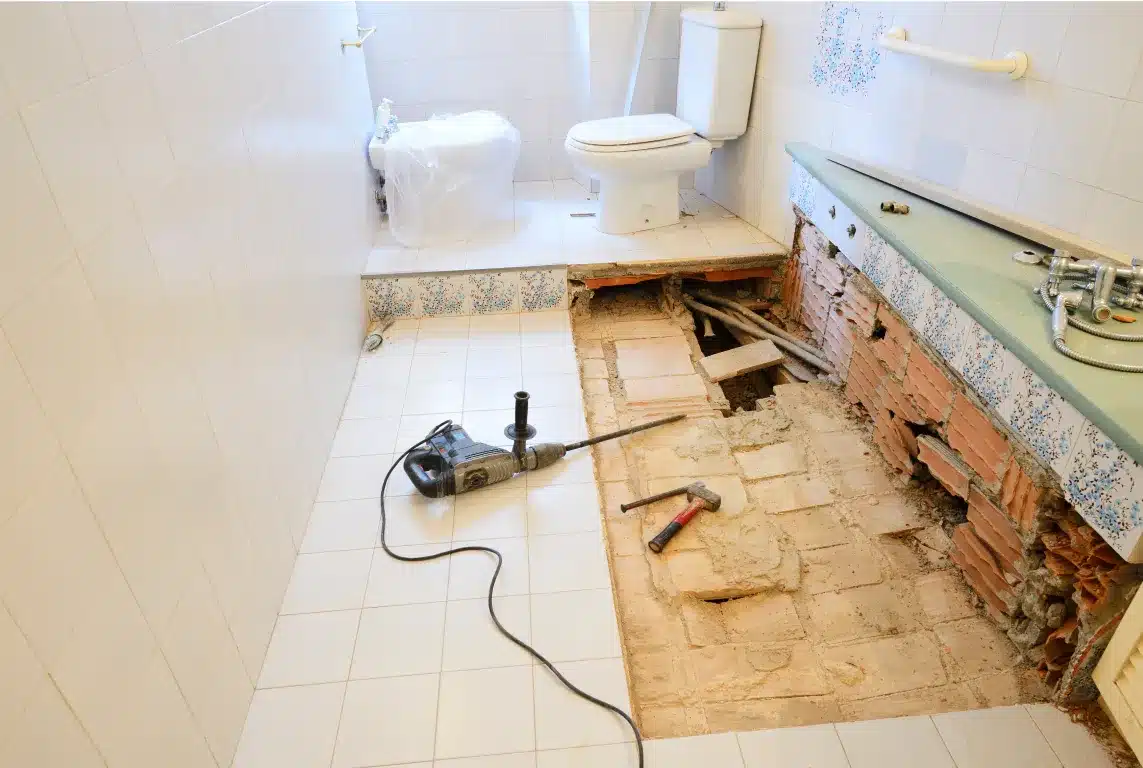
The call comes in at 7 PM on a Friday while you’re packing up the van. You miss it. By the time you call back Saturday morning, the homeowner has already booked a consultation with your competitor. That single missed call could have been a $30,000 bathroom remodel, gone.
This isn’t a rare occurrence, it’s the daily reality for busy contractors trying to manage leads, run jobs, and grow a business all at once. The old methods of marketing relying on word-of-mouth, messy spreadsheets, and late-night callbacks are leaking profit and opportunity from your business every single day.
This guide provides the complete blueprint to fix that. You will learn how to use practical, affordable Artificial Intelligence (AI) tools to automate your marketing, capture every lead, and deliver a client experience that earns 5-star reviews without adding hours to your workday.
This isn’t about futuristic robots, it’s about smart software that acts as your 24/7 sales and marketing assistant, letting you focus on what you do best, building beautiful bathrooms. By the end of this guide, you will have a clear, step-by-step plan to implement AI and win more profitable jobs.
Chapter 1: Why Bathroom Remodelers Can’t Afford To Ignore The AI Revolution In Home Services
The idea of “Artificial Intelligence” can feel distant and complicated, better suited for tech giants in Silicon Valley than for a contractor installing tile in Jacksonville. But the reality is that AI is no longer a futuristic concept, it’s a practical business tool that is fundamentally changing how local service companies find customers and operate.
This shift isn’t about replacing skilled tradespeople. It’s about equipping them with intelligent software that solves the most persistent and costly problems in the industry, from inconsistent lead flow to administrative overload.
Ignoring this change is like insisting on using a hand saw when your competitor has a power saw, you might get the job done, but you’ll work harder, move slower, and fall behind.
The State of the $66 Billion Bathroom Remodeling Industry
The global Bathroom Remodeling Services market was valued at US$ 3,181 million in 2025 and is projected to reach US$ 4,250 million by 2032, growing at a compound annual growth rate of 4.3%. Homeowners are investing heavily in their properties, and according to the National Kitchen & Bath Association (NKBA) in their 2024 Market Outlook, primary bathroom remodels are at the top of their priority list.
This isn’t about small cosmetic fixes, the median spend for a primary bathroom overhaul is around $25,000, with high-end, luxury projects easily clearing the $50,000 mark. The money is there, and homeowners are ready to spend it. The critical question is, are they finding you?
Why Your Competitors’ Old-School Marketing Is Holding Them Back
Despite the booming market, life for the average remodeling contractor is anything but easy. The same problems that plagued the industry a decade ago are still the primary sources of stress and stunted growth today.
According to extensive industry research from sources like Houzz & Home and the National Association of Home Builders (NAHB), contractors consistently name the same core challenges. The old ways of doing business simply aren’t equipped to solve them.
Here are the biggest pain points that traditional marketing fails to address:
- Lead Generation (68%): Finding a consistent, predictable stream of profitable leads is the number one challenge. Old methods like yard signs, local mailers, or basic directory listings are unpredictable and impossible to scale. You’re left in a constant cycle of feast or famine, never knowing where the next job will come from.
- Increased Competition (55%): There are more remodeling companies than ever. Standing out in a crowded local market is tough when everyone is making the same promises. If your marketing looks and sounds like everyone else’s, your only option is to compete on price, a race to the bottom that erodes your profit margins.
- Managing Client Expectations (45%): The gap between what a client imagines and what is feasible within their budget and timeline is a major source of conflict. Communicating design ideas effectively and keeping clients informed can feel like a full-time job in itself, leading to miscommunication and unhappy customers.
- Operational Inefficiency: How many hours a week do you lose to tasks that don’t make you money? Chasing down leads, manually sending follow-up emails, scheduling consultations, and preparing quotes are all necessary evils that pull you away from billable work on the job site. This administrative drag is a silent killer of profitability.
What AI Marketing Actually Means for a Remodeling Contractor
Let’s clear up a common misconception, AI marketing is not about robots laying tile or drones managing your job sites. For a contractor, it’s much simpler and more practical. Think of AI as the most efficient, dedicated office assistant you could ever hire.
It’s a suite of smart software tools designed to automate and optimize the repetitive marketing and sales tasks that you don’t have time for. It works 24/7, never calls in sick, and can perform thousands of calculations in a second to find your next customer.
Here are some concrete examples of what AI marketing actually does for a remodeler:
- It acts as your content writer: While you’re on a job site, an AI tool can draft a 1,500-word blog post on “Luxury Walk-In Shower Ideas for Small Bathrooms,” optimized to attract local homeowners searching on Google.
- It serves as your 24/7 receptionist: When a potential customer fills out a form on your website at 10 PM on a Saturday, an AI chatbot instantly engages them, asks key qualifying questions about their budget and timeline, and even books a consultation directly on your calendar.
- It becomes your smartest ad manager: AI analyzes your Google Ads campaign and automatically shifts your budget to show ads specifically to homeowners in your service area who have recently searched for tile suppliers, plumbing fixtures, and your competitors.
- It functions as your design assistant: During a sales consultation, AI can take a photo of your client’s outdated bathroom and generate several photorealistic 3D renderings of their new space in different styles, helping them visualize the final product and sign the contract faster.
The First-Mover Advantage: Seizing the AI Adoption Gap in the Trades
The business world is rapidly adopting AI. The IBM Global AI Adoption Index for 2023 reports that 77% of businesses are already using or actively exploring AI solutions. However, this adoption is not evenly distributed.
Large corporations and tech companies are leading the charge, while small businesses, particularly within the skilled trades, are lagging significantly behind. This gap creates a massive competitive opportunity.
This “adoption gap” means that right now, the vast majority of your local competitors are still relying on the same inefficient, old-school marketing methods they’ve used for years. They are still missing those late-night calls, letting website leads go cold, and guessing with their advertising dollars.
By being one of the first remodelers in your area to embrace simple, effective AI tools, you gain an immediate and powerful advantage. You can capture the leads they’re missing, operate with greater efficiency, deliver a superior customer experience, and dominate the local search results.
While they are stuck in the past, you can build a more profitable, predictable, and scalable business. The window of opportunity for this first-mover advantage is open now, but it won’t be for long.
Having established why this technological shift is too important to ignore, the next chapter will provide a detailed blueprint for how to use these tools to solve your biggest challenge: generating a steady stream of high-quality leads.

Chapter 2: An AI-Powered Blueprint For Bathroom Remodeling Lead Generation
For any contractor, the business lives and dies by the quality and consistency of its leads. The ultimate goal of any marketing effort is to make the phone ring with homeowners who are ready to hire and have the budget for your services.
This is where AI transitions from a concept into a lead-generating machine. By integrating AI into the three core channels of digital marketing, SEO, PPC, and Social Media, you can move from being invisible online to becoming the in-demand remodeler in your service area.
This chapter provides the exact, AI-powered playbook for each channel.
How AI-Powered SEO Puts You in Front of Homeowners Ready to Hire
Before hiring a local business, over 97% of consumers use the internet to find information, according to research from BrightLocal.
When a homeowner in your city types “bathroom remodeler near me” or “cost to remodel bathroom in Jacksonville FL” into Google, they aren’t just browsing, they have a high-intent need and are actively looking for a solution.
Being at the top of these search results is the modern-day equivalent of having the best storefront on the busiest street in town. AI-powered Search Engine Optimization (SEO) is the most effective way to secure that prime digital real estate.
Step 1: Discover Untapped Opportunities with AI-Powered Keyword Research
Traditional keyword research is a slow, manual process of guessing what customers might search for and checking search volumes one by one. AI completely transforms this process.
Modern SEO platforms like Semrush or Surfer SEO use AI to analyze thousands of keywords in seconds and, more importantly, group them into “topical clusters.” This is the key to building authority with Google.
Instead of trying to rank for the single, highly competitive keyword “bathroom remodel,” this approach allows you to build a web of content that answers every related question a potential customer might have.
You establish your business as the definitive expert on topics like “small bathroom remodel ideas,” “luxury shower systems,” “aging-in-place bathroom modifications,” and “what permits are needed for a bathroom remodel in [City].”
Here is a quick breakdown of the AI-powered process:
- Input a seed keyword: Start with a broad term like “bathroom remodel [Your City].”
- Generate variations: The AI tool will instantly produce hundreds or even thousands of related long-tail keywords, questions, and search terms that real people are using.
- Create topic clusters: The software’s AI will then automatically group these keywords into semantic clusters based on user intent. For example, it might create clusters for Cost, Ideas, Materials, Permits, and Contractors.
- Build your content plan: These clusters become your content roadmap. You now have a data-driven plan to create pages and blog posts that cover the entire topic comprehensively, signaling to Google that you are the most authoritative resource in your area.
Step 2: Create Authoritative Content in Half the Time with AI Assistance
The biggest hurdle in SEO is creating enough high-quality content to build authority. This is where many contractors get stuck. AI writing assistants like Jasper are the solution, but they must be used correctly.
Google has been very clear in its official guidance, it rewards high-quality, helpful content created for people, regardless of how it was produced.
The key is to use AI to assist, not to replace, human expertise. Your content must adhere to the principles of E-E-A-T (Experience, Expertise, Authoritativeness, Trustworthiness).
An AI tool cannot replicate your years of on-the-job experience. A human must always guide, edit, and inject real-world expertise into the content.
Here is an actionable example of the AI-assisted workflow:
- Generate an outline: Use a tool like Jasper to generate a comprehensive 1,500-word article outline on a topic like “10 Signs You Need a Bathroom Remodel.” This saves hours of brainstorming.
- Add your expertise: Go through the AI-generated draft and infuse it with your unique experience. For each “sign,” add your own project photos as examples. When discussing materials, recommend specific brands you trust and explain why e.g., “We prefer using Schluter-KERDI for all our waterproofing because its integrated system prevents the most common causes of shower leaks.”.
- Incorporate social proof: Embed a video testimonial from a local client who experienced one of the “signs” you’re writing about. This adds immense trust and authenticity that AI cannot create.
For an even greater advantage, use AI-powered content briefs from tools like Surfer SEO or MarketMuse. These tools analyze the top-ranking pages for your target keyword and give you a data-driven checklist.
They will tell you the ideal word count, the semantic terms to include, and the questions to answer to ensure your article is more comprehensive and helpful than your competitors’ pages.
Step 3: Scale Your Local Presence with Programmatic SEO
For remodelers serving multiple towns or neighborhoods, creating a unique, optimized landing page for each location is a powerful SEO strategy. However, doing this manually is incredibly time-consuming. Programmatic SEO (pSEO) is the solution.
Put simply, pSEO is a method of using a single template and a database (like a simple spreadsheet) to generate hundreds of unique pages at scale.
For instance, you can create a page template with variables like: “Expert Bathroom Remodeling in [Neighborhood], [City]. For homeowners near [Local Landmark], we specialize in [Service 1] and [Service 2].” Then, you create a spreadsheet with columns for Neighborhood, Local Landmark, Service 1, and Service 2 for every area you serve.
AI supercharges this process. It can be used to rephrase sentences and generate unique paragraphs for each page, ensuring that the content is not seen as duplicate by Google.
This allows a small company to create a massive online footprint, with a highly relevant page for every single service area, dramatically increasing the chances of ranking in local map packs and organic results across an entire region.
Stop Wasting Ad Spend: Precision Targeting and Optimization with AI-Powered PPC
Paid advertising platforms like Google Ads are no longer manual tools, they are powerful AI engines. Trying to manage a campaign by manually adjusting bids and guessing at keywords is the old way of doing things, and it’s a recipe for wasted money.
Modern Google Ads campaigns, especially Performance Max, leverage machine learning to automate nearly every aspect of the process for superior results.
In fact, Google’s own data shows that businesses using Performance Max campaigns see an average of an 18% increase in conversions at a similar cost per action.
Use AI Predictive Audiences to Find Customers Before They Find You
The targeting capabilities of AI represent a seismic shift from old advertising methods.
- The Old Way (Manual Guesswork): You would manually select broad targeting criteria. You might tell Google to show your ads to people aged 35-65 who live in your city and have a general “interest” in home improvement. This is incredibly inefficient and hits many people who are not in the market for your services.
- The New Way (AI Predictive Audience): You provide Google with a starting point, your list of past customers. Google’s AI then analyzes thousands of real-time signals like search history, websites visited, apps used, location data, to build a constantly evolving profile of your ideal customer.
It then goes out and finds new people who are behaving just like your best customers and are exhibiting signals that they are likely to convert in the near future. It finds your next customer before they even search for you.
Generate High-Converting Ad Copy and Creatives Instantly
Staring at a blank screen trying to write compelling ad headlines is a common frustration. AI tools, both within Google Ads itself and from third-party platforms like Jasper or AdCreative.ai, can generate dozens of powerful ad headlines, descriptions, and calls to action in seconds.
This enables rapid, effortless A/B testing. You can instantly generate and test variations like “5-Star Bathroom Remodels in [City]” against “Get a Free Remodel Quote Today” or “Luxury Finishes. Unbeatable Craftsmanship.” Google’s AI will then automatically analyze the performance data and prioritize showing the ad combinations that get the most clicks and conversions.
Furthermore, platforms like Google’s Ad Creative Studio allow you to upload your images and videos, and the AI will automatically remix them into countless variations for different audiences and platforms, ensuring your ads are always relevant and engaging.
Using AI To Build Your Brand And Engage Local Homeowners Across Social Media
Most remodeling contractors know they should be active on social media, but realistically, nobody has the time. This is another area where AI can serve as a powerful assistant. AI-driven social media management tools like Metricool or Buffer’s AI Assistant can streamline your entire social media workflow.
These tools can generate a month’s worth of post ideas in minutes, write engaging captions tailored to each platform, and analyze data to determine the optimal times to post for maximum engagement with your local audience.
Consider this simple, time-saving workflow:
- Upload a photo of a recently completed bathroom project.
- Give the AI a simple prompt: “Write three engaging Instagram captions for this modern farmhouse bathroom remodel in Jacksonville. Include relevant local hashtags and a question to encourage comments.”
- The AI will instantly provide several options for you to choose from, edit, and schedule.
Some tools can even take your project photos and automatically create simple video slideshows or Instagram Reels, adding royalty-free music and text overlays.
This allows you to maintain a professional and active social media presence, building brand trust and engaging with potential customers, in just a few minutes a week instead of hours.
With an AI-powered blueprint for generating leads, the next crucial step is to ensure you have an equally powerful system for managing, nurturing, and converting those leads into paying customers. The next chapter will focus on how AI can transform your sales process and internal operations.

Chapter 3: How The AI-Powered Remodelers Delivers 5-Star Experiences And Boosts Profit Margins
Generating leads is only half the battle. What happens after a potential customer finds you is what separates struggling contractors from highly profitable ones. A leaky sales process, slow response times, and inefficient operations can cost you thousands in lost revenue and wasted time.
This is where AI moves beyond marketing and becomes a core part of your business operations, helping you capture every opportunity, close more deals, and dramatically improve your profit margins. It’s about building a system that delivers a 5-star experience from the first click to the final walkthrough.
24/7 Communication and Leads Nurturing with AI Chatbots & CRMs
The single most important factor in converting an online lead is speed. A landmark study cited by LeadResponseManagement.org found that contacting a new web lead within five minutes makes you nine times more likely to convert them.
For a contractor who is on a job site, driving between appointments, or with family in the evening, a sub-five-minute response time is practically impossible. This “speed-to-lead” gap is where the majority of high-quality leads are lost to faster competitors. AI closes this gap permanently.
Capture and Qualify Leads 24/7 with an AI Chatbot
An AI chatbot installed on your website works as your virtual receptionist, 24 hours a day, 7 days a week. It never sleeps, never takes a break, and is always ready to engage a potential customer the second they show interest.
Unlike a simple contact form that sends an email into the void, a chatbot provides an instant, interactive experience that captures leads while they are at their peak interest.
Imagine this real-world conversation happening on your site at 11 PM:
- A visitor lands on your site after seeing your Google Ad.
- A chatbot window politely pops up: “Hi! Planning a bathroom remodel? I can help answer a few questions or schedule a free estimate for you.”
- The chatbot then asks pre-programmed qualifying questions: “To help us prepare, could you tell me your approximate budget for the project?” and “What is your ideal timeline to get started?”
- If the lead’s answers match your criteria for a good project, the chatbot can present your calendar and allow them to book a consultation on the spot. If they are not a good fit, the bot can politely inform them that a team member will review their request and follow up.
In less than a minute, the lead’s information has been captured, they have been qualified, and a sales appointment is booked, all without you lifting a finger. Recommended tools for this range from the user-friendly Tidio, which has a great free plan, to more advanced options like Drift or the fully integrated HubSpot Service Hub.
Automate Your Follow-Up with an AI-Powered CRM
Once a lead is captured, the follow-up process begins. An AI-powered Customer Relationship Management (CRM) system automates this critical but time-consuming task. Instead of manually sending emails or reminding yourself to call, you can build automated “nurturing” sequences that engage leads and build trust over time.
For example, when a new lead from your chatbot is added to your CRM, it can trigger a pre-built sequence of emails and texts:
- Immediately: “Thanks for your interest, [Name]! Here’s a link to our online project portfolio for some inspiration while we review the details you provided.”
- Day 2: “Hi [Name], I thought you might find this article from our blog on ‘How to Budget for Your Bathroom Remodel’ helpful. Let me know if you have any questions.”
- Day 5: “Just checking in, [Name]. Are you free for a quick 15-minute call next week to discuss your vision for the project?”
This consistent, helpful communication keeps you top-of-mind and positions you as a professional authority. The impact of this automation is staggering.
According to research from Annuitas Group, businesses that use marketing automation to nurture prospects experience a 451% increase in qualified leads compared to those who don’t. This system ensures that no lead ever falls through the cracks again.
Close More Deals with AI-Powered Design & 3D Visualization
One of the biggest hurdles in any remodeling sales process is the “visualization gap.” Clients often struggle to imagine what their new bathroom will actually look like. They can’t see how the tile they chose will pair with the vanity or how a new layout will feel.
This uncertainty leads to indecision and stalls the sale. Data from Houzz confirms this, with 78% of homeowners stating that being able to see the final project look is a critical factor in their decision-making process.
AI-powered design tools close this gap instantly, turning a standard sales consultation into an exciting, collaborative design session.
- The Traditional Process: Creating a single 3D rendering used to require hours of work in complex software like SketchUp or Chief Architect. It was a slow, expensive process often reserved for only the largest projects.
- The AI-Powered Process: Now, you can take a photo of the client’s current bathroom with your phone or tablet, and an AI tool can generate multiple photorealistic design concepts in different styles, e.g., modern, farmhouse, traditional in a matter of minutes.
You can show the client exactly what their space will look like with a freestanding tub versus a walk-in shower, or with dark versus light cabinetry. This removes uncertainty, creates excitement, and gives clients the confidence to make a decision and sign the contract.
Powerful yet easy-to-use tools like Reimagine Home AI are built for this, while even more creative concepts can be generated with tools like Midjourney or DALL-E 3, supplemented by the 3D Floor Planner in Houzz Pro.
How AI Can Help with Quoting and Reputation Management
Beyond sales and marketing, AI can also introduce significant efficiencies into your day-to-day operations, freeing up time and protecting your brand’s reputation.
Generate Faster, More Accurate Quotes
The quoting process can be a major bottleneck. AI-powered estimating software is emerging to help streamline this. These tools can analyze project plans, blueprints, or even photos to help automatically generate material take-off lists and estimate labor hours more quickly.
While the technology is not yet at a point of full automation, a skilled contractor’s review is always necessary, it significantly reduces manual data entry and helps create more consistent and profitable proposals.
Many of these tools also integrate with accounting software like QuickBooks, streamlining the process from estimate to invoice.
Automate Your 5-Star Review Generation
Your online reputation is your most valuable asset. A steady stream of positive reviews on platforms like Google is crucial for attracting new customers. Yet, most contractors are too busy to consistently ask for them. AI can automate this entire process.
You can set up simple automated triggers within your CRM. For example, when a project’s status is changed to “Complete,” the system can automatically send a personalized text message or email to the client a few days later.
The message can be simple and effective: “Hi [Client Name], it was a pleasure bringing your new bathroom to life! We hope you’re loving it. If you have a moment, would you mind sharing your experience on Google? It helps our small business immensely. [Link to Google Business Profile review page].”
AI can also assist in drafting professional and timely responses to all reviews, both positive and negative, ensuring your business always looks engaged and customer-focused.
Now that you understand the specific ways AI can generate leads and streamline your business, the logical next question is, which tools are the best fit? The following chapter provides a curated list of the top software for each stage of your marketing and sales funnel.
Chapter 4: The Best Software For Each Stage Of Your Marketing & Sales Funnel
Understanding the strategy is one thing, choosing the right tools to execute it is another. The market is flooded with AI software, and it can be overwhelming to figure out which platforms are genuinely useful for a remodeling contractor and which are just hype.
This chapter cuts through the noise. It provides a practical, curated guide to the best AI-powered software, broken down by function. Whether you’re looking for a single, all-in-one solution or a combination of specialized tools, this is your resource for making an informed decision.
The Best All-in-One AI-Powered Platforms for Remodelers
For contractors who prefer to have one central hub to manage their business, from leads to invoicing, an all-in-one platform is the best choice. These solutions integrate marketing, sales, and project management features, providing a unified view of your entire operation.
Houzz Pro
- Description: Houzz Pro is an end-to-end business management solution built from the ground up specifically for contractors, remodelers, and design professionals. It’s deeply embedded in the Houzz ecosystem, which is a primary destination for homeowners seeking inspiration and professionals.
- Key AI Features: Its standout AI feature is the integrated 3D Floor Planner and design visualization tools, which allow you to create and share impressive designs with clients. The platform also includes robust lead management with an integrated CRM and AI-powered automated follow-ups for estimates.
- Best for: Contractors who want a single, industry-specific platform to manage everything from their online profile and lead generation all the way through project completion and client communication.
Jobber
- Description: Jobber is a leading field service management software designed to improve the operational efficiency of home service businesses. Its strengths lie in scheduling, dispatching, and managing crews in the field.
- Key AI Features: Jobber uses AI and automation to streamline daily operations. This includes intelligent scheduling and route optimization to minimize drive time, automated quote and invoice follow-ups, and integrated client communication tools that centralize texts and emails.
- Best for: Remodelers who are primarily focused on streamlining their field operations, managing multiple crews effectively, and improving the efficiency of their quoting and billing processes.
HubSpot (with Sales & Marketing Hubs)
- Description: HubSpot is one of the most powerful and scalable platforms available for marketing, sales, and customer service. While not contractor-specific out of the box, its customization and powerful automation capabilities make it an excellent choice for businesses serious about growth.
- Key AI Features: HubSpot is packed with AI. This includes an AI Email Writer, an easy-to-use AI Chatbot builder for your website, predictive lead scoring, an AI feature that analyzes lead behavior to rate their likelihood of converting, and fully automated marketing and sales sequences known as workflows.
- Best for: Growth-focused contractors who want to implement sophisticated marketing and sales automation. It’s a great fit for companies that are scaling and need a system that can grow with them. This is the kind of advanced system we at Aziel Digital often implement for clients ready to dominate their market.
The Top AI-Powered Tools for Content Creation and SEO
For contractors who want to focus specifically on dominating search engine results and becoming the go-to authority in their area, a set of specialized SEO and content tools is the best approach. These tools work together to supercharge your content marketing efforts.
Jasper AI
- Description: Jasper is a premier AI writing assistant designed to help you create high-quality content drafts much faster. It excels at overcoming writer’s block and generating ideas.
- Key AI Feature: It utilizes a massive library of pre-built templates for almost any marketing need. You can use templates to create blog post outlines, full drafts, Google Ad copy, social media captions, and website service page copy.
- Best for: Contractors who want to significantly speed up their content creation process. It’s perfect for generating solid first drafts that a human can then edit, refine, and infuse with personal expertise.
Surfer SEO
- Description: Surfer SEO is a content optimization tool with one primary goal: to help you write content that is scientifically more likely to rank on the first page of Google.
- Key AI Feature: Its “Content Editor” is its most powerful feature. It analyzes the top-ranking pages for your target keyword and provides a real-time, data-driven checklist. It tells you which terms and phrases to include, the ideal word count, the optimal structure, and more, all while you write.
- Best for: Ensuring that every blog post and service page you create is perfectly optimized for search engines before you hit the publish button. It takes the guesswork out of on-page SEO.
Semrush
- Description: Semrush is a comprehensive, all-in-one digital marketing platform used by professionals worldwide. It covers everything from SEO and PPC to social media and competitor analysis.
- Key AI Features: Semrush has integrated AI throughout its toolkit. This includes powerful keyword clustering to build your topic authority, topic research tools that generate content ideas based on what’s trending, and AI assistance for writing and optimizing ad copy for your PPC campaigns.
- Best for: Contractors or marketing agencies like Aziel Digital that are managing a complete digital marketing strategy. It provides the deep data, competitive intelligence, and analytical tools needed for a sophisticated, multi-channel approach.
The Best AI-Powered Tools for Advertising and Lead Engagement
This category of tools focuses on the top and middle of the funnel. Driving paid traffic to your website and ensuring that every visitor who shows interest is engaged immediately.
Google Ads Performance Max
- Description: While it’s part of the Google Ads platform, Performance Max (PMax) should be thought of as a distinct, AI-driven tool. It represents Google’s vision for the future of advertising.
- Key AI Feature: PMax fully automates targeting, bidding, and creative delivery. You provide it with your assets, images, videos, logos, ad copy, and audience signals, and its machine learning engine does the rest, finding the most efficient path to conversions across all of Google’s networks, including Search, YouTube, Display, and Maps.
- Best for: Almost any remodeling contractor running Google Ads. It leverages Google’s own unparalleled data and machine learning to maximize results, which is why it’s a foundational component of the paid ad strategies we build for our clients, often resulting in dramatic increases in call volume, like the 97.78%+ boost we achieved for Ultimate Reflections Towing.
AdCreative.ai
- Description: AdCreative.ai is a specialized AI platform focused on one thing: generating high-performing ad creatives and copy at scale.
- Key AI Feature: Its AI analyzes your brand and landing page, then generates hundreds of visual ad variations and corresponding ad copy. Crucially, it also provides a performance score for each creative, predicting which ones are most likely to resonate with your audience and drive conversions.
- Best for: Contractors who are heavily invested in display, social media, or YouTube advertising and need a constant supply of fresh, conversion-focused ad visuals without hiring a full-time designer.
Tidio
- Description: Tidio is an exceptionally user-friendly and affordable platform that combines live chat with an AI chatbot builder.
- Key AI Feature: Its standout feature is the visual chatbot builder. You don’t need to know any code. You can simply drag and drop elements to create automated conversation flows that answer common questions, qualify leads, and book appointments 24/7.
- Best for: Small to medium-sized contractors looking for a simple, low-cost, and highly effective way to implement a lead-capture chatbot on their website. It’s often the perfect first AI tool to adopt.
Choosing the right tool is a critical step, but technology alone is not a strategy. The next chapter will provide a simple, 5-step framework to ensure you successfully implement these tools into your business, avoid common pitfalls, and achieve a tangible return on your investment.

Chapter 5: Your 5-Step AI Implementation Plan For Bathroom Remodeling Contractors
Seeing the vast potential of AI and the array of available tools can be both exciting and intimidating. The most common mistake contractors make is trying to do too much, too soon. They buy multiple software subscriptions, get overwhelmed, and end up using none of them effectively.
A successful AI integration isn’t about a massive, overnight transformation. It’s about a methodical, step-by-step process that starts small, proves its value, and builds from there.
This chapter provides a simple, actionable 5-step framework to get started with AI, ensuring you see real results without the frustration.
A Step-by-Step Guide to Integrating AI into Your Remodeling Business
Follow this roadmap to move from interest to implementation. This process is designed to be practical and focused on achieving a clear return on your investment of time and money.
Step 1: Audit Your Biggest Bottlenecks (Where Does It Hurt?)
Before you even think about which software to buy, you must first identify the biggest problem you need to solve. Technology is a tool, and you need to know which job it’s for. Take one week and be brutally honest about where your business is leaking time and money.
Ask yourself these questions and try to quantify the answers:
- How many leads from my website contact form took more than 24 hours to receive a response?
- How many phone calls went to voicemail because I was on a job site or it was after hours?
- How many hours did my office manager (or I) spend manually sending follow-up emails to prospects who received a quote?
- Where in my sales process do most prospects go cold? Is it before the initial call, or after they receive the proposal?
- What is the one administrative task that I dread the most every week?
The answers to these questions will point you directly to the area where an AI tool can have the most immediate and significant impact. If you’re missing after-hours leads, a chatbot is your priority. If you’re spending 10 hours a week on follow-ups, a CRM is your answer.
Step 2: Define One Clear, Measurable Goal
Once you’ve identified your bottleneck, your next step is to define a single, specific, and measurable goal for your first AI implementation. Avoid vague objectives like “get more leads” or “be more efficient.” A clear goal keeps you focused and allows you to definitively measure success.
Here are some examples of strong, measurable goals:
- Problem: Slow lead response time.
- Goal: “Reduce our average lead response time from 10 hours to under 5 minutes within the next 30 days by implementing an AI chatbot on our website.”
- Problem: Not enough traffic from Google.
- Goal: “Increase qualified leads originating from our blog by 20% over the next quarter by publishing four new, AI-assisted, SEO-optimized articles.”
- Problem: Wasted time on administrative tasks.
- Goal: “Save 5 hours per week on manual lead follow-up by implementing a CRM with a three-step automated email sequence.”
This specific goal becomes your north star. Every decision you make about which tool to choose and how to set it up should be in service of achieving this single objective.
Step 3: Start Small with One High-Impact Tool
This is the most critical step. Resist the temptation to purchase a comprehensive, all-in-one platform or multiple specialized tools at once. This approach inevitably leads to confusion, poor implementation, and wasted money.
Based on your goal from Step 2, choose one tool from Chapter 4 that directly solves your identified problem. The key is to select a tool that offers a free trial or an affordable entry-level plan. This allows you to test the technology and prove its return on investment (ROI) with minimal risk.
For example, a tool like Tidio (chatbot) or Jasper (content writer) offers an excellent, low-cost entry point to demonstrate the power of AI. Master one tool, see the positive results in your business, and only then consider adding another.
Step 4: Integrate and Train Your Team for Success
A new tool is useless if your team doesn’t understand it, trust it, or use it correctly. Even if your “team” is just one office manager, getting their buy-in is essential for success.
The key is to frame the AI tool not as a replacement, but as an assistant that makes their job easier and more effective. Explain how it will eliminate the most tedious parts of their day, allowing them to focus on higher-value activities.
Here’s an example of how to present it:
- Instead of saying: “I bought this chatbot to handle new leads.”
- Try saying: “I’ve set up this new chatbot to capture and qualify leads 24/7. This means you won’t have to worry about responding to basic inquiries late at night. Instead, you’ll come in each morning to a list of pre-qualified, high-intent prospects who have already booked a consultation. This will free you up to spend more time on the phone building relationships with our hottest leads and providing better service to our current clients.”
Provide simple training, create a one-page checklist for how to use the tool, and make it part of your daily workflow.
Step 5: Measure, Analyze, and Iterate for Maximum ROI
The final step is to circle back to the specific, measurable goal you defined in Step 2. You must track that metric relentlessly to determine if your implementation is working. Don’t rely on feelings, rely on data.
Here are some of the Key Performance Indicators (KPIs) you should be tracking, depending on your goal:
- Cost Per Lead (CPL): Is your marketing becoming more or less expensive?
- Lead-to-Consultation Booking Rate: What percentage of new leads are turning into actual sales appointments?
- Customer Acquisition Cost (CAC): What is the total cost to acquire one new paying customer?
- Website Form Conversion Rate: Is your chatbot converting more visitors than your old contact form did?
- Average Lead Response Time: How quickly are you engaging with new leads?
Use the dashboards in your CRM, Google Analytics, and call tracking software to monitor these numbers. Analyze the results weekly. If something is working, double down on it. If it’s not, analyze why and make adjustments.
This continuous cycle of measuring, analyzing, and iterating is how you ensure that your investment in AI technology translates directly into business growth.
We’ve used this exact iterative process to help clients like Hospitals For Humanity achieve an 879.6% increase in organic traffic and a 4,156.8% increase in donation page visits. Data-driven iteration works.
By following this disciplined 5-step plan, you can successfully integrate AI into your business. But the applications discussed so far are just the beginning.
The final chapter will look beyond marketing and sales to explore the exciting future of how AI will shape the entire construction and home remodeling industry.

Chapter 6: The Future Of AI In Construction And Home Remodeling
The AI-powered tools available today are already transforming how bathroom remodelers handle marketing, sales, and client communication. They are practical, accessible, and deliver a clear return on investment.
However, what we’re seeing now is only the first wave. As a business owner, it’s crucial to not only master the tools of today but also to understand the trends of tomorrow.
This final chapter looks beyond the immediate applications and explores the near-future impact of AI on the entire remodeling industry, positioning you to stay ahead of the curve and anticipate the next evolution of your trade.
Predictive Analytics, Hyper-Personalization, and AI in Project Management
The next generation of AI will move from being reactive to being proactive. It will not just help you manage the business you have, it will help you predict and shape the business you want.
Predictive Analytics for Proactive Lead Generation
Currently, AI helps you capture existing demand, homeowners who are already searching for your services. The future of AI is about predicting future demand. Imagine an AI platform that analyzes massive datasets to pinpoint your next customer before they even realize they need a remodel.
This AI will analyze signals like:
- Local real estate data: Identifying homes in your service area that are over 20 years old and haven’t been sold or renovated recently.
- Permit filings: Noting an increase in kitchen remodeling permits in a specific neighborhood, which often precedes a wave of bathroom remodels.
- Demographic shifts and property value trends: Pinpointing areas with growing families or rising home equity, both of which are strong indicators of remodeling activity.
The system would then flag these neighborhoods or even specific addresses as “high probability” zones, allowing you to deploy hyper-targeted marketing campaigns before the homeowner ever types a query into Google. This shifts your marketing from capturing intent to creating it.
Hyper-Personalized Client Communication
Future AI-powered CRMs will go far beyond just inserting a client’s name into a template email. The next wave of AI will focus on hyper-personalization by analyzing a client’s entire communication history with your company, every email, text, and chat transcript.
From this analysis, the AI will build a communication profile for each client. It will understand their preferred communication style. Is this client someone who prefers quick, informal text message updates? Or do they respond better to detailed, formal emails with bulleted lists?
When you need to send a project update, the CRM could suggest the optimal channel and even draft the message in the appropriate tone. This level of personalization will dramatically improve client satisfaction, reduce miscommunication, and make every client feel like they are your only priority.
What’s on the Horizon: AI in Supply Chain, Safety, and On-Site Operations
Looking even further ahead, AI’s influence will extend directly onto the job site and into the core logistics of the construction industry. These technologies are more complex, but they are already being developed and tested.
AI in Supply Chain and Material Sourcing
Project delays and cost overruns are often caused by supply chain issues. Future AI platforms will constantly monitor material prices from hundreds of local and national suppliers in real-time, automatically identifying the best deals on everything from tile to faucets.
More importantly, they will use predictive models to forecast potential supply chain disruptions.
By analyzing global shipping data, factory outputs, and weather patterns, the AI could alert you that a specific type of lumber is likely to experience a shortage in six weeks, allowing you to order proactively and keep your projects on schedule and on budget.
On-Site AI for Project Monitoring and Safety
While still in its early stages for residential remodeling, on-site AI is already making inroads in large-scale commercial construction. Technologies from companies like OpenSpace use AI to analyze 360-degree photos taken on-site and automatically map progress against the architectural plans.
The system can flag discrepancies between the plan and the reality, catching errors early before they become costly to fix.
In the future, similar AI-powered camera systems could be used to monitor job sites for safety compliance. The AI could analyze site footage and automatically identify potential hazards, such as a worker not wearing a hard hat in a designated area or tools left in an unsafe position, sending an immediate alert to the project manager.
The pace of technological change is accelerating. The contractors who thrive in the coming decade will be those who not only excel at their craft but also embrace the tools that make their businesses smarter, faster, and more profitable.
By understanding these future trends, you can begin to build a business that is not just successful today, but resilient and prepared for the opportunities of tomorrow.
Your Next Step to AI-Powered Growth
You now have the complete blueprint. You understand why AI is a critical advantage in the remodeling industry, you have a playbook for generating leads, and you have a step-by-step plan for implementation.
The gap between knowing what to do and actually doing it is where most contractors get stuck. The technology, the strategy, and the setup can still feel like a lot to take on while you’re running a business.
This is where expert guidance makes the difference. At Aziel Digital, we don’t just talk about this strategy, we implement it every day for contractors across the country, driving results like a 250%+ increase in local organic traffic for Hessco Innovations Towing and helping clients dominate the #1 and #2 spots on Google Maps.
We build the systems, the SEO, the ads, the automation, that fuel predictable growth.
If you’re ready to stop losing leads to your competitors and start building a more profitable, efficient, and scalable remodeling business, the next step is to talk with an expert who understands your industry.
Book a free, no-obligation Growth Call with our team today. We’ll audit your current marketing, identify your biggest opportunities, and show you exactly how an AI-powered strategy can be tailored to your specific business goals.
Frequently Asked Questions
How Much Does AI Marketing Cost For A Small Bathroom Remodeling Company?
The cost can range from nearly free to several hundred dollars per month, depending on your approach. You can start with highly affordable, high-impact tools.
For example, a basic plan for an AI chatbot like Tidio can be free, and an entry-level subscription to an AI content writer like Jasper starts at around $40-$60 per month. If you opt for an all-in-one platform like Houzz Pro or Jobber, costs typically start around $50-$150 per month.
The key is to follow the 5-step implementation plan and start with one low-cost tool to prove its ROI before expanding your investment.
Can Google Detect AI-Written Content And Will It Penalize My Website?
Google can detect patterns consistent with AI generation, but its official stance, as stated in their Search Central documentation, is that it does not penalize content based on how it was created.
Google’s systems are designed to reward high-quality, helpful, and people-first content, regardless of whether it was written by a human, an AI, or a combination of both. The danger lies in using AI to create low-quality, spammy content at scale.
As long as you use AI as an assistant to create well-researched, original content that you edit and infuse with your own expertise following E-E-A-T principles, you are well within Google’s guidelines.
What Is The Single Easiest AI Tool For A Contractor To Start With?
For most contractors, the single easiest and highest-impact AI tool to start with is an AI-powered chatbot for their website, such as Tidio. The setup is incredibly simple, often requiring just a few clicks and a small piece of code to install.
It immediately solves a critical business problem, capturing and qualifying leads 24/7, which directly prevents lost revenue from missed calls or slow email responses. Its value is easy to measure, you can track the number of leads captured or appointments booked, making it the perfect “first win” to build confidence in using AI.
Can AI Replace My Office manager Or marketing person?
AI is not a replacement for people, it’s a force multiplier. It automates the repetitive, time-consuming tasks, which frees up your human team members to focus on high-value activities that require a human touch.
For example, an AI chatbot can handle the initial lead capture, but a skilled office manager is still needed to build rapport on a follow-up call.
An AI writer can draft a blog post, but a marketing person is needed to develop the overall strategy and add unique company insights. AI makes your team more efficient and effective, it doesn’t make them obsolete.
How Can I Rank My Remodeling Business In Multiple Cities Using AI?
AI can significantly accelerate a multi-city ranking strategy through Programmatic SEO (pSEO). First, use an AI-powered SEO tool like Semrush to identify location-specific keywords for each city and neighborhood you serve, e.g., “bathroom remodel [City A],” “walk-in shower installation [Neighborhood B]”.
Then, use an AI writer to help generate unique content variations for a master “service area page” template. This allows you to quickly create dozens or hundreds of unique, optimized landing pages for each location, drastically increasing your online footprint and chances of ranking in local search results across your entire service region.
What Is The Best AI Chatbot For A Contractor’s Website?
The best chatbot depends on your needs and budget. For contractors just starting out, Tidio is an excellent choice due to its user-friendly interface, robust free plan, and simple visual builder.
For businesses with a larger budget that need deep integration with a powerful CRM, HubSpot’s chatbot is a superior option as it works seamlessly with their marketing and sales automation workflows.
The key is to choose a chatbot that can not only answer questions but also ask qualifying questions and integrate with your calendar to book appointments automatically.
Is Google Performance Max (Pmax) Actually Good For A Local Business Like Mine?
Yes, Performance Max can be extremely effective for local businesses, including remodelers, provided it is set up correctly. PMax uses Google’s AI to find customers across all of its channels, including Google Maps and Local Search results, which are critical for contractors.
The key to success with PMax, as noted in Google’s own best practices, is to provide the AI with strong audience signals, such as a list of your past customers and website visitors, and high-quality creative assets, clear photos of your best work. This gives the AI the right data to find more people just like your best customers.
How Do I Make Sure The Leads I Get From AI Are High-Quality?
You ensure lead quality by programming your AI tools with specific qualifying criteria. When setting up your website chatbot, for example, you must program it to ask questions that filter out bad-fit prospects early.
Include questions like, “What is your approximate budget for this project?” or “Are you the homeowner?” Based on the user’s answers, the AI can then direct high-quality leads to book a call while providing a different response to those who aren’t a good fit.
This same principle applies to your ad targeting, by providing your past customer list as a signal, you are telling the AI to find more people who match the profile of a high-quality lead.
Can AI Help Me Create Video Ads For My Remodeling Company?
Absolutely. While AI cannot yet film your projects, it can dramatically simplify the video ad creation process. Many modern video editing platforms, as well as tools like Google’s Ad Creative Studio, use AI to take your existing project photos and short video clips and automatically edit them into compelling video ads.
The AI can add music, text overlays, and transitions, creating multiple versions of an ad for you to test on platforms like YouTube, Facebook, and Instagram. This allows you to produce professional-looking video content without needing advanced editing skills or expensive software.
What’s The Difference Between AI Marketing And Regular Digital Marketing?
The primary difference is automation and data processing at scale. Regular digital marketing often involves manual processes, a person manually researches keywords, writes every social media post, and sets ad bids based on their best guess.
AI marketing uses intelligent software to automate and optimize these tasks. The AI can analyze thousands of data points in real-time to make better decisions than a human can like adjusting ad bids every minute or identifying a new trending keyword.
In short, AI marketing executes the principles of digital marketing with a level of speed, efficiency, and precision that is humanly impossible.
How Much Time Do I Need To Spend Managing These AI Tools Every Week?
The goal of AI is to save you time, not create another chore. After the initial setup, which might take a few hours per tool, the ongoing management should be minimal. For a chatbot or CRM automation, you might spend 30 minutes a week reviewing conversations or performance.
For AI-assisted content creation, the time is spent on the high-value editing and expertise-adding, not the initial drafting. A well-implemented AI marketing system should realistically save you 5-10 hours of administrative and marketing work per week.
Is It Better To Use An All-In-One Platform Like Houzz Pro Or Individual Tools Like Jasper?
This depends entirely on your business needs and technical comfort level. An all-in-one platform like Houzz Pro is great for contractors who want a single, simplified solution for managing their entire business and are willing to work within that platform’s ecosystem.
Using individual, “best-in-class” tools like Jasper for content and Tidio for chat gives you more flexibility and often more powerful features for each specific task, but it requires you to manage multiple subscriptions and ensure they work together.
A good rule of thumb, if your primary pain point is overall business disorganization, start with an all-in-one. If your biggest problem is a specific marketing challenge like no website traffic, start with a specialized tool.
How Can AI Help Me With My Google Business Profile?
AI can help manage and optimize your Google Business Profile (GBP) in several ways. First, AI-powered reputation management tools can automate the process of requesting reviews from happy customers, which is a critical GBP ranking factor.
Second, AI can help you draft responses to reviews quickly and professionally.
Finally, you can use AI content writers to help you create engaging “GBP Posts,” treating them like mini-blog posts to showcase recent projects, answer common questions, or announce special offers, keeping your profile active and relevant in local search.
Will Using AI For 3d Designs Make My Sales Consultations Longer?
On the contrary, it should make your sales consultations more efficient and effective, leading to a shorter sales cycle. The traditional process often involves a consultation, followed by days or weeks of waiting for a design, followed by another meeting for revisions.
With AI design tools like Reimagine Home AI, you can generate and iterate on designs in real-time during the initial consultation.
This collaborative process builds excitement and answers client questions on the spot, helping you overcome objections and get to a signed contract much faster, often in a single meeting.
How Do I Measure The ROI Of My AI Marketing Efforts?
You measure the ROI by tracking the metrics that directly impact your bottom line and comparing them to the cost of the tools. Before you start, benchmark your current performance.
Then, track the change in key metrics like Cost Per Lead (CPL), Customer Acquisition Cost (CAC), and the total revenue generated from leads that interacted with an AI tool, e.g., booked through your chatbot.
For a $50/month tool that generates just one extra qualified lead who becomes a $25,000 project, the ROI is astronomical. Using a CRM and call tracking are essential for accurately attributing sales back to specific marketing efforts.
What Are The Biggest Mistakes Contractors Make When Trying To Use AI?
The three biggest mistakes are, first, buying too many tools at once without a clear strategy, leading to overwhelm and wasted money.
Second, “Setting it and forgetting it,” assuming the AI works perfectly without any human oversight, training, or iteration.
Third, using AI content generation as a cheap replacement for real expertise, publishing generic, unedited articles that lack authority and fail to build trust with potential customers.
The key to avoiding these mistakes is to start small, have a specific goal, and always treat AI as an assistant to augment, not replace, human skill and judgment.
Can AI Help Me Respond To My Google Reviews?
Yes, AI can be an excellent assistant for managing Google reviews. Many reputation management platforms and even general AI writers like Jasper have templates for responding to customer feedback.
You can provide the AI with the customer’s review and ask it to draft a professional, personalized response. For a positive review, it can draft a thank you note that reinforces your company’s values.
For a negative review, it can help you draft a calm, empathetic, and solution-oriented response. You should always review and personalize the AI’s draft before posting, but it can save you significant time and help you maintain a consistent, professional tone.