

Your phone buzzes. It’s another lead from your Google Ads campaign. But when you call, you discover they’re 60 miles outside your service area and just want the lowest possible price for a job you don’t even specialize in. You just paid $75 for a conversation that went nowhere.
For many contractors, this isn’t a rare occurrence; it’s the daily reality of marketing. It’s a frustrating cycle of spending money on ads, hoping for the right calls, and relying on gut feelings to decide where the next dollar goes. That era of guesswork is officially over.
This is your definitive guide to AI marketing for contractors. It’s not about robots taking over job sites; it’s about using smart software to eliminate waste, automate tedious tasks, and create a predictable flow of high-profit jobs for your business.
We will show you the exact tools and strategies plumbers, roofers, electricians, and other trades are using to dominate their local markets. By the end of this guide, you will have a clear, step-by-step framework to implement an AI marketing plan that lowers your lead costs, fills your schedule with the right customers, and gives you a measurable return on every dollar you spend.

Chapter 1: Why Your Contracting Business Can’t Afford to Ignore AI Marketing
This chapter cuts through the hype to explain what AI marketing truly means for a hands-on contracting business. We’ll demystify the technology, show you the current state of marketing in the trades, and prove why shifting from guesswork to AI-driven strategies is the single biggest opportunity for growth in the industry today. This is your starting point for understanding how AI directly translates to more leads, lower costs, and less time wasted on marketing.
What AI Marketing Actually Means for a Plumber, Roofer, or Electrician
Artificial Intelligence (AI) marketing isn’t about futuristic robots; it’s about smart software that automates, predicts, and personalizes your marketing to win more profitable jobs. Think of it as your new digital foreman.
Your best human foreman knows which jobs make the most money, which neighborhoods have the highest-value homes, and how to allocate your crew for maximum efficiency.
AI marketing does the same thing for your advertising and online presence. It analyzes data from your past jobs, predicts where future opportunities are, and automatically puts your marketing budget to work getting the best results.
Let’s make this real. For a plumber, instead of manually creating a dozen Google Ads and guessing which one works best, an AI platform automatically tests 1,000 different headlines in a week. It quickly discovers that an ad mentioning “24/7 emergency service” gets 300% more calls for high-margin “emergency drain cleaning” jobs after 9 PM and automatically shows that specific ad to people searching at that time.
For a roofer, instead of manually posting photos of a completed job to Facebook whenever you remember, an AI tool analyzes local homeowner engagement data. It determines that posting between 7:30 PM and 9:00 PM on Wednesdays gets the most views and automatically schedules your project photos for that exact time, maximizing your visibility without you lifting a finger.
The core concepts behind this are simple: Machine Learning (ML) allows the software to learn from data, Predictive Analytics helps it forecast which leads are most valuable, and Marketing Automation handles the repetitive tasks. For a contractor, this all translates into better lead generation, smarter job bidding, and more efficient customer relationship management. The potential value is enormous.
A report from McKinsey highlights that AI could create between $1.4 to $2.6 trillion in value in marketing and sales alone. For your business, that “trillion” breaks down into real dollars saved on bad leads and real revenue gained from better jobs.
This isn’t a distant trend. The most successful businesses are already on board. The Salesforce “State of Marketing” report found that 70% of high-performing marketing teams already use at least one AI-powered tool. The question is no longer if you should adopt AI, but how quickly you can implement it to avoid falling behind the competition that already is.
The State of Marketing for Contractors
Most contractors live in a “feast or famine” cycle. One week, the phone is ringing off the hook and you’re turning down work. The next, it’s silent, and you’re worried about keeping your crew busy. This inconsistency stems from a marketing approach that lacks a predictable, automated engine for generating leads. AI is the engine that smooths out that cycle.
Today, the battle for customers is won or lost online. Gone are the days of relying solely on a Yellow Pages ad and word-of-mouth referrals. Data from HomeAdvisor shows that over 75% of homeowners now use the internet to find a local contractor.
If you’re not visible and competitive online, you’re invisible to the vast majority of your potential customers. The challenge is that being visible online has become increasingly expensive and complex.
Consider these industry realities:
- High Lead Costs: The average Cost Per Lead (CPL) for home services can be anywhere from $25 to over $150, according to WordStream data. AI’s primary goal is to attack this number, driving it down by targeting only the most qualified and profitable leads.
- Massive Time Sink: Small business owners spend an average of 10 to 20 hours every week on marketing tasks like social media posts, ad management, and email follow-ups, as reported by Constant Contact. That’s 20 hours you could be on-site, bidding new jobs, or spending with your family. AI automates a huge chunk of this busywork.
- Inefficient Spending: While the average marketing budget for a construction company is 5-10% of revenue, a significant portion is often wasted. This waste comes from inconsistent lead flow, calls from people living outside your service area, low-quality leads just shopping for the lowest price, and high ad spend with no clear way to track if it led to actual revenue.
From “Gut Feeling” to Data-Driven Growth: How AI Changes Everything
For years, contractors have had to make marketing decisions based on intuition. This “gut feeling” approach sounds like this:
- “I think we get a lot of jobs from the north side of town. Let’s run a Facebook ad there.”
- “Let’s just bid on the keyword ‘plumber’ in Google Ads and hope for the best.”
- “My cousin’s kid said we should be on TikTok, maybe we should try that.”
This is the equivalent of building a house without a blueprint. You might get a structure standing, but it won’t be efficient, stable, or predictable. AI provides the blueprint.
The new, data-driven way of thinking sounds completely different:
“The AI analyzed my CRM data and found that ‘tankless water heater installation’ jobs in the 32256 zip code have a 35% higher profit margin and a 90% closing rate. It has automatically shifted 20% more of my Google Ads budget to target homeowners in that specific area searching for that exact service.”
AI turns marketing from an unpredictable expense into a predictable growth engine. It does this by creating a powerful “feedback loop.” The more data you feed the AI, from your call tracking, website forms, and especially your CRM about which leads turned into profitable, closed jobs, the smarter it gets.
It learns the digital DNA of your perfect customer and relentlessly scours the internet to find more people just like them. This fundamental shift changes your entire perspective. Marketing is no longer a cost center you dread paying for; it becomes your most reliable tool for generating predictable revenue and growth.
This understanding is the foundation for everything that follows. Now that you know why AI is so critical, let’s break down the specific, practical ways you can apply it to start winning more jobs and dominating your local market.
Chapter 2: The Core AI Applications to Dominate Your Local Market
Theory is great, but how does AI actually get your phone to ring with profitable jobs?
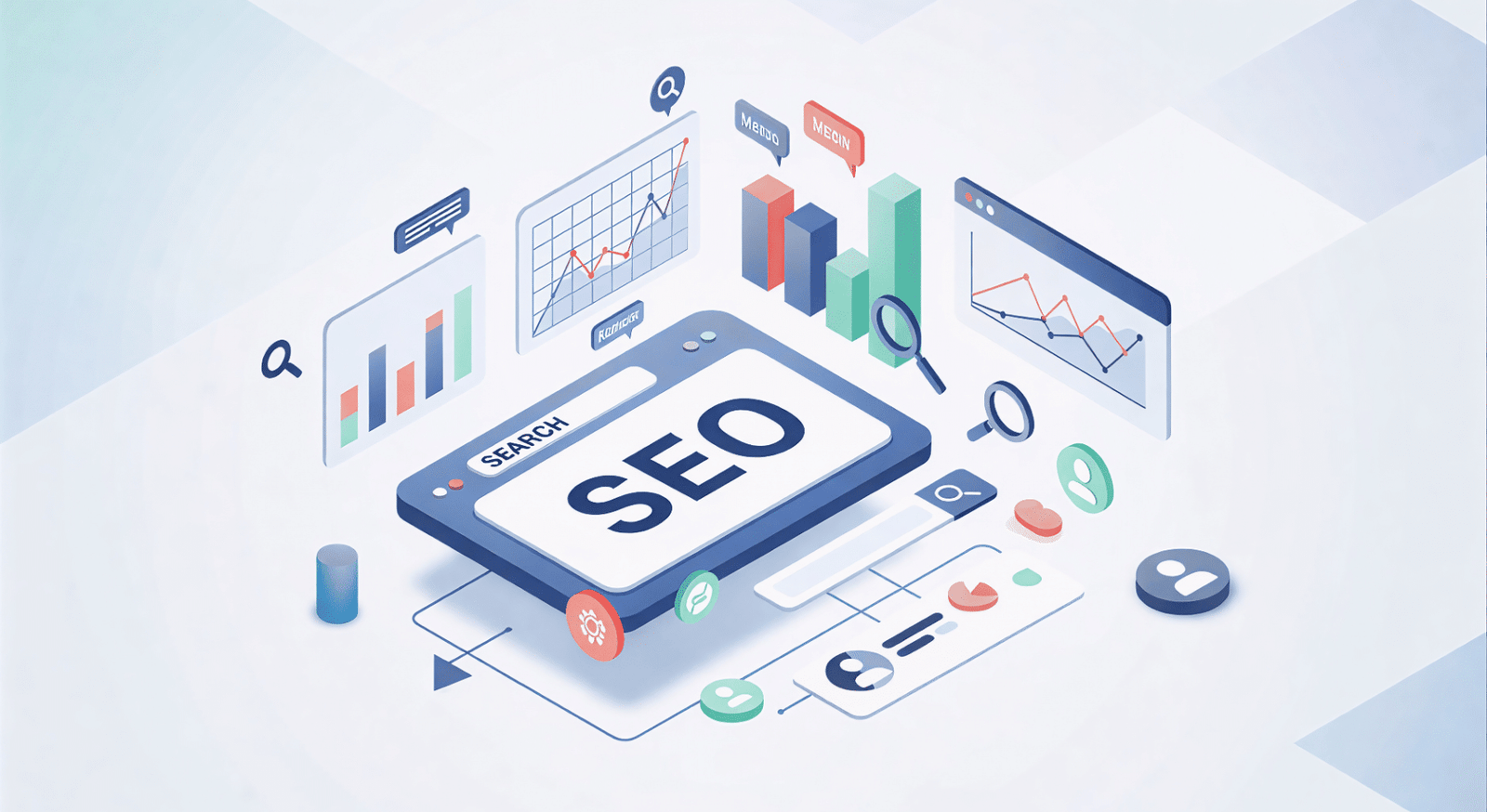
This chapter breaks down the five most impactful ways contractors can use artificial intelligence right now. We’ll go step-by-step through using AI for local Search Engine Optimization (SEO), paid advertising, content creation, lead nurturing, and reputation management, with real-world examples for your trade so you can see exactly how it works in practice.
How to Use AI for Hyper-Local SEO to Own Google Maps and Your Service Area
For a contractor, showing up on the first page of Google, specifically in the Google Maps “3-pack”, is the holy grail. AI-driven SEO uses intelligent tools to analyze competitors, uncover hidden keyword opportunities, and optimize your website at a scale and speed no human can match.
The goal is simple: when a homeowner in your service area searches for “emergency roofer near me” or “kitchen remodeling contractor,” your business is one of the first they see. This isn’t a long shot; it’s a strategic necessity, as research from GoGulf shows that 46% of all Google searches have local intent.
Furthermore, a recent BrightLocal survey confirmed that 98% of consumers used the internet to find information about local businesses in the last year.
Here is a step-by-step process to use AI for local SEO:
AI-Powered Keyword Research: The foundation of SEO is knowing what your customers are searching for. Instead of guessing, you use tools like Semrush to find two crucial types of keywords. First are geo-modified keywords like “HVAC repair Jacksonville FL” or “plumber in Riverside.”
Second, and often more valuable, are long-tail question keywords like “how much to install a new circuit breaker panel?” AI excels at identifying these high-intent keywords that your competitors are completely ignoring.
AI Content Optimization: Once you have your keywords, you need to create service pages that Google sees as the most authoritative answer. Tools like SurferSEO do this with data. You tell it you want to rank for “AC Installation,” and the AI analyzes the top 10 existing pages.
It then gives you a data-backed blueprint for your own page, suggesting you include related terms like “energy efficiency,” “financing options,” “Trane vs Carrier,” and details about installation costs to comprehensively cover the topic and outrank everyone else.
Automated Local Schema Markup: Schema is a type of code that speaks directly to Google. AI-powered website plugins can automatically generate `LocalBusiness` schema for your site. This code explicitly tells Google your exact service area, business hours, address, phone number, and customer reviews in its native language. This technical step is a massive signal for Google to feature you prominently in the Map Pack.
AI for Google Business Profile (GBP) Management: Your GBP is your digital storefront. AI tools can streamline its management. You can use AI to schedule weekly GBP posts that showcase recent jobs, generate draft responses to common customer questions in the Q&A section, and analyze the sentiment of your reviews to identify patterns.
For instance, the AI might detect that multiple reviews mention “technician was courteous,” giving you a powerful marketing message to use in your ads.
The difference is stark. Traditional SEO involves manual keyword lists and guesswork on what content to write. AI-SEO automates opportunity finding, provides data-driven content briefs, and offers predictive analysis on what it will take to rank. It’s the difference between navigating with a paper map and using a real-time GPS.
How to Use AI-Powered PPC to Stop Wasting Ad Spend and Win Profitable Jobs
Pay-Per-Click (PPC) ads, like Google Ads, can be a powerful source of leads, but they can also be a black hole for your budget if not managed correctly. AI in PPC automates the complex processes of bidding, ad creation, and targeting. Its job is to show your ad to the right homeowner at the exact moment they need your services, for the lowest possible cost.
The results are significant. According to Google’s own data, businesses using its AI-powered Performance Max campaigns see an average of an 18% increase in conversions at a similar cost per action.
Here are the core ways AI transforms contractor PPC campaigns:
Predictive Bidding: This is where AI truly shines. It analyzes thousands of signals in real-time, including the user’s location, the time of day, the device they’re using, and their recent search history, to predict how likely a click is to turn into a paying job. Based on this prediction, it adjusts your bid.
The AI will bid much more aggressively for a search like “emergency furnace repair” on a freezing Sunday night than it will for a search like “furnace maintenance cost” on a Tuesday morning, ensuring your ad spend is focused on the most urgent and profitable opportunities.
Dynamic Ad Copy: Are you tired of trying to write the perfect ad? AI tools like AdCreative.ai or the built-in features of Google Ads can generate and test hundreds of variations of headlines and descriptions. The system automatically identifies the combination that gets the most phone calls and form submissions and shows it more often, continuously optimizing your campaign for performance.
Audience Targeting & Lookalike Audiences: The most powerful data you have is your list of past customers. With platforms like Google Ads and Meta (Facebook) Advantage+ campaigns, you can upload your customer list from your CRM.
The AI analyzes the characteristics of your best customers and then finds new people across the internet with similar profiles, for example, homeowners in specific high-value zip codes who have recently shown interest in home improvement projects.
Budget Optimization with Performance Max (PMax): Think of PMax as Google’s all-in-one AI engine for local businesses. You provide it with your goals (e.g., generate phone calls), your budget, and your creative assets (text, images, videos). The AI then automatically allocates your ad budget across all of Google’s channels, Search, YouTube, Display, and Maps, to find the most leads for you.
Your job shifts from micromanaging bids and keywords to “managing the AI.” You feed it good data, like accurate conversion tracking and customer lists, and it makes millions of smart decisions on your behalf.
How to Automate Content Creation for Your Contracting Website, Blog, and Social Media
Most contractors are experts at their trade, not at writing. Staring at a blank page trying to come up with a blog post or a social media caption is a frustrating waste of time. AI writing assistants like Jasper.ai and ChatGPT Plus can’t replace your decades of hands-on expertise, but they can act as a powerful partner to create marketing content ten times faster.
Here are some practical use cases for contractors:
- Blog Posts: Generate detailed outlines and first drafts for helpful articles like “7 Signs Your Electrical Panel Needs an Upgrade” or “Choosing the Best Roofing Material for Florida Weather.” These posts attract customers early in their decision-making process and establish your authority.
- Service Pages: Quickly write detailed, keyword-rich descriptions for every single service you offer, from “sewer camera inspection” to “full kitchen remodel.” Well-written service pages are the backbone of a successful local SEO strategy.
- Social Media Captions: Stop struggling with what to write. Provide the AI with a few details about a recent job, and it will create engaging captions for your before-and-after project photos on Facebook and Instagram.
- Video Scripts: Plan out short, helpful FAQ videos to answer common customer questions. The AI can generate a script for a two-minute video explaining “What’s the difference between a traditional and a tankless water heater?”
- Email Newsletters: Stay top-of-mind with past customers by sending out a monthly newsletter. The AI can write home maintenance tips that provide value and keep your business’s name in their inbox for future projects or referrals.
The most effective way to use these tools is with the “Expertise Sandwich” method. This approach ensures your content is both efficient to create and genuinely valuable.
- You Provide the Expertise (Top Layer): Start by giving the AI a clear outline, key talking points, specific details from your experience, and the core message you want to convey.
- The AI Writes the Draft (The Filling): The AI takes your expert input and quickly generates a well-structured first draft, handling the heavy lifting of writing and organizing the information.
- You Edit and Personalize (Bottom Layer): You then review the draft, correcting any inaccuracies, and most importantly, injecting your personal experience, job-site stories, and unique brand voice. This final human touch is what makes the content authentic and trustworthy.
How to Use AI in Your CRM to Nurture Leads into Signed Contracts
How many potential jobs have been lost because a quote was sent but the follow-up was too slow or never happened? AI can integrate with your Customer Relationship Management (CRM) system, whether it’s a trade-specific platform like Jobber or ServiceTitan or a broader tool like HubSpot, to automate the crucial process of lead nurturing and identify your hottest prospects.
The primary applications are:
AI Lead Scoring: The AI analyzes a new lead’s behavior. Did they open your quote email three times? Did they visit your financing page after receiving the quote? Based on these signals, the AI assigns a “hotness” score to each lead. This allows you and your team to focus your attention and prioritize calling the prospects who are most likely to convert into a signed contract.
Automated Follow-up Sequences: This is a game-changer for closing rates. When a quote is sent from your CRM, the AI can automatically trigger a pre-written series of personalized emails and text messages. For example:
- Day 2: “Hi [Customer Name], just wanted to check if you had any questions about the roofing quote we sent over. Happy to walk you through it. – [Your Name]”
- Day 5: “Just a quick note – many of our customers find our financing options helpful. You can see them here: [Link]. Let me know if I can help.”
- Day 10: “Hi [Customer Name], just checking in one last time. This quote is valid for another week. Please let us know if you’d like to move forward.”
Personalized Cross-sells & Up-sells: The relationship doesn’t end when the job is done. After a project is marked complete, the AI can automatically schedule a follow-up task or email in six months to offer a related service. For example, after a roof replacement, it could send an offer for gutter cleaning and inspection before the rainy season starts, generating repeat business automatically.
How to Automate Reputation Management with AI to Get More 5-Star Reviews
In the trades, your reputation is everything. A BrightLocal study found that 88% of consumers trust online reviews as much as personal recommendations from friends or family. Manually asking every customer for a review and responding to each one is time-consuming. AI tools like BrightLocal, Podium, and BirdEye can automate the entire review generation and management process.
Here’s how it works:
- Automated Review Requests: The system integrates with your CRM or scheduling software. As soon as a job is marked “complete,” the AI automatically sends a personalized text message or email to the customer. This message thanks them for their business and provides a single, direct link to leave a review on your Google Business Profile, making it incredibly easy for happy customers to share their feedback.
- AI-Powered Review Responses: To save you time, many platforms now use AI to generate draft responses to new reviews. For a 5-star review, it might draft something like, “Thank you so much for the kind words, [Customer Name]! We’re thrilled you had a great experience.” This ensures every review gets a timely, professional reply, which shows potential customers that you are engaged and attentive.
- Sentiment Analysis for Business Improvement: This is one of the most powerful and underutilized features. The AI can analyze the text of all your online reviews from every platform to identify recurring themes and trends. It might flag that the phrase “scheduling communication” is frequently mentioned in your 3-star reviews, or that “cleaned up the work area” is consistently mentioned in your 5-star reviews. This provides you with specific, data-backed insights into what your business is doing well and which operational issues you need to fix to improve customer satisfaction.
These five applications are not futuristic concepts; they are practical tools you can implement today. By systematically applying AI to your SEO, PPC, content, sales, and reputation, you build a powerful, automated marketing system that works for you 24/7. Next, we’ll look at the specific tools you need to build this system.
Chapter 3: The Ultimate AI Marketing Toolkit for Contractors
You understand the strategies, and now it’s time to talk about the tools that make it all happen. This chapter is your curated, no-fluff guide to the best AI marketing software for contracting businesses.
We’ve cut through the noise of countless options to show you exactly which tools to use for content, SEO, advertising, and lead management. We’ve also included a recommended “starter stack” to help you get going immediately without breaking the bank.
The Best AI Content Creation and Copywriting Tools for Contractors
These tools act as your creative partner, helping you write everything from blog posts to ad copy in a fraction of the time.
Tool: Jasper.ai
An advanced AI writing assistant designed to create high-quality, long-form marketing copy, blog posts, and social media content.
It excels at writing SEO-friendly service page descriptions (“Leak Detection Services in Jacksonville”), quickly generates first drafts of helpful blog posts (“5 Signs You Need a New Roof”), creates engaging Facebook post captions for your project photos, and helps you write professional email follow-ups to quotes.
Tool: ChatGPT Plus
A highly versatile and conversational AI chatbot from OpenAI that is excellent for idea generation, drafting content, and quick-turnaround writing tasks.
It’s perfect for brainstorming blog post topics, generating lists of local keywords and frequently asked questions for your website, writing quick Google Business Profile posts to showcase a recent job, and drafting customer service email templates for common inquiries.
Tool: Copy.ai
An AI writer that specializes in short-form copy, making it particularly effective for advertisements and social media content where every word counts.
It can instantly generate dozens of different headline variations for your Google Ads, write compelling hooks to grab attention in Facebook video ads, and even help you create catchy slogans and taglines for your business branding.
The Best AI SEO and Local Search Analytics Tools for Contractors
These platforms provide the data and automation needed to get your business ranked at the top of local search results.
Tool: SurferSEO
An AI-powered content editor that analyzes the top-ranking search results for a specific keyword and provides a data-driven blueprint to help you create content that outranks them.
It removes the guesswork from SEO. To rank for “electrical panel upgrade,” Surfer gives you a “content score” and a simple checklist of related keywords and topics to include on your page. It’s like having an SEO expert guiding every sentence you write.
Tool: Semrush
A comprehensive, all-in-one SEO and digital marketing platform with powerful AI features for competitive research and opportunity analysis.
It’s Keyword Magic Tool is invaluable for discovering valuable local keywords that customers are searching for. Its competitive analysis tools let you see exactly which keywords your top local competitors are ranking for, allowing you to build a strategy to beat them.
Tool: BrightLocal
Is a specialized local SEO platform focused on reputation management, citation building, and local rank tracking.
It is purpose-built for service businesses. It automates the process of requesting reviews from customers, tracks your rankings in the Google Map Pack across all the different zip codes you serve, and audits your business listings across the web to ensure your name, address, and phone number (NAP) are consistent, which is a critical local ranking factor.
The Best AI Advertising and Automated Bidding Platforms for Contractors
These advertising platforms use AI to automate bidding and targeting, ensuring your ad dollars are spent as efficiently as possible to generate profitable leads.
Tool: Google Performance Max (PMax)
Google’s own all-in-one, AI-driven campaign type that automates targeting, bidding, and ad placement across all of Google’s channels, including Search, Maps, YouTube, and Display.
It is designed to be a powerful “done-for-you” solution (with expert setup and management) focused on one goal: getting the most leads for your budget. It finds customers whether they are actively searching for your service or just browsing online. Aziel Digital’s success with clients like Ultimate Reflections Towing, who saw a 150%+ increase in organic traffic and a 97.78%+ increase in call volume, is a testament to the power of expertly managed campaigns.
Tool: AdCreative.ai
A specialized tool that uses AI to generate ad creatives, the images, headlines, and text for your ads, that are designed for high conversion rates.
It can quickly generate dozens of visual ideas and copy variations for your Facebook or Google Display ads. This helps you avoid “ad fatigue” (where people stop noticing your ad) and allows you to test and find winning creative concepts much faster than manual design.
Tool: Meta (Facebook) Advantage+ Campaigns
Facebook and Instagram’s AI-powered campaign automation tool that simplifies audience targeting and budget allocation to find the most receptive users for your ads.
Its “lookalike audience” feature is incredibly powerful. You can upload a list of your past customers, and Facebook’s AI will analyze their demographics and interests to automatically find and show your ads to more people just like them within your designated service area.
The Best AI Chatbot and Lead Qualification Tools for Service Businesses
These tools work 24/7 on your website to engage potential customers, answer their questions, and capture their information so you never miss a lead.
Tool: Tidio
An easy-to-use, AI-powered website chatbot that engages visitors in real-time conversations.
It acts as your virtual receptionist, even when you’re on a job site or it’s after hours. The chatbot can answer common pre-sale questions (“Are you licensed and insured?”), qualify leads by asking key questions (“What is your zip code?” or “What type of service do you need?”), and even book appointments directly on your calendar.
Pro Tip: The Recommended Contractor AI Starter Stack
Feeling overwhelmed by the options? Don’t be. You don’t need to buy ten tools on day one. Start small, master one or two platforms, prove the return on your investment, and then expand. For a contractor just getting started with AI marketing, we recommend this powerful and cost-effective starter stack:
- For Content Ideas & Drafting: ChatGPT Plus (~$20/mo)
- For Website & SEO Optimization: SurferSEO (~$89/mo)
- For Lead Generation Ads: Google Performance Max (Your Ad Budget)
For a total software cost of about $110 per month plus your ad spend, this stack gives you the core capabilities to generate content ideas, optimize your most important service pages to rank on Google, and run a powerful, automated ad campaign to drive immediate leads.
With the right tools identified, the next step is to build a plan to put them to work. In the following chapter, we’ll walk you through a simple, five-step framework to create and launch your AI marketing strategy.

Chapter 4: How to Build Your Contractor AI Marketing Plan
Having the right tools is only half the battle. A hammer and a saw don’t build a house; a solid blueprint and a skilled carpenter do. This chapter provides a simple, 5-step framework to help you implement an AI marketing strategy that actually drives growth.
We’ll guide you from setting clear goals to launching and measuring your campaigns, turning the theory and tools from the previous chapters into an actionable plan for your business.
Step 1: Define Your Business Goals
Before you touch any AI tool, you need to know exactly what you’re trying to achieve. Vague goals like “get more leads” are useless because you can’t measure them effectively. Instead, you need to set SMART goals: Specific, Measurable, Achievable, Relevant, and Time-bound. This clarity is what will guide your entire AI strategy.
A bad, vague goal sounds like: “I want to do better with my ads.”
A good, SMART goal sounds like: “Reduce our Cost Per Qualified Lead for ‘kitchen remodeling’ keywords by 20% within the next 90 days by implementing AI-powered bidding in our Google Ads account.”
Think about what your business truly needs right now. Here are some common goals for contractors that can be supercharged with AI:
- Increase Overall Lead Volume: “Generate 50 qualified phone calls per month through our website within Q3.”
- Target High-Profit Services: “Increase the number of leads for commercial roofing by 40% in the next six months.”
- Decrease Marketing Waste: “Lower our overall Cost Per Lead (CPL) from $80 to $60 by the end of the year.”
- Improve Sales Efficiency: “Increase our lead-to-booking rate from 25% to 35% by implementing an automated email follow-up sequence.”
- Expand Service Area: “Establish a consistent lead flow of 10 leads per month from the new 32258 zip code within 60 days of launching our geo-targeted campaign.”
Choose one or two primary goals to start. This focus will make it much easier to select the right tools and measure your success.
Step 2: Audit Your Current Marketing to Find the Biggest AI Opportunities
Now that you have your goals, you need to find the biggest points of leverage where AI can make an impact. This doesn’t need to be a complex, multi-week analysis. Just ask yourself four simple questions about your current marketing efforts.
Use this simple AI opportunity audit checklist:
1. The Time Audit: Which marketing task takes you or your office staff the most manual time each week? Is it writing and scheduling social media posts? Responding to reviews? Following up on quotes?
AI Solution: If it’s writing content, an AI writer like Jasper.ai is your answer. If it’s managing reviews, a tool like BrightLocal is the solution.
2. The Money Audit: Where is your ad budget getting the least ROI? Look at your Google Ads account. Which keywords are you spending a lot on that don’t result in booked jobs? Are you getting calls from outside your service area?
AI Solution: Google Performance Max’s automated bidding can intelligently shift your budget away from these poor performers and toward the keywords and audiences that actually generate revenue.
3. The Data Audit: What critical business questions can’t you answer right now? For example, can you definitively say which marketing source (Google, Facebook, a mailer) brings in the most profitable jobs, not just the most leads?
AI Solution: AI-powered analytics, when properly connected to your CRM, can trace revenue from a closed job all the way back to the original ad click, giving you true clarity on your marketing ROI.
4. The Lead Flow Audit: Where are you losing potential customers in your process? Do visitors come to your website and then leave without contacting you? Do leads go cold after you send a quote?
AI Solution: An AI chatbot like Tidio can engage website visitors and capture their information before they leave. An automated follow-up sequence in your CRM can nurture cold leads back to life.
By answering these questions, you’ll have a clear idea of where to deploy AI first for the biggest and fastest impact on your business.
Step 3: Choose Your AI “Starter Stack”
With your goals set and opportunities identified, it’s time to select your tools. Refer back to the toolkit in Chapter 3. The key here is to start small and focused. Don’t buy 10 different AI tools on day one.
You’ll get overwhelmed and end up not using any of them effectively. Instead, choose one or two tools that directly address the biggest opportunities you found in your audit. Master them, prove their value, and then expand your toolkit.
Here are a few tailored stack recommendations based on common contractor profiles:
For the “DIY” Contractor on a Budget:
- Stack: ChatGPT Plus + Google Performance Max
- Focus: Use ChatGPT for quick content ideas and social posts, and let Google’s AI handle the heavy lifting of finding you leads through ads.
For the “Growth-Focused” Contractor Ready to Invest:
- Stack: Jasper.ai + SurferSEO + Google PMax + Tidio
- Focus: This is a comprehensive stack to create high-ranking content, run sophisticated ad campaigns, and capture leads 24/7 on your website.
For the “Market Dominator” Who Wants the Best Results:
- Stack: The full suite of best-in-class tools, managed and integrated by an expert agency.
- Focus: This approach leverages enterprise-level strategy and technology without the in-house learning curve, designed for contractors who want to aggressively take market share.
Step 4: Train Your Team or Partner with an AI Marketing Agency
AI is an incredibly powerful tool, but like any professional-grade tool, it needs a skilled operator to get the best results. You have two primary options for implementation.
Option 1: In-House Implementation.
This involves dedicating an existing employee, like an office manager or a tech-savvy technician, to learn and manage the AI tools you’ve chosen.
- Pros: Lower initial cash outlay.
- Cons: There is a steep learning curve. This person’s time will be taken away from their other critical duties. Mistakes made during the learning process can be costly, especially with ad budgets.
Option 2: Partner with a Specialized AI Marketing Agency.
This involves hiring experts like Aziel Digital who already have the tools, the expertise, and the proven systems specifically for the trades. We’ve achieved results like boosting organic traffic by 879.6% for Hospitals For Humanity and increasing local organic traffic by over 250% for Hessco Innovations Towing.
- Pros: You get faster, better results by leveraging years of experience from day one. You gain access to enterprise-level strategy and insights. You and your team can stay focused on what you do best: serving your customers.
- Cons: It requires a higher financial investment than the DIY approach.
The right choice depends on your budget, your timeline, and the technical aptitude of your internal team.
Step 5: Launch, Measure, and Create a Data Feedback Loop for Your AI
This is the most important step. AI marketing is not “set it and forget it.” It is a process of continuous improvement driven by a data feedback loop. The more high-quality data you provide, the smarter and more effective your AI becomes.
The feedback loop works like this:
- Launch: You launch your AI-powered ad campaign, your new SEO-optimized service pages, or your automated follow-up sequence.
- Gather & Optimize: The AI begins gathering data on what’s working and automatically makes micro-adjustments to improve performance.
- Review: On a regular basis, you or your agency reviews the performance against the SMART goals you set in Step 1. Are you hitting your Cost Per Lead target? Is the lead quality high?
- Provide Feedback: This is the human element. You provide critical feedback to the AI. This can be as simple as telling your Google Ads campaign which keywords generated actual booked jobs (not just form fills). Or it can be as sophisticated as uploading a list of your most profitable customers from your CRM so the AI can find more people just like them.
- Relaunch & Repeat: The AI takes this new feedback, gets smarter, and the entire cycle begins again, each time becoming more efficient and more effective at finding your ideal customer.
This continuous feedback loop is what creates a long-term, sustainable competitive advantage. While your competitors are still relying on gut feelings, your marketing will be getting incrementally smarter, more targeted, and more profitable every single week.
This five-step framework provides a clear path from strategy to execution. But how do you prove that all this effort is actually making you money? The next chapter will show you exactly how to calculate the real financial return on your AI marketing investment.

Chapter 5: How to Calculate the ROI of Your AI Marketing Efforts
At the end of the day, after all the talk about algorithms, keywords, and automation, only one question truly matters: “Is this making my business more money?” This chapter gets straight to the point, showing you exactly how to measure the success of your AI marketing.
We’ll cover the key metrics that actually matter for contractors and give you a simple, powerful formula to calculate your Return on Investment (ROI). This will allow you to see the tangible financial impact of your efforts on your company’s bottom line.
The Contractor KPIs That Actually Matter
The first step in measuring success is to stop focusing on “vanity metrics.” Things like website visits, clicks, impressions, and social media likes can feel good, but they don’t pay your bills. You can get a million impressions and go out of business. Instead, you need to track Key Performance Indicators (KPIs) that connect directly to revenue.
Here are the essential marketing KPIs every contractor should be tracking:
Cost Per Lead (CPL): This is your total marketing spend for a period divided by the total number of leads generated.
- Formula: Total Marketing Spend / Total Number of Leads
Cost Per Qualified Lead (CPQL): This is a much more important metric. It measures the cost to generate a lead that meets your specific criteria (e.g., they are in your service area, need a service you provide, and have a legitimate project). AI’s primary job is to lower this number drastically by filtering out junk leads.
- Formula: Total Marketing Spend / Number of Qualified Leads
Lead-to-Booking Rate (%): This tells you how effective your sales process is. It’s the percentage of total leads that turn into a scheduled, booked job. AI helps improve this by delivering higher-quality leads and by using automated nurturing to keep your business top-of-mind.
- Formula: (Number of Booked Jobs / Total Leads) x 100
Return on Ad Spend (ROAS): This is a direct measure of the profitability of your advertising campaigns. It shows you how much revenue you generate for every dollar you spend on ads.
- Formula: (Revenue Generated from Ads / Total Ad Spend)
Customer Lifetime Value (CLV): This is the total profit you can expect to earn from a single customer over the entire course of their relationship with your business. A simple roof repair can lead to a full roof replacement five years later, plus referrals to neighbors. AI helps increase CLV with automated follow-ups for maintenance plans and future projects.
Tracking these KPIs shifts your perspective from “How much are we spending on marketing?” to “How much profit is our marketing generating?”
How to Connect Your AI Marketing to Real-World Jobs and Revenue
To calculate these KPIs accurately, you need to connect your marketing activities to your sales data. This process is called lead attribution, and it’s the “data plumbing” that makes a true ROI calculation possible.
Without it, you’re still just guessing. For example, Aziel Digital’s work with Paving Contractors Dublin, which led to #1 and #2 Google Map rankings and a 300%+ traffic increase, would be meaningless without tying that traffic to actual paving contracts signed.
Here are the must-have tools for proper attribution:
- Call Tracking: This is non-negotiable for any contractor. Services like CallRail or WhatConverts provide you with unique phone numbers for each of your marketing channels. You place one number on your Google Ads, another on your Google Business Profile, and another on your website’s organic listings. When a call comes in, the system tells you exactly which channel generated it. You can even track which specific keyword a person searched before calling.
- CRM Integration: This is where the magic happens. Your website contact forms and your call tracking software should be integrated to automatically feed every new lead directly into your CRM (like Jobber or ServiceTitan). Crucially, the lead’s original source (e.g., “Google Ad – ’emergency plumber’ keyword”) should be tagged to their contact record.
When your team marks that lead as a “won job” and enters the final invoice amount into the CRM, that revenue can be traced all the way back to the specific ad, keyword, or webpage that started the conversation. This is the high-quality data that feeds the AI feedback loop we discussed in the last chapter, allowing it to get progressively smarter about finding more of your most profitable customers.
The Simple Formula for Calculating Your AI Marketing ROI
Once your tracking and attribution are in place, calculating your overall marketing ROI is straightforward. This formula tells you, in clear percentage terms, how much profit your marketing investment has generated.
The Formula:
ROI % = [ (Revenue from AI Marketing – Total AI Marketing Investment) / Total AI Marketing Investment ] x 100
Let’s break down the terms:
- Revenue from AI Marketing: This is the total revenue from all the new jobs that your attribution system has traced back to your AI-powered marketing campaigns.
- Total AI Marketing Investment: This is the combined cost of your AI software subscriptions, your total ad spend, and any agency management fees for the period.
Here is a concrete example for a hypothetical roofing contractor:
You partner with Aziel Digital and invest in their Starter Growth Bundle for $4,500 in one month. This is your “Total AI Marketing Investment.”
During that month, the AI-powered campaigns generated 10 booked roof replacement jobs. The average invoice for these jobs is $2,000.
Your “Revenue from AI Marketing” is 10 jobs x $2,000/job = $20,000.
Now, you plug those numbers into the formula:
ROI = [ ($20,000 – $4,500) / $4,500 ] x 100
ROI = [ $15,500 / $4,500 ] x 100
ROI = 344%
This number is powerful. It means that for every $1 you invested in your AI marketing system, you got back $3.44 in profit. This is the kind of clear, undeniable result that allows you to invest in growth with confidence. It transforms marketing from a mysterious expense into your most predictable and profitable business driver.
Now that you know how to prove the value of AI marketing, the only thing left is to take the first step. The final chapter will explore what’s next for AI in the trades and give you a clear path to get started before your competition leaves you behind.
Chapter 6: Getting Started with AI Before Your Competition Does
Artificial intelligence is not some far-off, futuristic trend; it is a present-day reality that is already creating a new class of winners and losers in the trades. The gap between contractors who adopt these technologies and those who don’t is widening every month.
This final chapter looks at what’s on the horizon for AI in the contracting world and provides a clear, no-pressure path for you to get started. The time to build your competitive advantage is now, don’t get left behind.
What’s Next for AI in the Trades?
While this guide has focused on AI’s impact on marketing, its influence is rapidly expanding into every corner of the contracting business. Understanding these future trends shows just how integral this technology will become.
Here’s a glimpse of what’s coming:
- AI-Powered Bidding and Estimating: Imagine an AI that can analyze architectural blueprints, material lists, and complex job specifications to generate a highly accurate project bid in minutes, not hours or days. This will drastically speed up the sales process and improve bidding accuracy.
- AI-Optimized Scheduling & Routing: For businesses with multiple crews and service trucks, AI will create the most efficient daily route based on job locations, real-time traffic data, and individual technician skill sets. This will save thousands of dollars in fuel and labor costs while allowing you to fit more jobs into each day.
- Predictive Maintenance: This is especially relevant for HVAC, plumbing, and appliance repair specialists. Using data from smart devices and IoT (Internet of Things) sensors within a home’s systems, an AI can predict that a specific component is likely to fail before it actually breaks down. It could then automatically alert the homeowner and schedule a preventative maintenance call, creating a new, proactive revenue stream.
- Hyper-Personalized Customer Portals: For large remodeling or construction projects, customers will be able to log into a portal and see AI-generated progress updates, complete with daily photos, timeline adjustments, and budget tracking. This level of transparency and communication will become a major competitive differentiator.
These advancements are not science fiction. They are the logical next step in an industry being transformed by data and automation. The contractors who embrace AI in their marketing today will be the best positioned to adopt these operational technologies tomorrow.
The Real Risk of Ignoring AI
The biggest risk in business is not failure; it’s irrelevance. Choosing to ignore AI is choosing to operate with a significant, self-imposed handicap. The competitive landscape is changing rapidly, and inaction is now a far greater risk than adoption.
Consider these direct comparisons that are happening right now in your service area:
While you are manually guessing which bid to place on a Google keyword, your competitor’s AI is testing 1,000 different bids per minute to find the most profitable ones that lead to actual jobs.
While you are trying to remember to follow up on a quote you sent last week, your competitor’s AI has already sent three personalized, automated follow-up emails and a text message to their prospect.
While your website is a static digital brochure that sits idle after 5 PM, your competitor’s website has an AI chatbot actively engaging visitors, answering their questions, and booking appointments for them at 10 PM on a Sunday.
The gap between the AI-enabled contractor and the traditional contractor will not just grow; it will accelerate. Early adopters will capture dominant market share because they will be more visible online, more responsive to customers, and more efficient in their marketing spend.
They’ll get the best leads for the lowest cost, allowing them to invest more in their team and equipment, creating a cycle of success that becomes nearly impossible for latecomers to break.
How to Implement AI Marketing in Your Business This Week
You’ve seen the proof, you understand the strategies, and you know the risks of waiting. The traditional way of marketing, a time-consuming, expensive guessing game, is no longer a viable path to growth. The solution is clear: implementing an AI-powered marketing system that provides predictable results for your contracting business.
By adopting this approach, you will get more high-quality leads, lower your marketing costs, save your valuable time, and finally be able to focus on what you do best, running your company and serving your customers.
This is where Aziel Digital comes in. We are not just a technology company; we are marketing experts with deep, hands-on experience in the trades. We understand the unique challenges you face because we’ve helped contractors across the country overcome them.
We achieved a 200%+ traffic increase for Emergency Roofers Dublin and helped Jesse Tutt’s business grow to over 24,000 website visitors per month. We combine our industry expertise with the most powerful AI technology available. We manage the tools, we analyze the data, and we deliver the results. You get the calls, the jobs, and the growth.
The path forward is simple. You don’t need to become an AI expert overnight. You just need to take the first step.
Schedule Your Free AI Strategy Call
Book a no-obligation call with our team. We’ll audit your current marketing, identify your single biggest opportunity for AI-driven growth, and show you a clear plan to get there.
Visit us at https://azieldigital.com/free-consultation/ to find a time that works for you.
Frequently Asked Questions
Can AI Help Me Figure Out Which Services Are The Most Profitable?
Yes, absolutely. By properly integrating your marketing channels with a CRM that tracks job revenue (a process known as revenue attribution), an AI-powered analytics system can provide a clear report.
It can show you that while “faucet repair” generates the most leads, “sewer line replacement” generates a 500% higher profit margin per job.
This data-driven insight, highlighted by business intelligence experts, allows you to strategically focus your marketing budget on attracting the jobs that make you the most money.
How Much Does AI Marketing Cost For A Small Contracting Business?
The cost varies based on the approach. A do-it-yourself “starter stack” using tools like ChatGPT Plus and SurferSEO can begin around $110 per month plus your ad spend.
Working with a specialized agency like Aziel Digital involves a higher investment, with packages tailored to your specific growth goals, but this provides access to expert strategy and management, often leading to a faster and higher return on investment, as documented by Google’s findings on the effectiveness of professionally managed AI campaigns.
Do I Need To Be A Tech Expert To Use AI Marketing For My Business?
No, you don’t. The key is to understand the strategy, not necessarily the complex code behind it. Basic tools like AI content writers are very user-friendly.
For more advanced applications like AI-powered PPC, your role is to provide the business goals and data, as explained by marketing experts at institutions like the Kellogg School of Management.
Partnering with an agency allows you to leverage the full power of the technology without needing any technical expertise yourself.
What Is The Difference Between Marketing Automation And True AI Marketing?
Marketing automation follows pre-set “if-then” rules. For example, “IF a person fills out a form, THEN send them Email A.” True AI marketing, powered by machine learning, makes its own decisions and predictions.
For example, an AI system analyzes thousands of data points to decide the perfect bid for an ad in real-time or determines which of five different emails is most likely to resonate with a specific lead based on their behavior. A Salesforce report on marketing trends highlights this shift from static rules to predictive personalization.
Can AI Replace My Marketing Person Or Agency?
AI is a tool, not a replacement for strategy. It is incredibly effective at executing tasks, analyzing data, and automating processes at scale.
However, it still requires a skilled human operator to set the goals, interpret the results, provide creative direction, and make strategic business decisions. AI empowers your marketing person or agency to be more effective and data-driven, not redundant.
How Long Does It Take To See Results From An AI Marketing Strategy?
Results vary by channel. With AI-powered PPC campaigns like Google Performance Max, you can start seeing new leads within the first week of launch.
For AI-driven SEO, results are more gradual, as it takes time for Google to recognize and reward content improvements; typically, you can expect to see meaningful movement in rankings and traffic within 3 to 6 months, a timeline consistent with industry benchmarks from sources like Search Engine Journal.
Is AI Marketing More Effective For Certain Trades Like Plumbing Versus Roofing?
AI marketing is effective across all trades because its principles are universal: find the right customer, at the right time, with the right message. An AI can be trained to find high-value “emergency plumbing” leads just as effectively as it can be trained to find homeowners researching “asphalt shingle roof replacement.”
The specific data and keywords will differ, but the underlying process of data analysis and optimization is equally powerful for any home service business.
Can AI Help Me Write Estimates Or Proposals?
Yes, this is an emerging application. While complex bids still require expert human oversight, AI writing assistants like ChatGPT can be used to quickly generate standard proposal language, service descriptions, and terms and conditions sections.
This can significantly speed up the process of creating professional-looking documents, allowing you to get quotes to customers faster.
Will AI Take My Job As A Contractor?
No, AI will not take the job of a skilled plumber, electrician, or roofer. AI cannot install a water heater, wire a new home, or replace a roof. AI is a tool that will make the business side of contracting more efficient.
The contractors who use AI to manage their marketing, scheduling, and customer communication will have a significant advantage over those who do not.
What Is The Best AI Tool For A Contractor Just Starting Out?
For a contractor just beginning to explore AI, ChatGPT Plus is an excellent starting point. It is low-cost (around $20/month) and incredibly versatile.
You can use it to brainstorm marketing ideas, draft social media posts, write customer emails, and get a feel for how AI can assist with content creation without a steep learning curve or large financial commitment.
How Can AI Help Me Get More 5-Star Reviews On Google?
AI-powered reputation management platforms like BrightLocal or Podium automate the review request process. They integrate with your CRM or scheduling software and, once a job is marked complete, automatically send a personalized text message or email to the customer with a direct link to your Google review page.
This simple automation dramatically increases the percentage of happy customers who leave a review, as it removes all friction from the process.
Can AI Automatically Post My Project Photos To Social Media?
Yes, but with a human touch. While some social media scheduling tools use AI to suggest the best times to post for maximum engagement, the process isn’t fully automated yet. You can use AI writers like Jasper.ai to generate compelling captions for your photos instantly.
You then use a scheduling tool to queue up these posts, but the initial selection of photos and approval of the AI-written text still benefits from your expert eye.
What Kind Of Data Does The AI Need From My Business To Work Effectively?
The better the data you provide, the smarter the AI gets. The most valuable data includes: a list of your past customers from your CRM, conversion data from your website (which leads turned into calls), and, most importantly, revenue data (which leads turned into paying jobs and how profitable they were).
This “closed-loop” data, as described in marketing analytics resources from HubSpot, allows the AI to learn the specific characteristics of your most valuable customers.
Is Using AI For Marketing Considered Cheating Or Unethical?
No, using AI for marketing is not considered cheating. It is the evolution of digital marketing tools. Just as contractors moved from hand saws to power saws to be more efficient, they are now moving from manual marketing tools to AI-powered ones.
Ethical considerations apply to how you use the technology, for example, being transparent about chatbots and ensuring personalized ads are relevant and not intrusive, but the use of the technology itself is standard industry practice.
How Does AI Help With Google Local Services Ads (LSAs)?
While Google’s LSA platform is more of a lead generation service than a traditional ad platform, AI plays a role behind the scenes.
Google’s algorithm uses numerous signals, including your review rating, responsiveness, and proximity to the searcher, to determine which “Google Guaranteed” or “Google Screened” providers to show.
An AI-powered reputation management tool that helps you get more positive reviews directly and positively influences your performance and visibility within the LSA system.
My Competitor Is Showing Up Everywhere Online. Are They Using AI?
It is highly likely. A competitor with a dominant and consistent online presence across Google Search, Maps, and social media is almost certainly using a sophisticated marketing approach. Achieving this level of visibility and efficiency manually is incredibly difficult and expensive.
They are likely using AI-powered SEO tools to optimize their website, AI-driven bidding on Google Ads to maximize their reach, and automation tools to manage their social media and reviews.
How Do I Know If An AI Marketing Agency Is Legitimate?
A legitimate AI marketing agency will focus on business outcomes, not just technology. They will ask about your revenue goals, your most profitable services, and your lead-to-booking rate.
They should be able to show you specific case studies from other contractors and clearly explain their process for tracking ROI, as discussed in publications like Forbes.
Be wary of any agency that promises instant #1 rankings or uses confusing technical jargon without explaining the business benefit.