

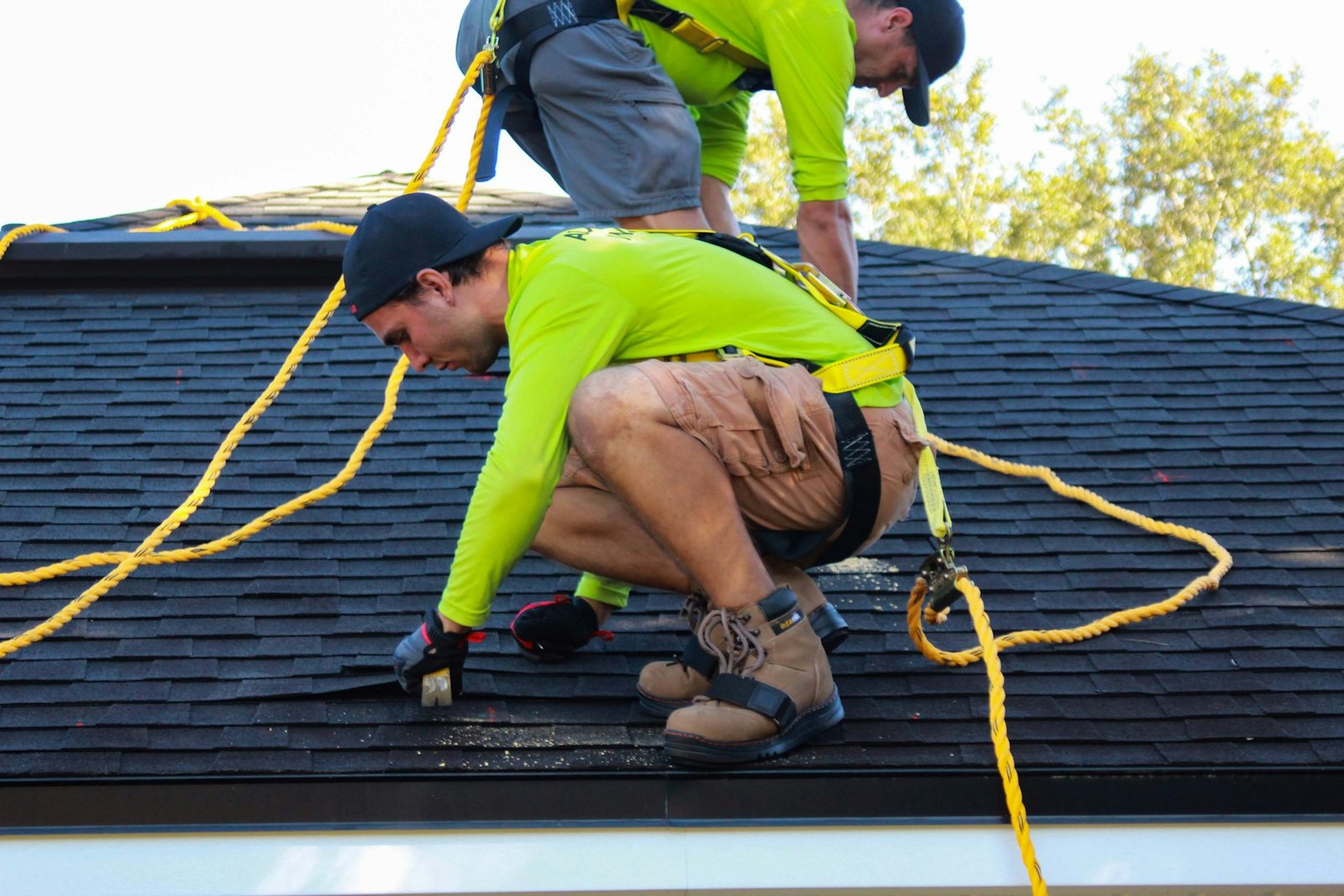
You might fix leaks for a living, but if you lack visibility, your potential revenue is draining away faster than water through a punctured membrane. The era of building a business solely on yard signs and door-knocking is behind us. Today, homeowners carry the Yellow Pages right in their pockets. If your business doesn’t pop up on their screen when they are frantically searching for repairs, you simply don’t exist to them. Marketing a roofing company now requires the same precision as a slate installation. You need the proper tools, a solid game plan, and the skill to execute without wasting your materials.
Main Points
- Google Business Profiles act as your main digital storefront, they must feature specific categories and fresh photos to work effectively.
- Local Services Ads (LSA) usually offer a better return on investment than traditional Pay-Per-Click because you pay per lead, not just for a click.
- The speed and volume of your reviews are just as important as your overall star rating when it comes to building trust.
- Website speed is a dealbreaker for conversion, sites that take longer than three seconds to load will lose half their traffic.
- Dedicated landing pages for specific roofing materials (like metal, asphalt, or flat roofs) perform much better than generic service pages.
- CRM software is essential for contacting leads within five minutes, which drastically increases your chances of qualifying them.
- Digital search has officially overtaken traditional referrals, with 90% of consumers heading online first to find help.
Dominate Local Search with Google Business Profile
The top three results you see in Google Maps known as the Local Packgrab the vast majority of clicks when people are ready to hire. When a homeowner types ‘roofer near me’ into their phone, they rarely look past these three options. Think of your Google Business Profile (GBP) as your digital storefront. It is often the very first, and sometimes the only, thing a potential client sees before deciding whether to call you.
Leaving your profile incomplete signals a lack of professionalism. You need to make sure your profile uses exact categories, specifically ‘Roofing Contractor,’ rather than a vague label like ‘Construction.’ Clearly define where you work and list accurate operating hours. High-quality photos of your completed jobs are non-negotiable. Google reports that businesses with photos on their profiles get 42% more requests for directions and 35% more click-throughs to their websites. Visual proof of your workmanship validates your claims before you ever speak to the customer.
Activity shows search algorithms that you are still in business. Post weekly updates via Google Posts showing off recent projects, storm damage tips, or team news to keep the profile alive. Data from Google indicates that 46% of all searches are looking for local information. If your profile is dormant, you will fall behind competitors who are engaging regularly.
NAP Consistency is the foundation of local SEO. Your Name, Address, and Phone number must be identical across your GBP, website, and other directories like Yelp, Angi, and the BBB. Discrepancies confuse search crawlers and lower your ranking. This accuracy matters because 88% of searches for local businesses on a mobile device result in a call or visit within 24 hours. You can’t afford to lose that traffic just because of a wrong number or a mismatched address.
Google Local Services Ads (LSA) vs. PPC
New businesses should prioritize Google Local Services Ads (LSA) over traditional search campaigns. LSA placements show up at the absolute top of the search results, distinct from standard text ads. These listings feature a green checkmark known as the Google Guaranteed badge. This badge signals that Google has vetted your business, instantly building trust with homeowners who are wary of scams.
The financial model of LSA works in the contractor’s favor. You pay per lead, not per click. This means you only pay when a potential customer actually calls you or sends a direct message through the ad. In the roofing industry, the average Cost Per Lead (CPL) via traditional Google Ads can range from $50 to $150. LSA leads are frequently cheaper and higher quality because the intent is much clearer.
Traditional Pay-Per-Click (PPC) gives you granular control but carries higher risk. You bid on specific keywords like ’emergency roof repair’ or ‘metal roofing installation.’ Roofing has one of the highest Cost Per Clicks (CPC) in the service sector. WordStream data suggests clicks often range between $15 and $50+ depending on how competitive your market is. While expensive, PPC visitors are 50% more likely to purchase something than organic visitors, making it a potent tool for established companies with larger budgets.
Efficiency in PPC comes from exclusion. You must use Negative Keywords to prevent wasting your budget on non-commercial searches. Terms like ‘free,’ ‘DIY,’ or ‘jobs’ should be excluded immediately. You want homeowners looking for a contractor, not people looking for employment or instructional videos.

Reputation Management and Gathering Reviews
Roofing is a high-ticket purchase, often costing between $10,000 and $30,000. Homeowners do not hand that kind of money to strangers without verification. Trust is your primary currency. BrightLocal research shows that 93% of customers read online reviews before buying a product or service. Your reputation isn’t just vanity, it is a gatekeeper.
A minimum rating of 4.0 is required for 52% of consumers to even consider a business. If you sit below that threshold, half your market eliminates you immediately. However, a perfect score isn’t enough. You need both velocity and volume. A 5-star rating with only two reviews from 2019 is far less effective than a 4.8 rating with 50 reviews from the current year. Recency proves you are still active and reliable.
The content of the feedback matters as much as the score. Consumers value written reviews more than the overall star rating 73% of the time. You need clients to describe their experience. To get these detailed responses, you need a strategy for automation. Send a text message request immediately after the final site walkthrough. Capture the homeowner when they are happiest, looking at their completed roof.
Management requires engagement. You or your marketing manager must respond to every review. Responding to negative reviews is critical. Acknowledge the issue and apologize without admitting fault if the situation is legally sensitive. Take the conversation offline immediately. This demonstrates to future customers that you are professional and care about resolving disputes, which can neutralize the impact of the bad rating.
High-Converting Website Content and SEO
A generic ‘Services’ page kills conversions. Homeowners search for specific problems, not general categories. You need individual pages for Asphalt Shingle, Metal Roofing, Flat Roofing, Storm Damage Repair, and Gutter Installation. This structure signals expertise to both the user and the search engine.
Create location landing pages for specific suburbs. A page titled ‘Roofing Contractor in [City Name]’ ranks better than a homepage trying to cover an entire county. This approach leverages long-tail keywords. Aim for terms like ‘Slate roof repair in [City]’ rather than just ‘Roofing.’ These specific searches have lower volume but much higher intent.
Performance is a technical requirement. Your site must load in under three seconds. Google data shows that 53% of mobile site visits are abandoned if pages take longer than three seconds to load. You pay for traffic, do not lose it to a slow server.
Here are the specific elements your site needs to convert traffic into leads,
- Emergency Intent Keywords- Terms like ‘roof leak repair immediately’ capture urgent needs.
- Clear Call to Action- Place buttons like ‘Get a Free Inspection’ above the fold where users see them instantly.
- Mobile Optimization- Ensure buttons are large enough to tap easily on a phone screen.
- Trust Signals- Display your license number and insurance info clearly in the footer.
- Video Content- A short clip of a crew working builds instant credibility.
Emergency keywords often have higher conversion rates than general terms. The average conversion rate for the construction and roofing industry hovers roughly between 3% and 5%. Small tweaks in speed and structure drive that number up.
Essential Software for Roofing Marketing and Management
Tools for Automation and Speed-to-Lead
Leads are perishable. Marketing brings the phone call, but operations must close the deal. Customer Relationship Management (CRM) systems like Jobber, AccuLynx, and RoofSnap are essential. They track a lead from the moment it enters your funnel until the final invoice is paid. Without a CRM, you are guessing at your numbers.
Speed is the deciding factor in modern sales. Companies that contact a lead within the first five minutes are 100x more likely to qualify that lead than those who wait 30 minutes, according to InsideSales.com. You cannot wait until you are off the roof to return a call. Automation tools bridge that gap.
Measurement tools like EagleView and Roofr speed up the estimation process. They allow you to provide accurate quotes quickly, impressing clients who are used to waiting days for a number. Use CompanyCam for photo documentation. Show homeowners damage they cannot see from the ground. These photos become valuable marketing collateral for your website and social media.
Review management platforms like Podium or Birdeye automate the request process. They ensure every happy customer gets a link to your Google profile. These are not just administrative tools, they are marketing assets. They ensure no lead falls through the cracks, directly increasing the ROI of every dollar you spend on advertising.
The Current Landscape of the Roofing Industry
Market Size and Trends
The opportunity in this sector is massive. Grand View Research values the U.S. roofing materials market size at approximately $23.4 billion for residential, with the total industry often exceeding $50 billion. The demand is built into the infrastructure of the country.
Growth is steady and projected to continue. The global roofing market is expected to reach $156.0 billion by 2030. Homeowners are investing in their properties, and storm activity drives consistent repair needs. However, the way these customers find you has shifted.
HubSpot statistics indicate that over 90% of consumers search online for a local business before making a call. Traditional methods are fading. Door-knocking and flyers yield lower returns every year compared to digital channels. Homeowners under 45 primarily find contractors via mobile search.
Your marketing must also account for seasonality. Peak seasons run from late spring to early fall. Storm seasons require a rapid response strategy. You must have your digital ads ready to launch the moment hail hits the ground.
The roofing business is competitive, but the majority of contractors are still operating with outdated playbooks. By optimizing your digital presence, automating your reputation management, and responding to leads instantly, you secure a position at the top of your local market.
Aziel Digital specializes in building these systems for blue-collar businesses. We handle the SEO, web design, and ad management so you can focus on the crew and the job site. If you want to stop chasing leads and start dominating your service area, contact us today.
Frequently Asked Questions
What is the most effective marketing channel for roofing contractors?
Local SEO combined with Local Services Ads (LSA) provides the highest return on investment for roofers. LSA places your business at the very top of Google search results with a ‘Google Guaranteed’ badge, while Local SEO ensures you appear in the ‘Map Pack’ just below it. These two spots capture the vast majority of high-intent traffic from homeowners who need immediate repairs.
According to Google Small Business data, businesses with complete profiles and active management see significantly higher engagement. Furthermore, LSA operates on a pay-per-lead model, meaning you only pay for valid calls, not just curious clicks. Allocate 60% of your budget to LSA and Local SEO to capture immediate demand, then use the remaining budget for retargeting and branding efforts.
How much does a roofing lead cost on Google Ads vs. Local Services Ads?
Local Services Ads generally offer a lower Cost Per Lead (CPL) and higher quality compared to traditional Google Ads. Traditional Google Ads (PPC) operates on a bidding system where you pay for every click, regardless of whether the person actually calls. LSA charges a flat rate per lead. In competitive markets, PPC clicks can cost $50+, driving CPL up to $150 or more.
WordStream benchmarks indicate that construction and home services have high average CPCs. In contrast, LSA leads are pre-vetted by Google, filtering out many of the solicitations and spam calls that plague standard PPC campaigns. Start with LSA to maximize your budget efficiency. Only expand into traditional PPC once you have exhausted the lead volume available through LSA in your service area.
Why is my roofing business not showing up in the Google Map Pack?
Your business is likely missing key optimization signals or lacks location authority. The Map Pack is driven by relevance, distance, and prominence. If your Google Business Profile is incomplete, lacks photos, or has inconsistent Name, Address, and Phone (NAP) data across the web, Google won’t rank you.
Google’s own documentation states that 46% of searches have local intent, and their algorithm prioritizes profiles that are active and accurate. Inconsistent citations (like having different addresses on Yelp vs. Facebook) destroy your authority. Audit your NAP consistency across all directories immediately. Post weekly updates to your Google Business Profile to signal regular activity to the algorithm.
How can I get more Google reviews for my roofing company?
Automate the request process and ask immediately upon job completion. Homeowners are most likely to review you the moment the job is done and they are satisfied with the new roof. Waiting even a few days drastically reduces the likelihood of them taking action.
BrightLocal studies show that 73% of consumers value written reviews over star ratings alone.
However, customers rarely leave reviews unprompted, they need a direct link sent via SMS or email. Implement software like Podium or Birdeye to automatically text a review link to the client as soon as the final invoice is sent.
Is door-knocking still an effective marketing strategy for roofers?
Door-knocking is declining in effectiveness compared to digital search, especially among younger homeowners. While storm chasers still use canvassing, modern consumer behavior has shifted to mobile search. Homeowners prefer to research and vet contractors privately before engaging.
HubSpot data reveals that over 90% of consumers search online before calling a business. Unsolicited knocking is often viewed as intrusive, whereas being found via search implies the customer chose you. Use door-knocking only as a supplement during immediate storm response. Focus your primary efforts on being visible where the homeowner is looking, their phone.
What is the average conversion rate for a roofing website?
The average roofing website converts traffic at a rate of roughly 3% to 5%. This means for every 100 visitors, only 3 to 5 will actually contact you. Sites that fail to load quickly or lack clear calls to action fall below this average. Data from Unbounce and WordStream suggests that construction and home improvement industries face competitive conversion landscapes.
Mobile speed is a major factor, 53% of visits are abandoned if a site takes over 3 seconds to load (Google). Increase conversion by placing a ‘Get a Free Inspection’ button in the top right corner and ensuring your phone number is clickable on mobile devices.
How does site speed affect roofing lead generation?
Site speed is a direct ranking factor and a critical component of user experience. If your site is slow, Google will rank it lower, and users will leave before seeing your offer. A slow site implies a disorganized business to the subconscious of the consumer.
Google research explicitly states that as page load time goes from 1 second to 3 seconds, the probability of bounce (leaving the site) increases by 32%. Compress all images of your roofing projects before uploading them. Use a fast hosting provider to ensure your portfolio doesn’t slow down your sales funnel.
What software should I use to manage roofing leads and estimates?
A combination of a dedicated CRM and an aerial measurement tool is standard for professional growth. You need a CRM (Customer Relationship Management) to track communication and a measurement tool to provide fast, accurate quotes without walking every roof immediately.
InsideSales.com data shows that responding to a lead within 5 minutes increases qualification rates by 100x. Tools like Jobber or AccuLynx facilitate this speed, while EagleView provides the data accuracy needed for estimates. Do not use spreadsheets. Invest in a CRM like Jobber or RoofSnap that integrates with your email and calendar to prevent lead leakage
How do I handle negative reviews for my roofing business?
Respond professionally, acknowledge the frustration, and take the conversation offline. You cannot delete legitimate negative reviews. Your response is for the benefit of future customers, showing them you are reasonable and responsive.
BrightLocal confirms that consumers read management responses. A hostile or defensive response damages trust more than the bad review itself. Reply with, ‘We are sorry to hear about this experience. Please contact our office directly so we can resolve this matter.’ This moves the dispute out of the public eye.
When is the best time of year to market roofing services?
Marketing should be year-round, but budget allocation should peak during storm seasons and late spring. Demand spikes after weather events and during warm months. However, you must market in the off-season to build the brand awareness that pays off when the season starts.
Industry trends show that residential roofing demand correlates strongly with severe weather and real estate sales cycles. Run brand awareness ads during the winter to stay top-of-mind, then switch to high-intent ’emergency repair’ keywords during storm season.
What are the best keywords for roofing SEO?
Long-tail, location-specific keywords drive the most valuable traffic. Ranking for ‘roofer’ is too broad. You want to rank for ‘slate roof repair in [City]’ or ’emergency flat roof fix.’ These users have a specific problem and are ready to buy. Search Engine Land notes that long-tail searches often have higher conversion rates because the user intent is specific. Create separate pages on your website for each material type (Asphalt, Metal, Tile) combined with your service cities.
How important is the Google Guaranteed badge for roofers?
It is a critical differentiator that signifies trust and insurance verification to homeowners. The badge is only available through Local Services Ads after a background check. It tells the consumer that Google backs your business up to a certain dollar amount if the job is not done right.
Google data suggests that ads with the Guaranteed badge see higher click-through rates because they stand out visually and reduce the perceived risk for the buyer. Complete the background check process immediately. The badge essentially acts as a digital license that separates you from unlicensed ‘chuck in a truck’ competitors.