

There is nothing more expensive than a silent phone and an empty job site. Most contractors watch their marketing budgets vanish into thin air because they are paying for visibility instead of actual intent. You might be paying for clicks, but a click doesn’t sign a contract. You need homeowners who are ready to tear down walls and write checks, not just window shoppers scrolling for DIY inspiration. The difference between a profitable quarter and a stagnant one usually comes down to putting your business exactly where high-value prospects are looking the moment they are ready to buy.
Essential Findings
- Google Local Services Ads allow you to pay per lead instead of per click, which cuts down on wasted budget compared to standard PPC.
- The Google Guaranteed badge might require an insurance check, but it builds the kind of immediate consumer trust that standard search listings just don’t have.
- Keeping your Name, Address, and Phone (NAP) data consistent across all directories is the bedrock of ranking in the Google Map Pack.
- Geofencing lets you aim your digital ads specifically at wealthy neighborhoods or the immediate area around your current job sites.
- Video marketing keeps people engaged longer, which helps justify high-ticket quotes much better than a text-based proposal ever could.
- Niche platforms like Houzz might have less traffic volume, but the purchase intent is significantly higher than what you find on broad social media channels.
- Direct mail campaigns that target the neighbors of your active job sites often beat out digital channels because physical mailboxes are far less crowded.
Capture High-Intent Leads with Google Local Services Ads
Standard Google Search Ads work on a Pay-Per-Click (PPC) model. You bid on keywords, and you pay every single time someone clicks, whether they call you or not. Google Local Services Ads (LSAs) completely change the game. These ads show up right at the very top of the search results, sitting above the standard PPC ads and the organic map listings. The biggest win here is the pay structure. With LSAs, you only pay for valid leadsactual calls or messagesrather than just clicks. This creates a safety net for your budget, ensuring you are spending money only on potential customers who actually reach out to you.
The Trust Factor and Cost Implications
Getting into LSAs requires passing a background check and verifying your insurance. Once you are cleared, your business earns the Google Guaranteed badge. That green checkmark tells homeowners that Google backs your business, which instills immediate confidence. This trust is crucial for voice search queries, like ‘Siri, find a kitchen remodeler near me,’ where LSAs often power the top recommendation.
While the cost per lead with LSAs is generally higher than the cost of a single click in a standard campaign, the intent is much stronger. According to WordStream, the average Cost Per Click (CPC) for the Home Improvement industry in standard Google Ads is around $6.40. However, paying $6.40 for a click doesn’t guarantee you a conversation. WordStream data suggests the average Conversion Rate for Home Improvement search ads is roughly 3.27%. That means you could be paying for 30 clicks before you get one viable lead. LSAs bypass this friction entirely.
You should budget for both standard ads and LSAs, but make LSAs the priority to establish immediate trust and grab high-intent traffic. Use the Google Local Services Ads portal to manage your profile and a tool like CallRail to track exactly which ads are making your phone ring.
Dominate the Map Pack with Hyper-Local SEO
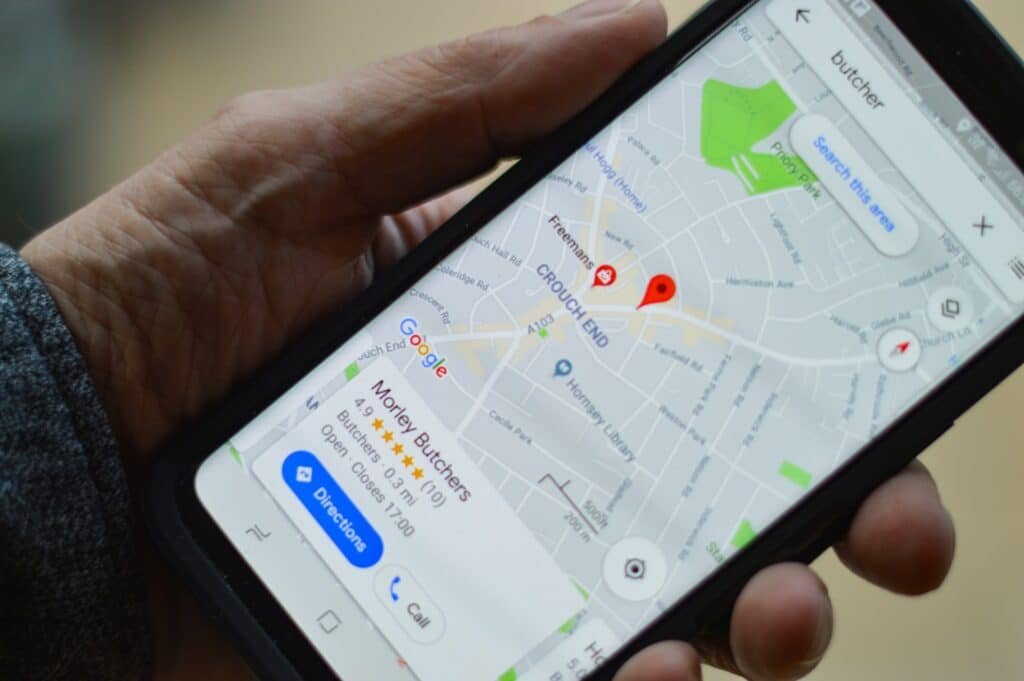
The ‘Map Pack’ is that block of three local business listings that pops up below the ads on a Google search result page. Ranking here for terms like ‘Bathroom Remodeler [City Name]’ is the main goal of local SEO. This real estate is incredibly valuable because 46% of all Google searches have local intent. Unlike paid ads, which stop working the second you stop paying, organic SEO builds long-term equity for your digital presence.
To rank here, you have to ensure your Name, Address, and Phone Number (NAP) are identical across every directory on the internet, including Yelp, the BBB, and YellowPages. Inconsistencies confuse Google’s algorithm and tank your rankings. Beyond just consistency, you have to signal activity. Use the Update feature on your Google Business Profile (GBP) to post weekly photos of jobs you have in progress.
Don’t just rely on a single ‘Services’ page on your website. Create individual landing pages for each specific suburb or town you service. If you work in a metropolitan area, you need a specific page for the northern suburbs that is different from the downtown page. This helps Google understand your specific service area radius.
Visuals play a massive role in conversion once a user finds you. Listings with photos are 2x as likely to be considered reputable and get 35% more clicks. Upload project photos directly to your Google Business Profile, not just your website. Use tools like BrightLocal or Whitespark to manage your citations and keep an eye on your local rankings. Since 76% of people who search on their smartphones for something nearby visit a business within a day, dominating this local space is non-negotiable if you want to keep your schedule full.
Visual Storytelling through Geofenced Social Ads
Search ads capture demand, but social ads generate it. Platforms like Facebook and Instagram allow you to target users based on life events and location rather than just keywords. Geofencing allows you to draw a digital perimeter around a specific location. You can target a wealthy neighborhood where you want to work, or set a one-mile radius around a current job site to show ads to your client’s neighbors.
While static images work, carousel ads showing the transformation processfrom demolition to the final coat of paintperform the best. The goal is to stop the scroll. Search ads target people looking for ‘contractors,’ but social ads can target people interested in ‘HGTV,’ ‘interior design,’ or who have ‘recently moved.’ This puts your brand in front of homeowners before they even start searching for a pro.
This strategy supports your more expensive Google Ads. The average Cost Per Lead (CPL) for the construction industry on Facebook is approximately $101. This is generally lower than high-competition Google Ads keywords. Use social media to build brand awareness so that when they eventually search for a contractor, they recognize your name.
You must also use the Facebook Pixel. This is code that goes on your website and tracks visitors. If someone visits your ‘Kitchen Renovation’ page but leaves without requesting a quote, the Pixel allows you to retarget them with ads on social media later. HubSpot reports that visual content is 40x more likely to get shared on social media than other types of content. Capitalize on this by using Meta Business Suite to deploy Video Reels that walk potential clients through a finished renovation.
Building Trust with Video Marketing and YouTube TrueView
A home remodel is a high-ticket item, often ranging from $20,000 to over $100,000. Homeowners rarely make these decisions based on text alone. They need to trust the people entering their home. Video walkthroughs featuring the business owner build this trust faster than any written copy ever could. Cisco reports that 82% of all internet traffic is video content, proving that this is how modern consumers prefer to consume information.
YouTube TrueView ads offer a distinct advantage for budget-conscious contractors. These are the skippable ads that play before other videos. You only pay if the viewer watches at least 30 seconds or the whole video. If they skip after 5 seconds, you pay nothing, yet you still gained free brand awareness.
Use GoPro cameras to film time-lapses of your projects. Condense a 3-month renovation into a 30-second high-energy clip. This serves as excellent creative for your ads. Furthermore, video testimonials carry significantly more weight than written reviews. Seeing a real person stand in their new kitchen and praise your work validates your expertise undeniably.
Retention is the strongest argument for video. Viewers retain 95% of a message when they watch it in a video, compared to only 10% when reading it in text. If you need to explain why a design-build process saves money compared to a bid-build process, do it on video. Use Adobe Premiere Rush for quick edits and host your content on Vimeo or Wistia for professional embedding on your site.
Leveraging Niche Platforms like Houzz and Angi
Google casts a wide net, but platforms like Houzz and Angi capture specific intent. Users on these sites aren’t browsing for entertainment, they are there to renovate. Houzz reports that 90% of its users are homeowners, and they plan to renovate or decorate within the next 12 to 24 months. This validates the cost of subscription fees, as you are paying to access a pre-qualified audience.
Houzz Pro profiles allow you to showcase portfolios and gain placement in their directory. However, success on these platforms depends entirely on your reputation. 79% of consumers trust online reviews as much as personal recommendations (BrightLocal). If your profile lacks recent, 5-star reviews, your advertising spend will yield poor results.
The criticism of platforms like Angi often centers on ‘shared leads,’ where a lead is sold to multiple contractors simultaneously. The only way to win in this environment is speed. Responding to a lead within the first minute increases conversion rates by up to 391%. If you cannot commit to immediate responses, these platforms will likely waste your money. You need a dedicated sales admin to monitor these channels. For high-end design work, Houzz is superior. For smaller repairs or service calls, Angi or Thumbtack may provide volume.
Driving Growth with Referral Programs and Strategic Partnerships
Word of mouth is powerful, but it is passive. You need a formalized referral system that incentivizes past clients to act as your sales force. Offer a specific reward such as cash, a gift card, or a donation in their name for every referral that signs a contract. Referred customers have a 16% higher lifetime value than non-referred customers, making the cost of the reward a smart investment.
Look for co-advertising opportunities. Partner with architects, interior designers, and real estate agents. A ‘Partner Package’ PDF explaining how you prepare homes for sale can encourage real estate agents to refer you to sellers who need pre-listing renovations. You can also split ad costs for local newsletters or community sponsorships.
Don’t overlook physical marketing. Direct mail (Every Door Direct Mail – EDDM) remains effective for hyper-local targeting. When you start a job, send ‘Just Started’ postcards to the 50 closest neighbors. Neighbors often have homes of similar age and layout, meaning they likely face the same repair issues. Direct mail has an average response rate of 4.4%, compared to email’s 0.12% (DMA). The physical mailbox is far less crowded than the digital inbox, giving your brand a better chance of being seen. Yard signs act as trust signals to these same neighbors, reinforcing the message on the postcard.
Advertising for home remodeling isn’t about plastering your name everywhere, it’s about being exactly where the homeowner is looking when they decide to invest in their property. By combining the immediate trust of Google Local Services Ads, the long-term equity of hyper-local SEO, and the visual power of geofenced social media, you create a marketing ecosystem that captures leads at every stage of the funnel. Stop paying for noise and start investing in intent. If you want to stop guessing and start dominating your local market, Aziel Digital provides the blue-collar expertise to build this infrastructure for you.
Frequently Asked Questions
What is the most effective advertising for remodeling contractors?
The most effective advertising strategy combines high-intent search ads with trust-building assets. Google Local Services Ads (LSAs) are currently the top performer for capturing immediate demand because they appear at the very top of search results and operate on a pay-per-lead model rather than pay-per-click.
The ‘Google Guaranteed’ badge associated with LSAs serves as a primary trust signal, verifying insurance and background checks, which is crucial for high-ticket services. While LSAs capture the lead, a strong organic SEO presence in the Map Pack ensures you remain visible to the 46% of Google users with local intent who skip the ads.
How much should a remodeling company spend on marketing?
Budgeting requires balancing gross revenue targets with how aggressive your growth goals are. The US Small Business Administration generally recommends spending 7% to 8% of gross revenue on marketing if you are doing under $5 million a year and your margins are in the 10-12% range.
For aggressive growth or entering a new market, this figure should often increase to 10-12%. In the home improvement sector, where one lead can result in a $50k project, under-spending often leads to stagnation. Allocate budget primarily toward direct response channels (LSAs, PPC) first to keep the schedule full, then funnel profits into brand awareness (Social, Video) for long-term equity.
Are Google Local Services Ads worth it for contractors?
Yes, they are often more efficient than standard PPC for service-based businesses. You pay for leads (calls/messages), not clicks. This eliminates the ‘window shopper’ tax where you pay for users who browse but never contact you.
LSAs power the responses for voice queries like ‘Find a contractor near me.’ As voice search adoption grows, being absent from LSAs removes you from these results. The verification process filters out lower-quality leads. However, you must answer the phone. Google penalizes the ranking of LSA profiles that miss calls consistently.
How do I get more remodeling leads for free?
Free leads come from sweat equity in organic search and reputation management. Optimizing your GBP is the single most effective ‘free’ tactic. Listings with photos receive 35% more clicks. Posting weekly updates signals to Google that you are active. Formalizing word-of-mouth is free. 92% of consumers trust referrals from people they know. Simply asking happy clients to post on Nextdoor or Facebook groups costs nothing but generates high-trust leads. Writing helpful blog posts (e.g., ‘Cost of Kitchen Remodel in [City]’) targets long-tail search queries. This builds organic traffic over time without ad spend.
Is Facebook or Google better for home improvement ads?
They serve different stages of the buying funnel and should be used together. Google captures people actively searching for a solution (e.g., ‘roof repair near me’). The conversion rate is higher (avg 3.27% for search ads) because the user has a problem now.
Facebook targets demographics and interests. It is excellent for ‘planting the seed’ with visual before/afters. The Cost Per Lead is often lower ($101 on FB), but the sales cycle is longer. Use Google to fill the schedule immediately. Use Facebook to build a brand presence and retarget people who visited your site but didn’t call.
How do I target wealthy neighborhoods for renovation projects?
You need precision targeting tools that focus on location and property value. Use digital geofencing to serve ads only to specific zip codes or even specific streets known for high property values. This allows you to drop postcards specifically in carrier routes that cover high-income subdivisions. Direct mail has a 4.4% response rate compared to email’s 0.12%. Tailor the creative. Wealthy demographics often respond better to messaging about ‘design-build,’ ‘luxury,’ and ‘value increase’ rather than ‘affordability’ or ‘discounts.’
What is the average cost per lead for remodeling?
Costs vary heavily by region and trade, but industry averages provide a baseline. WordStream data suggests an average CPC of $6.40. With a conversion rate of roughly 3.3%, a raw lead from standard search ads can cost between $150 and $200. Facebook leads for construction average around $101.
These leads are cheaper but often require more nurturing to close. High-ticket jobs (kitchens/additions) will have higher CPAs (Cost Per Acquisition) than service calls (plumbing repair). You should be willing to pay more for a lead that could yield a $50k contract.
Does direct mail still work for home improvement companies?
Direct mail is highly effective because of low competition in the physical mailbox. The DMA reports a 4.4% response rate for direct mail, significantly outperforming digital display and email. A physical postcard with a high-quality photo of a kitchen renovation hangs on a fridge. A digital ad disappears with a scroll. Sending ‘Just Listed / Just Completed’ cards to the 50 homes surrounding a job site leverages the ‘keeping up with the Joneses’ psychology. Neighbors trust you because they see your truck down the street.
How can I improve my Google ranking for remodeling?
Improving ranking requires a mix of technical SEO and content depth. Ensure your Name, Address, and Phone number are identical across Yelp, BBB, Angi, and your website. This is the bedrock of local trust flow. Do not just have one ‘Services’ page.
Create specific pages for each town you serve (e.g., ‘Basement Finishing in [Suburb A]’). This signals relevance to Google for those specific geographic searches. Get a steady stream of reviews. 87% of consumers use Google to evaluate local businesses. A dormant profile hurts your ranking, a profile getting new reviews regularly boosts it.
What are the best lead generation websites for contractors?
The best platform depends on your trade and capacity to handle sales. Best for high-end design-build remodeling. 90% of users are homeowners planning renovations. The intent is high, but volume is lower. Best for overall lead quality and trust. The background check filters out low-quality vendors. Good for volume and smaller jobs, but these are ‘speed-to-lead’ platforms. If you don’t call within minutes, you lose the lead.
How do I create a referral program for construction clients?
A successful program moves beyond passive hope to active incentivization. Define a clear tier system (e.g., ‘$500 for any project over $10k’). Make it substantial enough to matter. Ask for the referral during the ‘happiness peak’usually at the final walkthrough when the client is thrilled with the transformation.
Use an email newsletter to remind past clients of the referral bonus quarterly. Referred clients have a 16% higher lifetime value, so keeping past clients engaged is profitable.
What is geofencing in construction marketing?
Geofencing is a location-based digital marketing tool. It uses GPS or RFID technology to create a virtual boundary. When a mobile device enters this area, it triggers an ad on apps or browsers. You can geofence a competitor’s showroom, a specific trade show, or a high-income neighborhood.
Geofence your own active job sites. When neighbors walk their dogs past your yard sign, their phone can serve them an ad for your company later that evening, reinforcing brand awareness.