

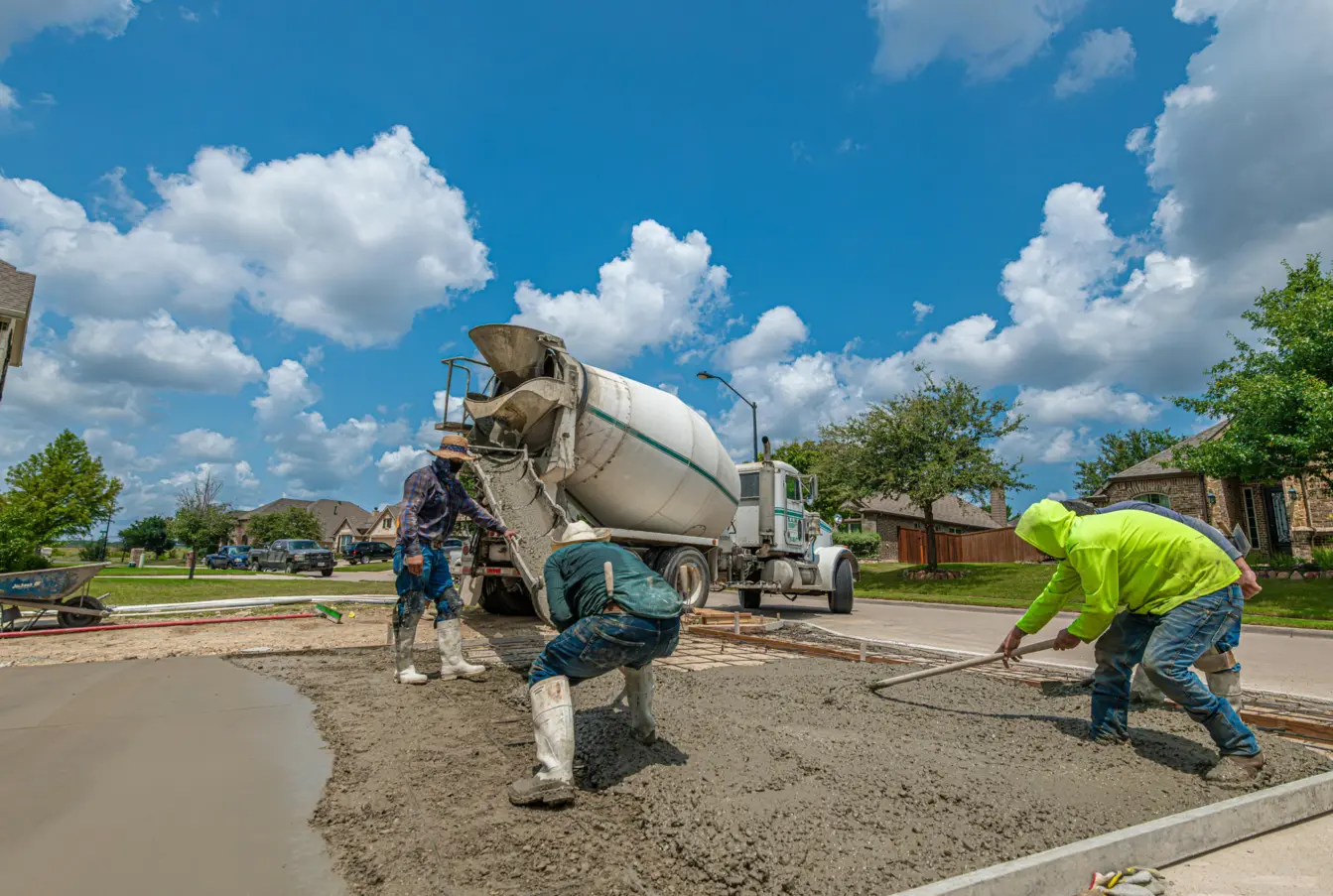
Pouring a flawless foundation requires a blend of precision, perfect timing, and exactly the right mix. Marketing your concrete business demands that very same level of discipline. You aren’t just fighting against unpredictable weather or frustrating supply chain delays, you are battling for attention in a crowded market where the loudest competitor often wins, even if their skill level is far below yours. Relying solely on word-of-mouth will keep your business small. If you want to scale up, you have to treat your lead generation pipeline with the same seriousness you apply to job site safety protocols. This guide lays out the exact blueprint to turn local searches into poured yards.
Important Notes
- Signals from your Google Business Profile account for roughly 36% of your ranking weight, making it a critical focus.
- Profiles that feature actual project photos receive 42% more requests for driving directions.
- PPC campaigns should be laser-focused on high-margin jobs, like stamped patios, rather than simple, low-value repairs.
- Mobile site speed is non-negotiable, conversion rates drop by 4.42% for every single second of delay.
- Video content on social media is a powerhouse, generating 1200% more shares than text and static images combined.
- Responding to new leads within 5 minutes increases your odds of qualifying that customer by 80%.
- Email marketing remains highly effective, offering a 36,1 ROI for client reactivation and seasonal maintenance.
Dominate Local Search Results With Google Business Profile Optimization
The most valuable real estate for a concrete contractor isn’t a corner lot in a hot new development. It is the Local Pack,that three-pack map listing that sits right at the very top of Google search results. This specific spot drives the vast majority of calls for local trades. If you aren’t showing up here, you are essentially invisible to homeowners who desperately need a driveway replacement or a foundation pour.
Your ranking in this pack relies heavily on the signals sent by your Google Business Profile (formerly GMB). According to Moz Local Search Ranking Factors, these signals,which include things like your proximity to the searcher, your business categories, and keywords in your title,account for roughly 36% of your ranking weight. Completeness is the first metric you need to address. You simply cannot leave fields blank. A fully fleshed-out profile tells Google that you are an active, legitimate business worthy of recommending.
Visual Proof and Review Velocity
Think of your photos as immediate proof of your competence. Google data indicates that businesses with photos on their profiles receive 42% more requests for directions and 35% more click-throughs to their websites. Please, do not rely on generic stock photography. Upload high-resolution images of your specific projects. Show off the texture of an exposed aggregate driveway or the perfect sheen of a polished concrete floor. These details sell your expertise before the client even picks up the phone.
Review velocity matters just as much as your overall star rating. A 5-star rating is great, but if it relies on two reviews from three years ago, your business looks dormant. You need a steady stream of fresh feedback to stay relevant. The average local business has about 39 Google reviews. To stand out, you must exceed this baseline. Implement a system where you request a review immediately after the cement cures and the job is inspected. Automated text reminders work best here, catching the customer at the peak of their satisfaction.
Launching High-ROI Google Ads Campaigns for Immediate Job Bookings
Search Engine Optimization (SEO) builds long-term authority, but it is a slow burn. When you need to fill your schedule next week, Pay-Per-Click (PPC) advertising provides immediate visibility. You pay only when a potential client actually clicks on your ad. This control allows you to turn the tap on or off based entirely on your current workload.
The key to profitability in Google Ads is strict, disciplined targeting. Do not bid on generic terms like ‘concrete work’ if you are only looking for big jobs. Focus your budget on high-margin services such as ‘decorative stamped patios’ or ‘commercial foundation contractors.’ These jobs justify the ad spend. Data from WordStream shows the average Cost Per Click (CPC) for the construction industry is approximately $6.40. You must ensure the potential job value covers this acquisition cost.
You must also control exactly where your ads show. Use geofencing or tight radius targeting to exclude zip codes you do not service. There is no point paying for a click from a homeowner forty miles away if your crew won’t travel that far. Furthermore, utilize negative keywords aggressively. You should block your ads from showing for searches like ‘concrete mix for sale,’ ‘DIY concrete,’ or ‘cement jobs salary.’ These searchers are looking for products or employment, not a contractor to hire.
Ad extensions increase your physical size and presence on the search results page. Use Call Extensions to let mobile users dial you directly from the ad without visiting your site. Location Extensions display your address and distance from the user, adding a layer of trust. Sitelink Extensions can direct users to specific pages, like your ‘Project Gallery’ or ‘About Us’ page, increasing the chances of a click. With an average conversion rate for construction ads sitting around 5.9%, every small optimization contributes to a lower cost per lead.
Building a Speed-Optimized Website That Turns Visitors into Estimates
Your website is a tool, not just a pretty digital brochure. Its only purpose is to convert a visitor into a lead. Design aesthetics matter, of course, but speed and clarity are what win jobs. A potential client must pass the ‘Grunt Test’ within three seconds of landing on your page. They need to know immediately what you do,for example, ‘Residential Driveway Replacement’,and how to contact you. If they have to hunt for your phone number, they will get frustrated and leave.
Essential Elements for Conversion
Mobile-first indexing is the standard now. Google ranks your site based on its mobile version, not the desktop one. If your concrete calculator glitches on an iPhone or your contact form runs off the screen on an Android, you lose the lead. Portent data highlights the high cost of a slow site, conversion rates drop by an average of 4.42% with each additional second of load time between seconds zero and five.
- Clear Calls to Action- Place ‘Get a Free Quote’ buttons that stick to the bottom of the screen on mobile devices so they are always accessible.
- Categorized Galleries- Separate your work into Patios, Driveways, and Retaining Walls so users find relevant examples quickly without digging.
- Trust Signals- Display your license numbers, insurance badges, and local chamber of commerce logos prominently to build confidence.
- Video Testimonials- Embed client videos near the contact form to reduce hesitation right before they reach out.
- Speed Optimizatio-, Compress all images and minimize code to ensure near-instant loading, keeping the user engaged.
Credibility is established instantly. 48% of people cite a website’s design as the number one factor in deciding the credibility of a business. If your site looks broken or neglected, customers will assume your concrete work will crack, too.

Showcasing Visual Proof on Instagram and Facebook to Build Trust
Concrete is an inherently visual trade. You are physically changing the landscape of a home. Platforms like Instagram and Facebook are essential for displaying this dramatic transformation. Social proof validates your claims of quality better than words ever could.
Utilize the psychology of the ‘Before and After.’ Take a photo from the exact same angle before breaking ground and again after sealing the concrete. This visual contrast is incredibly powerful. Video content is even more effective. A time-lapse of your crew pouring and finishing a foundation demonstrates efficiency and skill. Construction companies posting video content see higher engagement rates than those relying on static posts. In fact, video generates 1200% more shares than text and image content combined.
Do not overlook the research phase of the buyer’s journey. GWI statistics show that 54% of social browsers use social media to research products and services. Potential clients will look at your Facebook page to see if you are active and real. Join local community Facebook groups, such as HOA pages or town chats. When someone asks for a driveway recommendation, you can respond organically as a helpful neighbor.
Facebook Ads allow for granular targeting. You can show your stamped concrete ads specifically to homeowners aged 35 and older who have expressed interest in home improvement. This ensures your visual proof reaches the people most likely to actually buy.
Automating Follow-Ups and Estimates Using CRM Software
Generating a lead is wasted effort if you fail to manage it properly. The majority of sales in the trades are lost simply due to poor follow-up. You finish a busy day on the screed board and forget to call back the homeowner who asked for a patio estimate. CRM (Customer Relationship Management) software solves this by automating the process so nothing falls through the cracks.
Tools like Jobber, Housecall Pro, or ServiceTitan help you capture lead details and schedule estimates efficiently. Automation can send a thank-you email immediately after you complete a job. This same automation can request a Google Review, closing your marketing loop without you having to lift a finger.
Reactivation campaigns are an untapped revenue source for many contractors. You have a database of past clients sitting there. Use your CRM to email them every two or three years. Offer resealing or maintenance services. You generate revenue from people who already trust you, without spending a dime on new ads. Litmus data reports a 36,1 ROI on email marketing, making it one of the most efficient tools in your arsenal.
Navigating Angi and HomeAdvisor and Why Speed to Lead Matters
Lead aggregator services like Angi, HomeAdvisor, and Thumbtack can provide job opportunities, but they come with significant caveats. These platforms often sell the exact same lead to multiple contractors. This creates a ‘Shared Lead Trap,’ forcing you into a race to the bottom on price against three or four competitors.
If you use these platforms, speed is your only advantage. 78% of customers buy from the company that responds to their inquiry first. You cannot wait until your lunch break to call a lead back. You must use automated SMS software to contact the lead within seconds of the notification.
Data on lead response management shows the odds of qualifying a lead drop by 80% if there is a wait time of just five minutes. While buying leads can work for beginners, your long-term goal must be generating exclusive leads through your own website and SEO. This lowers your Cost Per Acquisition and removes the direct competition.
Capitalizing on the 66.8 Billion Dollar Concrete Market Shift to Mobile
The US concrete contractor industry was valued at $66.8 billion in 2023 according to IBISWorld. This massive market is shifting rapidly from traditional referrals to digital discovery. The days of the Yellow Pages are long gone. Today, the battleground is the smartphone.
BrightLocal statistics reveal that 97% of consumers use the internet to find local services. If a homeowner has a cracked driveway or needs a slab for a new shed, they search on their phone. If you do not appear in that search, you do not exist to them. 76% of people who search on their smartphones for something nearby visit a business within a day.
Competition is fierce. While the industry grows, so does the number of contractors fighting for work. Modernizing your approach is required to capture this revenue. You must meet the client where they are, which is on a mobile device, searching for immediate solutions. Aziel Digital specializes in positioning blue-collar businesses to capture this demand through precision web design and dominant SEO strategies.
Frequently Asked Questions
How much should concrete contractors spend on marketing per month?
Allocating the right budget really depends on your current growth stage and local competition. Established businesses should aim for 5-10% of gross revenue, while newer companies seeking aggressive growth may need to invest 12-15%. According to the U.S. Small Business Administration, businesses with revenue under $5 million should generally adhere to the 7-8% mark for marketing, assuming margins of 10-12%.
However, in competitive construction markets, under-spending results in invisibility. Start with a baseline you can sustain for six months. Track your Cost Per Lead (CPL). If your Google Ads generate leads at $50 each and your average job profit is $2,000, you can safely scale that spend upward.
Are shared leads from HomeAdvisor or Angi worth the cost for concrete jobs?
Shared leads can fill gaps in your schedule, but they often erode profit margins due to intense competition. These leads are worth the cost only if you have an automated system to respond instantly, otherwise, they are largely a waste of money. Lead response data indicates that 78% of customers award the job to the first responder.
Since these platforms sell the lead to 3-5 contractors, the ‘winner’ is usually the fastest, not necessarily the best. Use these platforms as a temporary bridge. Invest your profits from these jobs into building your own SEO and website assets (owned media) to eventually wean yourself off purchased leads.
How do I get my concrete business to the top of Google Maps?
Ranking in the ‘Local Pack’ requires consistent signals of relevance and ongoing activity.You need a verified Google Business Profile that is completely filled out, frequently updated, and consistently reviewed. Moz Local Search Ranking Factors attribute roughly 36% of ranking weight to GMB signals like proximity, categories, and keyword usage.
Furthermore, profiles with photos receive 42% more engagement.
Post weekly updates with photos of current projects. Implement an automated text message system to request reviews from every client immediately upon job completion to maintain a high ‘review velocity.’
What is the average cost per lead for concrete driveways and patios?
Costs vary by region, but generally, they fall within a predictable range for search marketing. Expect to pay between $40 and $100 per exclusive lead via Google Ads, depending on local competition and keyword intent. WordStream data shows the average Cost Per Click (CPC) in construction is around $6.40.
With an average conversion rate of 5.9%, it takes roughly 17 clicks to get a lead, putting the math near $108, though optimization can lower this significantly. Focus on ‘high intent’ keywords. A user searching ‘stamped concrete patio cost’ is closer to buying than someone searching ‘concrete patio ideas,’ and is worth a higher bid.
Why are my Google Ads getting clicks but not generating calls?
This disconnect usually points to a failure on the landing page side, not necessarily the ad itself. Your website is likely failing to convey trust or contact information quickly enough, or it is not mobile-friendly. Portent research shows conversion rates drop by over 4% for every second of load time.
Additionally, 48% of users judge credibility based on design. If the site is slow or looks amateur, they click back. Inspect your ‘Destination URL.’ Ensure it leads to a page specifically about the service advertised (e.g., a Patios page, not the Home page) and that the phone number is clickable and visible without scrolling.
Is Facebook or Instagram better for marketing stamped concrete services?
Both platforms are powerful, but they serve different stages of the marketing funnel. Instagram is superior for visual portfolios and discovery, while Facebook is better for community trust and targeted advertising. GWI data shows 54% of social browsers use social media to research products.
Instagram’s visual-first format suits the aesthetic nature of stamped concrete, while Facebook’s demographic targeting allows you to reach homeowners specifically. Use Instagram to host your ‘best of’ gallery and Stories for daily job site updates. Use Facebook to run paid ads targeting users aged 35+ interested in home improvement within your service radius.
How can I get more Google reviews from my concrete clients?
You must remove the friction from the review process to get results. Clients are willing to review but often forget, you must ask at the moment of peak happiness. BrightLocal studies consistently show that a significant majority of consumers will leave a review if asked. The barrier is usually convenience, not willingness.
Do not rely on email alone, which has low open rates. Use an SMS tool to text a direct link to your Google review form to the client’s phone while you are doing the final walk-through.
Do I really need a website if I have a Facebook page for my construction business?
Relying solely on social media severely limits your visibility and credibility. Yes, a website is non-negotiable because it acts as your digital home base that you own and control. 97% of consumers search online for local services (BrightLocal). A Facebook page often does not rank in the Local Pack or organic search results for keywords like ‘concrete driveway replacement,’ meaning you miss the highest-intent traffic. Build a fast, mobile-responsive website to capture search traffic, and use Facebook as a support channel to validate your work and build community.
What are the best keywords to target for residential concrete work?
The best keywords combine a specific service with local intent. Target ‘long-tail’ keywords that indicate a readiness to hire rather than just browse. Search query analysis shows that specific terms like ‘stamped concrete patio contractors near me’ have higher conversion rates than broad terms like ‘concrete.’ Focus on [Service] + [City] combinations (e.g., ‘Concrete driveway repair [City Name]’) and specific project types like ‘exposed aggregate,’ ‘retaining walls,’ or ‘RV pad installation.’
How quickly do I need to respond to a new concrete lead to secure the job?
Speed is the single most critical factor in lead conversion. You should aim to respond within 5 minutes or less. Lead response management data indicates the odds of qualifying a lead drop by 80% after just five minutes. After 30 minutes, the lead is effectively dead. Implement VoIP or CRM software that rings your mobile phone instantly when a web form is submitted, or use an auto-responder text to acknowledge the inquiry immediately.
What is the difference between SEO and PPC for concrete contractors?
It is the difference between renting visibility and owning it. PPC (Google Ads) is paid traffic that stops when you stop paying. SEO (Search Engine Optimization) is earned traffic that builds over time. PPC provides immediate top-of-page placement (WordStream data on $6.40 CPC). SEO takes months to mature but provides sustainable leads without a direct cost per click. Use PPC to generate cash flow immediately while investing in SEO to lower your long-term marketing costs.
How does website load speed affect my concrete business leads?
Slow speeds directly kill conversions and lower your ad quality scores. If your site is slow, users abandon it before seeing your work, wasting your marketing spend. Portent data shows that site speed is a major conversion factor, 0-4 second load times are the sweet spot. Google also penalizes slow sites in search rankings. Use tools like Google PageSpeed Insights to test your site. Optimize image sizes and switch to a faster hosting provider to ensure your site loads instantly on mobile networks.