

There is nothing louder than a phone sitting silent on a desk, for a business owner, it’s a bigger threat than a frozen pipe. If you are relying solely on word-of-mouth or legacy handshakes to keep the lights on, you are leaving your revenue stream wide open to competitors who are simply hungrier and louder than you are. You need a reliable system that pulls in commercial bids and inspection contracts with the same consistency as the suppression systems you install. It’s time to shift gears from just being ‘available’ to having aggressive digital visibility.
Salient Points
- The Google Screened Badge builds instant trust by showing clients you are fully verified, insured, and licensed.
- Local Services Ads (LSA) allow you to protect your budget by using a cost-per-lead model rather than paying for clicks.
- PPC traffic tends to convert 50% better than organic traffic because it captures people who are ready to buy now.
- Google Business Profiles that feature real photos get significantly more clicks and requests for directions.
- Creating educational content around NFPA codes positions your company as a partner in risk management, not just a vendor.
- LinkedIn filters give you the power to target facility managers and general contractors directly, bypassing the gatekeepers.
- Automated email marketing is the key to securing Recurring Monthly Revenue (RMR) from inspections without manual effort.
Win High-Value Bids With Google Local Services Ads and PPC
In the fire protection industry, trust is the only currency that matters. A facility manager needs to know you are legitimate before they even bother reading your ad copy. You can build this trust instantly with the Google Screened Badge. That little green checkmark signals that Google has already done the heavy lifting of verifying your background, insurance, and state licensure. It separates professional operations from the unlicensed ‘trunk slammer.’ The badge appears at the very top of search results, allowing you to cut through the noise and establish credibility immediately.
Once you have earned that badge, you should shift your financial strategy toward Local Services Ads (LSA). Traditional ads charge you every time someone clicks, regardless of intent. LSA charges you only when a qualified lead actually contacts you. This model protects your budget. You pay for phone calls and messages, not idle curiosity. This is critical for high-ticket items like warehouse fire suppression retrofits, where a single good lead can result in a six-figure contract.
However, you must segment your campaigns with precision. A commercial property manager searching for ‘warehouse fire suppression’ has a completely different intent than a homeowner looking for ‘residential sprinklers.’ Split these campaigns to strictly control your messaging and budget allocation. Commercial campaigns should focus heavily on code compliance and asset protection, while residential campaigns should focus on home safety. Further protect your budget by implementing a negative keyword list. You definitely do not want to pay for clicks from people searching for ‘lawn sprinkler,’ ‘garden hose,’ or ‘fire sprinkler toy.’
Finally, direct your traffic to specific destinations. If a user clicks an ad for ‘Commercial Inspection,’ send them straight to a landing page dedicated to NFPA 25 compliance. Sending them to a generic homepage forces them to hunt for information, increasing the likelihood they will get frustrated and bounce. Relevant landing pages convert higher simply because they match the user’s immediate need.
Optimizing Your Ad Spend
Target specific keywords like ‘Commercial fire sprinkler inspection cost’ and ‘NFPA 25 inspection services.’ Use statistics to validate your investment, remember that PPC traffic converts 50% better than organic traffic . Capitalize on high intent, 65% of all high-intent searches result in an ad click Monitor your return closely, businesses generally make an average of $2 in revenue for every $1 spent on Google Ads.
Dominate The Map Pack Using Local SEO Strategies
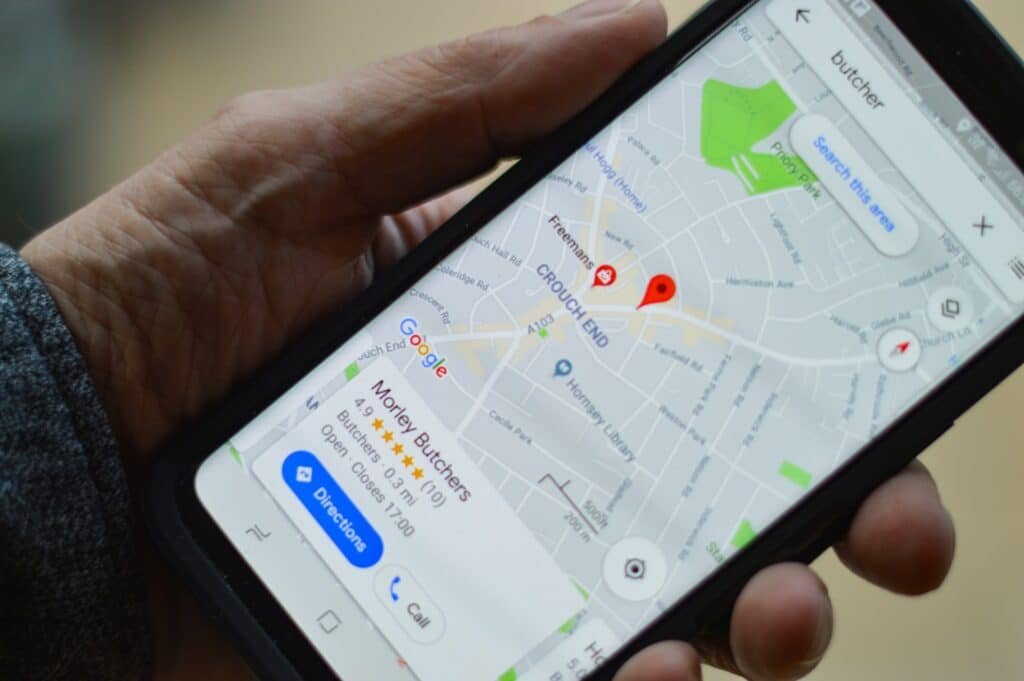
Fire protection is an inherently geographically bound service. When a pipe bursts or a pump fails, the client needs help nearby, and they need it now. You must capitalize on that ‘Near Me’ factor. Ranking in the Google Map Pack puts your phone number in front of urgent leads exactly when they need you most. This is the primary driver for emergency service calls and tight local inspection routes.
Think of your Google Business Profile (GBP) as your digital storefront. An incomplete profile signals a defunct or careless business. You need visual proof of your capabilities. Upload photos of your branded trucks, uniformed technicians, and before-and-after shots of complex installations. These images prove you have the manpower and equipment to handle the job. Profiles with photos receive 42% more requests for driving directions and 35% more clicks than those without.
Consistency is how you validate your existence to search algorithms. Your Name, Address, and Phone number (NAP) must be identical across every platform. This includes Yelp, Angi, the BBB, and industry-specific directories like the National Fire Sprinkler Association (NFSA) and the Blue Book Building & Construction Network. Discrepancies confuse Google’s data, causing your ranking to drop.
Review velocity matters just as much as the star rating. A steady stream of recent reviews outweighs a perfect rating from three years ago. Use automated text messaging to request a review immediately after a technician completes a passed inspection. Focus on getting feedback regarding punctuality and code knowledge. These are the specific traits property managers look for when vetting a vendor.
Tactics for Local Visibility
Target location-specific keywords like ‘Fire sprinkler system installation [City Name]’ and ‘backflow testing near me.’ Recognize that 46% of all Google searches have local intent Prioritize your online reputation, 97% of people learn more about a local company online than anywhere else. Ensure your presence on maps, 87% of consumers used Google to evaluate local businesses in 2022.
Build Authority With Content Focusing on NFPA Compliance
Facility managers are rarely fire code experts. They know they need to pass an inspection, but they often do not understand the technical nuances of NFPA 13 or NFPA 25. You win their business by translating these complex codes into plain English. Position your company as an educator. When you explain the rules clearly, you become the obvious choice to execute the work.
Frame your content around the financial and legal implications of non-compliance. Managers usually fear liability, fines, and litigation more than fire itself. Explain how proper maintenance mitigates these risks. Use hard data to justify the cost of your services. For example, emphasize that the death rate per 1,000 reported fires was 89% lower in properties with automatic extinguishing systems . This shifts the conversation from price to value and safety.
Create comparison guides to help clients make informed decisions. A clear explanation of the differences between Wet Pipe, Dry Pipe, and Pre-action systems helps a data center manager understand why they cannot use the same system as a heated warehouse. This establishes your technical expertise before you even step on site.
Video marketing helps demystify your work. A simple ‘Day in the Life’ video showing a hydrostatic test or a visual inspection builds confidence. It shows the client exactly what they are paying for. Offer downloadable assets, such as a ‘Property Manager’s Fire Safety Checklist’ PDF. This provides genuine value to the lead while capturing their email address for future marketing.
Content Assets That Convert
Focus heavily on keywords like ‘NFPA 25 inspection frequency’ and ‘retroactive fire sprinkler requirements.’ Leverage safety data, property damage is 30%–70% lower in buildings with fire sprinklers. Distribute guides explaining NFPA 13 installation requirements to architects and developers.
Secure Commercial Contracts Through LinkedIn Outreach
Fire protection for commercial entities is purely a B2B sale. You are not selling to a homeowner, you are selling to a procurement officer, a facility manager, or a general contractor. LinkedIn is the most effective tool for finding these decision-makers. You can filter users by job title, industry, and location to build a list of high-value prospects.
Deploy Account-Based Marketing (ABM) to land the big fish. Identify specific targets in your territory, such as university campuses, hospital networks, or logistics centers. Tailor your outreach to address their specific pain points, such as compliance across multiple buildings or aging infrastructure. Your company profile must look corporate and capable. Feature your NICET and AFSA certifications prominently in your banner image. This signals competence instantly.
Supplement your digital efforts with a ‘Lunch and Learn’ strategy. Invite local architects and general contractors to sessions regarding changing fire codes. This positions you as a consultant rather than just a sub-contractor. While networking on LinkedIn, keep an eye on construction bid sites like The Blue Book, ConstructConnect, and Dodge Construction Network. These platforms tell you who is building what, allowing you to reach out to the GC with a pre-emptive bid.
B2B Networking Tactics
Target keywords such as ‘Commercial fire protection bid’ and ‘industrial fire suppression systems.’ Prioritize LinkedIn, 80% of B2B leads come from this platform.Focus on the C-suite and management, 4 out of 5 LinkedIn members drive business decisions.
Maximize Recurring Revenue With Automated Email Marketing
Installations provide a cash injection, but inspections provide stability. The Recurring Monthly Revenue (RMR) from service contracts is the most valuable asset in your business. Email automation is the tool that secures this revenue. You cannot rely on a spreadsheet to track expiration dates, that is a recipe for missed opportunities.
Set up automated reminders that trigger emails 90, 60, and 30 days before a required inspection is due. This ensures the client budgets for the service and schedules it before they become non-compliant. Software like ServiceTitan, Jobber, Simpro, or FieldRoutes can handle these automations and house your customer data.
Speed to quote equals speed to revenue. Use a Deficiency Report Follow-up strategy. If a system fails inspection, the client needs a repair quote immediately. Automate this process so the quote arrives in their inbox while the problem is fresh. Segment your lists. Installation-only clients need to be sold on inspection contracts. Active inspection clients need upsells for backflow testing or repairs. Generic blasts get deleted, targeted emails get opened.
Automation Workflows
Use urgent subject lines like ‘Action Required, Your Building’s Fire Inspection is Due.’ Target terms like ‘Quarterly fire sprinkler inspection’ and ‘5-year internal pipe inspection.’ Segment for success, segmented email campaigns see 14.31% higher open rates than non-segmented campaigns.Focus on retention, it costs 5 times more to acquire a new customer than retain an existing one Winning in the fire protection industry requires precision. You need the technical skill to install the pipe and the digital strategy to win the bid. Aziel Digital understands the blue-collar landscape. We build the systems that keep your phone ringing and your technicians moving. If you are ready to dominate your local market, we are ready to help.
Frequently Asked Questions
What is the most effective advertising channel for fire sprinkler companies?
The most effective channel depends on your immediate goal, urgent leads or long-term contracts. Google Local Services Ads (LSA) typically provide the highest ROI for service-based businesses because you pay per lead, not per click. This effectively filters out window shoppers. According to WordStream, high-intent searches on Google result in ad clicks 65% of the time.
This means when someone has a burst pipe or an expiring inspection, they go to Google first. LSA captures this demand at the very top of the page. Use LSA for ’emergency repair’ and ‘inspection’ leads where speed matters. Use LinkedIn for securing long-term construction projects with General Contractors.
How do I get my fire protection business to show up on Google Maps?
Visibility on Google Maps requires a verified and optimized Google Business Profile (GBP). You must claim your profile and ensure your Name, Address, and Phone Number (NAP) are consistent across the web. Inconsistency kills rankings. HubSpot data indicates that 46% of all Google searches have local intent.
Google prioritizes businesses that prove they are active in the local area through regular photo uploads and review activity. Upload geotagged photos of your trucks and completed jobs weekly. This proves to Google that you are active in the specific neighborhoods you want to serve.
What is the difference between Google Ads and Local Services Ads for fire inspectors?
The difference lies in the payment model and the verification process. Google Ads (PPC) operates on a pay-per-click model where you bid on keywords. Local Services Ads (LSA) operate on a pay-per-lead model. LSA requires you to pass a background check and license verification to earn the ‘Google Screened’ badge.
This badge builds higher trust than a standard text ad. Run both if budget allows, but prioritize LSA for residential and small commercial service calls because the cost per acquisition is often lower and predictable.
How can I generate more commercial fire sprinkler leads?
Commercial leads require a mix of search intent targeting and outbound networking. You must target ‘bottom of the funnel’ keywords that facility managers use, such as ‘NFPA 25 compliance’ rather than generic terms. Unbounce reports that PPC traffic converts 50% better than organic for high-intent queries.
A facility manager searching for specific code compliance is ready to buy. Combine PPC ads for immediate capture with LinkedIn outreach to target decision-makers at hospitals, universities, and logistics centers directly.
What keywords should I use for fire sprinkler PPC campaigns?
Select keywords that imply commercial intent and urgency. Focus on specific service deliverables like ‘warehouse fire suppression,’ ‘5-year internal pipe inspection,’ and ‘backflow preventer testing.’ Generic keywords like ‘fire sprinkler’ waste money on residential searches or DIY enthusiasts.
Specificity filters your audience. Build an extensive negative keyword list. Exclude terms like ‘garden,’ ‘lawn,’ ‘toy,’ and ‘home depot’ to ensure your budget only funds commercial-grade inquiries.
Why is content marketing important for fire protection companies?
Content marketing establishes authority and reduces the client’s perceived risk.Property managers are often confused by fire codes. If you explain NFPA 13 and 25 clearly, you earn their trust.The NFPA reports that property damage is 30%–70% lower in buildings with sprinklers.
Using these stats in your content proves the financial value of your services beyond just ‘following the rules.’ Publish comparison guides (e.g., Wet vs. Dry systems) and checklists for preparing for an inspection. This positions you as a partner, not just a vendor.
How often should I email my clients about fire inspections?
Email frequency should mirror the compliance schedule, with aggressive reminders as deadlines approach. Send automated reminders 90, 60, and 30 days before the inspection due date. Invesp data shows it costs 5 times more to acquire a new customer than to retain one.
Your existing database of inspections is your most profitable asset. Don’t stop at the reminder. If they miss the date, switch the messaging to ‘Urgent, Compliance Risk’ to prompt immediate action.
Can LinkedIn help me get fire sprinkler installation contracts?
Yes, LinkedIn is the primary digital channel for B2B construction networking. LinkedIn allows you to bypass gatekeepers and message General Contractors and Facility Directors directly. Oktopost states that 80% of B2B leads come from LinkedIn.
It is where professional relationships are initiated. Optimize your company page with your safety certifications (NICET, AFSA). Connect with local architects and developers who are in the planning phase of new projects.
What is the ‘Google Screened’ badge and how do I get it?
It is a verification mark that appears in Local Services Ads. The badge signals to customers that Google has verified your insurance, background, and professional license. In an industry involving life safety, trust is paramount.
The green checkmark differentiates you from unverified competitors instantly. Apply through the Google Local Services Ads portal. Have your certificates of insurance and state contractor license numbers ready to expedite the process.
How do I market NFPA 25 compliance to facility managers?
Market it as risk mitigation and asset protection, not just a legal obligation. Focus on the consequences of non-compliance, fines, insurance hikes, and liability.
Using stats like the NFPA’s finding that death rates are 89% lower in sprinkled properties helps managers justify the budget to their superiors. Create a ‘Compliance Calendar’ lead magnet. Give it to managers to help them track their own testing dates, keeping your brand top-of-mind.
What software helps automate marketing for fire safety businesses?
Field service management software with integrated marketing features is best. Tools like ServiceTitan, Jobber, and FieldRoutes allow you to automate emails based on job completion or upcoming dates. Mailchimp reports that segmented campaigns see 14.31% higher open rates.
These tools allow you to segment by ‘Installation Date’ or ‘Last Inspection Date.’ Choose software that integrates with your dispatching. You want the ‘Inspection Due’ email to trigger automatically based on the technician’s last visit, without manual data entry.
How do I calculate the ROI of my digital marketing campaigns?
You calculate ROI by tracking the revenue generated from specific lead sources against the ad spend. ROI = (Revenue from Ad Channel – Cost of Ads) / Cost of Ads. Google Ads data suggests businesses make an average of $2 for every $1 spent. However, in high-ticket trades like fire protection, one commercial install can yield an ROI of 100:1.
Use call tracking numbers and unique landing pages for each campaign. This allows you to attribute a signed contract back to the specific keyword or ad that generated the lead.